front cover of Harvesting Coffee, Bargaining Wages
Harvesting Coffee, Bargaining Wages
Rural Labor Markets in Colombia, 1975-1990
Sutti Ortiz
University of Michigan Press, 1999
Harvesting Coffee, Bargaining Wages offers an insightful scrutiny of rural market behavior and a convincing explanation of why farmers fail sometimes to manage their laborers in ways predicted by market models--and how power imbalances and social conditions can impair the ability of laborers to attain a fair market contract during lax labor market periods. This empirical study, based on interviews with both farmers and laborers, covers a fifteen-year period characterized by the modernization of production. Ortiz compares three localized coffee labor markets, expanding the analysis by contrasting the strategies used by the coffee farmers in her study areas with those that farmers in other parts of the world adopt in order to cope with similar problems. Her data challenge prevalent generalizations about the consequences of agricultural modernization on laboring families by showing that management practices and contractual arrangements are ultimately molded by local conditions--cultural perceptions of a fair exchange, familial obligations and roles, availability of housing, bargaining power in the home and in the market, kin networks, and information flows--in interaction with national and global influences. Harvesting Coffee, Bargaining Wages will be of primary interest to anthropologists and sociologists, geographers, political scientists interested in explicit and implicit contract formats, and economists intrigued by the possibility of integrating social variables as contextual aspects of management strategies. Sutti Ortiz is Associate Professor Emerita of Anthropology, Boston University.
[more]

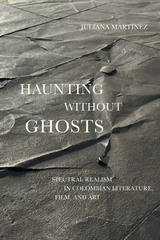
front cover of Haunting Without Ghosts
Haunting Without Ghosts
Spectral Realism in Colombian Literature, Film, and Art
By Juliana Martínez
University of Texas Press, 2020

Winner, William M. LeoGrande Prize, Center for Latin American and Latino Studies at American University, 2022

For half a century, cultural production in Colombia has labored under the weight of magical realism—above all, the works of Gabriel García Márquez—where ghosts told stories about the country’s violent past and warned against a similarly gruesome future.

Decades later, the story of violence in Colombia is no less horrific, but the critical resources of magical realism are depleted. In their wake comes "spectral realism." Juliana Martínez argues that recent Colombian novelists, filmmakers, and artists—from Evelio Rosero and William Vega to Beatriz González and Erika Diettes—share a formal and thematic concern with the spectral but shift the focus from what the ghost is toward what the specter does. These works do not speak of ghosts. Instead, they use the specter to destabilize reality by challenging the authority of human vision and historical chronology.

By introducing the spectral into their work, these artists decommodify well-worn modes of representing violence and create a critical space from which to seek justice for the dead and disappeared. A Colombia-based study, Haunting without Ghosts brings powerful insight to the politics and ethics of spectral aesthetics, relevant for a variety of sociohistorical contexts.
[more]

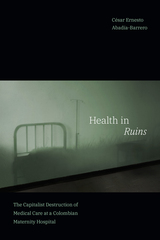
front cover of Health in Ruins
Health in Ruins
The Capitalist Destruction of Medical Care at a Colombian Maternity Hospital
César Ernesto Abadía-Barrero
Duke University Press, 2022
In Health in Ruins César Ernesto Abadía-Barrero chronicles the story of El Materno—Colombia’s oldest maternity and neonatal health center and teaching hospital—over several decades as it faced constant threats of government shutdown. Using team-based and collaborative ethnography to analyze the social life of neoliberal health policy, Abadía-Barrero details the everyday dynamics around teaching, learning, and working in health care before, during, and after privatization. He argues that health care privatization is not only about defunding public hospitals; it also ruins rich traditions of medical care by denying or destroying ways of practicing medicine that challenge Western medicine. Despite radical cuts in funding and a corrupt and malfunctioning privatized system, El Materno’s professors, staff, and students continued to find ways to provide innovative, high-quality, and noncommodified health care. By tracking the violences, conflicts, hopes, and uncertainties that characterized the struggles to keep El Materno open, Abadía-Barrero demonstrates that any study of medical care needs to be embedded in larger political histories.
[more]

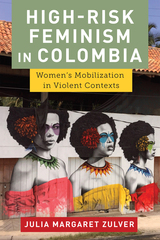
front cover of High-Risk Feminism in Colombia
High-Risk Feminism in Colombia
Women's Mobilization in Violent Contexts
Julia Margaret Zulver
Rutgers University Press, 2022
High-Risk Feminism in Colombia documents the experiences of grassroots women’s organizations that united to demand gender justice during and in the aftermath of Colombia’s armed conflict. In doing so, it illustrates a little-studied phenomenon: women whose experiences with violence catalyze them to mobilize and resist as feminists, even in the face of grave danger. Despite a well-established tradition of studying women in war, we tend to focus on their roles as mothers or carers, as peacemakers, or sometimes as revolutionaries. This book explains the gendered underpinnings of why women engage in feminist mobilization, even when this takes place in a ‘domain of losses’ that exposes them to high levels of risk. It follows four women’s organizations who break with traditional gender norms and defy armed groups’ social and territorial control, exposing them to retributive punishment. It provides rich evidence to document how women are able to surmount the barriers to mobilization when they frame their actions in terms of resistance, rather than fear.

 
[more]

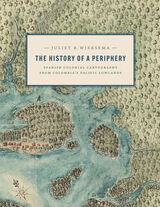
front cover of The History of a Periphery
The History of a Periphery
Spanish Colonial Cartography from Colombia's Pacific Lowlands
Juliet B. Wiersema
University of Texas Press, 2024

2025 ALAA Book Award, Association for Latin American Art/Arvey Foundation, College Art Association

An exploration of Colombian maps in New Granada.

During the late Spanish colonial period, the Pacific Lowlands, also called the Greater Chocó, was famed for its rich placer deposits. Gold mined here was central to New Granada’s economy yet this Pacific frontier in today’s Colombia was considered the “periphery of the periphery.” Infamous for its fierce, unconquered Indigenous inhabitants and its brutal tropical climate, it was rarely visited by Spanish administrators, engineers, or topographers and seldom appeared in detail on printed maps of the period.

In this lavishly illustrated and meticulously researched volume, Juliet Wiersema uncovers little-known manuscript cartography and makes visible an unexamined corner of the Spanish empire. In concert with thousands of archival documents from Colombia, Spain, and the United States, she reveals how a "periphery" was imagined and projected, largely for political or economic reasons. Along the way, she unearths untold narratives about ephemeral settlements, African adaptation and autonomy, Indigenous strategies of resistance, and tenuous colonialisms on the margins of a beleaguered viceroyalty.
[more]


Send via email Share on Facebook Share on Twitter