
 A SCHOLARLY BOOK REPOSITORY
22 start with S start with S

The accusations against Nurse, a well-respected member in the community, seemed unbelievable. Unflinchingly, this ailing elderly woman insisted on her innocence and refused to falsely confess. Supported by many in Salem, Nurse’s family and neighbors challenged her accusers in court and prepared a thorough defense for her, yet nothing could surmount the fear of witchcraft, and she was sentenced to death. Nurse, seen as a martyr for the truth, later became the first person accused of witchcraft to be memorialized in North America.
In A Salem Witch: The Trial, Execution, and Exoneration of Rebecca Nurse, the first full account of Nurse’s life, Daniel A. Gagnon vividly recreates seventeenth-century Salem, and in the process challenges previous interpretations of Nurse’s life and the 1692 witch hunt in general. Through primary source research, he reveals how the Nurse family’s role in several disputes prior to the witch hunt was different than previously thought, as well as how Nurse’s case helps answer the important question of whether the accusations of witchcraft were caused by mental illness or malicious intent. A Salem Witch reveals a remarkable woman whose legacy has transformed how the witch hunt has been remembered and memorialized.
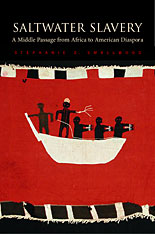
This bold, innovative book promises to radically alter our understanding of the Atlantic slave trade, and the depths of its horrors. Stephanie E. Smallwood offers a penetrating look at the process of enslavement from its African origins through the Middle Passage and into the American slave market.
Smallwood's story is animated by deep research and gives us a startlingly graphic experience of the slave trade from the vantage point of the slaves themselves. Ultimately, Saltwater Slavery details how African people were transformed into Atlantic commodities in the process. She begins her narrative on the shores of seventeenth-century Africa, tracing how the trade in human bodies came to define the life of the Gold Coast. Smallwood takes us into the ports and stone fortresses where African captives were held and prepared, and then through the Middle Passage itself. In extraordinary detail, we witness these men and women cramped in the holds of ships, gasping for air, and trying to make sense of an unfamiliar sea and an unimaginable destination. Arriving in America, we see how these new migrants enter the market for laboring bodies, and struggle to reconstruct their social identities in the New World.
Throughout, Smallwood examines how the people at the center of her story-merchant capitalists, sailors, and slaves-made sense of the bloody process in which they were joined. The result is both a remarkable transatlantic view of the culture of enslavement, and a painful, intimate vision of the bloody, daily business of the slave trade.
The sermon as crafted by the early New England preachers was the most prominent literary form of its day, yet the earliest Puritan texts have as a rule been available only in rare-book collections. This anthology of sermons of the first generation of preachers fills a serious gap in American literature. The preachers collected here, the most widely published of their time, were among the eighty or more who emigrated to Massachusetts Bay during the 1630s. They are John Cotton of Boston, Thomas Shepard of Cambridge, and Thomas Hooker of Hartford, the three foremost "lights of the western churches," and two eminent colleagues, Peter Bulkeley of Concord and John Davenport, first of New Haven and later of Boston.
The selections are chosen to be representative of the lengthy works from which they are drawn, to reflect the major concerns and styles of the preachers' work as a whole, and to demonstrate the genre of the sermon as developed by the early American Puritans. Not only does this anthology represent an important contribution to literary history, but the sermons also illustrate a doctrine uniquely elaborated in this period—a consistent and emphatic narrative, mythlike in its repetition and heroics, of the progress of the soul from a state of nature to a state of salvation. This theme may be seen as a three-stage-development, although individual sermons may vary. These stages—preparation, vocation, and regeneration—determine the order of the selections.
The editors' introductory material supplies a comprehensive and thorough discussion of the early New England sermons, concentrating on their role, history, structure, style, and subject matter. A separate essay on the texts of the sermons describes the relationship between the early printed versions and their form as delivered in the pulpit. The introduction preceding each selection presents original research on the historical circumstances of the preaching and publication of the work from which the sermon is drawn. The editors have also provided brief biographies of the preacfiers represented here, an annotated list of recommended background reading, and the most exhaustive checklist available of authoritative editions of the sermons of these five preachers.
This book will be useful to colonial specialists as well as to students of early American literature, religion, and history. The texts are critically edited for readability, with modernized spelling and annotations of unfamiliar phrases and allusions.
The Scots Irish were one of early Pennsylvania’s largest non-English immigrant groups. They were stereotyped as frontier ruffians and Indian haters. In The Scots Irish of Early Pennsylvania, historian Judith Ridner insists that this immigrant group was socio-economically diverse. Servants and free people, individuals and families, and political exiles and refugees from Ulster, they not only pioneered new frontier settlements, but also populated the state’s cities—Philadelphia and Pittsburgh—and its towns, such as Lancaster, Easton, and Carlisle.
Ridner provides a much-overdue synthesis and reassessment of this immigrant group, tracing a century of Scotch-Irish migration from 1720 to 1820. These men and women brought their version of Ulster to the colonies in their fierce commitments to family, community, entrepreneurship, Presbyterianism, republican politics, and higher education. The settlements they founded across the state, including many farms, businesses, meetinghouses, and colleges, ensured that Pennsylvania would be their cradle in America, and these settlements stand as powerful testaments to their legacy to the state’s history and development.
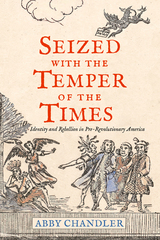
In Seized with the Temper of the Times Identity and Rebellion in Pre-Revolutionary America, historian Abby Chandler explores, as never before, the complex local and transatlantic tensions which infused the early imperial crisis. She argues that colonial responses to the Stamp Act were rooted in local tensions and that the Regulator Rebellion was fueled by trans-Atlantic tensions. These two paradoxes, a local crisis cast as imperial affair and an imperial affair cast as local crisis, tell a very different story than the one to which we are accustomed. Without pre-existing local tensions, the fury of the Stamp Act crisis might not have spilled over during the summer of 1765, and, without the added strains of the imperial crisis, the Regulator Rebellion might not have lasted for five years. The questions about the intersecting roles of local and imperial/federal interests and identities raised during both the Stamp Act crisis and the Regulator Rebellion would also continue to inform political thought in Rhode Island and North Carolina in the coming decades. Both colonies had long histories of challenges to their autonomy and their residents embraced the coming revolution before many of their counterparts, but they would also be reluctant participants in the rising union envisioned by the framers of the Constitution.
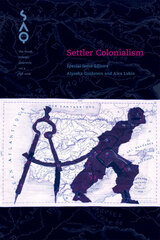
Essays consider how race, sexuality and gender, and ethnicity shape experiences of settler colonialism, how public and private space are administered, how citizenship laws establish boundaries of national inclusion and exclusion, how religious motives drive settler colonialism, and how settler colonial regimes appropriate and “cleanse” indigenous cultures and histories. One essay investigates the interwoven ideological rationales for cultural pluralism, Zionism, and opposition to empire in the United States prior to World War I, highlighting the seemingly paradoxical call for the support of a Zionist settlement of Israel on grounds that establishing a Jewish state through colonial appropriation paralleled American development. Another contributor argues that white settler colonialism in the United States is articulated within the present-day constellation of neoliberalism and post–civil rights “color-blind” discourse, focusing on the intersections of the U.S. vote against the UN Declaration on the Rights of Indigenous Peoples in 2007, the U.S. Supreme Court ruling on City of Sherrill v. Oneida Indian Nation of New York in 2005, and antisovereignty groups organizing against American Indian self-determination. Another offers the current situation in Darfur as a provocative rendering of postcolonial settler violence.
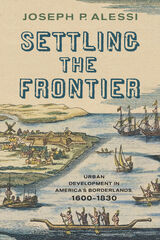
In 1811, while escorting members of John Jacob Astor’s Pacific Fur Company up the Columbia River, their Chinookan guide refused to advance beyond a particular point that marked a boundary between his people and another indigenous group. Long before European contact, Native Americans created and maintained recognized borders, ranging from family hunting and fishing properties to larger tribal territories to vast river valley regions. Within the confines of these respective borders, the native population often established permanent settlements that acted as the venues for the major political, economic, and social activities that took place in virtually every part of precolonial North America. It was the location of these native settlements that played a major role in the establishment of the first European, and later, American frontier towns.
In Settling the Frontier: Urban Development in America’s Borderlands, 1600–1830, historian Joseph P. Alessi examines how the Pecos, Mohawk, Ohioan, and Chinook tribal communities aided Europeans and Americans in the founding of five of America’s earliest border towns—Santa Fe (New Mexico), Fort Amsterdam (New York City), Fort Orange (Albany, New York), Fort Pitt (Pittsburgh, Pennsylvania), and Fort Astoria (Portland, Oregon). Filling a void in scholarship about the role of Native American communities in the settlement of North America, Alessi reveals that, although often resistant to European and American progress or abused by it, Indians played an integral role in motivating and assisting Europeans with the establishment of frontier towns. In addition to the location of these towns, the native population was often crucial to the survival of the settlers in unfamiliar and unforgiving environments. As a result, these new towns became the logistical and economic vanguards for even greater development and exploitation of North America.

Richard M. Gummere, writing with characteristic warmth and humor, explores the attitudes toward the classics of seven prominent colonial Americans--Hugh Jones, Robert Calef, Michael Wigglesworth, Samuel Davies, Henry Melhior Muhlenberg, Benjamin Rush, and Thomas Paine.
A companion volume to the author's The American Colonial Mind and the Classical Tradition, this book provides separate, absorbing biographies of these "seven wise men." Each of them was essentially pragmatic and judged the value of the classics not only on the basis of their intrinsic worth but also for their relevance to contemporary problems.
Hugh Jones--who advocated a practical training for the youth of Colonial Virginia--and Benjamin Rush questioned particularly the value of the classics as a requisite part of the school curriculum, although granting their importance for college admission and professional careers. Thomas Paine, openly skeptical about the wisdom of studying Greek and Latin in the original, scattered references in translation throughout his writings, so that he often seems to be "a classicist malgré lui."
Higglesworth, Davies, and Muhlenberg regarded the ancient languages as aids tothe understanding of Christian theology and as basic preparation for both the minister and the layman. Wigglesworth, at home in both ancient and modern literature, peppered his sermons with Latin quotations, but took care to keep his interpolations strictly subservient to the Gospel.
Some academicians and religious leaders adapted or even misinterpreted the classics in order to find in them support for various moralistic positions. Robert Calef opposed this disingenuousness and debated vigorously with Cotton Mather the evils of the Salem witch trial convictions, whose virtue Mather sought to prove by citing classical myths and legends. Calef raised a seemingly lone voice in his plea for a Christian policy of forbearance and understanding.
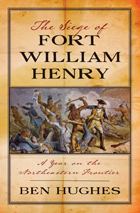
Immortalized in The Last of the Mohicans, the True Story of a Pivotal Battle in the British and French War for the North American Continent
The opening years of the French and Indian War were disastrous for the British. In 1755 General Braddock’s troops were routed at the Battle of Monongahela and by the middle of 1756 Fort Oswego on Lake Ontario had fallen. Hindered by quarrelsome provincial councils, incompetent generals, and the redcoats’ inability to adapt to wilderness warfare, Britain was losing the war. In 1757 the 35th Regiment of Foot stepped into the breach. A poorly trained assortment of conscripts, old soldiers, and convicted criminals led by Lieutenant Colonel George Monro, the regiment was destined to take center stage in the most controversial event of the war. Fort William Henry on the southern shore of New York’s Lake George was a key fortification supporting British interests along the frontier with French America. Monro and his regiment occupied the fort in the spring of 1757 while Britain planned its attack on the key French fortress at Louisbourg, Nova Scotia. Learning that most of Britain’s military resources were allocated to Louisbourg, the French launched a campaign along the weakened frontier. French Commander Louis-Joseph de Montcalm and his American Indian allies laid siege to Fort William Henry; Monro could not hold out and was forced to surrender. As part of the terms, the British regiment, colonial militia, and their camp followers would be allowed safe passage to nearby Fort Edward. The French watched in horror, however, as their Indian allies attacked the British column after it left the fort, an episode that sparked outrage and changed the tactics of the war.
Seen through the eyes of participants such as Louis Antoine de Bougainville, a scholarly young aide-de-camp, Jabez Fitch, an amiable Connecticut sergeant, and Kisensik, a proud Nipissing chief whose father once met Louis XIV in the marbled halls of Versailles, The Siege of Fort William Henry: A Year on the Northeastern Frontier uses contemporary newspaper reports, official documents, private letters, and published memoirs to bring the narrative to life. From Indian councils on the banks of the Saint Lawrence River and bustling military camps in northern New York to the narrative’s bloody denouement on the shores of Lake George, the reader is immersed in the colorful, yet brutal world of eighteenth-century northeastern America.
Contributors. Max Cavitch, Brian Connolly, Matthew Crow, John J. Garcia, Christopher Looby, Michael Meranze, Mark J. Miller, Justine S. Murison, Britt Rusert, Ana Schwartz, Joan W. Scott, Jordan Alexander Stein
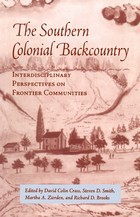
These essays demonstrate how various combinations of research strategies, conceptual frameworks, and data can afford a new look at a geographical area and its settlement. The contributors offer views on the evolution of backcountry communities by addressing such topics as migration, kinship, public institutions, transportation and communications networks, land markets and real estate claims, and the role of agricultural development in the emergence of a regional economy. In their discussions of individuals in the backcountry, they also explore the multiracial and multiethnic character of southern frontier society.
Yielding new insights unlikely to emerge under a single disciplinary analysis, The Southern Colonial Backcountry is a unique volume that highlights the need for interdisciplinary approaches to the backcountry while identifying common research problems in the field.
The Editors: David Colin Crass is the archaeological services unit manager at the Historic Preservation Division, Georgia Department of Natural Resources.
Steven D. Smith is the head of the Cultural Resources Consulting Division of the South Carolina Institute of Archaeology and Antrhopology.
Martha A. Zierden is curator of historical archaeology at The Charleston Museum.
Richard D. Brooks is the administrative manager of the Savannah River Archeological Research Program, South Carolina Institute of Archaeology and Antrhopology.
The Contributors: Monica L. Beck, Edward Cashin, Charles H. Faulkner, Elizabeth Arnett Fields, Warren R. Hofstra, David C. Hsiung, Kenneth E. Lewis, Donald W. Linebaugh, Turk McCleskey, Robert D. Mitchell, Michael J. Puglisi, Daniel B. Thorp.
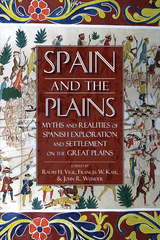
Spain and the Plains introduces and documents Spanish exploration of and migration to the Plains, examines the myths that shaped Spanish exploration and the pragmatic realities of exploration and settlement, and documents racism and misrepresentation that Hispanic groups encountered in the nineteenth and twentieth centuries. Contributors show how early explorers, shaped by the intellectual context of the Renaissance, sought mythical locales: the fountain of youth, the straits of Anian, and the city of Quivira. They describe how exploration shifted to emphasize military and economic gains in the eighteenth and nineteenth centuries. Essays portray the diaspora of Spanish settlers and reconstruct daily life in their settlements on the Plains.
This unique collection paints a clear picture of a crucial but often misrepresented and neglected era in American and Spanish history.
The editors, all authors of previous books, are affiliated with the Center for Great Plains Studies at the University of Nebraska-Lincoln, where Frances W. Kaye is a professor of English, John R. Wunder is a professor of history and journalism, and Ralph H. Vigil is a professor emeritus of history and ethnic studies. Contributors include Félix D. Almaráz Jr., Thomas E. Chávez, Frances W. Kaye, Russell M. Magnaghi, Ralph H. Vigil, Waldo R. Wedel, and John R. Wunder.
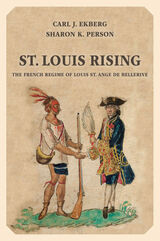
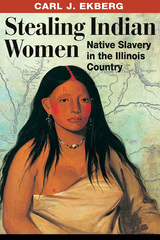
Drawing on new source materials, the authors delve into the complexities of politics, Indian affairs, slavery, and material culture that defined the city's founding period. Their alternative version of the oft-told tale uncovers the imperial realities--as personified by St. Ange--that truly governed in the Illinois Country of the time, and provide a trove of new information on everything from the fur trade to the arrival of the British and Spanish after the Seven Years' War.
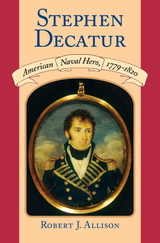
After the War of 1812, Decatur moved to Washington to help direct naval policy. His close friendships with James Madison, John Quincy Adams, and other political leaders soon made him a rising star in national politics. He and his wife Susan made their elegant home on Lafayette Square near the White House a center of Washington society. The capital and the entire nation were shocked in 1820 when Decatur died at the age of forty-one in a duel with a rival navy captain.
In this carefully researched and well-written biography, historian Robert Allison tells the story of Decatur's eventful life at a time when the young republic was developing its own identity—when the American people were deciding what kind of nation they would become. Although he died prematurely, Decatur played a significant role in the shaping of that national identity.
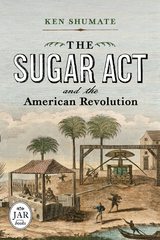
The Sugar Act and the American Revolution by Ken Shumate is the only book-length treatment of this first great challenge of the revolutionary era. For each of the three incarnations of the act, the author provides a clause-by-clause description, including the British reasoning behind the duties and trade restrictions, and a summary of the resulting American grievance. Following the explanation of each act are chapters describing the protests of American merchants and popular leaders, and the British response to those protests. As a consequence of further parliamentary acts of taxation, the story ends with the demand in 1774 by the First Continental Congress for Parliament to repeal the Sugar Act as being “essentially necessary in order to restore harmony between Great Britain and the American colonies.”
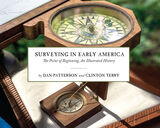
In Surveying Early America: The Point of Beginning, An Illustrated History, award-winning photographer Dan Patterson and American historian Clinton Terry vividly and succinctly unpack the profession of surveying during the eighteenth century. Over 100 full color photographs exclusively shot for the book depict authentic and historically accurate reproductions of techniques and tools through the use of American reenactors from the Department of Geographer, which provide an interpretive look at surveying as a primary means to building the American nation.
Through the lens of Patterson’s camera and Terry’s narrative, readers see what Washington saw as he learned his trade, explored the vast American wilderness, and occasionally laid personal claim to great expanses of land. Readers are visually and intellectually immersed in the historically accurate details of the surveying practices of George Washington, Virginia’s first surveyor and his team.
Step-by-step, readers learn how early America, in particular the east to the Ohio River Valley was initially divided and documented. Terry characterizes both the profession and methods of land measurement and surveying in British colonial North America—techniques that did not substantially change until the invention of GPS technology 200 years later. Along the way Terry details the various tools of the trade early surveyors used.
Photographer Dan Patterson, working with the Department of the Geographer, restages Washington’s actual expeditions during his time with the Geographers to the Army, the technical staff department consisting of American and French soldiers, whose work in the field supported the Continental Army. Patterson brilliantly displays the processes and instruments Washington used 260 years ago.
Together Ohio based photographer and author team up to create a single story, expanding the understanding of primary source material for general readers and those with a passion for early American history.
READERS
Browse our collection.
PUBLISHERS
See BiblioVault's publisher services.
STUDENT SERVICES
Files for college accessibility offices.
RECENTLY PUBLISHED




UChicago Accessibility Resources
home | accessibility | search | about | contact us
BiblioVault ® 2001 - 2024
The University of Chicago Press