
 A SCHOLARLY BOOK REPOSITORY
9 start with T start with T

Meanwhile, the Virginia-bound Sea Venture was shipwrecked on Bermuda, the dreaded, uninhabited “Isle of Devils.” The castaways’ journals describe the hurricane at sea as well as murders and mutinies on land. Their adventures are said to have inspired Shakespeare’s The Tempest.
A year later, in 1610, the Bermuda castaways sailed to Virginia in two small ships they had built. They arrived in Jamestown to find many people in the last stages of starvation; abandoning the colony seemed their only option. Then, in what many people thought was divine providence, three English ships sailed into Chesapeake Bay. Virginia was saved, but the colony’s troubles were far from over.
Despite glowing reports from Virginia Company officials, disease, inadequate food, and fear of Indians plagued the colony. The company poured thousands of pounds sterling and hundreds of new settlers into its venture but failed to make a profit, and many of the newcomers died. Bermuda—with plenty of food, no native population, and a balmy climate—looked much more promising, and in fact, it became England’s second New World colony in 1612.
In this fascinating tale of England’s first two New World colonies, Bernhard links Virginia and Bermuda in a series of unintended consequences resulting from natural disaster, ignorance of native cultures, diplomatic intrigue, and the fateful arrival of the first Africans in both colonies. Written for general as well as academic audiences, A Tale of Two Colonies examines the existing sources on the colonies, sets them in a transatlantic context, and weighs them against circumstantial evidence.
From diplomatic correspondence and maps in the Spanish archives to recent archaeological discoveries at Jamestown, Bernhard creates an intriguing history. To weave together the stories of the two colonies, which are fraught with missing pieces, she leaves nothing unexamined: letters written in code, adventurers’ narratives, lists of Africans in Bermuda, and the minutes of committees in London. Biographical details of mariners, diplomats, spies, Indians, Africans, and English colonists also enrich the narrative. While there are common stories about both colonies, Bernhard shakes myth free from truth and illuminates what is known—as well as what we may never know—about the first English colonies in the New World.
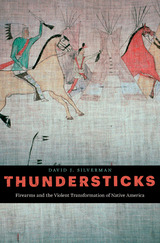
The adoption of firearms by American Indians between the seventeenth and nineteenth centuries marked a turning point in the history of North America’s indigenous peoples—a cultural earthquake so profound, says David Silverman, that its impact has yet to be adequately measured. Thundersticks reframes our understanding of Indians’ historical relationship with guns, arguing against the notion that they prized these weapons more for the pyrotechnic terror guns inspired than for their efficiency as tools of war. Native peoples fully recognized the potential of firearms to assist them in their struggles against colonial forces, and mostly against one another.
The smoothbore, flintlock musket was Indians’ stock firearm, and its destructive potential transformed their lives. For the deer hunters east of the Mississippi, the gun evolved into an essential hunting tool. Most importantly, well-armed tribes were able to capture and enslave their neighbors, plunder wealth, and conquer territory. Arms races erupted across North America, intensifying intertribal rivalries and solidifying the importance of firearms in Indian politics and culture.
Though American tribes grew dependent on guns manufactured in Europe and the United States, their dependence never prevented them from rising up against Euro-American power. The Seminoles, Blackfeet, Lakotas, and others remained formidably armed right up to the time of their subjugation. Far from being a Trojan horse for colonialism, firearms empowered American Indians to pursue their interests and defend their political and economic autonomy over two centuries.
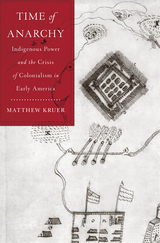
A gripping account of the violence and turmoil that engulfed England’s fledgling colonies and the crucial role played by Native Americans in determining the future of North America.
In 1675, eastern North America descended into chaos. Virginia exploded into civil war, as rebel colonists decried the corruption of planter oligarchs and massacred allied Indians. Maryland colonists, gripped by fears that Catholics were conspiring with enemy Indians, rose up against their rulers. Separatist movements and ethnic riots swept through New York and New Jersey. Dissidents in northern Carolina launched a revolution, proclaiming themselves independent of any authority but their own. English America teetered on the edge of anarchy.
Though seemingly distinct, these conflicts were in fact connected through the Susquehannock Indians, a once-mighty nation reduced to a small remnant. Forced to scatter by colonial militia, Susquehannock bands called upon connections with Indigenous nations from the Great Lakes to the Deep South, mobilizing sources of power that colonists could barely perceive, much less understand. Although the Susquehannock nation seemed weak and divided, it exercised influence wildly disproportionate to its size, often tipping settler societies into chaos. Colonial anarchy was intertwined with Indigenous power.
Piecing together Susquehannock strategies from a wide range of archival documents and material evidence, Matthew Kruer shows how one people’s struggle for survival and renewal changed the shape of eastern North America. Susquehannock actions rocked the foundations of the fledging English territories, forcing colonial societies and governments to respond. Time of Anarchy recasts our understanding of the late seventeenth century and places Indigenous power at the heart of the story.

A close look at the Forbes Campaign and its personnel reveals much about both British relations with native peoples and the nature of Britain’s American empire during a time of stress. Unlike other campaigns, this one was composed largely of colonial—not professional British—troops. In addition, individual colonies negotiated their role in the campaign and frequently placed their own local interests ahead of those of the empire as a whole. The campaign thus suggests the limits of imperial power and how Britain’s hold over its American frontiers was, at best, tenuous and helped lead to an eventual break-down of empire in the 1760s and 1770s.

When we talk about the economy, “the market” is often just an abstraction. While the exchange of goods was historically tied to a particular place, capitalism has gradually eroded this connection to create our current global trading systems. In Trading Spaces, Emma Hart argues that Britain’s colonization of North America was a key moment in the market’s shift from place to idea, with major consequences for the character of the American economy.
Hart’s book takes in the shops, auction sites, wharves, taverns, fairs, and homes of seventeenth- and eighteenth-century America—places where new mechanisms and conventions of trade arose as Europeans re-created or adapted continental methods to new surroundings. Since those earlier conventions tended to rely on regulation more than their colonial offspring did, what emerged in early America was a less-fettered brand of capitalism. By the nineteenth century, this had evolved into a market economy that would not look too foreign to contemporary Americans. To tell this complex transnational story of how our markets came to be, Hart looks back farther than most historians of US capitalism, rooting these markets in the norms of seventeenth- and eighteenth-century Britain. Perhaps most important, this is not a story of specific commodity markets over time but rather is a history of the trading spaces themselves: the physical sites in which the grubby work of commerce occurred and where the market itself was born.
Departing from traditional approaches to colonial legal history, Mary Sarah Bilder argues that American law and legal culture developed within the framework of an evolving, unwritten transatlantic constitution that lawyers, legislators, and litigants on both sides of the Atlantic understood. The central tenet of this constitution—that colonial laws and customs could not be repugnant to the laws of England but could diverge for local circumstances—shaped the legal development of the colonial world.
Focusing on practices rather than doctrines, Bilder describes how the pragmatic and flexible conversation about this constitution shaped colonial law: the development of the legal profession; the place of English law in the colonies; the existence of equity courts and legislative equitable relief; property rights for women and inheritance laws; commercial law and currency reform; and laws governing religious establishment. Using as a case study the corporate colony of Rhode Island, which had the largest number of appeals of any mainland colony to the English Privy Council, she reconstructs a largely unknown world of pre-Constitutional legal culture.

In September 1755, the most famous Indian in the world—a Mohawk leader known in English as King Hendrick—died in the Battle of Lake George. He was fighting the French in defense of British claims to North America, and his death marked the end of an era in Anglo-Iroquois relations. He was not the first Mohawk of that name to attract international attention. Half a century earlier, another Hendrick worked with powerful leaders in the frontier town of Albany. He cemented his transatlantic fame when he traveled to London as one of the “four Indian kings.”
Until recently the two Hendricks were thought to be the same person. Eric Hinderaker sets the record straight, reconstructing the lives of these two men in a compelling narrative that reveals the complexities of the Anglo-Iroquois alliance, a cornerstone of Britain’s imperial vision. The two Hendricks became famous because, as Mohawks, they were members of the Iroquois confederacy and colonial leaders believed the Iroquois held the balance of power in the Northeast. As warriors, the two Hendricks aided Britain against the French; as Christians, they adopted the trappings of civility; as sachems, they stressed cooperation rather than bloody confrontation with New York and Great Britain.
Yet the alliance was never more than a mixed blessing for the two Hendricks and the Iroquois. Hinderaker offers a poignant personal story that restores the lost individuality of the two Hendricks while illuminating the tumultuous imperial struggle for North America.
READERS
Browse our collection.
PUBLISHERS
See BiblioVault's publisher services.
STUDENT SERVICES
Files for college accessibility offices.
RECENTLY PUBLISHED





UChicago Accessibility Resources
home | accessibility | search | about | contact us
BiblioVault ® 2001 - 2024
The University of Chicago Press