
 A SCHOLARLY BOOK REPOSITORY
7 start with B start with B

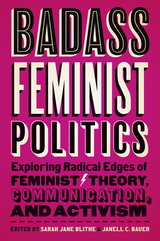
Badass Feminist Politics includes a diverse range of engaging feminist political projects to not only analyze the work being done on the ground but provide an overview for action that can be taken on by those seeking to engage in feminist activism in their own communities. Contributors included here are working for equality and equity and resisting violent, racist, homophobic, transphobic, xenophobic, and sexist language and action during this tension-filled political moment. Collectively, the book explores what it means to live and communicate feminist politics in everyday choices and actions, and how we can facilitate learning by analyzing these examples. Taking up current issues and new theoretical perspectives, the authors offer novel perspectives into what it means to live feminist politics. This book is a testament to resilience, resistance, communication, and forward thinking about what these themes all mean for new feminist agendas. Learning how to resist oppressive structures through words and actions is particularly important for students. Badass Feminist Politics features scholars from non-dominant groups taking up issues of marginalization and oppression, which can help people accomplish their social justice goals of inclusivity on the ground and in the classroom.
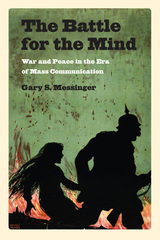
Gary Messinger shows that over the last 150 years a succession of breakthroughs in the realm of media has reshaped the making of war and peace. Along with mass newspapers, magazines, books, motion pictures, radio, television, computer software, and telecommunication satellites comes an array of strategies for exploiting these media to control popular beliefs and emotions. Images of war now arrive in many forms and reach billions of people simultaneously. Political and military leaders must react to crowd impulses that sweep around the globe. Nation-states and nongovernmental groups, including terrorists, use mass communication to spread their portrayals of reality.
Drawing on a wide range of media products, from books and articles to films and television programs, as well as his own research in the field of propaganda studies, Messinger offers a fresh and comprehensive overview. He skillfully charts the path that has led us to our current situation and suggests where we might go next.

Gold Medal – Networking, Social Media, and Communication – Axiom Business Book Awards, 2022JP Morgan Summer Reading List 2022
Survival strategies for communicating in a notification-saturated world
As our ability to pay attention in a world of distractions vanishes, it’s no wonder that our ability to be heard and understood—to convey our messages—is also threatened. Whether working with our teams and customers or communicating with our families and friends, it is increasingly difficult to break through the digital devices that get in the way of communication. And the ubiquity of digital devices means that we are often “multicommunicating,” participating in multiple conversations at once. As a result, our ability to be socially present with an audience requires an intentional approach.
This increased strain on attention has never been more clear than during the global pandemic, when our homes suddenly accommodated both work and family life. What are our options when facing professional communications at all hours? Do we ask for the technology to be put away at the dinner table? Establish other ground rules? What about using digital communications to our advantage—how can we facilitate information-sharing in the midst of a world where we are overwhelmed with content?
Drawing from fifteen years of research, interviews, and experience from teaching students and executives, Jeanine W. Turner offers a framework to navigate social presence at work and at home. By exploring four primary communication choices—budgeted, entitled, competitive, and invitational—Turner shows when and where to employ each strategy to most effectively allocate our attention and command the attention of others. Each chapter includes concrete strategies and concludes with reflection questions and exercises to help readers further explore these decisions in professional and personal relationships.


Exploring the role of rhetoric in African American identity and political discourse
Dexter B. Gordon’s Black Identity: Rhetoric, Ideology, and Nineteenth-Century Black Nationalism explores the problem of racial alienation and the importance of rhetoric in the formation of black identity in the United States. Faced with alienation and disenfranchisement as a part of their daily experience, African Americans developed collective practices of empowerment that cohere as a constitutive rhetoric of black ideology. Exploring the origins of that rhetoric, Gordon reveals how the ideology of black nationalism functions in contemporary African American political discourse.
Rooting his study in the words and works of nineteenth-century black abolitionists such as Maria Stewart, David Walker, and Henry Garnet, Gordon explores the rapprochement between rhetorical theory, race, alienation, and the role of public memory in identity formation. He argues that abolitionists used language in their speeches, pamphlets, letters, petitions, and broadsides that established black identity in ways that would foster liberation and empowerment. The arguments presented here constitute the only sustained treatment of nineteenth-century black activists from a rhetorical perspective.
Gordon demonstrates the pivotal role of rhetoric in African American efforts to create a viable public voice. Understanding nineteenth-century black alienation—and its intersection with twentieth-century racism—is crucial to understanding the continued sense of alienation that African Americans express about their American experience. Gordon explains how the ideology of black nationalism disciplines and describes African American life for its own ends, exposing a central piece of the ideological struggle for the soul of America. The book is both a platform for further discussion and an invitation for more voices to join the discourse as we search for ways to comprehend the sense of alienation experienced and expressed by African Americans in contemporary society.
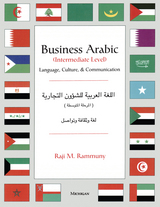
The volume expects students to have control of basic vocabulary and grammatical structures that are typically covered in the first two years of Arabic instruction. Grammatical notes are given for review purposes, where necessary.
READERS
Browse our collection.
PUBLISHERS
See BiblioVault's publisher services.
STUDENT SERVICES
Files for college accessibility offices.
RECENTLY PUBLISHED





UChicago Accessibility Resources
home | accessibility | search | about | contact us
BiblioVault ® 2001 - 2024
The University of Chicago Press