
 A SCHOLARLY BOOK REPOSITORY
Both its defenders and detractors
have described the argument from marginal cases as the most important
to date in defense of animal rights. Hotly debated among philosophers
for some twenty years, the argument concludes that no morally relevant
characteristic distinguishes human beings–including infants, the
severely retarded, the comatose, and other "marginal cases"--from
any other animals.
Babies and Beasts presents
the first book-length exploration of the broad range of views relating
to the argument from marginal cases and sorts out and evaluates its various
uses and abuses.
Daniel Dombrowski analyzes
the views of many who are prominent in the debate--
Peter Singer, Thomas Regan, H. J. McCloskey, Jan Narveson, John Rawls,
R. G. Frey, Peter Carruthers, Michael Leahy, Robert Nozick, and James
Rachels are included--in a volume that will be essential to philosophers,
animal rights activists, those who work in clinical settings, and others
who must sometimes deal with "marginal cases."
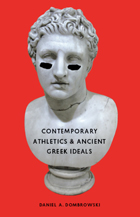
Despite their influence in our culture, sports inspire dramatically less philosophical consideration than such ostensibly weightier topics as religion, politics, or science. Arguing that athletic playfulness coexists with serious underpinnings, and that both demand more substantive attention, Daniel Dombrowski harnesses the insights of ancient Greek thinkers to illuminate contemporary athletics.
Dombrowski contends that the ideas of Plato, Aristotle, and Plotinus shed important light on issues—such as the pursuit of excellence, the concept of play, and the power of accepting physical limitations while also improving one’s body—that remain just as relevant in our sports-obsessed age as they were in ancient Greece. Bringing these concepts to bear on contemporary concerns, Dombrowski considers such questions as whether athletic competition can be a moral substitute for war, whether it necessarily constitutes war by other means, and whether it encourages fascist tendencies or ethical virtue. The first volume to philosophically explore twenty-first-century sport in the context of its ancient predecessor, Contemporary Athletics and Ancient Greek Ideals reveals that their relationship has great and previously untapped potential to inform our understanding of human nature.

As Daniel A. Dombrowski explains, Hartshorne advanced a neoclassical or process theism that contrasted with the "classical" theism defended by traditionalist Jews, Christians, and Muslim believers. His conception of God was dipolar, which could attribute to God certain qualities that traditionalists would exclude. For example, in Hartshorne's view, God can embrace excellent aspects of both activity and passivity, or of permanence and change; classical theists, on the other hand, exclude passivity and change from their conceptions.
Dombrowski goes on to explain the ramifications of Hartshorne's view of God for aesthetics, which for him had both broad and narrow meanings: all sensory feeling or sensation, in the broad sense, and a disciplined feeling for beauty, in the narrow sense. Included are discussions on Hartshorne's famous appreciation for the aesthetics of bird song; his view of beauty as a mean between two sets of extremes; his idea of the aesthetic attitude, which concentrates on values that are intrinsic and immediately felt; and the place of death in his aesthetics, in which the value of our lives consists in the beauty or intensity of experience that we contribute to the divine life.
Filling an important gap in our understanding of Hartshorne, Divine Beauty also makes a persuasive case for the superiority of his neoclassical theism over classical theism.
READERS
Browse our collection.
PUBLISHERS
See BiblioVault's publisher services.
STUDENT SERVICES
Files for college accessibility offices.
RECENTLY PUBLISHED






UChicago Accessibility Resources
home | accessibility | search | about | contact us
BiblioVault ® 2001 - 2025
The University of Chicago Press