
 A SCHOLARLY BOOK REPOSITORY
An intensely private woman, Earle lived in Brooklyn, New York, with her husband and four children and conducted much of her research either by mail or at the newly established Long Island Historical Society. She began writing on the eve of her fortieth birthday, and the impressive body of scholarship she generated over the next fifteen years stimulated new interest in early American social customs, domestic routines, foodways, clothing, and childrearing patterns.
Written in a style calculated to appeal to a wide readership, Earle's richly illustrated books recorded the intimate details of what she described as colonial "home life." These works reflected her belief that women had played a key historical role, helping to nurture communities by constructing households that both served and shaped their families. It was a vision that spoke eloquently to her contemporaries, who were busily creating exhibitions of early American life in museums, staging historical pageants and other forms of patriotic celebration, and furnishing their own domestic interiors.
Ed White explores the backcountry-city divide as well as the dynamics of indigenous peoples, bringing together two distinct bodies of scholarship: one stressing the political culture of the Revolutionary era, the other taking an ethnohistorical view of white–Native American contact. White concentrates his study in Pennsylvania, a state in which the majority of the population was rural, and in Philadelphia, a city that was a center of publishing and politics and the national capital for a decade. Against this backdrop, White reads classic political texts such as Crèvecoeur’s Letters from an American Farmer, Franklin’s Autobiography, and Paine’s “Agrarian Justice,” alongside missionary and captivity narratives, farmers’ petitions, and Native American treaties. Using historical and ethnographic sources to enrich familiar texts, White demonstrates the importance of rural areas in the study of U.S. nation formation and finds unexpected continuities between the early colonial period and the federal ascendancy of the 1790s.
Ed White is associate professor of English at the University of Florida.
Between the 1770s and the 1860s, people all across the globe relied on physiognomy and phrenology to evaluate human worth. These once-popular but now-discredited disciplines were based on a deceptively simple premise: that facial features or skull shape could reveal a person’s intelligence, character, and personality. In the United States, these were culturally ubiquitous sciences that both elite thinkers and ordinary people used to understand human nature.
While the modern world dismisses phrenology and physiognomy as silly and debunked disciplines, Beauty and the Brain shows why they must be taken seriously: they were the intellectual tools that a diverse group of Americans used to debate questions of race, gender, and social justice. While prominent intellectuals and political thinkers invoked these sciences to justify hierarchy, marginalized people and progressive activists deployed them for their own political aims, creatively interpreting human minds and bodies as they fought for racial justice and gender equality. Ultimately, though, physiognomy and phrenology were as dangerous as they were popular. In addition to validating the idea that external beauty was a sign of internal worth, these disciplines often appealed to the very people who were damaged by their prejudicial doctrines. In taking physiognomy and phrenology seriously, Beauty and the Brain recovers a vibrant—if largely forgotten—cultural and intellectual universe, showing how popular sciences shaped some of the greatest political debates of the American past.
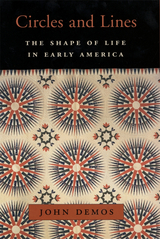
In this intimate, engaging book, John Demos offers an illuminating portrait of how colonial Americans, from the first settlers to the postrevolutionary generation, viewed their life experiences. He also offers an invaluable inside look into the craft of a master social historian as he unearths--in sometimes unexpected places--fragments of evidence that help us probe the interior lives of people from the faraway past.
The earliest settlers lived in a traditional world of natural cycles that shaped their behavior: day and night; seasonal rhythms; the lunar cycle; the life cycle itself. Indeed, so basic were these elements that "almost no one felt a need to comment on them." Yet he finds cyclical patterns--in the seasonal foods they ate, in the spike in marriages following the autumn harvest. Witchcraft cases reveal the different emotional reactions to day versus night, as accidental mishaps in the light become fearful nighttime mysteries. During the transitional world of the American Revolution, people began to see their society in newer terms but seemed unable or unwilling to come to terms with that novelty. Americans became new, Demos points out, before they fully understood what it meant. Their cyclical frame of reference was coming unmoored, giving way to a linear world view in early nineteenth-century America that is neatly captured by Kentucky doctor Daniel Drake's description of the chronography of his life.
In his meditation on these three worlds, Demos brilliantly demonstrates how large historical forces are reflected in individual lives. With the imaginative insights and personable touch that we have come to expect from this fine chronicler of the human condition, Circles and Lines is vintage John Demos.
Assembling essays written by three generations of labor historians, each with markedly different approaches to the labor histories of early America and the Atlantic world, this issue offers unique insights into the evolution of class analysis and its shifting place in the field of labor history. In one essay, a renowned member of the first generation of “new social historians” reflects on his work, considering the past and future of class analysis while highlighting some of his current views about class in early America. In other essays, a new generation of scholars enriches scholarship on early America and the Atlantic by incorporating complex and nuanced discussions of race and gender into traditional class analyses. Perhaps signaling the future of the field, another essay discusses the theoretical foundations and implications of a globalized mode of historical class analysis, examining the complicated connections among peoples in Europe, Africa, and North America during the seventeenth and eighteenth centuries and the impact these connections had in shaping early America and the Atlantic world.
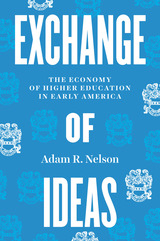
Exchange of Ideas launches a breathtakingly ambitious new economic history of American higher education. In this volume, Adam R. Nelson focuses on the early republic, explaining how knowledge itself became a commodity, as useful ideas became salable goods and American colleges were drawn into transatlantic commercial relations. American scholars might once have imagined that higher education could sit beyond the sphere of market activity—that intellectual exchange could transcend vulgar consumerism—but already by the end of the eighteenth century, they saw how ideas could be factored into the nation’s balance of trade. Moreover, they concluded that it was the function of colleges to oversee the complex process whereby knowledge could be priced and purchased. The history of capitalism and the history of higher education, Nelson reveals, are intimately intertwined—which raises a host of important and strikingly urgent questions. How do we understand knowledge and education as commercial goods? Who should pay for them? And, fundamentally, what is the optimal system of higher education in a capitalist democracy?
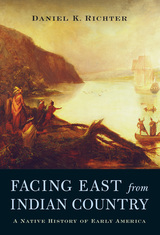
In the beginning, North America was Indian country. But only in the beginning. After the opening act of the great national drama, Native Americans yielded to the westward rush of European settlers. Or so the story usually goes. Yet, for three centuries after Columbus, Native people controlled most of eastern North America and profoundly shaped its destiny. In Facing East from Indian Country, Daniel K. Richter keeps Native people center-stage throughout the story of the origins of the United States.
Viewed from Indian country, the sixteenth century was an era in which Native people discovered Europeans and struggled to make sense of a new world. Well into the seventeenth century, the most profound challenges to Indian life came less from the arrival of a relative handful of European colonists than from the biological, economic, and environmental forces the newcomers unleashed. Drawing upon their own traditions, Indian communities reinvented themselves and carved out a place in a world dominated by transatlantic European empires. In 1776, however, when some of Britain’s colonists rebelled against that imperial world, they overturned the system that had made Euro-American and Native coexistence possible. Eastern North America only ceased to be an Indian country because the revolutionaries denied the continent’s first peoples a place in the nation they were creating.
In rediscovering early America as Indian country, Richter employs the historian’s craft to challenge cherished assumptions about times and places we thought we knew well, revealing Native American experiences at the core of the nation’s birth and identity.

Helena Wall shows what life was like in colonial America, a culture where individuals and family were subordinated to the demands of the community. Using local town, church, and especially court records from every colony, she examines the division of authority between family and community throughout colonial America.
Although this close relationship and its consequences for private life bred many tensions and conflicts, the premises and conditions of that interdependent association persisted even into the nineteenth century. Wall sketches the subsequent changes and outlines the new arrangements of family and community life as the colonies moved toward the formation of a new nation.
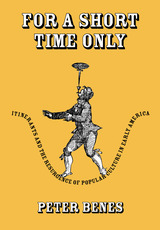
By the 1740s, colonists living in North America began to encounter scores of itinerant performers from England and Europe. These show people—acrobats, wire dancers, tumblers, trick riders, painters, dancing-masters, waxworks proprietors, healers, and singing and language teachers—brought novelty and culture to remote areas. Advertising in newspapers, they attracted audiences with the hook of appearing "for a short time only."
In this richly illustrated and deeply researched book, Peter Benes examines the rise of early American popular culture through the lives and work of itinerants who circulated in British North America and the United States from the late seventeenth through the early nineteenth century. Although they were frequently reviled as quacks and absconders by many provincials, these transients enjoyed a unique camaraderie and found audiences among high- and lowbrow alike. Drawing on contemporary diaries, letters, reminiscences, and hitherto inaccessible newspaper ads, broadsides, and images, Benes suggests why some elements of Europe's carnival and folklore traditions failed to gain acceptance in American society while others flourished brilliantly.
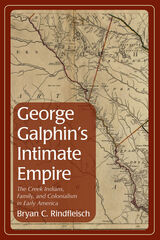
A native of Ireland, George Galphin arrived in South Carolina in 1737 and quickly emerged as one of the most proficient deerskin traders in the South. This was due in large part to his marriage to Metawney, a Creek Indian woman from the town of Coweta, who incorporated Galphin into her family and clan, allowing him to establish one of the most profitable merchant companies in North America. As part of his trade operations, Galphin cemented connections with Indigenous and European peoples across the South, while simultaneously securing links to merchants and traders in the British Empire, continental Europe, and beyond.
In George Galphin’s Intimate Empire: The Creek Indians, Family, and Colonialism in Early America, Bryan C. Rindfleisch presents a complex narrative about eighteenth-century cross-cultural relationships. Reconstructing the multilayered bonds forged by Galphin and challenging scholarly understandings of life in the Native South, the American South more broadly, and the Atlantic World, Rindfleisch looks simultaneously at familial, cultural, political, geographical, and commercial ties—examining how eighteenth-century people organized their world, both mentally and physically. He demonstrates how Galphin’s importance emerged through the people with whom he bonded. At their most intimate, Galphin’s multilayered relationships revolved around the Creek, Anglo-French, and African children who comprised his North American family, as well as family and friends on the other side of the Atlantic.
Through extensive research in primary sources, Rindfleisch reconstructs an expansive imperial world that stretches across the American South and reaches into London and includes Indians, Europeans, and Africans who were intimately interconnected and mutually dependent. As a whole, George Galphin’s Intimate Empire provides critical insights into the intensely personal dimensions and cross-cultural contours of the eighteenth-century South and how empire-building and colonialism were, by their very nature, intimate and familial affairs.
As digital communication has become dominant, commentators have declared that handwriting is a thing of the past, a relic of an earlier age. This volume of original essays makes it clear that anxiety around handwriting has existed for centuries and explores writing practices from a variety of interdisciplinary fields, including manuscript studies, Native American studies, media history, African American studies, book history, bibliography, textual studies, and archive theory.
By examining how a culturally diverse set of people grappled with handwriting in their own time and weathered shifting relationships to it, Handwriting in Early America uncovers perspectives that are multiethnic and multiracial, transatlantic and hemispheric, colonial and Indigenous, multilingual and illiterate. Essays describe a future of handwriting as envisioned by practitioners, teachers, and even government officials of this time, revealing the tension between the anxiety of loss and the need to allow for variations going forward.
Contributors include James Berkey, Blake Bronson-Bartlett, John J. Garcia, Christopher Hager, Desirée Henderson, Frank Kelderman, Michelle Levy, Lisa Maruca, Christen Mucher, Alan Niles, Seth Perlow, Carla L. Peterson, Sarah Robbins, Patricia Jane Roylance, Karen Sánchez-Eppler, and Danielle Skeehan.
In 1806 an anxious crowd of thousands descended upon Lenox, Massachusetts, for the public hanging of Ephraim Wheeler, condemned for the rape of his thirteen-year-old daughter, Betsy. Not all witnesses believed justice had triumphed. The death penalty had become controversial; no one had been executed for rape in Massachusetts in more than a quarter century. Wheeler maintained his innocence. Over one hundred local citizens petitioned for his pardon--including, most remarkably, Betsy and her mother.
Impoverished, illiterate, a failed farmer who married into a mixed-race family and clashed routinely with his wife, Wheeler existed on the margins of society. Using the trial report to reconstruct the tragic crime and drawing on Wheeler's jailhouse autobiography to unravel his troubled family history, Irene Quenzler Brown and Richard D. Brown illuminate a rarely seen slice of early America. They imaginatively and sensitively explore issues of family violence, poverty, gender, race and class, religion, and capital punishment, revealing similarities between death penalty politics in America today and two hundred years ago.
Beautifully crafted, engagingly written, this unforgettable story probes deeply held beliefs about morality and about the nature of justice.
In this compelling and original book, Caroline Wigginton reshapes our understanding of early American literary history. Overturning long-standing connections between the male-dominated print culture of pamphlets, broadsides, and newspapers and the transformative ideas that instigated the American Revolution, Wigginton explores how women's "relational publications"—circulated texts, objects, and performances—transformed their public and intimate worlds. She argues that Native, black, and white women's interpersonal "publications" revolutionized the dynamics of power and connection in public and private spaces, whether those spaces were Quaker meeting houses, Creek talwas, trading posts, burial grounds, or the women's own "neighborhoods."
Informed by deep and rich archival research, Wigginton's case studies explore specific instances of "relational publication." The book begins with a pairing of examples—the statement a grieving Lenape mother made through a wampum belt and the political affiliations created when a salon hostess shared her poetry. Subsequent chapters trace a history of women's publication practice, including a Creek woman's diplomatic and legal procession-spectacles in the colonial Southeast, a black mother's expression of protest in Newport, Rhode Island, and the resulting evangelical revival, Phillis Wheatley's elegies that refigured neighborhoods of enslaved and free Bostonians, and a Quaker woman's pious and political commonplace book in Revolutionary Philadelphia.
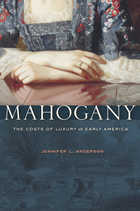
In the mid-eighteenth century, colonial Americans became enamored with the rich colors and silky surface of mahogany. This exotic wood, imported from the West Indies and Central America, quickly displaced local furniture woods as the height of fashion. Over the next century, consumer demand for mahogany set in motion elaborate schemes to secure the trees and transform their rough-hewn logs into exquisite objects. But beneath the polished gleam of this furniture lies a darker, hidden story of human and environmental exploitation.
Mahogany traces the path of this wood through many hands, from source to sale: from the enslaved African woodcutters, including skilled “huntsmen” who located the elusive trees amidst dense rainforest, to the ship captains, merchants, and timber dealers who scrambled after the best logs, to the skilled cabinetmakers who crafted the wood, and with it the tastes and aspirations of their diverse clientele. As the trees became scarce, however, the search for new sources led to expanded slave labor, vicious competition, and intense international conflicts over this diminishing natural resource. When nineteenth-century American furniture makers turned to other materials, surviving mahogany objects were revalued as antiques evocative of the nation's past.
Jennifer Anderson offers a dynamic portrait of the many players, locales, and motivations that drove the voracious quest for mahogany to adorn American parlors and dining rooms. This complex story reveals the cultural, economic, and environmental costs of America’s growing self-confidence and prosperity, and how desire shaped not just people’s lives but the natural world.
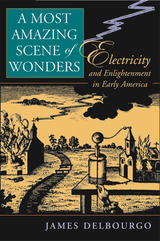
Benjamin Franklin's invention of the lightning rod is the founding fable of American science, but Franklin was only one of many early Americans fascinated by electricity. As a dramatically new physical experience, electricity amazed those who dared to tame the lightning and set it coursing through their own bodies. Thanks to its technological and medical utility, but also its surprising ability to defy rational experimental mastery, electricity was a powerful experience of enlightenment, at once social, intellectual, and spiritual.
In this compelling book, James Delbourgo moves beyond Franklin to trace the path of electricity through early American culture, exploring how the relationship between human, natural, and divine powers was understood in the eighteenth century. By examining the lives and visions of natural philosophers, spectacular showmen, religious preachers, and medical therapists, he shows how electrical experiences of wonder, terror, and awe were connected to a broad array of cultural concerns that defined the American Enlightenment. The history of lightning rods, electrical demonstrations, electric eels, and medical electricity reveals how early American science, medicine, and technology were shaped by a culture of commercial performance, evangelical religion, and republican politics from mid-century to the early republic.
The first book to situate early American experimental science in the context of a transatlantic public sphere, A Most Amazing Scene of Wonders offers a captivating view of the origins of American science and the cultural meaning of the American Enlightenment. In a story of shocks and sparks from New England to the Caribbean, Delbourgo brilliantly illuminates a revolutionary New World of wonder.
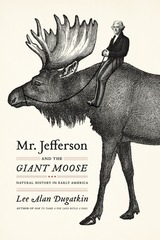
In the years after the Revolutionary War, the fledgling republic of America was viewed by many Europeans as a degenerate backwater, populated by subspecies weak and feeble. Chief among these naysayers was the French Count and world-renowned naturalist Georges-Louis Leclerc de Buffon, who wrote that the flora and fauna of America (humans included) were inferior to European specimens.
Thomas Jefferson—author of the Declaration of Independence, U.S. president, and ardent naturalist—spent years countering the French conception of American degeneracy. His Notes on Virginia systematically and scientifically dismantled Buffon’s case through a series of tables and equally compelling writing on the nature of his home state. But the book did little to counter the arrogance of the French and hardly satisfied Jefferson’s quest to demonstrate that his young nation was every bit the equal of a well-established Europe. Enter the giant moose.
The American moose, which Jefferson claimed was so enormous a European reindeer could walk under it, became the cornerstone of his defense. Convinced that the sight of such a magnificent beast would cause Buffon to revise his claims, Jefferson had the remains of a seven-foot ungulate shipped first class from New Hampshire to Paris. Unfortunately, Buffon died before he could make any revisions to his Histoire Naturelle, but the legend of the moose makes for a fascinating tale about Jefferson’s passion to prove that American nature deserved prestige.
In Mr. Jefferson and the Giant Moose, Lee Alan Dugatkin vividly recreates the origin and evolution of the debates about natural history in America and, in so doing, returns the prize moose to its rightful place in American history.
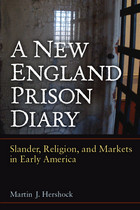
In 1812, New Hampshire shopkeeper Timothy M. Joy abandoned his young family, fleeing the creditors who threatened to imprison him. Within days, he found himself in a Massachusetts jailhouse, charged with defamation of a prominent politician. During the months of his incarceration, Joy kept a remarkable journal that recounts his personal, anguished path toward spiritual redemption. Martin J. Hershock situates Joy's account in the context of the pugnacious politics of the early republic, giving context to a common citizen's perspective on partisanship and the fate of an unfortunate shopkeeper swept along in the transition to market capitalism.
In addition to this close-up view of an ordinary person's experience of a transformative period, Hershock reflects on his own work as a historian. In the final chapter, he discusses the value of diaries as historical sources, the choices he made in telling Joy's story, alternative interpretations of the diary, and other contexts in which he might have placed Joy's experiences. The appendix reproduces Joy's original journal so that readers can develop their own skills using a primary source.
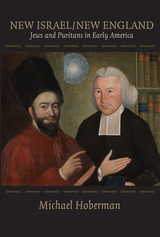
More often than not, Michael Hoberman shows, Puritans thought and wrote about Jews in order to resolve their own theological and cultural dilemmas. A number of prominent New Englanders, including Roger Williams, Increase Mather, Samuel Sewall, Benjamin Colman, Cotton Mather, Jonathan Edwards, and Ezra Stiles, wrote extensively about post-biblical Jews, in some cases drawing on their own personal acquaintance with Jewish contemporaries.
Among the intriguing episodes that Hoberman investigates is the recruitment and conversion of Harvard's first permanent instructor of Hebrew, the Jewish-born Judah Monis. Later chapters describe the ecumenical friendship between Newport minister Ezra Stiles and Haim Carigal, an itinerant rabbi from Palestine, as well as the life and career of Moses Michael Hays, the prominent freemason who was Boston's first permanently established Jewish businessman, a founder of its insurance industry, an early sponsor of the Bank of Massachusetts, and a personal friend of Paul Revere.

How early American Catholics justified secularism and overcame suspicions of disloyalty, transforming ideas of religious liberty in the process.
In colonial America, Catholics were presumed dangerous until proven loyal. Yet Catholics went on to sign the Declaration of Independence and helped to finalize the First Amendment to the Constitution. What explains this remarkable transformation? Michael Breidenbach shows how Catholic leaders emphasized their church’s own traditions—rather than Enlightenment liberalism—to secure the religious liberty that enabled their incorporation in American life.
Catholics responded to charges of disloyalty by denying papal infallibility and the pope’s authority to intervene in civil affairs. Rome staunchly rejected such dissent, but reform-minded Catholics justified their stance by looking to conciliarism, an intellectual tradition rooted in medieval Catholic thought yet compatible with a republican view of temporal independence and church–state separation. Drawing on new archival material, Breidenbach finds that early American Catholic leaders, including Maryland founder Cecil Calvert and members of the prominent Carroll family, relied on the conciliarist tradition to help institute religious toleration, including the Maryland Toleration Act of 1649.
The critical role of Catholics in establishing American church–state separation enjoins us to revise not only our sense of who the American founders were, but also our understanding of the sources of secularism. Church–state separation in America, generally understood as the product of a Protestant-driven Enlightenment, was in key respects derived from Catholic thinking. Our Dear-Bought Liberty therefore offers a dramatic departure from received wisdom, suggesting that religious liberty in America was not bestowed by liberal consensus but partly defined through the ingenuity of a persecuted minority.

Focusing on Massachusetts, then as now a center of U.S. medical education and practice, Thompson draws on data from patients' journals, medical account ledgers, physicians' daybooks, and court records to link changes in medical treatment to a gradual evolution of patient expectations across varied populations. Specifically, she identifies three developments—the increasing use of cash in medical transactions, growing religious pluralism, and the rise of malpractice suits—as key factors in transforming patients into active medical consumers unwilling to submit to doctors' advice without considering alternatives.
By showing how nineteenth-century patients shaped therapeutic practice "through the medical choices they made or didn't make," Thompson's study alters our understanding of American medicine in the past and has implications for its present and future.
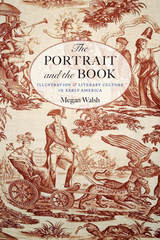
Illustrations played a key role in American literary culture despite the fact there was little demand for books by American writers. Indeed, most of the illustrated books bought, sold, and shared by Americans were either imported British works or reprinted versions of those imported editions. As a result, in addition to embellishing books, illustrations provided readers with crucial information about the country’s status as a former colony.
Through an examination of readers’ portrait-collecting habits, writers’ employment of ekphrasis, printers’ efforts to secure American-made illustrations for periodicals, and engravers’ reproductions of British book illustrations, Walsh uncovers in late eighteenth-century America a dynamic but forgotten visual culture that was inextricably tied to the printing industry and to the early US literary imagination.
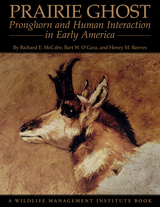
A Wildlife Management Institute Book
In this lavishly illustrated volume Richard E. McCabe, Bart W. O'Gara and Henry M. Reeves explore the fascinating relationship of pronghorn with people in early America, from prehistoric evidence through the Battle of Little Bighorn in 1876. The only one of fourteen pronghorn-like genera to survive the great extinction brought on by human migration into North America, the pronghorn has a long and unique history of interaction with humans on the continent, a history that until now has largely remained unwritten.With nearly 150 black-and-white photographs, 16 pages of color illustrations, plus original artwork by Daniel P. Metz, Prairie Ghost: Pronghorn and Human Interaction in Early America tells the intriguing story of humans and these elusive big game mammals in an informative and entertaining fashion that will appeal to historians, biologists, sportsmen and the general reader alike.
Winner of the Wildlife Society's Outstanding Book Award for 2005

Promise to Pay follows America’s first paper money—the “bills of credit” of British North America—from its seventeenth-century origins as a means of war finance to its pivotal role in catalyzing the American Revolution. Katie A. Moore combs through treasury records, account books, and the bills themselves to tell a new story of money’s origins that challenges economic orthodoxy and mainstream histories. Promise to Pay shows how colonial governments imposed paper bills on settler communities through existing labor and kinship relations, their value secured by thousands of individual claims on the public purse—debts—and the state’s promise to take them back as payment for taxes owed. Born into a world of hierarchy and deference, early American money eroded old social ties and created new asymmetries of power, functioning simultaneously as a ticket to the world of goods, a lifeline for those on the margins, and a tool of imperial domination.
Grounded in sustained engagement with scholarship from multiple disciplines, Promise to Pay breathes new life into old debates and offers an incisive account of the centrality of money in the politics and conflicts of empire, community, and everyday life.
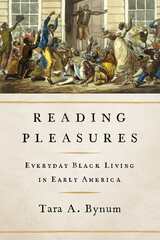
A daring assertion of Black people’s humanity, Reading Pleasures reveals how four Black writers experienced positive feelings and analyzes the ways these emotions served creative, political, and racialized ends.
---David Shields, University of South Carolina
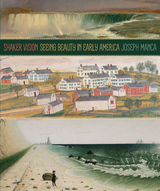
In Shaker Vision, Joseph Manca explores original texts, especially diaries and travel journals, and material culture to demonstrate that Shakers enjoyed a remarkably deep experience of the visual world. Shakers shared tastes with mainstream Americans and often employed a similar aesthetic vocabulary, but all within a belief system that made them distinct. In addition to their well-known ascetic architecture, furniture, and handicraft styles, they expressed themselves through ornate and detailed spiritual art and in vivid, visionary experiences. Based on firsthand accounts of the believers themselves, this richly illustrated volume will dramatically change how we assess the visual world of this uniquely American religious sect.
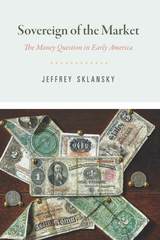
Jeffrey Sklansky’s wide-ranging study comprises three chronological parts devoted to major episodes in the career of the money question. First, the fight over the innovation of paper money in colonial New England. Second, the battle over the development of commercial banking in the new United States. And third, the struggle over the national banking system and the international gold standard in the late nineteenth century. Each section explores a broader problem of power that framed each conflict in successive phases of capitalist development: circulation, representation, and association. The three parts also encompass intellectual biographies of opposing reformers for each period, shedding new light on the connections between economic thought and other aspects of early American culture. The result is a fascinating, insightful, and deeply considered contribution to the history of capitalism.
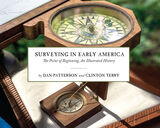
In Surveying Early America: The Point of Beginning, An Illustrated History, award-winning photographer Dan Patterson and American historian Clinton Terry vividly and succinctly unpack the profession of surveying during the eighteenth century. Over 100 full color photographs exclusively shot for the book depict authentic and historically accurate reproductions of techniques and tools through the use of American reenactors from the Department of Geographer, which provide an interpretive look at surveying as a primary means to building the American nation.
Through the lens of Patterson’s camera and Terry’s narrative, readers see what Washington saw as he learned his trade, explored the vast American wilderness, and occasionally laid personal claim to great expanses of land. Readers are visually and intellectually immersed in the historically accurate details of the surveying practices of George Washington, Virginia’s first surveyor and his team.
Step-by-step, readers learn how early America, in particular the east to the Ohio River Valley was initially divided and documented. Terry characterizes both the profession and methods of land measurement and surveying in British colonial North America—techniques that did not substantially change until the invention of GPS technology 200 years later. Along the way Terry details the various tools of the trade early surveyors used.
Photographer Dan Patterson, working with the Department of the Geographer, restages Washington’s actual expeditions during his time with the Geographers to the Army, the technical staff department consisting of American and French soldiers, whose work in the field supported the Continental Army. Patterson brilliantly displays the processes and instruments Washington used 260 years ago.
Together Ohio based photographer and author team up to create a single story, expanding the understanding of primary source material for general readers and those with a passion for early American history.
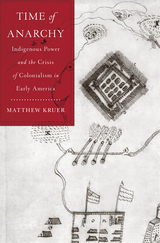
A gripping account of the violence and turmoil that engulfed England’s fledgling colonies and the crucial role played by Native Americans in determining the future of North America.
In 1675, eastern North America descended into chaos. Virginia exploded into civil war, as rebel colonists decried the corruption of planter oligarchs and massacred allied Indians. Maryland colonists, gripped by fears that Catholics were conspiring with enemy Indians, rose up against their rulers. Separatist movements and ethnic riots swept through New York and New Jersey. Dissidents in northern Carolina launched a revolution, proclaiming themselves independent of any authority but their own. English America teetered on the edge of anarchy.
Though seemingly distinct, these conflicts were in fact connected through the Susquehannock Indians, a once-mighty nation reduced to a small remnant. Forced to scatter by colonial militia, Susquehannock bands called upon connections with Indigenous nations from the Great Lakes to the Deep South, mobilizing sources of power that colonists could barely perceive, much less understand. Although the Susquehannock nation seemed weak and divided, it exercised influence wildly disproportionate to its size, often tipping settler societies into chaos. Colonial anarchy was intertwined with Indigenous power.
Piecing together Susquehannock strategies from a wide range of archival documents and material evidence, Matthew Kruer shows how one people’s struggle for survival and renewal changed the shape of eastern North America. Susquehannock actions rocked the foundations of the fledging English territories, forcing colonial societies and governments to respond. Time of Anarchy recasts our understanding of the late seventeenth century and places Indigenous power at the heart of the story.
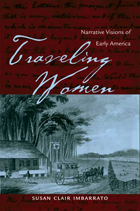
Susan Clair Imbarrato closely examines women’s accounts of their journeys from 1700 to 1830, including Sarah Kemble Knight’s well-known journal of her trip from Boston to New York in 1704 and many lesser-known accounts, such as Sarah Beavis’s 1779 journal of her travel to Ohio via Kentucky and Susan Edwards Johnson’s account or her 1801–2 journey from Connecticut to North Carolina.
In the women’s keen observations and entertaining wit, readers will find bravado mixed with hesitation, as women set forth on business, to relocate, and for pleasure. These travelers wrote compellingly of crossing rivers and mountains, facing hunger, encountering native Americans, sleeping in taverns, and confronting slavery, expressing themselves in voices that differed in sensibility from male explorers and travelers.
These accounts, as Imbarrato shows, challenge assumptions that such travel was predominately a male enterprise. In addition, Traveling Women provides a more balanced portrait of westward settlement by affirming women’s importance in the settling of early America.
READERS
Browse our collection.
PUBLISHERS
See BiblioVault's publisher services.
STUDENT SERVICES
Files for college accessibility offices.
RECENTLY PUBLISHED





UChicago Accessibility Resources
home | accessibility | search | about | contact us
BiblioVault ® 2001 - 2024
The University of Chicago Press