
 A SCHOLARLY BOOK REPOSITORY
10 start with P start with P
Economic growth in the middle-income countries of Southeast Asia over the past few decades has been widely praised for reducing poverty in both absolute and relative terms. Indonesia is a prime example. But while poverty has declined in Indonesia, patterns of food poverty persist across Indonesia. What explains this troubling paradox? How does it relate to Indonesia’s enthusiastic embrace of the “entitlements revolution,” the use of direct cash transfers as a tool for reducing poverty and building social inclusion?
This book analyzes the nature and social consequences of economic development and agrarian change processes in rural Indonesia in relation to the scope and effectiveness of Indonesia’s social protection programs. The findings are based on a series of extensive ground-up case studies in Indonesian communities in a variety of eco-agrarian settings that seek to understand the drivers of food insecurity and vulnerability at a household level. The results show that while high-value farming, diversification, and migration may offer a means of economic progress for poor households, opportunities for accumulation are limited. This, the authors show, is due to the way class, gender, and power work in remote local contexts, and the fact that much surplus income is used for enhanced consumption and changing lifestyles. There are few signs of the classical structural transformation of the countryside which has historically been considered the most decisive pathway out of rural poverty. The authors conclude that social assistance is unlikely to counter the persistence of rural poverty, food insecurity, and precarity in the absence of other redistributive strategies that shift the structural drivers of inequality.
In 1961 South Korea was mired in poverty. By 1979 it had a powerful industrial economy and a vibrant civil society in the making, which would lead to a democratic breakthrough eight years later. The transformation took place during the years of Park Chung Hee's presidency. Park seized power in a coup in 1961 and ruled as a virtual dictator until his assassination in October 1979. He is credited with modernizing South Korea, but at a huge political and social cost.
South Korea's political landscape under Park defies easy categorization. The state was predatory yet technocratic, reform-minded yet quick to crack down on dissidents in the name of political order. The nation was balanced uneasily between opposition forces calling for democratic reforms and the Park government's obsession with economic growth. The chaebol (a powerful conglomerate of multinationals based in South Korea) received massive government support to pioneer new growth industries, even as a nationwide campaign of economic shock therapy-interest hikes, devaluation, and wage cuts-met strong public resistance and caused considerable hardship.
This landmark volume examines South Korea's era of development as a study in the complex politics of modernization. Drawing on an extraordinary range of sources in both English and Korean, these essays recover and contextualize many of the ambiguities in South Korea's trajectory from poverty to a sustainable high rate of economic growth.
The rise of modern public finance revolutionized political economy. As governments learned to invest tax revenue in the long-term financial resources of the market, they vastly increased their administrative power and gained the ability to use fiscal, monetary, and financial policy to manage their economies. But why did the modern fiscal state emerge in some places and not in others? In approaching this question, Wenkai He compares the paths of three different nations—England, Japan, and China—to discover why some governments developed the tools and institutions of modern public finance, while others, facing similar circumstances, failed to do so.
Focusing on three key periods of institutional development—the decades after the English Civil Wars, the Meiji Restoration, and the Taiping Rebellion—He demonstrates how each event precipitated a collapse of the existing institutions of public finance. Facing urgent calls for revenue, each government searched for new ways to make up the shortfall. These experiments took varied forms, from new methods of taxation to new credit arrangements. Yet, while England and Japan learned from their successes and failures how to deploy the tools of modern public finance and equipped themselves to become world powers, China did not. He’s comparative historical analysis isolates the nature of the credit crisis confronting each state as the crucial factor in determining its specific trajectory. This perceptive and persuasive explanation for China’s failure at a critical moment in its history illuminates one of the most important but least understood transformations of the modern world.

Jude L. Fernando explores the paradoxical relationship between NGOs and capitalism, showing that supposedly progressive organisations often promote essentially the same policies and ideas as existing governments.
The book examines how a diverse group of NGOs have shaped state formation in Bangladesh and Sri Lanka. It argues that, rather than influencing state formation for the better, NGOs have been integrated into the capitalist system and their language adopted to give traditional exploitative social relations a transformative appearance.
This enlightening study will give pause to those who see NGOs as drivers of true social change and will encourage students of development studies to make a deeper analysis of state formation.

Although it ended up as only one among a host of federal research policymaking agencies, the National Science Foundation was originally conceived as central to the federal research policymaking system. Kleinman’s historical examination of the National Science Foundation exposes the sociological and political workings of the system, particularly the way in which a small group of elite scientists shaped the policymaking process and defined the foundation’s structure and future. Beginning with Vannevar Bush’s 1945 manifesto The Endless Frontier, Kleinman explores elite and populist visions for a postwar research policy agency and shows how the structure of the American state led to the establishment of a fragmented and uncoordinated system for federal research policymaking. His book concludes with an analysis of recent efforts to reorient research policy and to remake federal policymaking institutions in light of the current "crisis" of economic competitiveness.
A particularly timely study, Politics on the Endless Frontier will be of interest to historians and sociologists of science and technology and to science policy analysts.

From tax and household registers, law codes, and other primary sources, as well as recent Japanese sources, William Wayne Farris has developed the first systematic, scientific analysis of early Japanese population, including the role of disease in economic development. This work provides a comprehensive study of land clearance, agricultural technology, and rural settlement. The function and nature of ritsuryō institutions are reinterpreted within the revised demographic and economic setting.
Farris’s text is illustrated with maps, population pyramids for five localities, and photographs and translations of portions of tax and household registers, which throw further light on the demography and economy of Japan in the seventh, eighth, and ninth centuries.
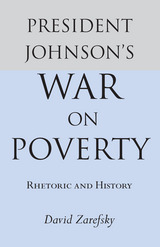
Illustrates the interweaving of rhetorical and historical forces in shaping public policy
In January 1964, in his first State of the Union address, President Lyndon Johnson announced a declaration of “unconditional war” on poverty. By the end of the year the Economic Opportunity Act became law.
The War on Poverty illustrates the interweaving of rhetorical and historical forces in shaping public policy. Zarefsky suggest that an important problem in the War on Poverty lay in its discourse. He assumes that language plays a central role in the formulation of social policy by shaping the context within which people view the social world. By terming the anti-poverty effort a war, President Johnson imparted significant symbolism to the effort: it called for total victory and gave confidence that the “war” was winnable. It influenced the definition of the enemy as an intergenerational cycle of poverty, rather than the shortcomings of the individual; and it led to the choice of community action, manpower programs, and prudent management as weapons and tactics. Each of these implications involves a choice of language and symbols, a decision about how to characterize and discuss the world. Zarefsky contends that each of these rhetorical choices was helpful to the Johnson administration in obtaining passage of the Economic Opportunity Ac of 1964, but that each choice invited redefinition or reinterpretation of a symbol in a way that threatened the program.
“A superb, field-changing book…A true classic.”
—Sunil Amrith
“Makes a major contribution towards a necessary discussion of the politics of aid.”
—Times Higher Education
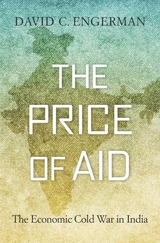
Debates over foreign aid are often strangely ahistorical. Economists argue about effectiveness—how to make aid work—while critics bemoan money wasted on corruption, ignoring the fundamentally political character of aid. The Price of Aid exposes the geopolitical calculus underpinning development assistance, and its costs.
India stood at the center of American and Soviet aid competition throughout the Cold War, as both superpowers saw developmental aid as a way of pursuing their geopolitical goals by economic means. Drawing on recently declassified files from seven countries, David Engerman shows how Indian leaders used Cold War competition to win battles at home, eroding the Indian state in the process. As China spends freely in Africa, the political stakes of foreign aid are rising once again.
“A magnificent book. Anyone who seeks to understand contemporary India and its development struggles will have to start here. Engerman’s work is not only enlightening, it turns much of what we thought we knew about India, foreign aid, and the Cold War in South Asia upside down.”
—O. A. Westad, author of The Cold War
“An outstanding history…Drawing on an unprecedented array of official and private archives in India, Russia, the United States, and Britain, Engerman offers a superb account—one that integrates the ideologies and policies of the superpowers with a sharp analysis of the push-and-pull of policymaking in India. This is a landmark study of independent India as well as the Cold War.”
—Srinath Raghavan, author of India’s War
This collection of essays examines Zambia’s efforts to promote economic reform during the 1990s. Following the restoration of democratic rule, the government of Zambia adopted an ambitious program designed to stabilize the economy and lay the foundation for sustained growth and development. These essays describe the adjustment program, highlighting the attempts to reform the budget, the tax system, the financial system, agriculture and mining, and to create the human capacity to sustain the reforms.
Major improvements in economic performance occurred from 1992 to 1995. After that, however, economic performance deteriorated as a result of the government’s selective abandonment of key elements of the reform program and the emergence of major governance problems. In response to international pressure, by 2001 the government completed the sale of the copper mines and qualified for large-scale debt relief. The long delays involved seriously undermined economic performance.
The volume concludes that for economic reform to succeed in Zambia, the government should scale back its development agenda to match its financial and human capacities, reduce dependence on foreign aid, adopt and maintain prudent macroeconomic policies, and support the expansion of both mining and agriculture.
READERS
Browse our collection.
PUBLISHERS
See BiblioVault's publisher services.
STUDENT SERVICES
Files for college accessibility offices.
RECENTLY PUBLISHED



UChicago Accessibility Resources
home | accessibility | search | about | contact us
BiblioVault ® 2001 - 2024
The University of Chicago Press