
 A SCHOLARLY BOOK REPOSITORY
Results by Title
3 books about Eiss, Paul
3 books about Eiss, Paul
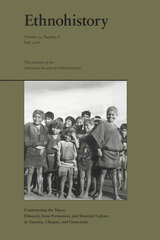
Constructing the Maya
Ethnicity, State Formation, and Material Culture in Yucatán, Chiapas, and Guatemala, Volume 55
Paul K. Eiss, special issue editor
Duke University Press
This special issue of Ethnohistory is a significant contribution to the history and anthropology of the Maya in both Mexico and Guatemala. Utilizing a comparative analytic framework, these essays explore the ethnic dimensions—indigeneity, indigenismo, mestizaje, racial subjugation—of state formation as well as state practice in indigenous regions. The contributors emphasize how the material aspects of state formation—roads and infrastructure; model villages; restored ruins; portrait photography; highland marketplaces; modern improvements; traditional cultural performances, artifacts, and dress—become theaters for the construction and reconstruction of ethnic and political entities and relationships. Taken as a whole, the collection challenges a tendency toward the segmentation of the discussion of the Maya into distinct disciplines (anthropology and history), national historiographies (Mexican and Guatemalan), and, within Mexico, distinct regional historiographies (Yucatán and Chiapas).
Contributors: David Carey Jr., Paul K. Eiss, Ben Fallaw, Stephen E. Lewis, Walter E. Little, John M. Watanabe
[more]

The Fernando Coronil Reader
The Struggle for Life Is the Matter
Fernando Coronil
Duke University Press, 2019
In The Fernando Coronil Reader Venezuelan anthropologist Fernando Coronil challenges us to rethink our approaches to key contemporary epistemological, political, and ethical questions. Consisting of work written between 1991 and 2011, this posthumously published collection includes Coronil's landmark essays “Beyond Occidentalism” and “The Future in Question” as well as two chapters from his unfinished book manuscript, "Crude Matters." Taken together, the essays highlight his deep concern with the Global South, Latin American state formation, theories of nature, empire, and postcolonialism, and anthrohistory as an intellectual and ethical approach. Presenting a cross section of Coronil's oeuvre, this volume cements his legacy as one of the most innovative critical social thinkers of his generation.
[more]
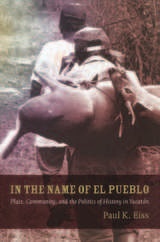
In the Name of El Pueblo
Place, Community, and the Politics of History in Yucatán
Paul K. Eiss
Duke University Press, 2010
The term “el pueblo” is used throughout Latin America, referring alternately to small towns, to community, or to “the people” as a political entity. In this vivid anthropological and historical analysis of Mexico’s Yucatán peninsula, Paul K. Eiss explores the multiple meanings of el pueblo and the power of the concept to unite the diverse claims made in its name. Eiss focuses on working-class indigenous and mestizo populations, examining how those groups negotiated the meaning of el pueblo among themselves and in their interactions with outsiders, including landowners, activists, and government officials. Combining extensive archival and ethnographic research, he describes how residents of the region have laid claim to el pueblo in varied ways, as exemplified in communal narratives recorded in archival documents, in the performance of plays and religious processions, and in struggles over land, politics, and the built environment. Eiss demonstrates that while el pueblo is used throughout the hemisphere, the term is given meaning and power through the ways it is imagined and constructed in local contexts. Moreover, he reveals el pueblo to be a concept that is as historical as it is political. It is in the name of el pueblo—rather than class, race, or nation—that inhabitants of northwestern Yucatán stake their deepest claims not only to social or political rights, but over history itself.
[more]
READERS
Browse our collection.
PUBLISHERS
See BiblioVault's publisher services.
STUDENT SERVICES
Files for college accessibility offices.
RECENTLY PUBLISHED




UChicago Accessibility Resources
home | accessibility | search | about | contact us
BiblioVault ® 2001 - 2025
The University of Chicago Press