
 A SCHOLARLY BOOK REPOSITORY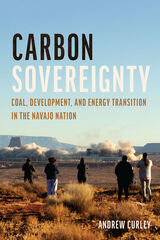
This comprehensive new work offers a deep dive into the complex inner workings of energy shift in the Navajo Nation. Geographer Andrew Curley, a member of the Navajo Nation, examines the history of coal development within the Navajo Nation, including why some Diné supported coal and the consequences of doing so. He explains the Navajo Nation’s strategic choices to use the coal industry to support its sovereignty as a path forward in the face of ongoing colonialism. Carbon Sovereignty demonstrates the mechanism of capitalism through colonialism and the construction of resource sovereignty, in both the Navajo Nation’s embrace and its rejection of a coal economy.
For the people of the Navajo Nation, energy sovereignty is dire and personal. Thanks to on-the-ground interviews with Diné coal workers, environmental activists, and politicians, Curley documents the real consequences of change as they happened. While some Navajo actors have doubled down for coal, others have moved toward transition. Curley argues that political struggles ultimately shape how we should understand coal, capitalism, and climate change. The rise and fall of coal magnify the nuance and complexity of change. Historical and contemporary issues intermingle in everyday life with lasting consequences.
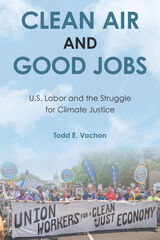
The labor–climate movement in the U.S. laid the groundwork for the Green New Deal by building a base within labor for supporting climate protection as a vehicle for good jobs. But as we confront the climate crisis and seek environmental justice, a “jobs vs. environment” discourse often pits workers against climate activists. How can we make a “just transition” moving away from fossil fuels, while also compensating for the human cost when jobs are lost or displaced?
In his timely book, Clean Air and Good Jobs, Todd Vachon examines the labor–climate movement and demonstrates what can be envisioned and accomplished when climate justice is on labor’s agenda and unions work together with other social movements to formulate bold solutions to the climate crisis. Vachon profiles the workers and union leaders who have been waging a slow, but steadily growing revolution within their unions to make labor as a whole an active and progressive champion for both workers and the environment.
Clean Air and Good Jobs examines the “movement within the movement” offering useful solutions to the dual crises of climate and inequality.

In Our Energy Future, Lincoln Davies shines a bright light on the challenges the transition presents, including energy equity, political partisanship, the need for holistic solutions, and adaptability in the face of change. Our Energy Future makes the case for why the United States’ current transition to clean energy provides our world with something we so desperately need today: hope.
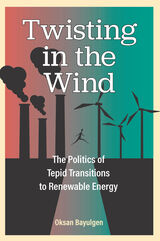
Why do governments insist on fossil fuels? Why do renewables face uncertain and inconsistent legal and regulatory circumstances that slow their market-share growth against fossil fuels? Oksan Bayulgen studies the political determinants of partial energy reforms that result in tepid energy transitions and shifts the geographical focus from front-runner countries of energy innovation to developing countries, which have become the largest carbon emitters in the world. Her in-depth case study of energy policies in Turkey over the past two decades demonstrates that energy transitions are neither inevitable nor linear and that they are often initiated if and only when promoting renewables is in the interests of governing elites and stall when political dividends associated with energy rents change. This book contributes to the debates on the nature and pace of energy transitions by analyzing the power dynamics and political institutions under which energy reforms are initiated and implemented over time. This timely topic will be of interest to scholars, policymakers, energy investors, and anyone interested in environmental studies.
READERS
Browse our collection.
PUBLISHERS
See BiblioVault's publisher services.
STUDENT SERVICES
Files for college accessibility offices.
RECENTLY PUBLISHED


UChicago Accessibility Resources
home | accessibility | search | about | contact us
BiblioVault ® 2001 - 2026
The University of Chicago Press