
 A SCHOLARLY BOOK REPOSITORY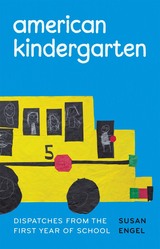
When we think of kindergarten, many might imagine joyous free play, and a tangle of trucks, dress-up clothes, and blocks, as five-year-olds explore their vivid imaginations and budding social skills. Others might envision a quiet group sitting cross-legged in a circle during story time. Neither of these scenes would be an inaccurate representation of the pivotal year of entry into traditional education in this country. However, neither offers a complete picture of what children do every day in those seemingly transparent, yet actually mysterious, classrooms. What can or should we expect during the first year of school? How are children learning and growing during those hours spent away from their homes?
Susan Engel embarked on finding these answers in American Kindergarten: Dispatches from the First Year of School. Engel toured twenty-nine classrooms across fourteen states, observing each closely, with a special eye toward the ways each classroom’s goals reflect its community. As she made her way across the country, Engel found that on the surface, kindergarten students are similar: good-natured, eager to learn, and deeply affectionate. Their classrooms, too, feature many of the same expectations, routines, and activities. But the differences between the classrooms were striking and often surprising. Over the two years of her classroom visits, Engel identified five promises that teachers and their classrooms make to their students: reading, order, thinking, identity, and love. Engel found that schools differ in how they prioritize and keep the promises they make; some make all five promises, while others emphasize only one or two. The five promises capture a set of values, aspirations, and goals that drive everything that happens in a classroom.
Engaging and incisive, American Kindergarten is the story of the promises our country’s schools make to five-year-old children, and how those promises are kept and sometimes broken.

An unexpected portrait of the first year of school for America’s youngest learners.
When we think of kindergarten, many might imagine joyous free play, and a tangle of trucks, dress-up clothes, and blocks, as five-year-olds explore their vivid imaginations and budding social skills. Others might envision a quiet group sitting cross-legged in a circle during story time. Neither of these scenes would be an inaccurate representation of the pivotal year of entry into traditional education in this country. However, neither offers a complete picture of what children do every day in those seemingly transparent, yet actually mysterious, classrooms. What can or should we expect during the first year of school? How are children learning and growing during those hours spent away from their homes?
Susan Engel embarked on finding these answers in American Kindergarten: Dispatches from the First Year of School. Engel toured twenty-nine classrooms across fourteen states, observing each closely, with a special eye toward the ways each classroom’s goals reflect its community. As she made her way across the country, Engel found that on the surface, kindergarten students are similar: good-natured, eager to learn, and deeply affectionate. Their classrooms, too, feature many of the same expectations, routines, and activities. But the differences between the classrooms were striking and often surprising. Over the two years of her classroom visits, Engel identified five promises that teachers and their classrooms make to their students: reading, order, thinking, identity, and love. Engel found that schools differ in how they prioritize and keep the promises they make; some make all five promises, while others emphasize only one or two. The five promises capture a set of values, aspirations, and goals that drive everything that happens in a classroom.
Engaging and incisive, American Kindergarten is the story of the promises our country’s schools make to five-year-old children, and how those promises are kept and sometimes broken.
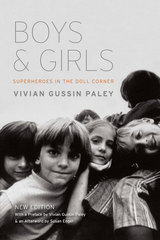
For more than forty years, Boys and Girls has a classic account of the little-known world that young children create together when they play. Vivian Gussin Paley takes readers inside a kindergarten classroom to show them in detail how boys and girls play—and how, by playing and fantasizing in different ways, they work through complicated notions of gender roles and identity. The children’s own conversations, stories, playacting, and scuffles are interwoven with Paley’s observations and accounts of her vain attempts to alter their stereotyped play. In the decades since the book's original publication, play in kindergarten and early years of school has lost ground to structured teaching and even testing, which makes Paley's book, updated for a new era, more important than ever. To teach kids successfully, we must make space for play.

Despite American education’s recent mania for standardized tests, testing misses what really matters about learning: the desire to learn in the first place. Curiosity is vital, but it remains a surprisingly understudied characteristic. The Hungry Mind is a deeply researched, highly readable exploration of what curiosity is, how it can be measured, how it develops in childhood, and how it can be fostered in school.
“Engel draws on the latest social science research and incidents from her own life to understand why curiosity is nearly universal in babies, pervasive in early childhood, and less evident in school…Engel’s most important finding is that most classroom environments discourage curiosity…In an era that prizes quantifiable results, a pedagogy that privileges curiosity is not likely to be a priority.”
—Glenn C. Altschuler, Psychology Today
“Susan Engel’s The Hungry Mind, a book which engages in depth with how our interest and desire to explore the world evolves, makes a valuable contribution not only to the body of academic literature on the developmental and educational psychology of children, but also to our knowledge on why and how we learn.”
—Inez von Weitershausen, LSE Review of Books

“A remarkable book. Whether you are an educator, parent, or simply a curious reader, you will come to see, hear, and understand children in new ways.”
—Howard Gardner, author of Multiple Intelligences
Adults easily recognize children’s imagination at work as they play. Yet most of us know little about what really goes on inside their heads as they encounter the problems and complexities of the world around them. Susan Engel brings together an extraordinary body of research to explain how toddlers, preschoolers, and elementary-aged children think.
A young girl’s bug collection reveals how children ask questions and organize information. Watching a boy scoop mud illuminates the process of invention. When a child ponders the mystery of death, we witness how ideas are built. But adults shouldn’t just stand around watching. When parents are creative, it can rub off. Engel shows how parents and teachers can stimulate children’s curiosity by presenting them with mysteries to solve, feeding their sense of mastery and nourishing their natural hunger to learn.
“A fascinating read for parents who wonder, simply, what is my child thinking? Why do they love collecting? Where did that idea come from? A celebration of children’s innovation and sense of wonder.”
—Emily Oster, author of Expecting Better
“Combining insight, scientific acumen, and exquisite narrative, The Intellectual Lives of Children allows readers to peer into the minds of infants, toddlers, and preschoolers as they explore and learn in everyday moments, emphasizing what constitutes real learning.”
—Kathy Hirsh-Pasek, Science

Decades of work in psychology labs have vastly enhanced our knowledge about how children perceive, think, and reason. But it has also encouraged a distorted view of children, argues psychologist Susan Engel in this provocative and passionate book--a view that has affected every parent who has tried to debate with a six-year-old. By focusing on the thinking processes prized by adults, too many expert opinions have rendered children as little adults. What has been lost is what is truly unique and mysterious--the childlike quality of a child's mind.
Engel draws on keen observations and descriptive research to take us into the nearly forgotten, untidy, phantasmagorical world of children's inner lives. She reminds us that children fuse thought and emotion, play and reality; they swing wildly between different ways of interpreting and acting in the world. But just as a gawky child may grow into a beauty, illogical and sometimes maddening childishness can foreshadow great adult ability.
Engel argues that the "scientist in a crib" view encourages parents and teachers to expect more logical reasoning and emotional self-control from children than they possess. She provides a concise and valuable overview of what modern developmental psychologists have learned about children's developing powers of perception and capacity for reasoning, but also suggests new ways of studying children that better capture the truth about their young minds.
READERS
Browse our collection.
PUBLISHERS
See BiblioVault's publisher services.
STUDENT SERVICES
Files for college accessibility offices.
RECENTLY PUBLISHED




UChicago Accessibility Resources
home | accessibility | search | about | contact us
BiblioVault ® 2001 - 2026
The University of Chicago Press