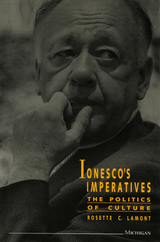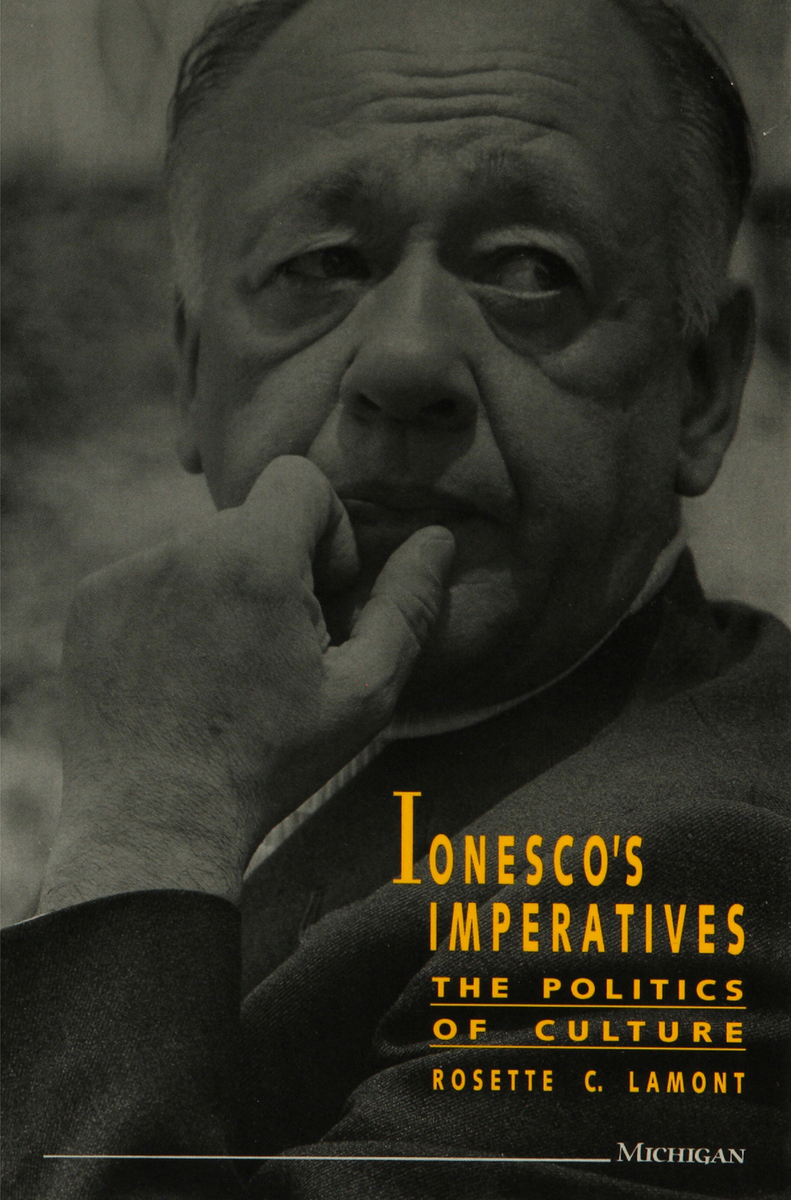
Ionesco's Imperatives: The Politics of Culture
University of Michigan Press, 1993
Cloth: 978-0-472-10310-2 | eISBN: 978-0-472-22545-3 (standard)
Library of Congress Classification PQ2617.O6Z742 1993
Dewey Decimal Classification 842.914
Cloth: 978-0-472-10310-2 | eISBN: 978-0-472-22545-3 (standard)
Library of Congress Classification PQ2617.O6Z742 1993
Dewey Decimal Classification 842.914
ABOUT THIS BOOK | AUTHOR BIOGRAPHY | REQUEST ACCESSIBLE FILE
ABOUT THIS BOOK
In this study, leading scholar Rosette C. Lamont traces Eugene ionesco’s development as a writer and dramatist from his Surrealist beginnings through to his late “dream plays.” Her careful analysis of Ionesco’s entire oeuvre shows how the archetypal and the historical are intermingled in a synthesis that marks lonesco as a major figure in post-World War Il, post-Holocaust literature.Lamont’s rereading of lonesco’s work reveals the dramatist as profoundly marked by the events occurring in Europe in his time and his personal experiences with war, occupation, and concentration camps. Despite his repeated statements that he was strictly apolitical, later in life lonesco himself admitted that being officially apolitical may well be the most political of attitudes.The author links the modern idea of totalitarianism with the playwright’s critique of language, thereby placing her discussion of his work within the new theoretical approaches to language and power. In moving the analysis of his work beyond the category of absurdist theater, Lamont reveals how the power of his plays resides in his synthesis of the political, psychological, and metaphysical.
See other books on: Culture | Lamont, Rosette | Political and social views | Politics and literature | Theater
See other titles from University of Michigan Press