
 A SCHOLARLY BOOK REPOSITORY
12 start with A start with A
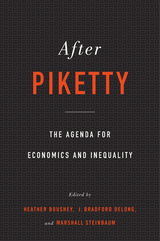
A Foreign Affairs Best Book of the Year
“An intellectual excursion of a kind rarely offered by modern economics.”
—Foreign Affairs
Thomas Piketty’s Capital in the Twenty-First Century is the most widely discussed work of economics in recent years. But are its analyses of inequality and economic growth on target? Where should researchers go from there in exploring the ideas Piketty pushed to the forefront of global conversation? A cast of leading economists and other social scientists—including Emmanuel Saez, Branko Milanovic, Laura Tyson, and Michael Spence—tackle these questions in dialogue with Piketty.
“A fantastic introduction to Piketty’s main argument in Capital, and to some of the main criticisms, including doubt that his key equation…showing that returns on capital grow faster than the economy—will hold true in the long run.”
—Nature
“Piketty’s work…laid bare just how ill-equipped our existing frameworks are for understanding, predicting, and changing inequality. This extraordinary collection shows that our most nimble social scientists are responding to the challenge.”
—Justin Wolfers, University of Michigan
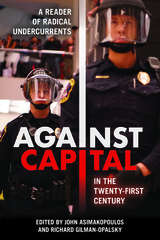
The problems of capitalism have been studied from Karl Marx to Thomas Piketty. The latter has recently confirmed that the system of capital is deeply bound up in ever-growing inequality without challenging the continuance of that system. Against Capital in the Twenty-First Century presents a diversity of analyses and visions opposed to the idea that capital should have yet another century to govern human and non-human resources in the interest of profit and accumulation. The editors and contributors to this timely volume present alternatives to the whole liberal litany of administered economies, tax policy recommendations, and half-measures. They undermine and reject the logic of capital, and the foregone conclusion that the twenty-first century should be given over to capital just as the previous two centuries were.
Providing a deep critique of capitalism, based on assessment from a wide range of cultural, social, political, and ecological thinking, Against Capital in the Twenty-First Century insists that transformative, revolutionary, and abolitionist responses to capital are even more necessary in the twenty-first century than they ever were.
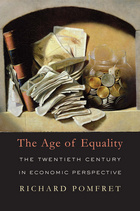
In 1900 the global average life expectancy at birth was thirty-one years. By 2000 it was sixty-six. Yet, alongside unprecedented improvements in longevity and material well-being, the twentieth century also saw the rise of fascism and communism and a second world war followed by a cold war. This book tells the story of the battles between economic systems that defined the last century and created today's world.
The nineteenth century was a period of rapid economic growth characterized by relatively open markets and more personal liberty, but it also brought great inequality within and between nations. The following century offered sharp challenges to free-wheeling capitalism from both communism and fascism, whose competing visions of planned economic development attracted millions of people buffeted by the economic storms of the 1930s. The Age of Equality describes the ways in which market-oriented economies eventually overcame the threat of these visions and provided a blueprint for reform in nonmarket economies. This was achieved not through unbridled capitalism but by combining the efficiency and growth potential of markets with government policies to promote greater equality of opportunity and outcome. Following on the heels of economic reform, rapid catch-up growth in countries such as China, India, Indonesia, Brazil, and Poland helped to reduce global inequality.
At a time when inequality is on the rise in nations as disparate as the United States and Egypt, Pomfret’s interpretation of how governments of market economies faced the challenges of the twentieth century is both instructive and cautionary.
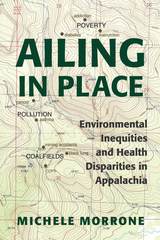
In Ailing in Place, Michele Morrone explores the relationship between environmental conditions in Appalachia and health outcomes that are too often ascribed to individual choices only. She applies quantitative data to observations from environmental health professionals to frame the ways in which the environment, as a social determinant of health, leads to health disparities in Appalachian communities. These examples—these stories of place—trace the impacts of water quality, waste disposal, and natural resource extraction on the health and quality of life of Appalachian people.
Public health is inextricably linked to place. Environmental conditions such as contaminated water, unsafe food, and polluted air are as important as culture, community, and landscape in characterizing a place and determining the health outcomes of the people who live there. In some places, the state of the environment is a consequence of historical activities related to natural resources and cultural practices. In others, political decisions to achieve short-term economic objectives are made with little consideration of long-term public health consequences.

“The American taxpayer”—angered by government waste and satisfied only with spending cuts—has preoccupied elected officials and political commentators since the Reagan Revolution. But resistance to progressive taxation has older, deeper roots. American Tax Resisters presents the full history of the American anti-tax movement that has defended the pursuit of limited taxes on wealth and battled efforts to secure social justice through income redistribution for the past 150 years.
From the Tea Party to the Koch brothers, the major players in today’s anti-tax crusade emerge in Romain Huret’s account as the heirs of a formidable—and far from ephemeral—political movement. Diverse coalitions of Americans have rallied around the flag of tax opposition since the Civil War, their grievances fueled by a determination to defend private life against government intrusion and a steadfast belief in the economic benefits and just rewards of untaxed income. Local tax resisters were actively mobilized by business and corporate interests throughout the early twentieth century, undeterred by such setbacks as the Sixteenth Amendment establishing a federal income tax. Zealously petitioning Congress and chipping at the edges of progressive tax policies, they bequeathed hard-won experience to younger generations of conservatives in their pursuit of laissez-faire capitalism.
Capturing the decisive moments in U.S. history when tax resisters convinced a majority of Americans to join their crusade, Romain Huret explains how a once marginal ideology became mainstream, elevating economic success and individual entrepreneurialism over social sacrifice and solidarity.
Nathan J. Kelly argues that a key reason for this is that rising concentrations of wealth create a politics that makes reducing economic inequality more difficult. Kelly convincingly shows that, when a small fraction of the people control most of the economic resources, they also hold a disproportionate amount of political power, hurtling us toward a self-perpetuating plutocracy, or an “inequality trap.” Among other things, the rich support a broad political campaign that convinces voters that policies to reduce inequality are unwise and not in the average voter’s interest, regardless of the real economic impact. They also take advantage of interest groups they generously support to influence Congress and the president, as well as state governments, in ways that stop or slow down reform. One of the key implications of this book is that social policies designed to combat inequality should work hand-in-hand with political reforms that enhance democratic governance and efforts to fight racism, and a coordinated effort on all of these fronts will be needed to reverse the decades-long trend.
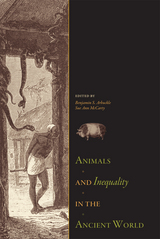
The authors provide a global range of case studies from both New and Old World archaeology—a royal Aztec dog burial, the monumental horse tombs of Central Asia, and the ceremonial macaw cages of ancient Mexico among them. They explore the complex relationships between people and animals in social, economic, political, and ritual contexts, incorporating animal remains from archaeological sites with artifacts, texts, and iconography to develop their interpretations.
Animals and Inequality in the Ancient World presents new data and interpretations that reveal the role of animals, their products, and their symbolism in structuring social inequalities in the ancient world. The volume will be of interest to archaeologists, especially zooarchaeologists, and classical scholars of pre-modern civilizations and societies.
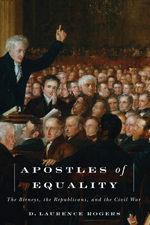
The first biographical account of the life of James Gillespie Birney in more than fifty years, this fabulously insightful history illuminates and elevates an all-but-forgotten figure whose political career contributed mightily to the American political fabric. Birney was a southern-born politician at the heart of the antislavery movement, with two southern-born sons who were major generals involved in key Union Army activities, including the leadership of the black troops. The interaction of the Birneys with historical figures (Abraham Lincoln, Harriet Beecher Stowe, and Henry Clay) highlights the significance of the family’s activities in politics and war. D. Laurence Rogers offers a unique historiography of the abolition movement, the Civil War, and Reconstruction through the experiences of one family navigating momentous developments from the founding of the Republic until the late 19th century.


READERS
Browse our collection.
PUBLISHERS
See BiblioVault's publisher services.
STUDENT SERVICES
Files for college accessibility offices.
RECENTLY PUBLISHED




UChicago Accessibility Resources
home | accessibility | search | about | contact us
BiblioVault ® 2001 - 2024
The University of Chicago Press