
 A SCHOLARLY BOOK REPOSITORY
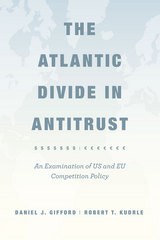
With The Atlantic Divide in Antitrust, Daniel J. Gifford and Robert T. Kudrle explore many of the main contested areas of contemporary antitrust, including mergers, price discrimination, predatory pricing, and intellectual property. After identifying how prevailing analyses differ across these areas, they then examine the policy ramifications. Several themes run throughout the book, including differences in the amount of discretion firms have in dealing with purchasers, the weight given to the welfare of various market participants, and whether competition tends to be viewed as an efficiency-generating process or as rivalry. The authors conclude with forecasts and suggestions for how greater compatibility might ultimately be attained.
In this short but powerful book, Stephen Green argues that it is time to acknowledge that underlying all the sound and fury of the Brexit debate were fundamental questions—whether or not fully recognized—about British identity. Are the British different, special, and capable of finding their own way in the world? Who are they, those who call themselves British? Is it all too easy to blame Brexit on post-industrial decline in the traditional heartlands of the Labor Party, or scaremongering by a band of deluded “Little Englanders”? Or is British identity more complex, deep-rooted—and perhaps, in some sense, troubling—than those of other European nations?
Legislative member organizations (LMOs)—such as caucuses in the U.S. Congress and intergroups in the European Parliament—exist in lawmaking bodies around the world. Unlike parties and committees, LMOs play no obvious, predefined role in the legislative process. They provide legislators with opportunities to establish social networks with colleagues who share common interests. In turn, such networks offer valuable opportunities for the efficient exchange of policy-relevant—and sometimes otherwise unattainable—information between legislative offices. Building on classic insights from the study of social networks, the authors provide a comparative overview of LMOs across advanced, liberal democracies. In two nuanced case studies of LMOs in the European Parliament and the U.S. Congress, the authors rely on a mix of social network analysis, sophisticated statistical methods, and careful qualitative analysis of a large number of in-depth interviews.

This book presents the first large-scale study of lobbying strategies and outcomes in the United States and the European Union, two of the most powerful political systems in the world. Every day, tens of thousands of lobbyists in Washington and Brussels are working to protect and promote their interests in the policymaking process. Policies emanating from these two spheres have global impacts—they set global standards, they influence global markets, and they determine global politics. Armed with extensive new data, Christine Mahoney challenges the conventional stereotypes that attribute any differences between the two systems to cultural ones—the American, a partisan and combative approach, and the European, a consensus-based one.
Mahoney draws from 149 interviews involving 47 issues to detail how institutional structures, the nature of specific issues, and characteristics of the interest groups combine to determine decisions about how to approach a political fight, what arguments to use, and how to frame an issue. She looks at how lobbyists choose lobbying tactics, public relations strategies, and networking and coalition activities. Her analysis demonstrates that advocacy can be better understood when we study the lobbying of interest groups in their institutional and issue context. This book offers new insights into how the process of lobbying works on both sides of the Atlantic.

The two most recent expansions to the EU, in May 2004 and January 2007, have had a significant impact on contemporary conceptions of statehood, nation-building, and citizenship within the Union. This volume outlines the citizenship laws in each of the twelve new countries as well as in the accession states of Croatia and Turkey.
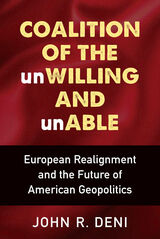
Why does the United States need European allies, and why is it getting more difficult for those allies to partner with Washington in standing up to China, pushing back against Russia, and pursuing other common interests around the world? This book addresses the economic, demographic, political, and military trends that are fundamentally upending the ability and willingness of European allies to work with Washington. Brexit and its impact on Britain’s economy and its military, Germany’s seemingly relentless economic and political rise, France’s continuing economic malaise, Italy’s aging population and its withdrawal from major overseas operations, and Poland’s demographic decline and single-minded obsession with Russia will combine to make partnership with Washington nearly impossible. In short, the constellation of allies and partners the United States has relied on since 9/11 will look very different a decade from now. How should Washington respond? It doesn’t hold all the cards, but this book offers an array of practical recommendations for American leaders. By leveraging these proposals, U.S. policy-makers can avoid the worst-case scenarios and make the most of limited opportunities.

As corporations search for new production sites, governments compete furiously using location subsidies and tax incentives to lure them. Yet underwriting big business can have its costs: reduction in economic efficiency, shifting of tax burdens, worsening of economic inequalities, or environmental degradation.
Competing for Capital is one of the first books to analyze competition for investment in order to suggest ways of controlling the effects of capital mobility. Comparing the European Union's strict regulation of state aid to business with the virtually unregulated investment competition in the United States and Canada, Kenneth P. Thomas documents Europe's relative success in controlling—and decreasing—subsidies to business, even while they rise in the United States.
Thomas provides an extensive history of the powers granted to the EU's governing European Commission for controlling subsidies and draws on data to show that those efforts are paying off. In reviewing trends in North America, he offers the first comprehensive estimate of U.S. subsidies to business at all levels to show that the United States is a much higher subsidizer than it portrays itself as being.
Thomas then suggests what we might learn from the European experience to control the effects of capital mobility—not only within or between states, but also globally, within NAFTA and the World Trade Organization as well. He concludes with policy recommendations to help promote international cooperation and cross-fertilization of ways to control competition for investment.
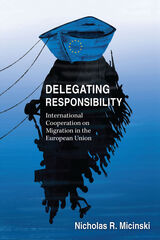
Delegating Responsibility explores the politics of migration in the European Union and explains how the EU responded to the 2015–17 refugee crisis. Based on 86 interviews and fieldwork in Greece and Italy, Nicholas R. Micinski proposes a new theory of international cooperation on international migration. States approach migration policies in many ways—such as coordination, collaboration, subcontracting, and unilateralism—but which policy they choose is based on capacity and on credible partners on the ground. Micinski traces the fifty-year evolution of EU migration management, like border security and asylum policies, and shows how EU officials used “crises” as political leverage to further Europeanize migration governance. In two in-depth case studies, he explains how Italy and Greece responded to the most recent refugee crisis. He concludes with a discussion of policy recommendations regarding contemporary as well as long-term aspirations for migration management in the EU.
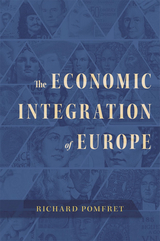
The clearest and most up-to-date account of the achievements—and setbacks—of the European Union since 1945.
Europe has been transformed since the Second World War. No longer a checkerboard of entirely sovereign states, the continent has become the largest single-market area in the world, with most of its members ceding certain economic and political powers to the central government of the European Union. This shift is the product of world-historical change, but the process is not well understood. The changes came in fits and starts. There was no single blueprint for reform; rather, the EU is the result of endless political turmoil and dazzling bureaucratic gymnastics. As Brexit demonstrates, there are occasional steps backward, too. Cutting through the complexity, Richard Pomfret presents a uniquely clear and comprehensive analysis of an incredible achievement in economic cooperation.
The Economic Integration of Europe follows all the major steps in the creation of the single market since the postwar establishment of the European Coal and Steel Community. Pomfret identifies four stages of development: the creation of a customs union, the deepening of economic union with the Single Market, the years of monetary union and eastward expansion, and, finally, problems of consolidation. Throughout, he details the economic benefits, costs, and controversies associated with each step in the evolution of the EU. What lies ahead? Pomfret concludes that, for all its problems, Europe has grown more prosperous from integration and is likely to increase its power on the global stage.

Spanning from the beginning of the transnational idea with 1951’s Montanunion—the European Coal and Steel Community—to the current financial crisis, Menasse focuses on the institutional structures and forces both advancing and obstructing the European project. Given the internal tensions among the European Commission, Parliament, and Council, Menasse argues that current problems that are frequently misunderstood as resulting from the financial crisis are, in fact, political. Along the way, he makes the bold claim that either the Europe of nation-states will perish—or the project of transcending the nation-states will.
A provocative book, Enraged Citizens, European Peace and Democratic Deficits deftly analyzes the financial and bureaucratic structures of the European Union and sheds much-needed light on the state of the debt crisis. Menasse brings his considerable literary expertise to the unraveling of the real state of the Union, along the way weaving an intriguing tale of one continent’s efforts to become a truly postnational democracy.

This volume examines the security dialogue between Japan and the European Union since the establishment of the official European Community-Japan cooperation efforts in the late 1950s. Olena Mykal investigates how international events—particularly the terrorist attacks in New York on 9/11 and the EU’s proposal to lift its arms embargo on China—have strengthened the dialogue over the past decade.
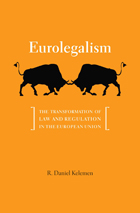
Despite western Europe's traditional disdain for the United States' "adversarial legalism," the European Union is shifting toward a very similar approach to the law, according to Daniel Kelemen. Coining the term "eurolegalism" to describe the hybrid that is now developing in Europe, he shows how the political and organizational realities of the EU make this shift inevitable.
The model of regulatory law that had long predominated in western Europe was more informal and cooperative than its American counterpart. It relied less on lawyers, courts, and private enforcement, and more on opaque networks of bureaucrats and other interests that developed and implemented regulatory policies in concert. European regulators chose flexible, informal means of achieving their objectives, and counted on the courts to challenge their decisions only rarely. Regulation through litigation-central to the U.S. model-was largely absent in Europe.
But that changed with the advent of the European Union. Kelemen argues that the EU's fragmented institutional structure and the priority it has put on market integration have generated political incentives and functional pressures that have moved EU policymakers to enact detailed, transparent, judicially enforceable rules-often framed as "rights"-and back them with public enforcement litigation as well as enhanced opportunities for private litigation by individuals, interest groups, and firms.


This revised and updated edition offers a well-illustrated analysis of each of the EU¹s major policy areas, and covers arguments both for and against the EU. McGiffen explores subjects including enlargement, internal and external security, the Euro, trade, the environment, employment, transport and regional policy. He explains how and why the debate about membership is frequently and falsely presented as if it were a conflict between 'nationalism' and Œinternationalism', and argues instead that the EU is merely one of a number of possible solutions to the the economic and political problems facing Europe.
Published in association with Spectre.
Steve McGiffen is a writer, author and consultant. Until recently he worked for the United Left Group in the European Parliament and the Socialist Party of the Netherlands. He is editor of Spectre, a radical left website which can be read at www.spectrezine.org, His previous books include Biotechnology (Pluto Press, 2005).
The distinguished contributors analyze Turkish Islam and attempt to determine how significant a factor it is in Turkey's compatibility with the democratic and humanitarian aims of EU member states. Their incisive essays argue that Islamic religious forces will not undermine the autonomy of the secular Turkish state. They also contend that Islam-inspired political parties actually support the secular government. Included in the volume is the thought-provoking study "Searching for the Fault-Line" by E. J. Zürcher and H. van der Linden that examines Turkey's current religious landscape and ultimately dismisses the notion of an inevitable clash between Turkish Islam and European cultures.
A valuable study for political scientists, European scholars, and interested observers, The European Union, Turkey and Islam offers a timely and masterfully argued case for why Islam as practiced in Turkey should not be an impediment to the nation's membership in the European Union.
In carefully crafted official statements, the European Union presents itself as an honest broker in the Middle East. In reality, however, the EU’s 27 governments have been engaged in a long process of accommodating Israel’s occupation of Palestinian territories.
Journalist David Cronin interrogates the relationship and its outcomes. A recent agreement for 'more intense, more fruitful, more influential co-operation' between the EU and Israel has meant that Israel has become a member state of the Union in all but name. Cronin shows that rather than using this relationship to encourage Israeli restraint, the EU has legitimised actions such as the ill-treatment of prisoners and the Gaza invasion.
Concluding his revealing and shocking account, Cronin calls for a continuation and deepening of international activism and protest to halt the EU's slide into complicity.


Drawing on the experiences of peacekeepers in Bosnia, Haiti, Rwanda, and Afghanistan, From War to Rule of Law demonstrates that newly emerging democracies may need much more than emergency economic support. Restoring the rule of law, Joris Voorhoeve shows, can involve the training of a new police force, for example, or the creation of an international war crimes tribunal. Any disregard for human rights or delay in civilian reconciliation can lead to serious resurgences in violence.
Voorhoeve concludes by offering specific recommendations for members of the United Nations and the European Union, as well as individual donors. Given the nature of today’s armed conflicts, From War to Rule of Law provides new hope for all those concerned about the lasting success of international peacekeeping missions.

Moving away from state-centered and Marxist approaches to the study of the European monetary integration process, Karl Kaltenthaler offers a new analytical framework to assess the dynamics within and among the participating countries. Using official and unofficial documents as well as interviews with players ranging from presidents of the Bundesbank to functionaries in the trade unions, Kaltenthaler argues that the number of decision makers negotiating policy and their accountability to interest groups, political parties, government ministries, and Germany’s central bank have made Germany’s fluctuations in policy inevitable. Germany and the Politics of Europe’s Money examines twenty years of German policy through an analysis of four key episodes: the creation of the European Monetary System, the creation of the Franco-German Economic and Financial Council, the establishment of policy toward the European Monetary Union, and the institutional transformation of the EMS in the 1990s. It thus brings a new understanding to Germany’s dynamic policies and the political forces behind them.

Beginning with a discussion of the political, economic, and cultural development of Europe from a historical perspective, the focus of the book shifts to an examination of the changing forms of European democracy and the move from public ownership and planning to privatization and deregulated competition. Further essays analyze the challenge to national party systems and electoral performance from emerging social movements and organized interest groups. Political and bureaucratic structures are also examined as is the new European constitutionalism reflected in the increasingly significant role of the judiciary. Lastly, attention is turned to several major themes in European politics: the changing foundations of foreign and security policy, the function of industrial champion firms, and the retreat from the welfare state. Primarily comparative in its scope, Governing the New Europe does devote particular attention to specific major states as well as to the importance of the European Union to the political life of member and non-member countries.
Neither exaggerating the common features of the patterns that have emerged in contemporary Europe nor capitulating to the complexity of enduring differences and instabilities between states, Governing the New Europe will become one of the standard texts in its field.
Contributors. Jack Hayward, Jolyon Howorth, Herbert Kitschelt, Marie Lavigne, Tom Mackie, Michael Mezey, Edward C. Page, Richard Parry, Richard Rose, Anthony Smith, Alec Stone
An all-star cast of scholars and politicians from Europe and America propose and debate the creation of a new European parliament with substantial budgetary and legislative power to solve the crisis of governance in the Eurozone and promote social and fiscal justice and public investment.
The European Union is struggling. The rise of Euroskeptic parties in member states, economic distress in the south, the migrant crisis, and Brexit top the news. But deeper structural problems may be a greater long-term peril. Not least is the economic management of the Eurozone, the nineteen countries that use the Euro. How can this be accomplished in a way generally acceptable to members, given a political system whose structures are routinely decried for a lack of democratic accountability? How can the EU promote fiscal and social justice while initiating the long-term public investments that Europe needs to overcome stagnation? These are the problems a distinguished group of European and American scholars set out to solve in this short but valuable book.
Among many longstanding grievances is the charge that Eurozone policies serve large and wealthy countries at the expense of poorer nations. It is also unclear who decides economic policy, how the interests of diverse member states are balanced, and to whom the decision-makers are accountable. The four lead authors—Stéphanie Hennette, Thomas Piketty, Guillaume Sacriste, and Antoine Vauchez—describe these and other problems, and respond with a draft treaty establishing a parliament for economic policy, its members drawn from national parliaments. We then hear from invited critics, who express support, objections, or alternative ideas.
How to Democratize Europe offers a chance to observe how major thinkers view some of the Continent’s most pressing issues and attempt to connect democratic reform with concrete changes in economic and social policies.
At the core of much policy debate is the inherent paradox whereby immigrant populations are frequently perceived as posing a potential security threat yet bolster economies by providing an inexpensive workforce. Strict attention to border controls and immigration quotas has diverted focus away from perhaps the most significant dilemma: the integration of existing immigrant groups. Often restricted in their civil and political rights and targets of xenophobia, racial profiling, and discrimination, immigrants are unable or unwilling to integrate into the population. These factors breed distrust, disenfranchisement, and hatred-factors that potentially engender radicalization and can even threaten internal security.
The contributors compare policies on these issues at three relational levels: between individual EU nations and the U.S., between the EU and U.S., and among EU nations. What emerges is a timely and critical examination of the variations and contradictions in policy at each level of interaction and how different agencies and different nations often work in opposition to each other with self-defeating results. While the contributors differ on courses of action, they offer fresh perspectives, some examining significant case studies and laying the groundwork for future debate on these crucial issues.
Multilingualism is an ever-present feature in political contexts around the world, including multilingual states and international organizations. Increasingly, consequential political decisions are negotiated between politicians who do not share a common native language. Nils Ringe uses the European Union to investigate how politicians’ reliance on shared foreign languages and translation services affects politics and policy-making. Ringe's research illustrates how multilingualism is an inherent and consequential feature of EU politics—that it depoliticizes policy-making by reducing its political nature and potential for conflict. An atmosphere with both foreign language use and a reliance on translation leads to communication that is simple, utilitarian, neutralized, and involves commonly shared phrases and expressions. Policymakers tend to disregard politically charged language and they are constrained in their ability to use vague or ambiguous language to gloss over disagreements by the need for consistency across languages.

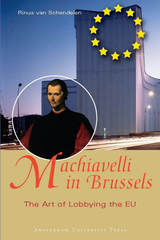
The objective of these interest groups is to influence the EU decision-making, of which they see themselves as a stakeholder. To the existing representative bodies such as the Parliament and the Council, they add their practice of lobbying for a desired outcome by making their interests present or represented at the EU level. In a roundabout way, they contribute to the EU integration and also to its democracy, so long as the following conditions are fulfilled.
Europe’s financial crisis cannot be blamed on the Euro, Harold James contends in this probing exploration of the whys, whens, whos, and what-ifs of European monetary union. The current crisis goes deeper, to a series of problems that were debated but not resolved at the time of the Euro’s invention.
Since the 1960s, Europeans had been looking for a way to address two conundrums simultaneously: the dollar’s privileged position in the international monetary system, and Germany’s persistent current account surpluses in Europe. The Euro was created under a politically independent central bank to meet the primary goal of price stability. But while the monetary side of union was clearly conceived, other prerequisites of stability were beyond the reach of technocratic central bankers. Issues such as fiscal rules and Europe-wide banking supervision and regulation were thoroughly discussed during planning in the late 1980s and 1990s, but remained in the hands of member states. That omission proved to be a cause of crisis decades later.
Here is an account that helps readers understand the European monetary crisis in depth, by tracing behind-the-scenes negotiations using an array of sources unavailable until now, notably from the European Community’s Committee of Central Bank Governors and the Delors Committee of 1988–89, which set out the plan for how Europe could reach its goal of monetary union. As this foundational study makes clear, it was the constant friction between politicians and technocrats that shaped the Euro. And, Euro or no Euro, this clash will continue into the future.

Managing Ethnic Diversity after 9/11 compares these two strategies and considers that both may have engendered greater radicalization--and a greater chance of home-grown terrorism. Essays address how transatlantic countries, including the United Kingdom, the United States, France, Germany, Spain, Italy, and the Netherlands have integrated ethnic minorities, especially Arabs and Muslims, since 9/11. Discussing the "securitization of integration," contributors argue that the neglect of civil integration has challenged the rights of these minorities and has made greater security more remote.
Migration and Irregular Work in Austria offers a fresh new perspective on irregular migrant work by making use of in-depth interviews with migrants themselves. The authors challenge our ability to divide the world of foreign employment into legal and illegal work, and instead evaluate the new manifestations of “irregular migrant work” that have evolved in the wake of EU expansion. Arguing that this work is based on both supply and demand—and thus deeply ingrained in the structure of our advanced economies—this volume should fill a large gap in migration and labor market research.

The contributors identify and analyze several new groups of migrants, notably young people without family obligations or clear plans for the future. Including case studies on migrants from Poland, Romania, Hungary, and Latvia—as well as on destination countries such as the United Kingdom and Germany—the resulting collection insightfully points towards future migration trends and sets guidelines for further research.

Visit the author’s website.
In Religion and the Struggle for European Union, Brent F. Nelsen and James L. Guth delve into the powerful role of religion in shaping European attitudes on politics, political integration, and the national and continental identities of its leaders and citizens.
Nelsen and Guth contend that for centuries Catholicism promoted the universality of the Church and the essential unity of Christendom. Protestantism, by contrast, esteemed particularity and feared Catholic dominance. These differing visions of Europe have influenced the process of postwar integration in profound ways. Nelsen and Guth compare the Catholic view of Europe as a single cultural entity best governed as a unified polity against traditional Protestant estrangement from continental culture and its preference for pragmatic cooperation over the sacrifice of sovereignty. As the authors show, this deep cultural divide, rooted in the struggles of the Reformation, resists the ongoing secularization of the continent. Unless addressed, it threatens decades of hard-won gains in security and prosperity.
Farsighted and rich with data, Religion and the Struggle for European Union offers a pragmatic way forward in the EU's attempts to solve its social, economic, and political crises.
The Repoliticization of the Welfare State grapples with the evolving nature of political conflict over social spending after the Great Recession. While the severity of the economic crisis encouraged strong social spending responses to protect millions of individuals, governments have faced growing pressure to reduce budgets and make deep cuts to the welfare state. Whereas conservative parties have embraced fiscal discipline and welfare state cuts, left-wing parties have turned away from austerity in favor of higher social spending. These political differences represent a return of traditional left-right beliefs over social spending and economic governance.
This book is one of the first to systematically compare welfare state politics before and after the Great Recession, arguing that a new and lasting post-crisis dynamic has emerged where political parties once again matter for social spending. At the heart of this repoliticization are intense ideological debates over market regulation, social inequality, redistribution, and the role of the state. The book analyzes social spending dynamics for 28 countries before and after the crisis. It also includes in-depth country case studies representing five distinct welfare state types: Germany, the United Kingdom, Sweden, Spain, and the Czech Republic.
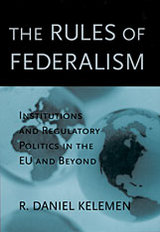
This book examines patterns of environmental regulation in the European Union and four federal polities--the United States, Germany, Australia, and Canada. Daniel Kelemen develops a theory of regulatory federalism based on his comparative study, arguing that the greater the fragmentation of power at the federal level, the less discretion is allotted to component states. Kelemen's analysis offers a novel perspective on the EU and demonstrates that the EU already acts as a federal polity in the regulatory arena.
In The Rules of Federalism, Kelemen shows that both the structure of the EU's institutions and the control these institutions exert over member states closely resemble the American federal system, with its separation of powers, large number of veto points, and highly detailed, judicially enforceable legislation. In the EU, as in the United States, a high degree of fragmentation in the central government yields a low degree of discretion for member states when it comes to implementing regulatory statutes.

The European Union has made remarkable, unprecedented advances in both external and internal security integration. "Epistemic communities" of ambassadors, military generals, scientists, and other experts who supersede national governments in the diplomacy of security decision making are taking advantage of their shared expertise, common culture, professional norms, and frequent meetings to forge new levels of collaboration. Mai'a K. Davis Cross brings together numerous personal interviews and recent government documents across five separate case studies to construct a microsociological account of how EU governance really works and what future role the EU is likely to play internationally.
Liz Fekete is a leading authority on issues of racism, Islamophobia and national security legislation. A Suitable Enemy draws on sixteen years of research to present a comprehensive overview of EU immigration, asylum, race and security policies.
Fekete argues that at the same time as the EU introduces selective migration policies, it closes its borders against asylum seekers who were the first victims of the growth of the security state which now embraces Muslims. She explores the way in which anti-terrorist legislation has been used to evict undesirable migrants, how deportation policies commodify and de-humanise the most vulnerable and how these go hand in hand with evolving forms of racism, particularly Islamophobia.
At the heart of the book is an examination of xeno-racism -- a non-colour coded form of institutionalised racism -- where migrants who do not assimilate, or who are believed to be incapable of assimilation, are excluded.


"The premise of mainstreaming gender is to bring equality concerns into every aspect of policy-making, and this brave book offers a close look at how feminists have taken up the challenge to transform the hidden dynamics of male domination in agricultural policy in Europe. In contrast to the automatic assumption that (neo)liberal policy always works against women’s interests, Prügl demonstrates the potential for feminist ju-jitsu to take advantage of multiple levels of governance to empower women in some circumstances. Although feminists were not always successful, the story of their efforts to remake agricultural policy should encourage activists to look for points of leverage in this and other contested and changing multilevel power systems."
---Myra Marx Ferree, University of Wisconsin
"Information on policy development, conflicts about improving the status of farm women, and using rural development policies to foster gender equality is hard to access in English and extremely useful for researchers concerned with the specifics of gender equality policy in the EU."
---Alison Woodward, Institute for European Studies, Vrije Universiteit Brussel
"This book is a must-read for scholars interested in the gendered process of global restructuring. Elisabeth Prügl succeeds superbly in teasing out the power politics involved in European agricultural policy. Through the lens of a feminist-constructivist approach, she makes visible the multiple mechanisms of gendered power within the state. This very lucid narrative is a milestone in a new generation of feminist theoretical scholarship."
---Brigitte Young, University of Muenster, Germany
Taking West and East Germany as case studies, Elisabeth Prügl shows how European agricultural policy has cemented long-standing gender-based inequalities and how feminists have used liberalization as an opportunity to challenge such inequalities. Through a comparison of the EU’s rural development program known as LEADER as it played out in the Altmark region in the German East and in the Danube/Bavarian Forest region in the West, Prügl provides a close-up view of the power politics involved in government policies and programs.
In identifying mechanisms of power (refusal, co-optation, compromise, normalization, and silencing of difference), Prügl illustrates how these mechanisms operate in arguments over gender relations within the state. Her feminist-constructivist approach to global restructuring as a gendered process brings into view multiple levels of governance and the variety of gender constructions operating in different societies. Ultimately, Prügl offers a new understanding of patriarchy as diverse, contested, and in flux.
Jacket photograph: © iStockphoto.com/Wojtek Kryczka
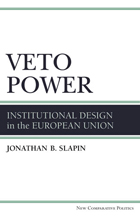
"This is a terrific book. The questions that Slapin asks about intergovernmental conferences (IGCs) in the European Union are extraordinarily important and ambitious, with implications for the EU and for international cooperation more generally. Furthermore, Slapin's theorizing of his core questions is rigorous, lucid, and accessible to scholarly readers without extensive formal modeling background . . . This book is a solid, serious contribution to the literature on EU studies."
---Mark Pollack, Temple University
"An excellent example of the growing literature that brings modern political science to bear on the politics of the European Union."
---Michael Laver, New York University
Veto rights can be a meaningful source of power only when leaving an organization is extremely unlikely. For example, small European states have periodically wielded their veto privileges to override the preferences of their larger, more economically and militarily powerful neighbors when negotiating European Union treaties, which require the unanimous consent of all EU members.
Jonathan B. Slapin traces the historical development of the veto privilege in the EU and how a veto---or veto threat---has been employed in treaty negotiations of the past two decades. As he explains, the importance of veto power in treaty negotiations is one of the features that distinguishes the EU from other international organizations in which exit and expulsion threats play a greater role. At the same time, the prominence of veto power means that bargaining in the EU looks more like bargaining in a federal system. Slapin's findings have significant ramifications for the study of international negotiations, the design of international organizations, and European integration.

Europe's turn of fortune is humbling, humiliating and, perhaps, irreversible. What went wrong, and when? Europe's most audacious moment occurred sometime between 1989 and 1991, a brief period that encapsulated both the demise of communism in Central and Eastern Europe and the bold steps forward on the path towards an 'ever-closer union' in Western Europe. Twenty years later, the dramatic failures of economic and political integration have forced Europeans to re-consider the underpinnings of their project. The economic crisis of 2010-11 also manifested itself as a crisis of European democracy. Old questions acquired new meaning: Is it possible to maintain conditions for self-government while undermining the nation-state? What are the limits of solidarity? Can Europe be truly united through its common history, or its common currency? Is further unity in Europe even desirable?
In Whose Liberty Is It Anyway? Stefan Auer exposes the limits of the current European project by interrogating some of its many incongruities, particularly when it comes to its commitment to freedom. The author argues that the calls for more European solidarity are not convincing when Europe's poor are asked to pay for the mistakes of those who are more fortunate. Europe's unity, Auer asserts, can only be maintained by accepting its limitations and by beginning to fulfill some of its many promises.
READERS
Browse our collection.
PUBLISHERS
See BiblioVault's publisher services.
STUDENT SERVICES
Files for college accessibility offices.
RECENTLY PUBLISHED






UChicago Accessibility Resources
home | accessibility | search | about | contact us
BiblioVault ® 2001 - 2024
The University of Chicago Press