
 A SCHOLARLY BOOK REPOSITORY
The book focuses on the different ways male authorities, as well as female subjects, conceived the female body as deeply connected to notions of what constituted a useful or deviant citizen within the Viceroyalty. Using eighteenth-century legal documents, illustrated chronicles, religious texts, and newspapers, Meléndez explores in depth the representation of the female body in periods of political, economic, and religious transformation to determine how it was conceived within certain contexts.
Deviant and Useful Citizens presents a highly complex society that relied on representations of utility and productivity to understand the female body, as it reveals the surprisingly large stake that colonial authorities had in defining the status of women during a crucial time in South American history.
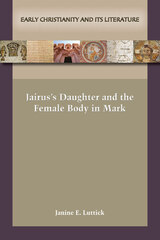
Jairus’s Daughter and the Female Body in Mark demonstrates that ubiquitous and significant depictions of children in the literature and material culture of the first century CE shaped the mindsets of the Gospel of Mark’s original audience. Through a detailed analysis of the story of Jairus’s daughter in Mark 5 and of the archaeological remains depicting female children, Janine E. Luttick reveals how ancient hearers of this story encountered an image of a female child that communicated ideas of hope to Jesus’s followers and in turn how readers today can understand the authority of Jesus, the domestic structures of early Christianity, and the suffering and loss experienced by some early Christians.
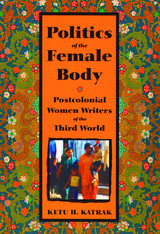
Is it possible to simultaneously belong to and be exiled from a community? In Politics of the Female Body, Ketu H. Katrak argues that it is not only possible, but common, especially for women who have been subjects of colonial empires.
Through her careful analysis of postcolonial literary texts, Katrak uncovers the ways that the female body becomes a site of both oppression and resistance. She examines writers working in the English language, including Anita Desai from India, Ama Ata Aidoo from Ghana, and Merle Hodge from Trinidad, among others. The writers share colonial histories, a sense of solidarity, and resistance strategies in the on-going struggles of decolonization that center on the body.
Bringing together a rich selection of primary texts, Katrak examines published novels, poems, stories, and essays, as well as activist materials, oral histories, and pamphlets—forms that push against the boundaries of what is considered strictly literary. In these varied materials, she reveals common political and feminist alliances across geographic boundaries.
A unique comparative look at women’s literary work and its relationship to the body in third world societies, this text will be of interest to literary scholars and to those working in the fields of postcolonial studies and women’s studies.
READERS
Browse our collection.
PUBLISHERS
See BiblioVault's publisher services.
STUDENT SERVICES
Files for college accessibility offices.
RECENTLY PUBLISHED




UChicago Accessibility Resources
home | accessibility | search | about | contact us
BiblioVault ® 2001 - 2026
The University of Chicago Press