
 A SCHOLARLY BOOK REPOSITORY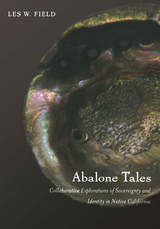
Tales about abalone and their historical and contemporary meanings are related by Field and his coauthors, who include the chair and other members of the Muwekma Ohlone Tribe; a Point Arena Pomo elder; the chair of the Wiyot tribe and her sister; several Hupa Indians; and a Karuk scholar, artist, and performer. Reflecting the divergent perspectives of various Native groups and people, the stories and analyses belie any presumption of a single, unified indigenous understanding of abalone. At the same time, they shed light on abalone’s role in cultural revitalization, struggles over territory, tribal appeals for federal recognition, and connections among California’s Native groups. While California’s abalone are in danger of extinction, their symbolic power appears to surpass even the environmental crises affecting the state’s vulnerable coastline.
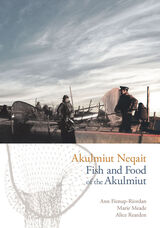
This bilingual book details the lives of the Akulmiut living in the lake country west of Bethel, Alaska, in the villages of Kasigluk, Nunapitchuk, and Atmautluak. Akulmiut Neqait is based in conversations recorded with the people of these villages as they talk about their uniquely Yup'ik view of the world and how it has weathered periods of immense change in southwest Alaska. While many predicted that globalization would sound the death knoll for many distinctive traditions, these conversations show that Indigenous people all over the planet have sought to appropriate the world in their own terms. For all their new connectedness, the continued relevance of traditional admonitions cannot be denied.

Seductive verse.
Ovid (Publius Ovidius Naso, 43 BC–AD 17), born at Sulmo, studied rhetoric and law at Rome. Later he did considerable public service there, and otherwise devoted himself to poetry and to society. Famous at first, he offended the emperor Augustus by his Ars amatoria, and was banished because of this work and some other reason unknown to us, and dwelt in the cold and primitive town of Tomis on the Black Sea. He continued writing poetry, a kindly man, leading a temperate life. He died in exile.
Ovid’s main surviving works are the Metamorphoses, a source of inspiration to artists and poets including Chaucer and Shakespeare; the Fasti, a poetic treatment of the Roman year of which Ovid finished only half; the Amores, love poems; the Ars amatoria, not moral but clever and in parts beautiful; Heroides, fictitious love letters by legendary women to absent husbands; and the dismal works written in exile: the Tristia, appeals to persons including his wife and also the emperor; and similar Epistulae ex Ponto. Poetry came naturally to Ovid, who at his best is lively, graphic and lucid.
The Loeb Classical Library edition of Ovid is in six volumes.
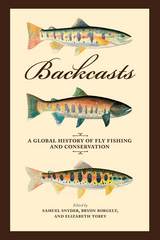
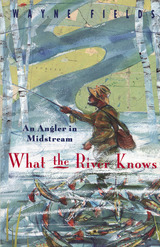
Though Maclean writes of an age-old focus of all anglers—the day’s catch—he may as well be speaking to another, deeper accomplishment of the best fishermen and fisherwomen: the preservation of natural resources.
Backcasts celebrates this centuries-old confluence of fly fishing and conservation. However religious, however patiently spiritual the tying and casting of the fly may be, no angler wishes to wade into rivers of industrial runoff or cast into waters devoid of fish or full of invasive species like the Asian carp. So it comes as no surprise that those who fish have long played an active, foundational role in the preservation, management, and restoration of the world’s coldwater fisheries. With sections covering the history of fly fishing; the sport’s global evolution, from the rivers of South Africa to Japan; the journeys of both native and nonnative trout; and the work of conservation organizations such as the Federation of Fly Fishers and Trout Unlimited, Backcasts casts wide.
Highlighting the historical significance of outdoor recreation and sports to conservation in a collection important for fly anglers and scholars of fisheries ecology, conservation history, and environmental ethics, Backcasts explores both the problems anglers and their organizations face and how they might serve as models of conservation—in the individual trout streams, watersheds, and landscapes through which these waters flow.
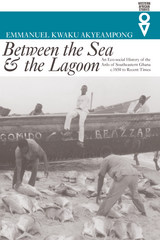
This study offers a “social interpretation of environmental process” for the coastal lowlands of southeastern Ghana. The Anlo-Ewe, sometimes hailed as the quintessential sea fishermen of the West African coast, are a previously non-maritime people who developed a maritime tradition. As a fishing community the Anlo have a strong attachment to their land. In the twentieth century coastal erosion has brought about a collapse of the balance between nature and culture. The Anlo have sought spiritual explanations but at the same time have responded politically by developing broader ties with Ewe-speaking peoples along the coast.
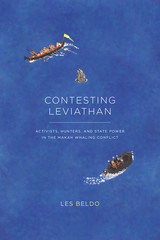
In Contesting Leviathan, anthropologist Les Beldo describes the complex judicial and political climate for whale conservation in the United States, and the limits of the current framework in which whales are treated as “large fish” managed by the National Marine Fisheries Service. Emphasizing the moral dimension of the conflict between the Makah, the US government, and antiwhaling activists, Beldo brings to light the lived ethics of human-animal interaction, as well as how different groups claim to speak for the whale—the only silent party in this conflict. A timely and sensitive study of a complicated issue, this book calls into question anthropological expectations regarding who benefits from the exercise of state power in environmental conflicts, especially where indigenous groups are involved. Vividly told and rigorously argued, Contesting Leviathan will appeal to anthropologists, scholars of indigenous culture, animal activists, and any reader interested in the place of animals in contemporary life.
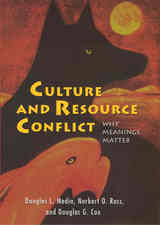
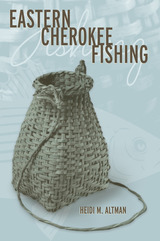
Interviewees include a great range of informants, from native speakers of Cherokee with extensive knowledge of traditional fishing methods to Euro-American English speakers whose families have lived in North Carolina for many generations and know about contemporary fishing practices in the area. The topic of fishing thus offers perspective on the Cherokee language, the vigor of the Cherokee system of native knowledge, and the history of the relationship between Cherokee people and the local environment. Heidi Altman also examines the role of fishing as a tourist enterprise and how fishing practices affect tribal waters.

Known as the Garden State, New Jersey could also be called the Fishing State. New Jersey boasts more than 6,000 miles of rivers and streams; 24,000 acres of public lakes, reservoirs and ponds; 420 square miles of open bay and estuary waters; and 120 miles of ocean coast — with nearly every gallon of water swimming with a remarkable variety of fish.
Using his more than 50 years of personal and academic observations, Glenn R. Piehler has written the perfect guidebook for new and proficient anglers, as well as students of fisheries science.
Piehler begins with the taxonomic origins and classification of almost 100 species of fresh and saltwater sport fishes described in the book, as well as “a number of creatures you might unwittingly hook into . . . with just enough technical jargon and information on the general biology of fishes to make the remaining chapters more winning,” he writes. “In each case I have tried to capture the essence of each species or group of species—what they look like, how big they get, where they came from, what kind of waterbodies they live in, what they do for a living, generally how and when they may be caught, how they’ve fared over the years and are doing today, and where you can get more specific information about some of them.”
Exit Here for Fish examines the factors affecting the distribution and abundance of fish, probing the controversies surrounding preservation efforts, and the apportionment of fish among sport and commercial interests. Piehler looks at the seldom-examined history of fisheries and laws dealing with their management, habitats, and water quality. Finally, he lists a host of activities readers can enjoy, such as fish tagging and volunteering for the Wildlife Conservation Corps, to help preserve and protect the fun of fishing.
This new edition includes updates throughout, new photos, and a new chapter detailing improvements in fishing opportunities since the mid-1990s but warning of the looming threats to coldwater fisheries.
Key Features:
• Profiles of the state’s twenty finest trout streams and maps to find them
• “Don’t miss” fishing opportunities
• Sound advice for anglers—from beginner to expert
• Tactics you can use to catch more trout
• Conservation projects that have helped trout survive
• A history of Wisconsin’s trout-fishing and conservation heritage
• A guide to trout foods
• Suggestions of helpful organizations, tourism and conservation offices, books, magazines, videos, and websites
Exploring Wisconsin Trout Streams is a treat for novice and veteran anglers alike. Drawing on years of conservation and angling experience, Steve Born, Jeff Mayers, Andy Morton, and Bill Sonzogni tell you about great fishing opportunities unique to Wisconsin—1,000 miles of spring creeks, the amazing nocturnal Hex hatch, and big salmonids in the Great Lakes tributaries.
They profile twenty of Wisconsin’s finest streams—from the bucolic Green River in the southwest to the historic and wild Bois Brule in the north. For each stream, the authors share their fishing experiences, supplemented by detailed maps and descriptions of the stream’s location and natural setting, conservation history, angling opportunities and advice, nearby facilities, including choice places to eat and sleep, and other local fishing sites. Reflecting the state’s preeminent role in the nation’s trout-angling and conservation heritage, every chapter emphasizes the importance of environmental stewardship. Exploring Wisconsin Trout Streams shares ways to get the most out of your angling adventure while preserving Wisconsin’s beautiful streams.
Key Features
*Profiles of the state's 20 finest trout streams and maps to find them
*"Don't miss" fishing opportunities
*Sound advice for anglers—from beginner to expert
*Tactics you can use to catch more trout
*Conservation projects that have helped trout survive
*A history of Wisconsin's trout-fishing and conservation heritage
*A guide to trout foods
*Choice places to eat and sleep
*Suggestions of helpful organizations, tourism and conservation offices, books, magazines, videos, and internet web sites
*Four-color cover / jacket
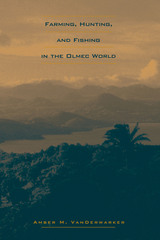
The Olmec who anciently inhabited Mexico's southern Gulf Coast organized their once-egalitarian society into chiefdoms during the Formative period (1400 BC to AD 300). This increase in political complexity coincided with the development of village agriculture, which has led scholars to theorize that agricultural surpluses gave aspiring Olmec leaders control over vital resources and thus a power base on which to build authority and exact tribute.
In this book, Amber VanDerwarker conducts the first multidisciplinary analysis of subsistence patterns at two Olmec settlements to offer a fuller understanding of how the development of political complexity was tied to both agricultural practices and environmental factors. She uses plant and animal remains, as well as isotopic data, to trace the intensification of maize agriculture during the Late Formative period. She also examines how volcanic eruptions in the region affected subsistence practices and settlement patterns. Through these multiple sets of data, VanDerwarker presents convincing evidence that Olmec and epi-Olmec lifeways of farming, hunting, and fishing were driven by both political and environmental pressures and that the rise of institutionalized leadership must be understood within the ecological context in which it occurred.
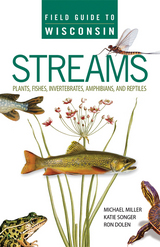
More than 1,000 images illustrate the species in this field guide. These images are augmented by detailed ecological and taxonomic notes, descriptions of look-alike species, and distribution maps. The guide identifies:
• more than 130 common plants
• all 120 fishes known to inhabit Wisconsin streams
• 8 crayfishes
• 50 mussels
• 10 amphibians
• 17 reptiles
• 70 families of insects
• other commonly found invertebrates.
Best Regional General Interest Books, selected by the American Association of School Librarians
Best Regional General Interest Books, selected by the Public Library Reviewers
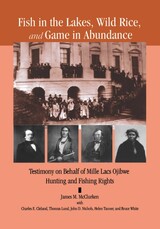
On 13 August 1990 members of the Mille Lacs Band of Ojibwe filed a lawsuit against the State of Minnesota for interfering with the hunting, fishing, and gathering rights that had been guaranteed to them in an 1837 treaty with the United States. In order to interpret the treaty the courts had to consider historical circumstances, the intentions of the parties, and the treaty's implementation. The Mille Lacs Band faced a mammoth challenge. How does one argue the Native side of the case when all historical documentation was written by non- Natives? The Mille Lacs selected six scholars to testify for them. Published here for the first time, Charles Cleland, James McClurken, Helen Tanner, John Nichols, Thomas Lund, and Bruce White discuss the circumstances under which the treaty was written, the personalities involved in the negotiations and the legal rhetoric of the times, as well as analyze related legal conflicts between Natives and non- Natives. Justice Sandra Day O'Connor delivered the 1999 Opinion of the [United States Supreme] Court.

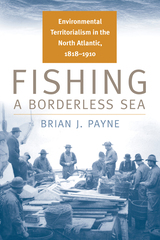
Over the centuries, processing and distribution of products from land and sea has stimulated the growth of a global economy. In the broad sweep of world history, it may be hard to imagine a place for the meager little herring baitfish. Yet, as Brian Payne adeptly recounts, the baitfish trade was hotly contested in the Anglo-American world throughout the nineteenth century. Politicians called for wars, navies were dispatched with guns at the ready, vessels were seized at sea, and violence erupted at sea.
Yet, the battle over baitfish was not simply a diplomatic or political affair. Fishermen from hundreds of villages along the coastline of Atlantic Canada and New England played essential roles in the construction of legal authority that granted or denied access to these profitable bait fisheries.
Fishing a Borderless Sea illustrates how everyday laborers created a complex system of environmental stewardship that enabled them to control the local resources while also allowing them access into the larger global economy.
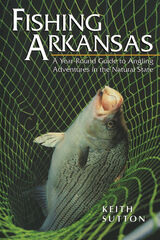
Enhanced by Sutton's excellent photographs, the guide includes twelve sections on popular game fish, such as largemouth and smallmouth bass, crappie, catfish, bluegill, and trout. It also provides an introduction to often-overlooked species like bowfin, gar, carp, paddlefish, and pickerel. Hundreds of valuable fishing tips gleaned from decades of on-the-water experience and interviews with dozens of guides, biologists, and expert anglers enhance the engaging narraive. From the glistening trout in the cold tailwaters of the White River, to feisty catfish on the muddy bayou bottoms of the Delta region, Keith Sutton has served up a tempting array of the fish that can be sought and caught on hook and line in the teeming waters of Arkansas.
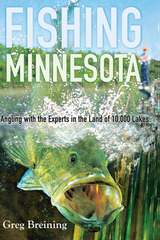
An insider’s look at the skills and thrills of fishing
Fishing is more than catching fish. It is travel, nature, adventure, friendships, and discovery. In Fishing Minnesota, Greg Breining tags along with expert anglers and reports what they have spent years learning. He fishes for Lake Superior steelhead with Shawn Perich, small-stream smallmouth bass with Tim Holschlag, stream trout with Jay Bunke, and north-country muskies with Mark Windels. Along the way, Breining comes to understand not only how they catch fish, but why they go to the trouble.
Nowhere else will you find a comprehensive how-to guide for fishing Minnesota’s many lakes and streams, full of tips from the region’s best tournament anglers, most experienced fisheries biologists, and never-fail professional guides. Breining shares their secrets on such topics as how to snell a yarn fly, where to find the biggest muskies in any lake, and how to pick the best minnows for Mille Lacs. Breining gives us that coveted experience of being in the boat with the pros.
“Now, let’s find out where those fish are and how to catch a few,” says Art Reid in his Preface.
And that is the essence of this comprehensive guide to fishing in Southern Illinois. In the colorful language of one who has fished the waters and swapped tales over many a campfire, Reid draws upon more than 25 years of experience fishing the United States and several foreign countries.
Liberally spiced with anecdotes, this book tells not only where the fish are and how to catch them but who catches them: no history of fishing in Southern Illinois would be complete without an abundance of profiles of the colorful people who for years have been dedicated anglers. The stories are fun and related with verve, the people fascinating, and the information as complete as a fisherman could find anywhere.
Fishing the Great Lakes is a sweeping history of the destruction of the once-abundant fisheries of the great "inland seas" that lie between the United States and Canada. Though lake trout, whitefish, freshwater herring, and sturgeon were still teeming as late as 1850, Margaret Bogue documents here how overfishing, pollution, political squabbling, poor public policies, and commercial exploitation combined to damage the fish populations even before the voracious sea lamprey invaded the lakes and decimated the lake trout population in the 1940s.
From the earliest records of fishing by native peoples, through the era of European exploration and settlement, to the growth and collapse of the commercial fishing industry, Fishing the Great Lakes traces the changing relationships between the fish resources and the people of the Great Lakes region. Bogue focuses in particular on the period from 1783, when Great Britain and the United States first politically severed the geographic unity of the Great Lakes, through 1933, when the commercial fishing industry had passed from its heyday in the late nineteenth century into very serious decline. She shows how fishermen, entrepreneurial fish dealers, the monopolistic A. Booth and Company (which distributed and marketed much of the Great Lakes catch), and policy makers at all levels of government played their parts in the debacle. So, too, did underfunded scientists and early conservationists unable to spark the interest of an indifferent public. Concern with the quality of lake habitat and the abundance of fish increasingly took a backseat to the interests of agriculture, lumbering, mining, commerce, manufacturing, and urban development in the Great Lakes region. Offering more than a regional history, Bogue also places the problems of Great Lakes fishing in the context of past and current worldwide fishery concerns.
Grab your tackle and hit the road with Ron Bern and Manny Luftglass as they take you to the choicest places to fish in New York in Gone Fishin': The 100 Best Spots in New York, their follow-up to the highly successful Gone Fishin': The 100 Best Spots in New Jersey.
Truly great freshwater and saltwater fishing abounds throughout the state, from the classic Catskills trout streams to the mighty Hudson and Delaware rivers; from Lake Ontario to the Finger Lakes; from Long Island Sound to the bluewater canyons off the coast; from saltwater bays to artificial reefs; from the smaller sweetwater rivers and New York City reservoirs to surprising trout streams and bass ponds on Long Island.
Luftglass and Bern provide readers with immediately useful insights into each of the 100 best sites. They furnish easy-to-follow directions, descriptions of the body of water, boat launch information, and detailed advice on live and artificial bait, fishing methods, equipment, depths, best times of day and year, secret tips particular to each site, and even specific places to work bait or lures. Gone Fishin' also includes places that are good for children, as well as those which are handicapped accessible.
Throughout the book, Bern and Luftglass share anecdotes about their own fishing adventures and some of the big ones that didn't get away in their more than 33 years of fishing together. The information they cram into every chapter will help you find the spot, fish it more effectively, and catch more fish.
Whether you fish 150 times a year or you are planning to fish for the first time, you're sure to fall hook, line, and sinker for this entertaining and educational guide.
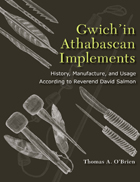
The most detailed and well-illustrated study of material culture for any northern Athabascan language group to date, Gwich’in Athabascan Implements reproduces pre- and early post-contact tools that are historically important to the Athabaskan people. A long-term collaboration between anthropologist Thomas O’Brien and Athabascan elder David Salmon, this volume provides more than one hundred one-to-one sketches of a wide variety of implements, many of which are no longer commonly found in use.
As his own story unfolds, Mark Browning analyzes angling literature from the Bible to Norman Maclean, always bringing his inquiry back to the same source: the enigma of this sport.
Haunted by Waters is an exploration of the apparent compulsion of those who fish not only to read about the sport, but to write about it as well. Mark Browning's personal account as a fly fisherman and his perspective as a critic make him uniquely qualified to navigate these waters.


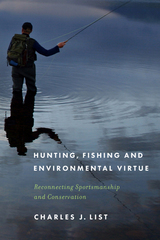
In his argument, List examines the connection between certain activities and the development of virtue in the classical sources, such as Aristotle and Plato. He then explores the work of Aldo Leopold, identifying three key environmental virtues that field sports instill in practitioners in the kind of conservation advocated by Leopold and others.
After reviewing several powerful philosophical objections to his viewpoint, List considers the future of environmental sportsmanship. He suggests that, in order to incorporate a revived connection between field sports and environmental virtue, the practice of hunting and angling must undergo changes, including shifts that would impact hunter education, civic engagement, the role of firearms, our understanding of “game” animals, and alliances with other sorts of outdoor recreation.
Hunting, Fishing, and Environmental Virtue will appeal to academics interested in the ethical issues surrounding hunting and fishing, professionals in wildlife management, and hunters and anglers interested in conservation.

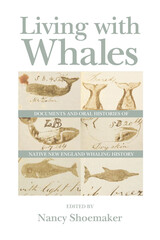
In Living with Whales, Nancy Shoemaker reconstructs the history of Native whaling in New England through a diversity of primary documents: explorers' descriptions of their "first encounters," indentures, deeds, merchants' accounts, Indian overseer reports, crew lists, memoirs, obituaries, and excerpts from journals kept by Native whalemen on their voyages. These materials span the centuries-long rise and fall of the American whalefishery and give insight into the far-reaching impact of whaling on Native North American communities. One chapter even follows a Pequot Native to New Zealand, where many of his Maori descendants still reside today.
Whaling has left behind a legacy of ambivalent emotions. In oral histories included in this volume, descendants of Wampanoag and Shinnecock whalemen reflect on how whales, whaling, and the ocean were vital to the survival of coastal Native communities in the Northeast, but at great cost to human life, family life, whales, and the ocean environment.
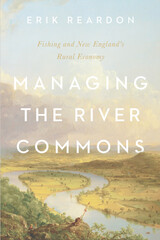
Historian Erik Reardon argues that to protect these fish, New England's farmer-fishermen pushed for conservation measures to limit commercial fishing and industrial uses of the river. Beginning in the colonial period and continuing to the mid-nineteenth century, they advocated for fishing regulations to promote sustainable returns, compelled local millers to open their dams during seasonal fish runs, and defeated corporate proposals to erect large-scale dams. As environmentalists work to restore rivers in New England and beyond in the present day, Managing the River Commons offers important lessons about historical conservation efforts that can help guide current campaigns to remove dams and allow anadromous fish to reclaim these waters.
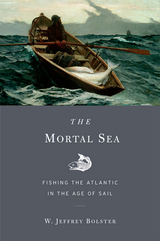
Since the Viking ascendancy in the Middle Ages, the Atlantic has shaped the lives of people who depend upon it for survival. And just as surely, people have shaped the Atlantic. In his innovative account of this interdependency, W. Jeffrey Bolster, a historian and professional seafarer, takes us through a millennium-long environmental history of our impact on one of the largest ecosystems in the world.
While overfishing is often thought of as a contemporary problem, Bolster reveals that humans were transforming the sea long before factory trawlers turned fishing from a handliner's art into an industrial enterprise. The western Atlantic's legendary fishing banks, stretching from Cape Cod to Newfoundland, have attracted fishermen for more than five hundred years. Bolster follows the effects of this siren's song from its medieval European origins to the advent of industrialized fishing in American waters at the beginning of the twentieth century.
Blending marine biology, ecological insight, and a remarkable cast of characters, from notable explorers to scientists to an army of unknown fishermen, Bolster tells a story that is both ecological and human: the prelude to an environmental disaster. Over generations, harvesters created a quiet catastrophe as the sea could no longer renew itself. Bolster writes in the hope that the intimate relationship humans have long had with the ocean, and the species that live within it, can be restored for future generations.
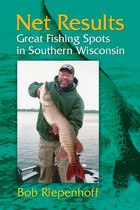
Includes contour maps of 54 lakes.
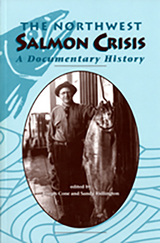
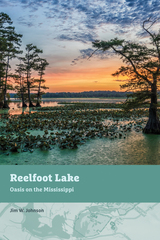
Each year nearly a quarter million visitors come to Reelfoot Lake, also known as “The Earthquake Lake,” to enjoy its natural splendor. With its twenty-five thousand acres of shimmering water, haunting cypress swamps, and two-hundred-year-old lily marshes, the lake is rich in natural beauty and natural history. Yet, despite being one of the most unique lakes in the country—this natural body of water formed during the New Madrid earthquakes in the early nineteenth century—it is relatively understudied. Biologist and environmentalist Jim W. Johnson grew up on the lake and experienced its natural and cultural history firsthand. As a wildlife biologist, he spent much of his career managing Reelfoot and its surrounding area. Reelfoot Lake: Oasis on the Mississippi is part personal remembrance, part guidebook, and part cautionary tale on river and wetland ecology, conservation, and land management, written by an author intimately knowledgeable about the lake and life on it. By exploring Reelfoot’s ancient and recent history, Johnson illuminates the lives of generations of people who lived and thrived in the floodplain. For those looking to navigate the waters of the lake, this book will make travel through the bayous and canals much easier and more pleasurable. And its discussions about the lake’s ecology will bolster voices calling for the protection and preservation of Reelfoot and other wetlands like it.
Accompanied by stunning photography, Johnson’s book is sure to become a useful outdoor guide to Reelfoot Lake and will increase readers’ appreciation for wetlands.
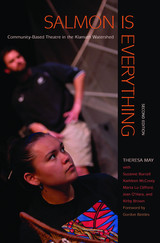
Salmon Is Everything simultaneously illuminates the logistics of a crisis in the third largest watershed in the Pacific Northwest—the premature death of more than 30,000 salmon on the Lower Klamath River in 2002—and documents what happened when one community decided to use art to amplify the experiences of its members. The fish kill had unprecedented impact throughout the watershed, and for many tribal communities it signified an ongoing loss of traditional cultural practices. But in the political and ecological upheaval that followed, the role of salmon in tribal life went largely unacknowledged, which inspired the collaboration between May and members of the Yurok, Hoopa Valley, and Karuk tribes, as well as farmers, ranchers, and others invested in the Klamath watershed.
Salmon is Everything will appeal to readers interested in the environmental and cultural history of the Pacific Northwest and the ecological and civil challenges its communities face. For artists and activists, it’s a useful case study. Salmon is Everything offers a unique interdisciplinary resource for high school and college level courses in environmental studies, Native American studies, and theatre arts education.
New materials in this second edition include additional essays by Native faculty and actors, an updated introduction by the author, minor textual corrections throughout, and a new online resource guide.
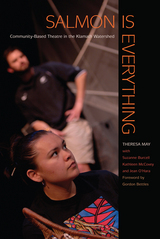
Salmon Is Everything simultaneously illuminates the logistics of a crisis in the third largest watershed in the Pacific Northwest—the premature death of more than 30,000 salmon on the Lower Klamath River in 2002—and documents what happened when one community decided to use art to amplify the experiences of its members. The fish kill had unprecedented impact throughout the watershed, and for many tribal communities it signified an ongoing loss of traditional cultural practices. But in the political and ecological upheaval that followed, the role of salmon in tribal life went largely unacknowledged, which inspired the collaboration between May and members of the Yurok, Hoopa Valley, and Karuk tribes, as well as farmers, ranchers, and others invested in the Klamath watershed.
Salmon is Everything will appeal to readers interested in the environmental and cultural history of the Pacific Northwest and the ecological and civil challenges its communities face. For artists and activists, it’s a useful case study. Salmon is Everything offers a unique interdisciplinary resource for high school and college level courses in environmental studies, Native American studies, and theatre arts education.
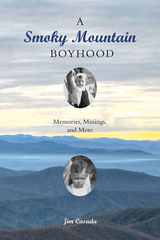
Born in Bryson City, North Carolina, Jim Casada has had a long career as a teacher, author, and avid outdoorsman. He grew up in a time and place where families depended on the land and their community to survive. Many of the Smoky Mountain customs and practices that Casada reflects on are gradually disappearing or have vanished from our collective memories.
In A Smoky Mountain Boyhood, Casada pairs his gift for storytelling and his training as a historian to produce a highly readable memoir of mountain life in East Tennessee and western North Carolina. His stories evoke a strong sense of place and reflect richly on the traits that make the people of Southern Appalachia a unique American demographic. Casada discusses traditional folkways; hunting, growing, preparing, and eating wide varieties of food available in the mountain region; and the overall fabric of mountain life. Divided into four main sections—High Country Holiday Tales and Traditions; Seasons of the Smokies; Tools, Toys, and Boyhood Treasures; and Precious Memories—each part reflects on a unique and memorable coming-of-age in the Smokies.
Containing a strong sense of adventure, nostalgic tone, and well-paced prose, Casada’s memoir will be appreciated by those who yearn to rediscover the Smokies of their childhoods as well as those who wish to imaginatively climb these mountains for the first time.

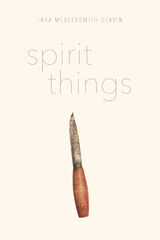
“Spirit things” are those mundane objects that offer new insights into the world on closer consideration—fishing nets, a favorite knife, and the bioluminescent gleam of seawater in a twilight that never truly grows dark. Spirit Things recounts stories of fishing, family, synesthesia, storytelling, gender, violence, and meaning. Each essay takes an object and follows it through histories: personal, material, and scientific, drawing together the delicate lines that link things through their making and use, their genesis and evolution, and the ways they gain significance in an individual’s life.
A contemplative take on everything from childcare to neurodivergence, comfort foods to outlaws, Spirit Things uses experiences from the human world and locates them on the edges of nature. Contact with wilderness, with wildness, be it twenty-foot seas in the ocean off Alaska’s coast or chairs flying through windows of a Kodiak bar, provides an entry point for meditations on the ways in which patterns, magic, and wonder overlap.
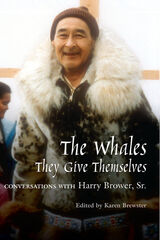
Brower was deeply committed to Native culture, and his life history is a moving expression of the Inupiaq way of life. He was also influential in traditionally non-Native arenas in which Native and non-Native values sometimes collided. Acting as a mediator between Inupiaq whalers and non-Native scientists, Brower communicated a vast understanding of bowhead whales and whaling that became the basis for a scientific research program and helped protect Inupiaq subsistence whaling. He was a central architect of the Arctic Slope Regional Corporation boundaries, and served for over twenty years as a consultant to scientists at the Naval Arctic Research Laboratory. Brower's role in this collaborative research serves as one of the earliest and best examples of how scientists and Native experts can work together to advance knowledge. Such approaches are now promoted by researchers around the world.
The Whales, They Give Themselves not only conveys Brower's life story, but also is a cross-cultural journey of wisdom and friendship. Whereas academic oral historians once strove to erase the presence of the interviewer in the name of objectivity, Brewster recognizes the influence her specific relationship with Brower had on the way he narrated his life. This volume is a major contribution to our understanding of northern peoples, and a testament to the immense value of collaborative oral history.
READERS
Browse our collection.
PUBLISHERS
See BiblioVault's publisher services.
STUDENT SERVICES
Files for college accessibility offices.
RECENTLY PUBLISHED


UChicago Accessibility Resources
home | accessibility | search | about | contact us
BiblioVault ® 2001 - 2024
The University of Chicago Press