
 A SCHOLARLY BOOK REPOSITORY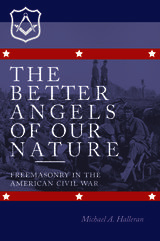
The first in-depth study of the Freemasons during the Civil War
One of the enduring yet little examined themes in Civil War lore is the widespread belief that on the field of battle and afterward, members of Masonic lodges would give aid and comfort to wounded or captured enemy Masons, often at great personal sacrifice and danger. This work is a deeply researched examination of the recorded, practical effects of Freemasonry among Civil War participants on both sides.
From first-person accounts culled from regimental histories, diaries, and letters, Michael A. Halleran has constructed an overview of 19th-century American freemasonry in general and Masonry in the armies of both North and South in particular, and provided telling examples of how Masonic brotherhood worked in practice. Halleran details the response of the fraternity to the crisis of secession and war, and examines acts of assistance to enemies on the battlefield and in POW camps.
The author examines carefully the major Masonic stories from the Civil War, in particular the myth that Confederate Lewis A. Armistead made the Masonic sign of distress as he lay dying at the high-water mark of Pickett’s charge at Gettysburg.
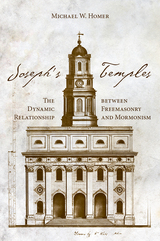
There are indications that Freemasonry was a pervasive foundational element in Mormonism and that its rituals and origin legends influenced not just the secret ceremonies of the LDS temples but also such important matters as the organization of the Mormon priesthood, the foundation of the women’s Relief Society, the introduction and concealment of polygamy, and the church’s position on African Americans’ full membership. Freemasonry was also an important facet of Mormons’ relations with broader American society.
The two movements intertwined within a historical context of early American intellectual, social, and religious ferment, which influenced each of them and in varying times and situations placed them either in the current or against the flow of mainstream American culture and politics. Joseph’s Temples provides a comprehensive examination of a dynamic relationship and makes a significant contribution to the history of Mormonism, Freemasonry, and their places in American history.
Recipient of the Meritorious Book Award from the Utah Division of State History

The life of Töhötöm Nagy (1908–1979), Jesuit, Mason, and secret service agent, offers fascinating insights into interwar Hungary, the Catholic Church and Vatican diplomacy, Freemasonry, and the activities of communist state security service.
As a young Jesuit Nagy was one of the leaders of a successful Catholic youth movement in interwar Hungary. After World War II he played an important role acting as an intermediary between the Vatican, the Red Army, and the Hungarian Catholic Church. After being sent to South America, he was attracted by liberation theology, but left the Society of Jesus, joined the Freemasons, and did social and philanthropic work in the slums of Buenos Aires. However, in the late 1960s he agreed to work for the Hungarian state security service in return for his repatriation. This latter period is reconstructed from the files of the Historical Archives of State Security in Budapest. Éva Petrás writes with empathy but with a sense of distance of the courage and restless energy of her subject. Her discussion of the limits of free choice and Nagy’s intense struggle to live a meaningful life make this biography breathtaking.
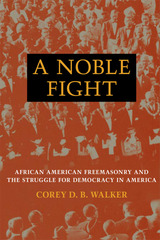
With great care and detail, Walker argues that African American freemasonry provides a critical theoretical lens for understanding the distinctive ways African Americans have constructed a radically democratic political imaginary through racial solidarity and political nationalism, forcing us to reconsider much more circumspectly the complex relationship between voluntary associations and democratic politics.
Mapping the discursive logics of the language of freemasonry as a metaphoric rendering of American democracy, this study interrogates the concrete forms of an associational culture, revealing how paradoxical aspects of freemasonry such as secrecy and public association inform the production of particular ideas and expressions of democracy in America.
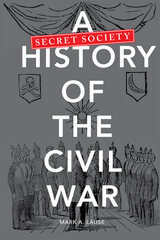
Antebellum secret societies ranged politically from those with progressive or even revolutionary agendas to those that pursued conservative or oppressive goals. This book shows how, in the years leading up to the Civil War, these clandestine organizations exacerbated existing sectional tensions in the United States. Lause's research indicates that the pervasive influence of secret societies may have played a part in key events such as the Freesoil movement, the beginning of the Republican party, John Brown's raid on Harpers Ferry, Lincoln's election, and the Southern secession process of 1860-1861.
This exceptional study encompasses both white and African American secret society involvement, revealing the black fraternal experience in antebellum America as well as the clandestine operations that provided assistance to escaped slaves via the Underground Railroad. Unraveling these pervasive and extensive networks of power and influence, A Secret Society History of the Civil War demonstrates that antebellum secret societies played a greater role in affecting Civil War-era politics than has been previously acknowledged.

These Black cemeteries dot the Tennessee landscape, but few know their history or the societies of care they represent. To Care for the Sick and Bury the Dead is the first book-length look at these cemeteries and the lodges that fostered them.
This book is a must-have for genealogists, historians, and family members of the people buried in these cemeteries.
READERS
Browse our collection.
PUBLISHERS
See BiblioVault's publisher services.
STUDENT SERVICES
Files for college accessibility offices.
RECENTLY PUBLISHED




UChicago Accessibility Resources
home | accessibility | search | about | contact us
BiblioVault ® 2001 - 2026
The University of Chicago Press