
 A SCHOLARLY BOOK REPOSITORY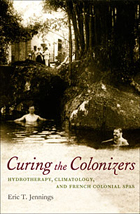
Combining the histories of empire, leisure, tourism, culture, and medicine, Eric T. Jennings sheds new light on the workings of empire by examining the rationale and practice of French colonial hydrotherapy between 1830 and 1962. He traces colonial acclimatization theory and the development of a “science” of hydrotherapy appropriate to colonial spaces, and he chronicles and compares the histories of spas in several French colonies—Guadeloupe, Madagascar, Tunisia, and Réunion—and in France itself. Throughout Curing the Colonizers, Jennings illuminates the relationship between indigenous and French colonial therapeutic knowledge as well as the ultimate failure of the spas to make colonialism physically or morally safe for the French.
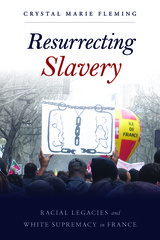
How can politicians and ordinary citizens face the racial past in a country that frames itself as colorblind? In her timely and provocative book, Resurrecting Slavery, Crystal Fleming shows how people make sense of slavery in a nation where talking about race, colonialism, and slavery remains taboo. Noting how struggles over the meaning of racial history are informed by contemporary politics of race, she asks: What kinds of group identities are at stake today for activists and French people with ties to overseas territories where slavery took place?
Fleming investigates the connections and disconnections that are made between racism, slavery, and colonialism in France. She provides historical context and examines how politicians and commemorative activists interpret the racial past and present. Resurrecting Slavery also includes in-depth interviews with French Caribbean migrants outside the commemorative movement to address the everyday racial politics of remembrance.
Bringing a critical race perspective to the study of French racism, Fleming’s groundbreaking study provides a more nuanced understanding of race in France along with new ways of thinking about the global dimensions of slavery, anti-blackness, and white supremacy.
READERS
Browse our collection.
PUBLISHERS
See BiblioVault's publisher services.
STUDENT SERVICES
Files for college accessibility offices.
RECENTLY PUBLISHED


UChicago Accessibility Resources
home | accessibility | search | about | contact us
BiblioVault ® 2001 - 2026
The University of Chicago Press