
 A SCHOLARLY BOOK REPOSITORY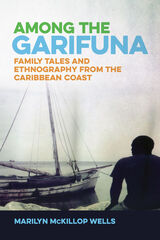
An intimate ethnographic narrative of one indigenous family in the twentieth-century Caribbean
Among the Garifuna is the first ethnographic narrative of a Garifuna family. The Garifuna are descendants of the “Black Carib,” whom the British deposited on Roatan Island in 1797 and who settled along the Caribbean coast from Belize City to Nicaragua.
In 1980, medical anthropologist Marilyn McKillop Wells found herself embarking on an “improbable journey” when she was invited to the area to do fieldwork with the added challenge of revealing the “real” Garifuna. Upon her arrival on the island, Wells was warmly embraced by a local family, the Diegos, and set to work recording life events and indigenous perspectives on polygyny, Afro-indigenous identity, ancestor-worshiping religion, and more. The result, as represented in Among the Garifuna, is a lovingly intimate, earthy human drama.
The family narrative is organized chronologically. Part I, “The Old Ways,” consists of vignettes that introduce the family backstory with dialogue as imagined by Wells based on the family history she was told. We meet the family progenitors, Margaret and Cervantes Diego, during their courtship, experience Margaret’s pain as Cervantes takes a second wife, witness the death of Cervantes and ensuing mourning rituals, follow the return of Margaret and the children to their previous home in British Honduras, and observe the emergence of the children’s personalities.
In Part II, “Living There,” Wells continues the story when she arrives in Belize and meets the Diego children, including the major protagonist, Tas. In Tas’s household Wells learns about foods and manners and watches family squabbles and reconciliations. In these mini-stories, Wells interweaves cultural information on the Garifuna people with first-person narrative and transcription of their words, assembling these into an enthralling slice of life. Part III, “The Ancestor Party,” takes the reader through a fascinating postmortem ritual that is enacted to facilitate the journey of the spirits of the honored ancestors to the supreme supernatural.
Among the Garifuna contributes to the literary genres of narrative anthropology and feminist ethnography in the tradition of Zora Neal Hurston and other women writing culture in a personal way. Wells’s portrait of this Garifuna family will be of interest to anthropologists, Caribbeanists, Latin Americanists, students, and general readers alike.

Garifuna live in Central America, primarily Honduras, and the United States. Identified as Black by others and by themselves, they also claim indigenous status and rights in Latin America. Examining this set of paradoxes, Mark Anderson shows how, on the one hand, Garifuna embrace discourses of tradition, roots, and a paradigm of ethnic political struggle. On the other hand, Garifuna often affirm blackness through assertions of African roots and affiliations with Blacks elsewhere, drawing particularly on popular images of U.S. blackness embodied by hip-hop music and culture.
Black and Indigenous explores the politics of race and culture among Garifuna in Honduras as a window into the active relations among multiculturalism, consumption, and neoliberalism in the Americas. Based on ethnographic work, Anderson questions perspectives that view indigeneity and blackness, nativist attachments and diasporic affiliations, as mutually exclusive paradigms of representation, being, and belonging.
As Anderson reveals, within contemporary struggles of race, ethnicity, and culture, indigeneity serves as a normative model for collective rights, while blackness confers a status of subaltern cosmopolitanism. Indigeneity and blackness, he concludes, operate as unstable, often ambivalent, and sometimes overlapping modes through which people both represent themselves and negotiate oppression.
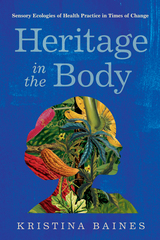
Employing an embodied ecological heritage (EEH) framework, Baines explores the links between health and heritage as a fluid series of ecological practices. Health and wellness are holistically defined and approached from a phenomenological perspective. Baines focuses on how sensory experiences change the body through practice and provides insights into community-driven alternatives as a means to maintain and support happy, healthy lives.
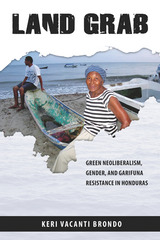
Employing approaches from feminist political ecology, critical race studies, and ethnic studies,Keri Vacanti Brondo illuminates three contemporary development paradoxes in Honduras: the recognition of the rights of indigenous people at the same time as Garifuna are being displaced in the name of development; the privileging of foreign research tourists in projects that promote ecotourism but result in restricting Garifuna from traditional livelihoods; and the contradictions in Garifuna land-rights claims based on native status when mestizos are reserving rights to resources as natives themselves.
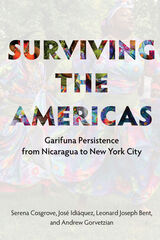
In Surviving the Americas, Serena Cosgrove, José Idiáquez, Leonard Joseph Bent, and Andrew Gorvetzian shed light on what it means to be Garifuna today, particularly in Nicaragua. Their research includes over nine months of fieldwork in Garifuna communities in the Pearl Lagoon on the southern Caribbean coast of Nicaragua and in New York City. The resulting ethnography illustrates the unique social issues of the Nicaraguan Garifuna and how their culture, traditions, and reverence for their ancestors continues to persist.

This classic study of Black
Carib culture and its preservation through ancestral rituals organized
by older women now includes a foreword by Constance R. Sutton and an afterword
by the author.
"One of the outstanding
studies of this genre. . . . Refreshingly, the book has good photographs,
as well as strong endnotes and bibliography, and very useful tables, figures,
maps, and index." -- Choice
"An outstanding contribution
to the literature on female-centered bilateral kinship and residence."
-- Grant D. Jones, American Ethnologist
"A richly detailed account
of a contemporary culture in which older women are important, valued,
and self-respecting."
-- Anthropology and Humanism Quarterly
"A combination of competent
research, interwoven themes, and an easily readable, sometimes beautifully
evocative, prose style." -- Heather Strange, The Gerontologist
READERS
Browse our collection.
PUBLISHERS
See BiblioVault's publisher services.
STUDENT SERVICES
Files for college accessibility offices.
RECENTLY PUBLISHED





UChicago Accessibility Resources
home | accessibility | search | about | contact us
BiblioVault ® 2001 - 2026
The University of Chicago Press