logo for Duke University Press
Materializing Imaginaries in Senegal
Modern African Literature and Global 1968
Fatoumata Seck
Duke University Press, 2026
In Materializing Imaginaries in Senegal, Fatoumata Seck shows how cultural revolutionary projects in Senegal and beyond in the 1960s shaped African literature, cinema, and intellectual thought in the latter half of the twentieth century. She charts an intellectual and literary history that positions Global 1968 as a defining moment in modern African literature. Seck analyzes African literature of this period through the prism of creative dissidence, revolutionary fervor, and cultural experimentation. Seck examines the role of African students and intellectuals in forging decolonizing aesthetics underpinned by pan-African and internationalist solidarities of the 1960s. She traces the presence of these revolutionary projects in African letters, illuminating how revolutionary imaginaries sediment and remain as latent possibilities, while also reframing the emergence and reception of works by figures such as Léopold Sédar Senghor, Cheikh Anta Diop, David Mandessi Diop, Aminata Sow Fall, Ousmane Sembène, Awa Thiam, Djibril Diop Mambéty, Ken Bugul, Boubacar Boris Diop, and others. In so doing, Seck demonstrates that unfulfilled revolutions do not prevent the materialization of revolutionary imaginaries.
[more]


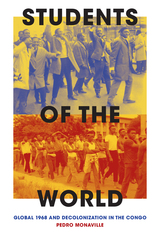
front cover of Students of the World
Students of the World
Global 1968 and Decolonization in the Congo
Pedro Monaville
Duke University Press, 2022
On June 30, 1960—the day of the Congo’s independence—Prime Minister Patrice Lumumba gave a fiery speech in which he conjured a definitive shift away from a past of colonial oppression toward a future of sovereignty, dignity, and justice. His assassination a few months later showed how much neocolonial forces and the Cold War jeopardized African movements for liberation. In Students of the World, Pedro Monaville traces a generation of Congolese student activists who refused to accept the foreclosure of the future Lumumba envisioned. These students sought to decolonize university campuses, but the projects of emancipation they articulated went well beyond transforming higher education. Monaville explores the modes of being and thinking that shaped their politics. He outlines a trajectory of radicalization in which gender constructions, cosmopolitan dispositions, and the influence of a dissident popular culture mattered as much as access to various networks of activism and revolutionary thinking. By illuminating the many worlds inhabited by Congolese students at the time of decolonization, Monaville charts new ways of writing histories of the global 1960s from Africa.
[more]


Send via email Share on Facebook Share on Twitter