
 A SCHOLARLY BOOK REPOSITORY


The book explains the value of particular plants for birds and other wildlife, not only as food sources but as nesting sites and cover. Each plant is described in depth, with details on color, height, blooming time, light requirements, and soil preferences, along with planting tips and suggested companion plants. Nowak offers closer looks at the intriguing features of these diverse plant species and their intertwined relationships with birds, complemented by more than 150 color photos that showcase the beauty of the plants and birds together. Novice gardeners will also find essential information on birdscaping basics, site preparation, management guidelines, and safeguarding songbirds.
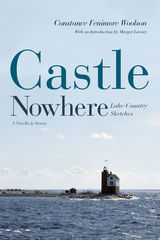
Castle Nowhere is Constance Woolson's collection of stories set for the most part in the Great Lakes, in particular northern Lake Michigan and Lake Huron near Detroit.
Several themes inhabit Woolson's writing: an environmental consciousness and concern with landscapes; an awareness of the complexities of race; and an abidingly careful eye for the shallowness that sometimes accompanies wealth or social pretensions. She also had a unique perspective as a woman who pioneered the use of controversial subjects---such as unrequited or misplaced passion---and methods in fiction during a time that valorized domesticity.
As Margot Livesey notes in her introduction, reading about thwarted love is only one of the pleasures to be found in Castle Nowhere. "The majority of these stories are set in remote areas on the shores of Lake Michigan, which Woolson evokes with great vividness and beauty while always remaining keenly aware that beauty in no way mitigates hardship. As a writer, she was nearly always looking over her shoulder, and many, if not all, of these stories were written at a time when she no longer visited the Lake and her beloved Mackinac Island."
Contemporary readers will find a curiously modern atmosphere in Woolson's stories, as well as a distinct regional flavor in her careful renderings of the Great Lakes landscape. As such, Castle Nowhere represents a rare woman's voice in literature of its period and setting.
Constance Fenimore Woolson (1840-1894) was born in New Hampshire and moved to Cleveland shortly thereafter. She spent time on Mackinac Island, Michigan, then traveled to Florida before moving to Europe. Much of her time there was spent in Italy. She died in Venice in 1894. Novelist Margot Livesey is the author of Eva Moves the Furniture and Homework.
To create a conceptual bridge between disparate dialogues, Beaudoin examines multigenerational nineteenth-century Mohawk and settler sites in southern Ontario, Canada. He demonstrates that few obvious differences exist and calls for more nuanced interpretive frameworks. Using conventional categories, methodologies, and interpretative processes from Indigenous and settler archaeologies, Beaudoin encourages archaeologists and scholars to focus on the different or similar aspects among sites to better understand the nineteenth-century life of contemporaneous Indigenous and settler peoples.
Beaudoin posits that the archaeological record represents people’s navigation through the social and political constraints of their time. Their actions, he maintains, were undertaken within the understood present, the remembered past, and perceived future possibilities. Deconstructing existing paradigms in colonial and postcolonial theories, Matthew A. Beaudoin establishes a new, dynamic discourse on identity formation and politics within the power relations created by colonization that will be useful to archaeologists in the academy as well as in cultural resource management.
People living in the Great Lakes region are already feeling the effects of a changing climate. Shifts in seasonal temperatures and precipitation patterns could have dramatic impacts on the economy, ecology, and quality of life. In this illuminating and thorough volume, leading scholars address the challenge of preparing for climate change in the region, where decision makers from various sectors—government, agriculture, recreation, and tourism—must increasingly be aware of the need to incorporate climate change into their short- and long-term planning. The chapters in this revealing book, written by some of the foremost climate change scholars in North America, outline the major trends in the climate of the Great Lakes region, how humans might cope with the uncertainty of climate change impacts, and examples of on-the-ground projects that have addressed these issues.
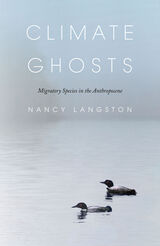
Environmental historian Nancy Langston explores three “ghost species” in the Great Lakes watershed—woodland caribou, common loons, and lake sturgeon. Ghost species are those that have not gone completely extinct, although they may be extirpated from a particular area. Their traces are still present, whether in DNA, in small fragmented populations, in lone individuals roaming a desolate landscape in search of a mate. We can still restore them if we make the hard choices necessary for them to survive. In this meticulously researched book, Langston delves into how climate change and human impact affected these now ghost species. Climate Ghosts covers one of the key issues of our time.
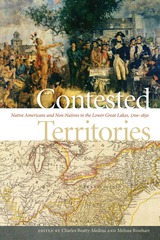
A remarkable multifaceted history, Contested Territories examines a region that played an essential role in America's post-revolutionary expansion—the Lower Great Lakes region, once known as the Northwest Territory. As French, English, and finally American settlers moved westward and intersected with Native American communities, the ethnogeography of the region changed drastically, necessitating interactions that were not always peaceful. Using ethnohistorical methodologies, the seven essays presented here explore rapidly changing cultural dynamics in the region and reconstruct in engaging detail the political organization, economy, diplomacy, subsistence methods, religion, and kinship practices in play. With a focus on resistance, changing worldviews, and early forms of self-determination among Native Americans, Contested Territories demonstrates the continuous interplay between actor and agency during an important era in American history.

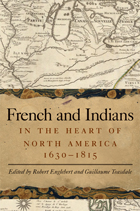
results of many of the investigations of French colonial sites made in
the mid-continent during the last decade. It includes work done at Fort
St. Louis, Fort de Chartres, Fort Massac, French Peoria, Cahokia, Prairie
du Pont, Prairie du Rocher, and other locations controlled by the French
during a time when their dominance in North America was more than twice
that of Britain and Spain combined.
Five of the book's fifteen chapters summarize major excavations at colonial
fortifications, four of which are public monuments that currently attract
thousands of visitors each year. Another five chapters deal with French
colonial villages, and the remainder of the book is devoted to diet, trade,
the role of historic documents in the reconstruction of life on the French
colonial frontier, and other topics.
Fresh Water: Women Writing on the Great Lakes is a collection of nonfiction works by women writers. These works focus on the Midwest: living with the five interconnected freshwater seas that we know as the Great Lakes. Contributing to this collection are renowned poets, essayists, and fiction writers, all of whom write about their own creative streams of consciousness, the fresh waters of the Great Lakes, and the region's many rivers: Loraine Anderson, Judith Arcana, Rachel Azima, Mary Blocksma, Gayle Boss, Sharon Dilworth, Beth Ann Fennelly, Linda Nemec Foster, Gail Griffin, Rasma Haidri, Aleta Karstad, Laura Kasischke, Janet Kauffman, Jacqueline Kolosov, Susan Laidlaw, Lisa Lenzo, Linda Loomis, Anna Mills, Stephanie Mills, Judith Minty, Anne-Marie Oomen, Rachael Perry, Susan Power, Donna Seaman, Heather Sellers, Gail Louise Siegel, Sue William Silverman,Claudia Skutar, Annick Smith, Leslie Stainton, Kathleen Stocking, Judith Strasser, Alison Swan, Elizabeth A.Trembley, Jane Urquhart, Diane Wakoski, and Leigh Allison Wilson.

Lumberjacks: the men, the myth, and the making of an American legend
The folk hero Paul Bunyan, burly, bearded, wielding his big ax, stands astride the story of the upper Midwest—a manly symbol of the labor that cleared the vast north woods for the march of industrialization while somehow also maintaining an aura of pristine nature. This idea, celebrated in popular culture with songs and folktales, receives a long overdue and thoroughly revealing correction in Gentlemen of the Woods, a cultural history of the life and lore of the real lumberjack and his true place in American history.
Now recalled as heroes of wilderness and masculinity, lumberjacks in their own time were despised as amoral transients. Willa Hammitt Brown shows that nineteenth-century jacks defined their communities of itinerant workers by metrics of manhood that were abhorrent to the residents of the nearby Northwoods boomtowns, valuing risk-taking and skill rather than restraint and control. Reviewing songs, stories, and firsthand accounts from loggers, Brown brings to life the activities and experiences of the lumberjacks as they moved from camp to camp. She contrasts this view with the popular image cultivated by retreating lumber companies that had to sell off utterly barren land. This mythologized image glorified the lumberjack and evoked a kindly, flannel-wearing, naturalist hero.
Along with its portrait of lumberjack life and its analysis of the creation of lumberjack myth, Gentlemen of the Woods offers new insight into the intersections of race and social class in the logging enterprise, considering the actual and perceived roles of outsider lumberjacks and Native inhabitants of the northern forests. Anchored in the dual forces of capitalism and colonization, this lively and compulsively readable account offers a new way to understand a myth and history that has long captured our collective imagination.
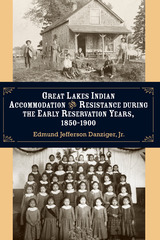
During the four decades following the War of 1812, Great Lakes Indians were forced to surrender most of their ancestral homelands and begin refashioning their lives on reservations. The challenges Indians faced during this period could not have been greater. By century's end, settlers, frontier developers, and federal bureaucrats possessed not only economic and political power but also the bulk of the region's resources. It is little wonder that policymakers in Washington and Ottawa alike anticipated the disappearance of distinctive Indian communities within a single generation. However, these predictions have proved false as Great Lakes Indian communities, though assaulted on both sides of the international border to this day, have survived. Danziger's lively and insightful book documents the story of these Great Lakes Indians---a study not of victimization but of how Aboriginal communities and their leaders have determined their own destinies and preserved core values, lands, and identities against all odds and despite ongoing marginalization.
Utilizing eyewitness accounts from the 1800s and an innovative, cross-national approach, Danziger explores not only how Native Americans adapted to their new circumstances---including attempts at horse and plow agriculture, the impact of reservation allotment, and the response to Christian evangelists---but also the ways in which the astute and resourceful Great Lakes chiefs, councils, and clan mothers fought to protect their homeland and preserve the identity of their people. Through their efforts, dreams of economic self-sufficiency and self-determination as well as the historic right to unimpeded border crossings---from one end of the Great Lakes basin to the other---were kept alive.
In this highly accessible history of ships and shipping on the Great Lakes, upper elementary readers are taken on a rip-roaring journey through the waterways of the upper Midwest.
Great Ships on the Great Lakes explores the history of the region’s rivers, lakes, and inland seas—and the people and ships who navigated them. Read along as the first peoples paddle tributaries in birch bark canoes. Follow as European voyageurs pilot rivers and lakes to get beaver pelts back to the eastern market. Watch as settlers build towns and eventually cities on the shores of the Great Lakes. Listen to the stories of sailors, lighthouse keepers, and shipping agents whose livelihoods depended on the dangerous waters of Lake Michigan, Superior, Huron, Erie, and Ontario. Give an ear to their stories of unexpected tragedy and miraculous rescue, and heed their tales of risk and reward on the low seas.
Great Ships also tells the story of sea battles and gunships, of the first vessels to travel beyond the Niagara, and of the treacherous storms and cold weather that caused thousands of ships to sink in the Great Lakes. Watch as underwater archaeologists solve the mysteries of Great Lakes shipwrecks today. And learn how the shift from sail to steam forever changed the history of shipping, as schooners made way for steamships and bulk freighters, and sailing became a recreation, not a hazardous way of life.
Designed for the upper elementary classroom with emphasis on Michigan and Wisconsin, Great Ships on the Great Lakes includes a timeline of events, on-page vocabulary, and a list of resources and places to visit. Over 20 maps highlight the region’s maritime history. The accompanying Teacher’s Guide includes 18 classroom activities, arranged by chapter, including lessons on exploring shipwrecks and learning how glaciers moved across the landscape.
Forests have always been more than just their trees. The forests in Michigan (and similar forests in other Great Lakes states such as Wisconsin and Minnesota) played a role in the American cultural imagination from the beginnings of European settlement in the early nineteenth century to the present. Our relationships with those forests have been shaped by the cultural attitudes of the times, and people have invested in them both moral and spiritual meanings.
Author John Knott draws upon such works as Simon Schama's Landscape and Memory and Robert Pogue Harrison's Forests: The Shadow of Civilization in exploring ways in which our
relationships with forests have been shaped, using Michigan---its history of settlement, popular literature, and forest management controversies---as an exemplary case. Knott looks at such well-known figures as William Bradford, James Fenimore Cooper, John Muir, John Burroughs, and Teddy Roosevelt; Ojibwa conceptions of the forest and natural world (including how Longfellow mythologized them); early explorer accounts; and contemporary literature set in the Upper Peninsula, including Jim Harrison's True North and Philip Caputo's Indian Country.
Two competing metaphors evolved over time, Knott shows: the forest as howling wilderness, impeding the progress of civilization and in need of subjugation, and the forest as temple or cathedral, worthy of reverence and protection. Imagining the Forestshows the origin and development of both.
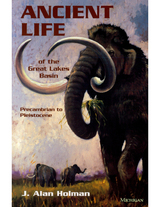
The first book of its kind, In Quest of Great Lakes Ice Age Vertebrates details the Ice Age fishes, amphibians, reptiles, birds and mammals in the provinces and states surrounding the Great Lakes. Holman's work begins with definitions of concepts and terms for the general audience and a general discussion of how the last ice age, the Pleistocene Epoch, affected our physical and biological world. Methods employed and tools used in the collection of vertebrate fossils, as well as ethics and protocol in the maintenance of a useful collection follow, coupled with details of each animal's structure, habits, habitats, and ecological importance. The heart of the book is a species-by-species account of the Pleistocene vertebrates of the region, followed by an examination of the compelling problems of the Pleistocene relative to faunal interpretations, including overall ecological makeup of the region's fauna, vertebrate range adjustment that occurred in the region, Pleistocene extinction effects on the animals of the region, the aftermath of the Ice Age, and a look at what the future may hold for the region.
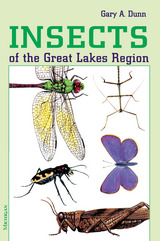
The insects are the world's most amazing animals and comprise over eighty-five percent of the known animal species. Insects of the Great Lakes Region is the first comprehensive guide to document the rich and diverse insect fauna of the Great Lakes region. In Insects of the Great Lakes Region, educators, insect enthusiasts, and the general public will find high-quality, well-presented, easy-to-understand information with over 250 illustrations of the insects found in yards, gardens, fields, and forests. Among the topics discussed are the geological, biological, and entomological history of the Great Lakes region, the distributional patterns of insects in the Great Lakes region, and insect classification and identification. Appendixes guide the reader to entomological organizations, entomological periodicals, public insect collections, regulations on collecting insects from public lands in the Great Lakes region, as well as rare, threatened, and endangered insects. This guide shows the amateur entomologist everything he needs to know, from where to collect milkweed bugs to how often to feed his pet tarantula.
Gary Dunn is Executive Director and Editor, Young Entomologists' Society, Inc., International Headquarters, Lansing, Michigan.
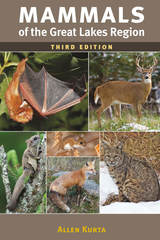
A thorough introduction outlines the environmental factors that affect the distribution and abundance of mammals in Great Lakes ecosystems and discusses the impacts of current human activities, including introduction of diseases and climate change. There is also a section on preparing captured specimens for research or teaching, as well as user-friendly keys and quick reference tables to physical measurements and life history data. Brand new in this edition, the book also features detailed illustrations of the tracks of commonly found mammals to assist with year-round identification. Providing the most up-to-date information on mammals in the Great Lakes basin, this book belongs on the shelves of teachers, students, naturalists, and professional biologists throughout the region.
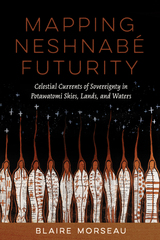
In Mapping Neshnabé Futurity Blaire Morseau weaves together on-the-ground insights and Indigenous speculative fiction to illustrate the profound ways in which Anishinaabé/Neshnabé (Potawatomi, Odawa, and Ojibwe) communities are reclaiming their sovereignty and crafting vibrant futures. Morseau lays out how Neshnabék have marshaled dissent to hydrologic fracturing, oil pipelines, and other damaging infrastructures of capitalist settler futurity. The book positions these efforts as vital acts of nation building and visionary reclamation of space, both terrestrial and celestial.
Morseau also challenges the hegemonic narratives of settler futurism found in mainstream science fiction, which often perpetuate colonial fantasies and exclude marginalized voices. By fusing ethnography of tribal nation-building projects and analysis of Indigenous speculative fiction, Morseau provides a path to Indigenous futurisms and its role in imagining decolonization. Morseau’s analysis underscores the potency of Indigenous knowledge systems and ceremonial practices in imagining and actualizing alternative futures.
Mapping Neshnabé Futurity is an essential read for scholars and activists alike, urging a rethinking of how we conceive of futurity and sovereignty. This work shows how counter-mapping projects both on the ground and in the skies reclaim space in the Great Lakes region—Neshnabé homelands—and are part of larger constellations of Indigenous futurities and stories of survivance.
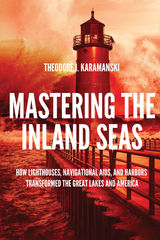
Karamanski explores both the navigational and sailing tools of First Nations peoples and the dismissive and foolhardy attitude of early European maritime sailors. He investigates the role played by commercial boats in the Underground Railroad, as well as how the federal development of crucial navigational resources exacerbated sectionalism in the antebellum United States. Ultimately Mastering the Inland Sea shows the undeniable environmental impact of technologies used by the modern commercial maritime industry. This expansive story illuminates the symbiotic relationship between infrastructure investment in the region's interconnected waterways and North America's lasting economic and political development.
Now in its tenth decade of publication, Michigan Trees has been, since it was first introduced in 1913, the must-have reference book for anyone who wants to know about the trees of this unique North American region.
In this new and updated edition, several new species have been added to the lineup, as well as sections on tree ecology and fall color. Written and illustrated in a style that appeals at once to academic botanists and armchair arborphiles alike, Michigan Trees gives readers everything they need to know for identifying trees in the Great Lakes state. Included with each description are fascinating notes and asides (for example, this tidbit on the jack pine: "Parklike or savanna stands in north-central Michigan are prime habitat for the rare Kirtland's warbler that breeds nowhere else in the world."). Also includes a tree key and identification section illustrated with elegantly simple line drawings that reveal the tiny, signature details that make each tree unique.
Burton V. Barnes is Professor of Forestry at the University of Michigan. Formerly a research forester, he is best known for his research and publications in forest ecology and forest genetics.
Warren H. Wagner, Jr. was a world authority on ferns. He had been Professor Emeritus of Botany and Natural Resources at the University of Michigan before his death at the age of 80 in 2000.
Diverse in their languages and customs, the Native American peoples of the Great Lakes region—the Miamis, Ho-Chunks, Potawatomis, Ojibwas, and many others—shared a tumultuous history. In the colonial era their rich homeland became a target of imperial ambition and an invasion zone for European diseases, technologies, beliefs, and colonists. Yet in the face of these challenges, their nations’ strong bonds of trade, intermarriage, and association grew and extended throughout their watery domain, and strategic relationships and choices allowed them to survive in an era of war, epidemic, and invasion.
In Peoples of the Inland Sea, David Andrew Nichols offers a fresh and boundary-crossing history of the Lakes peoples over nearly three centuries of rapid change, from pre-Columbian times through the era of Andrew Jackson’s Removal program. As the people themselves persisted, so did their customs, religions, and control over their destinies, even in the Removal era. In Nichols’s hands, Native, French, American, and English sources combine to tell this important story in a way as imaginative as it is bold. Accessible and creative, Peoples of the Inland Sea is destined to become a classroom staple and a classic in Native American history.
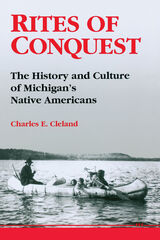
Beyond wars and warriors, Rites of Conquest is also about diplomacy and negotiation, mythology and magic, birth and death, and the joys and trials of daily life in the native villages of the Great Lakes region. Today, Michigan's Native American citizens struggle to solve problems that are a legacy of their past, while they attempt to maintain a distinctive place within modern society. In facing this challenge they often turn to the values and traditions that set them apart as the most enduring peoples of the Great Lakes region.
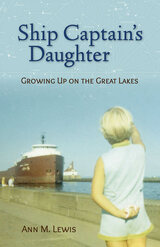
Ann Lewis's childhood was marked by an unusual rhythm. Each year the thawing and freezing of the Great Lakes signaled the beginning and end of the shipping season, months of waiting that were punctuated by brief trips to various ports to meet her father, the captain.
With lively storytelling and vivid details, Lewis captures the unusual life of shipping families whose days and weeks revolved around the shipping industry on the Great Lakes. She paints an intriguing and affectionate portrait of her father, a talented pianist whose summer job aboard an ore freighter led him to a life on the water. Working his way up from deckhand to ship captain, Willis Michler became the master of thirteen ships over a span of twenty-eight years. From the age of twelve, Ann accompanied the captain to the ports of Milwaukee, Chicago, Toledo, and Cleveland on the lower Great Lakes. She describes sailing through stormy weather and starry nights, visiting the engine room, dining at the captain's table, and wheeling the block-long ship with her father in the pilot house. Through her mother's stories and remarks, Lewis also reveals insights into the trials and rewards of being a ship captain's wife. The book is enhanced by the author's vintage snapshots, depicting this bygone lifestyle.
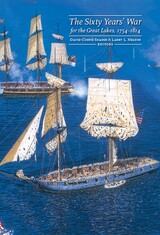
The Sixty Years' War for the Great Lakes contains twenty essays concerning not only military and naval operations, but also the political, economic, social, and cultural interactions of individuals and groups during the struggle to control the great freshwater lakes and rivers between the Ohio Valley and the Canadian Shield. Contributing scholars represent a wide variety of disciplines and institutional affiliations from the United States, Canada, and Great Britain.
Collectively, these important essays delineate the common thread, weaving together the series of wars for the North American heartland that stretched from 1754 to 1814. The war for the Great Lakes was not merely a sideshow in a broader, worldwide struggle for empire, independence, self-determination, and territory. Rather, it was a single war, a regional conflict waged to establish hegemony within the area, forcing interactions that divided the Great Lakes nationally and ethnically for the two centuries that followed.

In this beautifully illustrated children’s book based on historical documents and photographs, readers share in Sport’s adventures while discovering the various ways lighthouse tender ships helped keep the lake safe for others. Helpful diagrams, a map, and a historical note supplement this engaging story for young readers.
2020 Wisconsin Library Association Outstanding Children’s Book of the Year
2020 Midwest Book Award Gold Medal
2020 Library of Michigan Notable Book Award
2019 Historical Society of Michigan State History Award
2019 Moonbeam Children’s Book Award
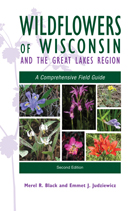
• more than 1,100 species from 459 genera in 100 families
• many rare and previously overlooked species
• 2,100 color photographs and 300 drawings
• Wisconsin distribution maps for almost all plants
• brief descriptions including distinguishing characteristics of the species
• Wisconsin status levels for each species of wildflower (native, invasive, endangered, etc.)
• derivation of Latin names.
READERS
Browse our collection.
PUBLISHERS
See BiblioVault's publisher services.
STUDENT SERVICES
Files for college accessibility offices.
RECENTLY PUBLISHED


UChicago Accessibility Resources
home | accessibility | search | about | contact us
BiblioVault ® 2001 - 2025
The University of Chicago Press