
 A SCHOLARLY BOOK REPOSITORY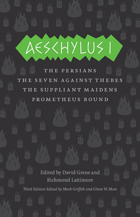
The most engaging and authoritative translation of some of the foundational works of Western culture
This volume collects careful, readable translations of some of the key works of Aeschylus by experts in the language and culture of the ancient Greek world in which he lived and wrote. Aeschylus I contains “The Persians,” translated by Seth Benardete; “The Seven Against Thebes,” translated by David Grene; “The Suppliant Maidens,” translated by Seth Benardete; and “Prometheus Bound,” translated by David Grene.
For this edition, series editors Mark Griffith and Glenn W. Most have carefully updated the translations to bring them even closer to the ancient Greek while retaining the vibrancy for which our English versions are famous.New introductions for each play offer essential information about its first production, plot, and reception in antiquity and beyond. In addition, each volume includes an introduction to the life and work of its tragedian, as well as notes addressing textual uncertainties and a glossary of names and places mentioned in the plays.
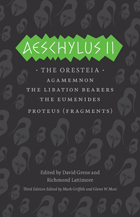
Aeschylus II contains “The Oresteia,” translated by Richmond Lattimore, and fragments of “Proteus,” translated by Mark Griffith.
Many years ago, the University of Chicago Press undertook a momentous project: a new translation of the Greek tragedies that would be the ultimate resource for teachers, students, and readers. They succeeded. Under the expert management of eminent classicists David Grene and Richmond Lattimore, those translations combined accuracy, poetic immediacy, and clarity of presentation to render the surviving masterpieces of Aeschylus, Sophocles, and Euripides in an English so lively and compelling that they remain the standard translations. The updated third editions of these classic works were designed to ensure that our Greek tragedies remain the leading English-language versions throughout the twenty-first century.
In this highly anticipated third edition, Mark Griffith and Glenn W. Most have carefully updated the translations to bring them even closer to the ancient Greek while retaining the vibrancy for which our English versions are famous. This edition also includes brand-new translations of Euripides’ Medea, The Children of Heracles, Andromache, and Iphigenia among the Taurians, fragments of lost plays by Aeschylus, and the surviving portion of Sophocles’s satyr-drama The Trackers. New introductions for each play offer essential information about its first production, plot, and reception in antiquity and beyond. In addition, each volume includes an introduction to the life and work of its tragedian, as well as notes addressing textual uncertainties and a glossary of names and places mentioned in the plays.
In addition to the new content, the volumes have been reorganized both within and between volumes to reflect the most up-to-date scholarship on the order in which the plays were originally written. The result is a set of handsome paperbacks destined to introduce new generations of readers to these foundational works of Western drama, art, and life.
"This is it. No qualifications. Go out and buy it everybody."—Kenneth Rexroth, The Nation
"The translations deliberately avoid the highly wrought and affectedly poetic; their idiom is contemporary....They have life and speed and suppleness of phrase."—Times Education Supplement
"These translations belong to our time. A keen poetic sensibility repeatedly quickens them; and without this inner fire the most academically flawless rendering is dead."—Warren D. Anderson, American Oxonian
"The critical commentaries and the versions themselves...are fresh, unpretentious, above all, functional."—Commonweal
"Grene is one of the great translators."—Conor Cruise O'Brien, London Sunday Times
"Richmond Lattimore is that rara avis in our age, the classical scholar who is at the same time an accomplished poet."—Dudley Fitts, New York Times Book Review
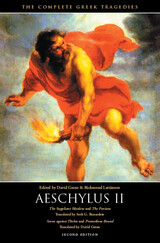
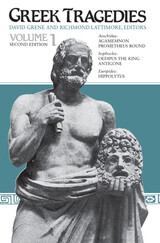
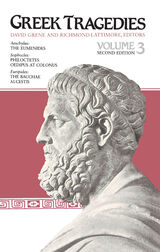
For the Centennial Edition two of the original translations have been replaced. In the original publication David Grene translated only one of the three Theban plays, Oedipus the King. Now he has added his own translations of the remaining two, Oedipus at Colonus and Antigone, thus bringing a new unity of tone and style to this group. Grene has also revised his earlier translation of Prometheus Bound and rendered some of the former prose sections in verse. These new translations replace the originals included in the paperback volumes Sophocles I (which contains all three Theban plays), Aeschylus II, Greek Tragedies, Volume I, and Greek Tragedies, Volume III, all of which are now being published in second editions.
All other volumes contain the translations of the tragedies of Aeschylus, Sophocles, and Euripides for the most part from the original versions first published in the 1940s and 1950s. These translations have been the choice of generations of teachers and students, selling in the past forty years over three million copies.
"These authoritative translations consign all other complete collections to the wastebasket."—Robert Brustein, The New Republic
"This is it. No qualifications. Go out and buy it everybody."—Kenneth Rexroth, The Nation
"The translations deliberately avoid the highly wrought and affectedly poetic; their idiom is contemporary....They have life and speed and suppleness of phrase."—Times Education Supplement
"These translations belong to our time. A keen poetic sensibility repeatedly quickens them; and without this inner fire the most academically flawless rendering is dead."—Warren D. Anderson, American Oxonian
"The critical commentaries and the versions themselves...are fresh, unpretentious, above all, functional."—Commonweal
"Grene is one of the great translators."—Conor Cruise O'Brien, London Sunday Times
"Richmond Lattimore is that rara avis in our age, the classical scholar who is at the same time an accomplished poet."—Dudley Fitts, New York Times Book Review
"This is it. No qualifications. Go out and buy it everybody."—Kenneth Rexroth, The Nation
"The translations deliberately avoid the highly wrought and affectedly poetic; their idiom is contemporary....They have life and speed and suppleness of phrase."—Times Education Supplement
"These translations belong to our time. A keen poetic sensibility repeatedly quickens them; and without this inner fire the most academically flawless rendering is dead."—Warren D. Anderson, American Oxonian
"The critical commentaries and the versions themselves...are fresh, unpretentious, above all, functional."—Commonweal
"Grene is one of the great translators."—Conor Cruise O'Brien, London Sunday Times
"Richmond Lattimore is that rara avis in our age, the classical scholar who is at the same time an accomplished poet."—Dudley Fitts, New York Times Book Review
"This is it. No qualifications. Go out and buy it everybody."—Kenneth Rexroth, The Nation
"The translations deliberately avoid the highly wrought and affectedly poetic; their idiom is contemporary....They have life and speed and suppleness of phrase."—Times Education Supplement
"These translations belong to our time. A keen poetic sensibility repeatedly quickens them; and without this inner fire the most academically flawless rendering is dead."—Warren D. Anderson, American Oxonian
"The critical commentaries and the versions themselves...are fresh, unpretentious, above all, functional."—Commonweal
"Grene is one of the great translators."—Conor Cruise O'Brien, London Sunday Times
"Richmond Lattimore is that rara avis in our age, the classical scholar who is at the same time an accomplished poet."—Dudley Fitts, New York Times Book Review

For the Centennial Edition two of the original translations have been replaced. In the original publication David Grene translated only one of the three Theban plays, Oedipus the King. Now he has added his own translations of the remaining two, Oedipus at Colonus and Antigone, thus bringing a new unity of tone and style to this group. Grene has also revised his earlier translation of Prometheus Bound and rendered some of the former prose sections in verse. These new translations replace the originals included in the paperback volumes Sophocles I (which contains all three Theban plays), Aeschylus II, Greek Tragedies, Volume I, and Greek Tragedies, Volume III, all of which are now being published in second editions.
All other volumes contain the translations of the tragedies of Aeschylus, Sophocles, and Euripides for the most part from the original versions first published in the 1940s and 1950s. These translations have been the choice of generations of teachers and students, selling in the past forty years over three million copies.
For the Centennial Edition two of the original translations have been replaced. In the original publication David Grene translated only one of the three Theban plays, Oedipus the King. Now he has added his own translations of the remaining two, Oedipus at Colonus and Antigone, thus bringing a new unity of tone and style to this group. Grene has also revised his earlier translation of Prometheus Bound and rendered some of the former prose sections in verse. These new translations replace the originals included in the paperback volumes Sophocles I (which contains all three Theban plays), Aeschylus II, Greek Tragedies, Volume I, and Greek Tragedies, Volume III, all of which are now being published in second editions.
All other volumes contain the translations of the tragedies of Aeschylus, Sophocles, and Euripides for the most part from the original versions first published in the 1940s and 1950s. These translations have been the choice of generations of teachers and students, selling in the past forty years over three million copies.
For the Centennial Edition two of the original translations have been replaced. In the original publication David Grene translated only one of the three Theban plays, Oedipus the King. Now he has added his own translations of the remaining two, Oedipus at Colonus and Antigone, thus bringing a new unity of tone and style to this group. Grene has also revised his earlier translation of Prometheus Bound and rendered some of the former prose sections in verse. These new translations replace the originals included in the paperback volumes Sophocles I (which contains all three Theban plays), Aeschylus II, Greek Tragedies, Volume I, and Greek Tragedies, Volume III, all of which are now being published in second editions.
All other volumes contain the translations of the tragedies of Aeschylus, Sophocles, and Euripides for the most part from the original versions first published in the 1940s and 1950s. These translations have been the choice of generations of teachers and students, selling in the past forty years over three million copies.
For the Centennial Edition two of the original translations have been replaced. In the original publication David Grene translated only one of the three Theban plays, Oedipus the King. Now he has added his own translations of the remaining two, Oedipus at Colonus and Antigone, thus bringing a new unity of tone and style to this group. Grene has also revised his earlier translation of Prometheus Bound and rendered some of the former prose sections in verse. These new translations replace the originals included in the paperback volumes Sophocles I (which contains all three Theban plays), Aeschylus II, Greek Tragedies, Volume I, and Greek Tragedies, Volume III, all of which are now being published in second editions.
All other volumes contain the translations of the tragedies of Aeschylus, Sophocles, and Euripides for the most part from the original versions first published in the 1940s and 1950s. These translations have been the choice of generations of teachers and students, selling in the past forty years over three million copies.
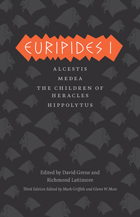
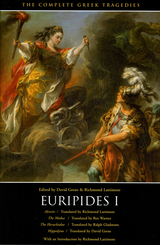
Euripides I contains the plays “Alcestis,” translated by Richmond Lattimore; “Medea,” translated by Oliver Taplin; “The Children of Heracles,” translated by Mark Griffith; and “Hippolytus,” translated by David Grene.
Many years ago, the University of Chicago Press undertook a momentous project: a new translation of the Greek tragedies that would be the ultimate resource for teachers, students, and readers. They succeeded. Under the expert management of eminent classicists David Grene and Richmond Lattimore, those translations combined accuracy, poetic immediacy, and clarity of presentation to render the surviving masterpieces of Aeschylus, Sophocles, and Euripides in an English so lively and compelling that they remain the standard translations. The updated third editions of these classic works were designed to ensure that our Greek tragedies remain the leading English-language versions throughout the twenty-first century.
In this highly anticipated third edition, Mark Griffith and Glenn W. Most have carefully updated the translations to bring them even closer to the ancient Greek while retaining the vibrancy for which our English versions are famous. This edition also includes brand-new translations of Euripides’ Medea, The Children of Heracles, Andromache, and Iphigenia among the Taurians, fragments of lost plays by Aeschylus, and the surviving portion of Sophocles’s satyr-drama The Trackers. New introductions for each play offer essential information about its first production, plot, and reception in antiquity and beyond. In addition, each volume includes an introduction to the life and work of its tragedian, as well as notes addressing textual uncertainties and a glossary of names and places mentioned in the plays.
In addition to the new content, the volumes have been reorganized both within and between volumes to reflect the most up-to-date scholarship on the order in which the plays were originally written. The result is a set of handsome paperbacks destined to introduce new generations of readers to these foundational works of Western drama, art, and life.
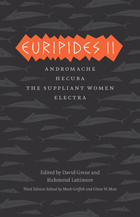
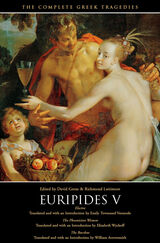
Euripides II contains the plays “Andromache,” translated by Deborah Roberts; “Hecuba,” translated by William Arrowsmith; “The Suppliant Women,” translated by Frank William Jones; and “Electra,” translated by Emily Townsend Vermeule.
Many years ago, the University of Chicago Press undertook a momentous project: a new translation of the Greek tragedies that would be the ultimate resource for teachers, students, and readers. They succeeded. Under the expert management of eminent classicists David Grene and Richmond Lattimore, those translations combined accuracy, poetic immediacy, and clarity of presentation to render the surviving masterpieces of Aeschylus, Sophocles, and Euripides in an English so lively and compelling that they remain the standard translations. The updated third editions of these classic works were designed to ensure that our Greek tragedies remain the leading English-language versions throughout the twenty-first century.
In this highly anticipated third edition, Mark Griffith and Glenn W. Most have carefully updated the translations to bring them even closer to the ancient Greek while retaining the vibrancy for which our English versions are famous. This edition also includes brand-new translations of Euripides’ Medea, The Children of Heracles, Andromache, and Iphigenia among the Taurians, fragments of lost plays by Aeschylus, and the surviving portion of Sophocles’s satyr-drama The Trackers. New introductions for each play offer essential information about its first production, plot, and reception in antiquity and beyond. In addition, each volume includes an introduction to the life and work of its tragedian, as well as notes addressing textual uncertainties and a glossary of names and places mentioned in the plays.
In addition to the new content, the volumes have been reorganized both within and between volumes to reflect the most up-to-date scholarship on the order in which the plays were originally written. The result is a set of handsome paperbacks destined to introduce new generations of readers to these foundational works of Western drama, art, and life.
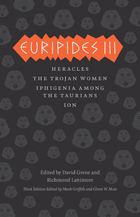
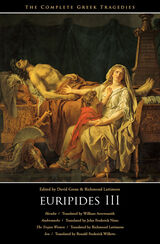
Euripides III contains the plays “Heracles,” translated by William Arrowsmith; “The Trojan Women,” translated by Richmond Lattimore; “Iphigenia among the Taurians,” translated by Anne Carson; and “Ion,” translated by Ronald Frederick Willetts.
Many years ago, the University of Chicago Press undertook a momentous project: a new translation of the Greek tragedies that would be the ultimate resource for teachers, students, and readers. They succeeded. Under the expert management of eminent classicists David Grene and Richmond Lattimore, those translations combined accuracy, poetic immediacy, and clarity of presentation to render the surviving masterpieces of Aeschylus, Sophocles, and Euripides in an English so lively and compelling that they remain the standard translations. The updated third editions of these classic works were designed to ensure that our Greek tragedies remain the leading English-language versions throughout the twenty-first century.
In this highly anticipated third edition, Mark Griffith and Glenn W. Most have carefully updated the translations to bring them even closer to the ancient Greek while retaining the vibrancy for which our English versions are famous. This edition also includes brand-new translations of Euripides’ Medea, The Children of Heracles, Andromache, and Iphigenia among the Taurians, fragments of lost plays by Aeschylus, and the surviving portion of Sophocles’s satyr-drama The Trackers. New introductions for each play offer essential information about its first production, plot, and reception in antiquity and beyond. In addition, each volume includes an introduction to the life and work of its tragedian, as well as notes addressing textual uncertainties and a glossary of names and places mentioned in the plays.
In addition to the new content, the volumes have been reorganized both within and between volumes to reflect the most up-to-date scholarship on the order in which the plays were originally written. The result is a set of handsome paperbacks destined to introduce new generations of readers to these foundational works of Western drama, art, and life.
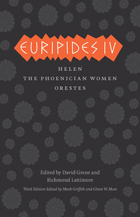
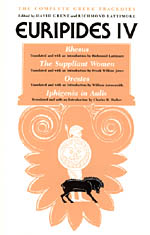
Euripides IV contains the plays “Helen,” translated by Richmond Lattimore; “The Phoenician Women,” translated by Elizabeth Wyckoff; and “Orestes,” translated by William Arrowsmith.
Many years ago, the University of Chicago Press undertook a momentous project: a new translation of the Greek tragedies that would be the ultimate resource for teachers, students, and readers. They succeeded. Under the expert management of eminent classicists David Grene and Richmond Lattimore, those translations combined accuracy, poetic immediacy, and clarity of presentation to render the surviving masterpieces of Aeschylus, Sophocles, and Euripides in an English so lively and compelling that they remain the standard translations. The updated third editions of these classic works were designed to ensure that our Greek tragedies remain the leading English-language versions throughout the twenty-first century.
In this highly anticipated third edition, Mark Griffith and Glenn W. Most have carefully updated the translations to bring them even closer to the ancient Greek while retaining the vibrancy for which our English versions are famous. This edition also includes brand-new translations of Euripides’ Medea, The Children of Heracles, Andromache, and Iphigenia among the Taurians, fragments of lost plays by Aeschylus, and the surviving portion of Sophocles’s satyr-drama The Trackers. New introductions for each play offer essential information about its first production, plot, and reception in antiquity and beyond. In addition, each volume includes an introduction to the life and work of its tragedian, as well as notes addressing textual uncertainties and a glossary of names and places mentioned in the plays.
In addition to the new content, the volumes have been reorganized both within and between volumes to reflect the most up-to-date scholarship on the order in which the plays were originally written. The result is a set of handsome paperbacks destined to introduce new generations of readers to these foundational works of Western drama, art, and life.
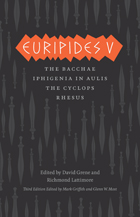
Euripides V includes the plays “The Bacchae,” translated by William Arrowsmith; “Iphigenia in Aulis,” translated by Charles R. Walker; “The Cyclops,” translated by William Arrowsmith; and “Rhesus,” translated by Richmond Lattimore.
Many years ago, the University of Chicago Press undertook a momentous project: a new translation of the Greek tragedies that would be the ultimate resource for teachers, students, and readers. They succeeded. Under the expert management of eminent classicists David Grene and Richmond Lattimore, those translations combined accuracy, poetic immediacy, and clarity of presentation to render the surviving masterpieces of Aeschylus, Sophocles, and Euripides in an English so lively and compelling that they remain the standard translations. The updated third editions of these classic works were designed to ensure that our Greek tragedies remain the leading English-language versions throughout the twenty-first century.
In this highly anticipated third edition, Mark Griffith and Glenn W. Most have carefully updated the translations to bring them even closer to the ancient Greek while retaining the vibrancy for which our English versions are famous. This edition also includes brand-new translations of Euripides’ Medea, The Children of Heracles, Andromache, and Iphigenia among the Taurians, fragments of lost plays by Aeschylus, and the surviving portion of Sophocles’s satyr-drama The Trackers. New introductions for each play offer essential information about its first production, plot, and reception in antiquity and beyond. In addition, each volume includes an introduction to the life and work of its tragedian, as well as notes addressing textual uncertainties and a glossary of names and places mentioned in the plays.
In addition to the new content, the volumes have been reorganized both within and between volumes to reflect the most up-to-date scholarship on the order in which the plays were originally written. The result is a set of handsome paperbacks destined to introduce new generations of readers to these foundational works of Western drama, art, and life.
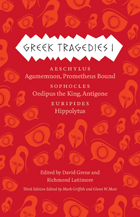
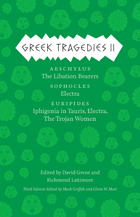
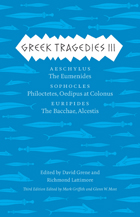
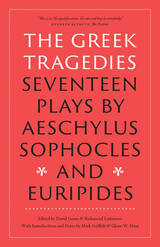
Drawn from the authoritative third editions of David Grene and Richmond Lattimore’s collections of the complete Greek tragedies, expertly updated by Mark Griffith and Glenn W. Most, this collection brings together seventeen of the greatest surviving plays of ancient Greece. Combining accuracy, poetic immediacy, and clarity of presentation, the masterpieces of Aeschylus, Sophocles, and Euripides have been rendered so compellingly in English that they remain the definitive translations. Each text has been carefully updated to bring it even closer to the ancient Greek original while retaining the vibrancy for which Chicago’s versions are famous.
Alongside the plays, this edition includes an introduction to the life and work of each tragedian; an introduction to each play offering essential information about its first production, plot, and reception through the centuries; and notes addressing textual uncertainties. Featuring lively translations by eminent classicists and authors including Anne Carson, Robert Fitzgerald, David Grene, Richmond Lattimore, Oliver Taplin, Emily Townsend Vermeule, and Elizabeth Wyckoff, this is an indispensable anthology for any reader of the foundational works of Western drama, art, and life.
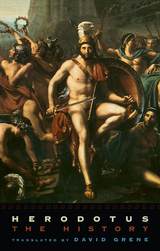
Here is the historian, investigating and judging what he has seen, heard, and read, and seeking out the true causes and consequences of the great deeds of the past. In his History, the war between the Greeks and Persians, the origins of their enmity, and all the more general features of the civilizations of the world of his day are seen as a unity and expressed as the vision of one man who as a child lived through the last of the great acts in this universal drama.
In Grene's remarkable translation and commentary, we see the historian as a storyteller, combining through his own narration the skeletal "historical" facts and the imaginative reality toward which his story reaches. Herodotus emerges in all his charm and complexity as a writer and the first historian in the Western tradition, perhaps unique in the way he has seen the interrelation of fact and fantasy.
"Reading Herodotus in English has never been so much fun. . . . Herodotus crowds his fresco-like pages with all shades of humanity. Whether Herodotus's view is 'tragic,' mythical, or merely common sense, it provided him with a moral salt with which the diversity of mankind could be savored. And savor it we do in David Grene's translation."—Thomas D'Evelyn, Christian Science Monitor
"Grene's work is a monument to what translation intends, and to what it is hungry to accomplish. . . . Herodotus gives more sheer pleasure than almost any other writer."—Peter Levi, New York Times Book Review
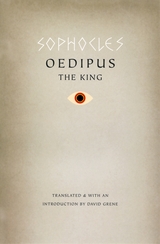
Available for the first time as an independent work, David Grene’s legendary translation of Oedipus the King renders Sophocles’ Greek into cogent, vivid, and poetic English for a new generation to savor. Over the years, Grene and Lattimore’s Complete Greek Tragedies have been the preferred choice of millions of readers—for personal libraries, individual study, and classroom use. This new, stand-alone edition of Sophocles’ searing tale of jealousy, rage, and revenge will continue the tradition of the University of Chicago Press’s classic series.
Praise for David Grene and Richmond Lattimore’s Complete Greek Tragedies
“This is it. No qualifications. Go out and buy it everybody.”—Kenneth Rexroth, Nation
“The translations deliberately avoid the highly wrought and affectedly poetic; their idiom is contemporary. . . . They have life and speed and suppleness of phrase.”—Times Education Supplement

Over the years, David Grene and Richmond Lattimore’s Complete Greek Tragedies have been the preferred translations of millions of readers—for personal libraries, individual study, and classroom use. Drawn from the authoritative third edition of the University of Chicago Press’s classic series, this updated stand-alone edition of Grene’s Oedipus the King renders the original Greek in clear, vivid, and poetic English for a new generation to savor.
Mark Griffith and Glenn W. Most’s introduction to Sophocles’s searing tale of jealousy, rage, and revenge provides essential information about the play’s first production, plot, and reception in antiquity and beyond.

A fiercely independent thinker, colorful storyteller, and spirited teacher, David Grene devoted his life to two things: farming, which he began as a boy in Ireland and continued into old age; and classics, which he taught for several decades that culminated in his translating and editing, with Richmond Lattimore, of The Complete Greek Tragedies.
In this charming memoir, which he wrote during the years leading up to his death in 2002 at the age of eighty-nine, Grene weaves together these interests to tell a quirky and absorbing story of the sometimes turbulent and always interesting life he split between the University of Chicago—where he helped found the Committee on Social Thought—and the farm he kept back in Ireland.
Charting the path that took him from Europe to Chicago in 1937, and encompassing his sixty-five-year career at the university, Grene’s book draws readers into the heady and invigorating climate of his time there. And it is elegantly balanced with reflections stemming from his work on the farm where he hunted, plowed and regularly traveled on horseback to bring his cows home for milking. Grene’s form and humor are quite his own, and his brilliant storytelling will enthrall anyone interested in the classics, rural Ireland, or twentieth-century intellectual history, especially as it pertains to the University of Chicago.
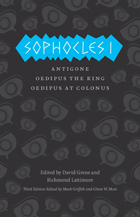
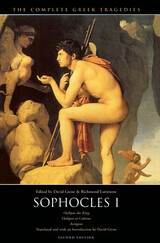
Sophocles I contains the plays “Antigone,” translated by Elizabeth Wyckoff; “Oedipus the King,” translated by David Grene; and “Oedipus at Colonus,” translated by Robert Fitzgerald.
Many years ago, the University of Chicago Press undertook a momentous project: a new translation of the Greek tragedies that would be the ultimate resource for teachers, students, and readers. They succeeded. Under the expert management of eminent classicists David Grene and Richmond Lattimore, those translations combined accuracy, poetic immediacy, and clarity of presentation to render the surviving masterpieces of Aeschylus, Sophocles, and Euripides in an English so lively and compelling that they remain the standard translations. The updated third editions of these classic works were designed to ensure that our Greek tragedies remain the leading English-language versions throughout the twenty-first century.
In this highly anticipated third edition, Mark Griffith and Glenn W. Most have carefully updated the translations to bring them even closer to the ancient Greek while retaining the vibrancy for which our English versions are famous. This edition also includes brand-new translations of Euripides’ Medea, The Children of Heracles, Andromache, and Iphigenia among the Taurians, fragments of lost plays by Aeschylus, and the surviving portion of Sophocles’s satyr-drama The Trackers. New introductions for each play offer essential information about its first production, plot, and reception in antiquity and beyond. In addition, each volume includes an introduction to the life and work of its tragedian, as well as notes addressing textual uncertainties and a glossary of names and places mentioned in the plays.
In addition to the new content, the volumes have been reorganized both within and between volumes to reflect the most up-to-date scholarship on the order in which the plays were originally written. The result is a set of handsome paperbacks destined to introduce new generations of readers to these foundational works of Western drama, art, and life.
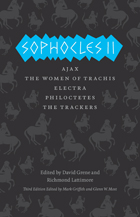
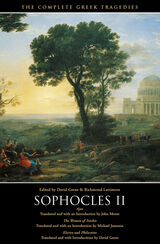
Sophocles II contains the plays “Ajax,” translated by John Moore; “The Women of Trachis,” translated by Michael Jameson; “Electra,” translated by David Grene; “Philoctetes,” translated by David Grene; and “The Trackers,” translated by Mark Griffith.
Many years ago, the University of Chicago Press undertook a momentous project: a new translation of the Greek tragedies that would be the ultimate resource for teachers, students, and readers. They succeeded. Under the expert management of eminent classicists David Grene and Richmond Lattimore, those translations combined accuracy, poetic immediacy, and clarity of presentation to render the surviving masterpieces of Aeschylus, Sophocles, and Euripides in an English so lively and compelling that they remain the standard translations. The updated third editions of these classic works were designed to ensure that our Greek tragedies remain the leading English-language versions throughout the twenty-first century.
In this highly anticipated third edition, Mark Griffith and Glenn W. Most have carefully updated the translations to bring them even closer to the ancient Greek while retaining the vibrancy for which our English versions are famous. This edition also includes brand-new translations of Euripides’ Medea, The Children of Heracles, Andromache, and Iphigenia among the Taurians, fragments of lost plays by Aeschylus, and the surviving portion of Sophocles’s satyr-drama The Trackers. New introductions for each play offer essential information about its first production, plot, and reception in antiquity and beyond. In addition, each volume includes an introduction to the life and work of its tragedian, as well as notes addressing textual uncertainties and a glossary of names and places mentioned in the plays.
In addition to the new content, the volumes have been reorganized both within and between volumes to reflect the most up-to-date scholarship on the order in which the plays were originally written. The result is a set of handsome paperbacks destined to introduce new generations of readers to these foundational works of Western drama, art, and life.
READERS
Browse our collection.
PUBLISHERS
See BiblioVault's publisher services.
STUDENT SERVICES
Files for college accessibility offices.
RECENTLY PUBLISHED






UChicago Accessibility Resources
home | accessibility | search | about | contact us
BiblioVault ® 2001 - 2025
The University of Chicago Press