
 A SCHOLARLY BOOK REPOSITORY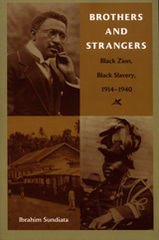
In an account based on extensive archival research, including work in the Liberian National Archives, Sundiata explains how Garvey’s plan collapsed when faced with opposition from the Liberian elite, opposition that belied his vision of a unified Black World. In 1930 the League of Nations investigated labor conditions and, damningly, the United States, land of lynching and Jim Crow, accused Liberia of promoting “conditions analogous to slavery.” Subsequently various plans were put forward for a League Mandate or an American administration to put down slavery and “modernize” the country. Threatened with a loss of its independence, the Liberian government turned to its “brothers beyond the sea” for support. A varied group of white and black anti-imperialists, among them W. E. B. Du Bois, took up the country’s cause. In revealing the struggle of conscience that bedeviled many in the black world in the past, Sundiata casts light on a human rights predicament which, he points out, continues in twenty-first-century African nations as disparate as Sudan, Mauritania, and the Ivory Coast.
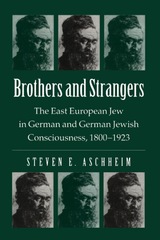
Brothers and Strangers traces the history of German Jewish attitudes, policies, and stereotypical images toward Eastern European Jews, demonstrating the ways in which the historic rupture between Eastern and Western Jewry developed as a function of modernism and its imperatives. By the 1880s, most German Jews had inherited and used such negative images to symbolize rejection of their own ghetto past and to emphasize the contrast between modern “enlightened” Jewry and its “half-Asian” counterpart. Moreover, stereotypes of the ghetto and the Eastern Jew figured prominently in the growth and disposition of German anti-Semitism. Not everyone shared these negative preconceptions, however, and over the years a competing post-liberal image emerged of the Ostjude as cultural hero. Brothers and Strangers examines the genesis, development, and consequences of these changing forces in their often complex cultural, political, and intellectual contexts.



"Peshkin strikes a hopeful chord, revealing what social encounters among ethnic groups—at their best—can be like in America."—Education Digest
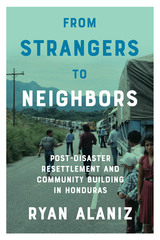
Natural disasters, the effects of climate change, and political upheavals and war have driven tens of millions of people from their homes and spurred intense debates about how governments and nongovernmental organizations (NGOs) should respond with long-term resettlement strategies. Many resettlement efforts have focused primarily on providing infrastructure and have done little to help displaced people and communities rebuild social structure, which has led to resettlement failures throughout the world. So what does it take to transform a resettlement into a successful community?
This book offers the first long-term comparative study of social outcomes through a case study of two Honduran resettlements built for survivors of Hurricane Mitch (1998) by two different NGOs. Although residents of each arrived from the same affected neighborhoods and have similar demographics, twelve years later one resettlement wrestles with high crime, low participation, and low social capital, while the other maintains low crime, a high degree of social cohesion, participation, and general social health. Using a multi-method approach of household surveys, interviews, ethnography, and analysis of NGO and community documents, Ryan Alaniz demonstrates that these divergent resettlement trajectories can be traced back to the type and quality of support provided by external organizations and the creation of a healthy, cohesive community culture. His findings offer important lessons and strategies that can be utilized in other places and in future resettlement policy to achieve the most effective and positive results.
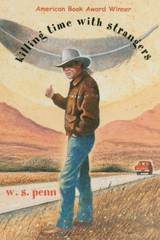
Young Pal needs help with his dreaming.
Palimony Blue Larue, a mixblood growing up in a small California town, suffers from a painful shyness and wants more than anything to be liked. That's why Mary Blue, his Nez Perce mother, has dreamed the weyekin, the spirit guide, to help her bring into the world the one lasting love her son needs to overcome the diffidence that runs so deep in his blood. The magical (and not totally competent) weyekin pops in and out of Pal's life at the most unexpected times—and in the most unlikely guises—but seems to have difficulty setting him on the right path. Is there any hope for Palimony Blue?
Don't ask his father, La Vent Larue; La Vent is past hope, past help, a city zoning planner and a pawn in the mayor's development plans who ends up crazy and in jail after he shoots the mayor in the—well, never mind. Better to ask Pal's mother, who summons the weyekin when she isn't working on a cradle board for Pal and his inevitable bride. And while you're at it, ask the women in Pal's life: Sally the preacher's daughter, Brandy the waitressing flautist, Tara the spoiled socialite. And be sure to ask Amanda, if you can catch her. If you can dream her.
Using comic vision to address serious concerns of living, Penn has written a freewheeling novel that will surpass most readers' expectations of "ethnic fiction." Instead of the usual polemics, it's marked by a sense of humor and a playfulness of language that springs directly from Native American oral tradition.
What more can be said about a book that has to be read to the end in order to get to the beginning? That Killing Time with Strangers is unlike any novel you have read before? Or perhaps that it is agonizingly familiar, giving us glimpses of a young man finding his precarious way in life? But when the power of dreaming is unleashed, time becomes negotiable and life's joys and sorrows go up for grabs. And as sure as yellow butterflies will morph into Post-It notes, you will know you have experienced a new and utterly captivating way of looking at the world.
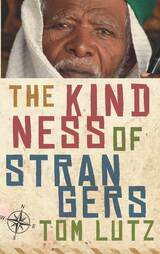
You may never visit these places, but Tom Lutz will do it for you. And while global media may serve up a steady diet of division, violence, oppression, hatred, and strife, The Kindness of Strangers shows that people the world over are much more likely to meet strangers with interest, empathy, welcome, and compassion.


In Myself and Strangers, John Graves, the highly regarded author of Goodbye to a River and other classic works, recalls the decade-long apprenticeship in which he found his voice as a writer. He recounts his wanderings from Texas to Mexico, New York, and Spain, where, like Hemingway, he hoped to find the material with which to write books that mattered. With characteristic honesty, Graves admits the false starts and dead ends that dogged much of his writing, along with the exhilaration he felt when the words finally flowed. He frankly describes both the pleasures and the restlessness of expatriate life in Europe after World War II—as well as his surprising discovery, when family obligations eventually called him home to Texas, that the years away had prepared him to embrace his native land as the fit subject matter for his writing. For anyone seeking the springs that fed John Graves' best-loved books, this memoir of apprenticeship will be genuinely rewarding.
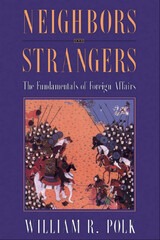
Indeed, going deeper into the human experience, Polk documents "fear of the foreigner" as a visceral response so deep-seated and so pervasive that it transcends human memory, individual experience and even logical analysis. More generally, he shows that the tension created by having to live as neighbors with those who, in the definition of contemporaries, were irredeemably alien has been one of the major causes of the rise of civilizations.
Accessible and engaging, Neighbors and Strangers is a revelatory look at how foreign affairs are a profound reflection of human nature.


Recognizing that any partner is unknowable on some level, Michael Lowenthal writes about how intimacy can make strangers of us all. A newly ordained priest struggles with guilt and longing when he runs into his ex-girlfriend. A woman weighs the cost of protecting her daughter from a man they both adore. A teenage busboy has a jolting brush with a famous musician. A young man tries to salvage a long-distance relationship while caring for his mentor, an erotic writer dying of AIDS.
In edgy, disquieting stories, Lowenthal traces the paths that attraction and erotic encounters take, baffling and rueful as often as electrifying. This fraught and funny volume forces us to grapple with our own subconscious desires and question how well we can ever really know ourselves.

"Strangers is a remarkably good book for a reader sufficiently attentive to hear its quiet power, to let it work in its distinctive way."—Boston Globe
"The poems of David Ferry's Strangers are in fact one book, and it is a splendid one. There is the same austere and poignant voice throughout, asking the unanswerable things, speaking of all that is withheld from us, confronting the unknownness that dwells even in the familiar and dear. Painful and touching, the book offers a distinctive vision which is at the same time inescapably true."—Richard Wilbur
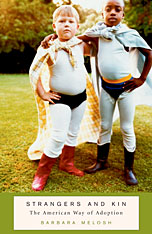
Strangers and Kin is the history of adoption, a quintessentially American institution in its buoyant optimism, generous spirit, and confidence in social engineering. An adoptive mother herself, Barbara Melosh tells the story of how married couples without children sought to care for and nurture other people's children as their own. It says much about the American experience of family across the twentieth century and our shifting notions of kinship and assimilation. Above all, it speaks of real people striving to make families out of strangers.
In the early twentieth century, childless adults confronted orphanages reluctant to entrust their wards to the kindness of strangers. By the 1930s, however, the recently formed profession of social work claimed a new expertise--the science and art of child placement--and adoption became codified in law. It flourished in the United States, reflecting our ethnic diversity, pluralist ideals, and pragmatic approach to family. Then, in the 1960s, as the sexual revolution reshaped marriage, motherhood, and women's work, adoption became a less attractive option and the number of adoptive families precipitously declined. Taking this history into the early twenty-first century, Melosh offers unflinching insight to the contemporary debates that swirl around adoption: the challenges to adoption secrecy; the ethics and geopolitics of international adoption; and the conflicts over transracial adoption.
This gripping history is told through poignant stories of individuals, garnered from case records long inaccessible to others, and captures the profound losses and joys that make adoption a lifelong process.
Author Rachel Seelig portrays Berlin during the Weimar Republic as a “threshold” between exile and homeland in which national and artistic commitments were reexamined, reclaimed, and rebuilt. In the pulsating yet precarious capital of Germany’s first fledgling democracy, the collision of East and West engendered a broad spectrum of poetic styles and Jewish national identities.

Ghassan Zaqtan is not only one of the most significant Palestinian poets at work today, but one of the most important poets writing in Arabic. Since the publication of his first collection in 1980, Zaqtan’s presence as a poet has evolved with the same branching and cumulative complexity as his poems—an invisible system of roots insistently pushing through the impacted soil of political and national narratives.
Strangers in Light Coats is the third collection of Zaqtan’s poetry to appear in English. It brings together poems written between 2014 and 2020 drawn from six volumes of poetry. Catching and holding the smallest particles of observation and experience in their gravity, the poems sprout and grow as though compelled, a trance of process in which fable, myth, and elegy take form only to fall apart and reconfigure, each line picked apart by the next and brought into the new body.
How should Western democracies respond to the many millions of people who want to settle in their societies? Economists and human rights advocates tend to downplay the considerable cultural and demographic impact of immigration on host societies. Seeking to balance the rights of immigrants with the legitimate concerns of citizens, Strangers in Our Midst brings a bracing dose of realism to this debate. David Miller defends the right of democratic states to control their borders and decide upon the future size, shape, and cultural make-up of their populations.
“A cool dissection of some of the main moral issues surrounding immigration and worth reading for its introductory chapter alone. Moreover, unlike many progressive intellectuals, Miller gives due weight to the rights and preferences of existing citizens and does not believe an immigrant has an automatic right to enter a country…Full of balanced judgments and tragic dilemmas.”
—David Goodhart, Evening Standard
“A lean and judicious defense of national interest…In Miller’s view, controlling immigration is one way for a country to control its public expenditures, and such control is essential to democracy.”
—Kelefa Sanneh, New Yorker

In a culture deeply divided along ethnic lines, the idea that the relationship between blacks and Jews was once thought special—indeed, critical to the cause of civil rights—might seem strange. Yet the importance of blacks for Jews and Jews for blacks in conceiving of themselves as Americans, when both remained outsiders to the privileges of full citizenship, is a matter of voluminous but perplexing record. It is this record, written across the annals of American history and literature, culture and society, that Eric Sundquist investigates. A monumental work of literary criticism and cultural history, Strangers in the Land draws upon politics, sociology, law, religion, and popular culture to illuminate a vital, highly conflicted interethnic partnership over the course of a century.
Sundquist explores how reactions to several interlocking issues—the biblical Exodus, the Holocaust, Zionism, and the state of Israel—became critical to black–Jewish relations. He charts volatile debates over social justice and liberalism, anti-Semitism and racism, through extended analyses of fiction by Bernard Malamud, Paule Marshall, Harper Lee, and William Melvin Kelley, as well as the juxtaposition of authors such as Saul Bellow and John A. Williams, Lori Segal and Anna Deavere Smith, Julius Lester and Philip Roth. Engaging a wide range of thinkers and writers on race, civil rights, the Holocaust, slavery, and related topics, and cutting across disciplines to set works of literature in historical context, Strangers in the Land offers an encyclopedic account of questions central to modern American culture.
Strangers in the Land is, then, a history of public opinion, whose purpose is to show how nativism evolved in society and in action. Higham seeks to explain what could inflame xenophobia and who resisted it. He saw his work as part of a renewed interest in the study of nationalism following the national upheavals in the wake of the McCarthy hearings. Surely Higham's mentor at the University of Wisconsin, intellectual historian Merle Curti, influenced Higham's approach in seeking to examine the power of nationalism as an idea. Also influential was the intellectual climate of the 1950s with its of distrust of ideology and distain of prejudice. Higham admits being repelled by the nationalist delusions of the Cold War, again helping to explain why his study concentrates on seeking some explanation for the irrational and violent outbreaks. The book thus focuses on points of conflict, "antagonisms that belong within ideologies of passionate national consciousness." For example, Higham's explains the 100 percent American movement in terms of progressive ideals and the desire of Americans to shape immigrants into a particular ideal of "Americanness" through education and assimilation. This intellectual construct eventually gave way to the racial thinking to which Higham assigns much influence in the efforts to restrict immigration. Ideology is also central to his chapter on the history of the idea of racism in which he argues that Anglo-Saxon nationalism, literary naturalism and a nascent understanding of genetics combined to bring forth arguments for immigration restriction to preserve the racial purity of the American people. Thus, key for Higham's argument is the power of ideas in shaping individual behavior and thereby shaping history.
This text is an absolute must-read for anyone seeking to understand American nativism and the darker side of nationalism.
Hospitality practices grounded in religious belief have long exercised a profound influence on Wisconsin’s Latino communities. Sergio M. González examines the power relations at work behind the types of hospitality--welcoming and otherwise--practiced on newcomers in both Milwaukee and rural areas of the Badger State. González’s analysis addresses central issues like the foundational role played by religion and sacred spaces in shaping experiences and facilitating collaboration among disparate Latino groups and across ethnic lines; the connections between sacred spaces and the moral justification for social justice movements; and the ways sacred spaces evolved into places for mitigating prejudice and social alienation, providing sanctuary from nativism and repression, and fostering local and transnational community building.
Perceptive and original, Strangers No Longer reframes the history of Latinos in Wisconsin by revealing religion’s central role in the settlement experience of immigrants, migrants, and refugees.
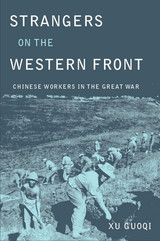
During World War I, Britain and France imported workers from their colonies to labor behind the front lines. The single largest group of support labor came not from imperial colonies, however, but from China. Xu Guoqi tells the remarkable story of the 140,000 Chinese men recruited for the Allied war effort.
These laborers, mostly illiterate peasants from north China, came voluntarily and worked in Europe longer than any other group. Xu explores China’s reasons for sending its citizens to help the British and French (and, later, the Americans), the backgrounds of the workers, their difficult transit to Europe—across the Pacific, through Canada, and over the Atlantic—and their experiences with the Allied armies. It was the first encounter with Westerners for most of these Chinese peasants, and Xu also considers the story from their perspective: how they understood this distant war, the racism and suspicion they faced, and their attempts to hold on to their culture so far from home.
In recovering this fascinating lost story, Xu highlights the Chinese contribution to World War I and illuminates the essential role these unsung laborers played in modern China’s search for a new national identity on the global stage.
"Know thyself," a precept as old as Socrates, is still good advice. But is introspection the best path to self-knowledge? What are we trying to discover, anyway? In an eye-opening tour of the unconscious, as contemporary psychological science has redefined it, Timothy D. Wilson introduces us to a hidden mental world of judgments, feelings, and motives that introspection may never show us.
This is not your psychoanalyst's unconscious. The adaptive unconscious that empirical psychology has revealed, and that Wilson describes, is much more than a repository of primitive drives and conflict-ridden memories. It is a set of pervasive, sophisticated mental processes that size up our worlds, set goals, and initiate action, all while we are consciously thinking about something else.
If we don't know ourselves—our potentials, feelings, or motives—it is most often, Wilson tells us, because we have developed a plausible story about ourselves that is out of touch with our adaptive unconscious. Citing evidence that too much introspection can actually do damage, Wilson makes the case for better ways of discovering our unconscious selves. If you want to know who you are or what you feel or what you're like, Wilson advises, pay attention to what you actually do and what other people think about you. Showing us an unconscious more powerful than Freud's, and even more pervasive in our daily life, Strangers to Ourselves marks a revolution in how we know ourselves.
Starting with the background of the initiative, the authors tell us about the debates over strategy, the court proceedings, and the impact of each stage of the litigation on the parties involved. The authors explore the meaning of legal protection for gay people and the arguments for and against the Colorado initiative.
This book is essential reading for anyone interested in the development of civil rights protections for gay people and the evolution of what it means to be gay in contemporary American society and politics. In addition, it is a rich story well told, and will be of interest to the general reader and scholars working on issues of civil rights, majority-minority relations, and the meaning of equal rights in a democratic society.
Suzanne Goldberg is an attorney with the Lambda Legal Defense and Education Fund. Lisa Keen is Senior Editor at the Washington Blade newspaper.

Starting with the background of the initiative, the authors tell us about the debates over strategy, the court proceedings, and the impact of each stage of the litigation on the parties involved. The authors explore the meaning of legal protection for gay people and the arguments for and against the Colorado initiative.
This book is essential reading for anyone interested in the development of civil rights protections for gay people and the evolution of what it means to be gay in contemporary American society and politics. In addition, it is a rich story well told, and will be of interest to the general reader and scholars working on issues of civil rights, majority-minority relations, and the meaning of equal rights in a democratic society.
Suzanne Goldberg is an attorney with the Lambda Legal Defense and Education Fund. Lisa Keen is Senior Editor at the Washington Blade newspaper.
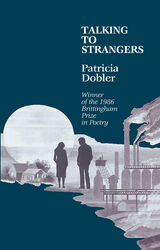
In her first book of poems, Patricia Dobler records her memories of the Ohio mill town where she grew up in the 1950s. but the poems range over time and the memories of others, as well: her immigrant Hungarian grandparents, her parent's tensions during hard times (”Years spilled on the kitchen table, / picked over like beans or old bills”), the dangers, losses, and occasional triumphs of hard-working men and women.
Returning to the landmark Brown v. Board of Education decision of 1954 and to the famous photograph of Elizabeth Eckford, one of the Little Rock Nine, being cursed by fellow "citizen" Hazel Bryan, Allen argues that we have yet to complete the transition to political friendship that this moment offered. By combining brief readings of philosophers and political theorists with personal reflections on race politics in Chicago, Allen proposes strikingly practical techniques of citizenship. These tools of political friendship, Allen contends, can help us become more trustworthy to others and overcome the fossilized distrust among us.
Sacrifice is the key concept that bridges citizenship and trust, according to Allen. She uncovers the ordinary, daily sacrifices citizens make to keep democracy working—and offers methods for recognizing and reciprocating those sacrifices. Trenchant, incisive, and ultimately hopeful, Talking to Strangers is nothing less than a manifesto for a revitalized democratic citizenry.
READERS
Browse our collection.
PUBLISHERS
See BiblioVault's publisher services.
STUDENT SERVICES
Files for college accessibility offices.
RECENTLY PUBLISHED





UChicago Accessibility Resources
home | accessibility | search | about | contact us
BiblioVault ® 2001 - 2024
The University of Chicago Press