
 A SCHOLARLY BOOK REPOSITORY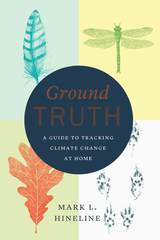
We know that the Earth’s climate is changing, and that the magnitude of this change is colossal. At the same time, the world outside is still a natural world, and one we can experience on a granular level every day. Ground Truth is a guide to living in this condition of changing nature, to paying attention instead of turning away, and to gathering facts from which a fuller understanding of the natural world can emerge over time.
Featuring detailed guidance for keeping records of the plants, invertebrates, amphibians, birds, and mammals in your neighborhood, this book also ponders the value of everyday observations, probes the connections between seasons and climate change, and traces the history of phenology—the study and timing of natural events—and the uses to which it can be put. An expansive yet accessible book, Ground Truth invites readers to help lay the groundwork for a better understanding of the nature of change itself.

An in-depth examination of how computer vision in AI is indebted to artistic ideals from the Enlightenment
When Dutch megabank ING launched a 2016 advertising campaign spearheaded by an AI-generated “next Rembrandt,” it demonstrated just how deeply Western assumptions about the history of art had infiltrated fledgling artificial intelligence technologies. Working backward from this computer-generated Old Master painting, Elizabeth C. Mansfield traces the history of computer vision (the branch of AI research concerned with visual perception, recognition, and design) back to Enlightenment fantasies of intelligent machines and artistic automata.
Through her inquiry in eighteenth-century European fascination with art-making machines, Mansfield connects centuries-old automata to contemporary AI systems like DALL-E and Midjourney, showing how the history of art abides as a ghost in the machine of computer vision. She documents the artistic ambitions, aesthetic experiments, commercial pressures, and crises of authenticity that occur during the development of a technology designed to emulate aspects of human visual perception.
An innovative art historical response to computer vision, Ground Truth offers important new directions for a renewed engagement with art’s humanist and digital generation history. At a time when the humanist enterprise is being questioned, Mansfield makes the different worlds of art history and computer vision mutually intelligible in this compelling account of both.
Retail e-book files for this title are screen-reader friendly with images accompanied by short alt text and/or extended descriptions.
READERS
Browse our collection.
PUBLISHERS
See BiblioVault's publisher services.
STUDENT SERVICES
Files for college accessibility offices.
RECENTLY PUBLISHED






UChicago Accessibility Resources
home | accessibility | search | about | contact us
BiblioVault ® 2001 - 2026
The University of Chicago Press