
 A SCHOLARLY BOOK REPOSITORY
Results by Title
3 books about Guevara, Che
3 books about Guevara, Che

Carne de Dios
A Novel
Homero Aridjis; Translated by Chloe Garcia Roberts
University of Arizona Press, 2025
In the remote mountains of Oaxaca, the Beatniks have arrived.
María Sabina, the renowned Mazatec healer, spends her days in the small town of Huautla de Jiménez selling produce at the market and foraging under the new moon for the sacred mushrooms that grow near her home—her Holy Children, Carne de Dios, or Flesh of God. But her life changes forever when an amateur mycologist from New York, with a cameraman in tow, visits her to experience for himself the mushroom ceremony, or velada, he knows only from whispers in anthropological records. When he publishes an unauthorized article about his experience in LIFE Magazine 1957, the stage is set for an explosive encounter between the burgeoning international counterculture and the woman who became an unwilling icon of the psychedelic revolution.
Homero Aridjis’s novel, vividly translated by Chloe Garcia Roberts, tells the story of the motley crew of bohemians, researchers, and holy fools, both real and imagined, who descend on the town of Huautla de Jiménez searching for inspiration, distraction, and salvation in the sacred mushrooms. These seekers melt in and out of a narrative infiltrated by the slipstream logic of dreams. As John Lennon plays jazz on the patio of the Hotel Grande, Juan Rulfo contemplates horror movies, and Allen Ginsberg recites mantras at Philip Lamantia’s wedding, María Sabina’s life is increasingly thrown into turmoil.
Carne de Dios is a masterful and often humorous blend of history, myth, and poetic imagination, captured in a translation that mirrors the hallucinatory beauty of Aridjis’s original Spanish. Aridjis’s intimate portrayal of María Sabina, informed by his personal connection to her, serves as both a tribute to her enduring legacy and a critical reflection on the wave of global interest in mushroom culture still gaining momentum today.
This English translation includes an introduction by the translator and an afterword by the author.
María Sabina, the renowned Mazatec healer, spends her days in the small town of Huautla de Jiménez selling produce at the market and foraging under the new moon for the sacred mushrooms that grow near her home—her Holy Children, Carne de Dios, or Flesh of God. But her life changes forever when an amateur mycologist from New York, with a cameraman in tow, visits her to experience for himself the mushroom ceremony, or velada, he knows only from whispers in anthropological records. When he publishes an unauthorized article about his experience in LIFE Magazine 1957, the stage is set for an explosive encounter between the burgeoning international counterculture and the woman who became an unwilling icon of the psychedelic revolution.
Homero Aridjis’s novel, vividly translated by Chloe Garcia Roberts, tells the story of the motley crew of bohemians, researchers, and holy fools, both real and imagined, who descend on the town of Huautla de Jiménez searching for inspiration, distraction, and salvation in the sacred mushrooms. These seekers melt in and out of a narrative infiltrated by the slipstream logic of dreams. As John Lennon plays jazz on the patio of the Hotel Grande, Juan Rulfo contemplates horror movies, and Allen Ginsberg recites mantras at Philip Lamantia’s wedding, María Sabina’s life is increasingly thrown into turmoil.
Carne de Dios is a masterful and often humorous blend of history, myth, and poetic imagination, captured in a translation that mirrors the hallucinatory beauty of Aridjis’s original Spanish. Aridjis’s intimate portrayal of María Sabina, informed by his personal connection to her, serves as both a tribute to her enduring legacy and a critical reflection on the wave of global interest in mushroom culture still gaining momentum today.
This English translation includes an introduction by the translator and an afterword by the author.
[more]
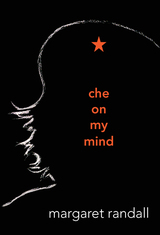
Che on My Mind
Margaret Randall
Duke University Press, 2013
Che on My Mind is an impressionistic look at the life, death, and legacy of Che Guevara by the renowned feminist poet and activist Margaret Randall. Recalling an era and this figure, she writes, "I am old enough to remember the world in which [Che] lived. I was part of that world, and it remains a part of me." Randall participated in the Mexican student movement of 1968 and eventually was forced to leave the country. She arrived in Cuba in 1969, less than two years after Che's death, and lived there until 1980. She became friends with several of Che's family members, friends, and compatriots. In Che on My Mind she reflects on his relationships with his family and fellow insurgents, including Fidel Castro. She is deeply admiring of Che's integrity and charisma and frank about what she sees as his strategic errors. Randall concludes by reflecting on the inspiration and lessons that Che's struggles might offer early twenty-first-century social justice activists and freedom fighters.
[more]
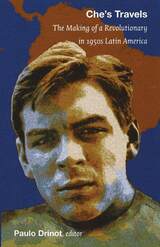
Che's Travels
The Making of a Revolutionary in 1950s Latin America
Paulo Drinot, ed.
Duke University Press, 2010
Ernesto “Che” Guevara twice traveled across Latin America in the early 1950s. Based on his accounts of those trips (published in English as The Motorcycle Diaries and Back on the Road), as well as other historical sources, Che’s Travels follows Guevara, country by country, from his native Argentina through Chile, Peru, Colombia, and Venezuela, and then from Argentina through Bolivia, Peru, Guatemala, and Mexico. Each essay is focused on a single country and written by an expert in its history. Taken together, the essays shed new light on Che’s formative years by analyzing the distinctive societies, histories, politics, and cultures he encountered on these two trips, the ways they affected him, and the ways he represented them in his travelogues. In addition to offering new insights into Guevara, the essays provide a fresh perspective on Latin America’s experience of the Cold War and the interplay of nationalism and anti-imperialism in the crucial but relatively understudied 1950s. Assessing Che’s legacies in the countries he visited during the two journeys, the contributors examine how he is remembered or memorialized; how he is invoked for political, cultural, and religious purposes; and how perceptions of him affect ideas about the revolutions and counterrevolutions fought in Latin America from the 1960s through the 1980s.
Contributors
Malcolm Deas
Paulo Drinot
Eduardo Elena
Judith Ewell
Cindy Forster
Patience A. Schell
Eric Zolov
Ann Zulawski
[more]
READERS
Browse our collection.
PUBLISHERS
See BiblioVault's publisher services.
STUDENT SERVICES
Files for college accessibility offices.
RECENTLY PUBLISHED


UChicago Accessibility Resources
home | accessibility | search | about | contact us
BiblioVault ® 2001 - 2026
The University of Chicago Press