Cloth: 978-1-64642-837-3 | eISBN: 978-1-64642-838-0 (all)
Library of Congress Classification F1219.76 .R57S96 2026
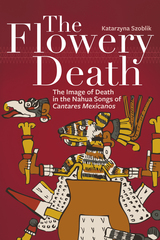
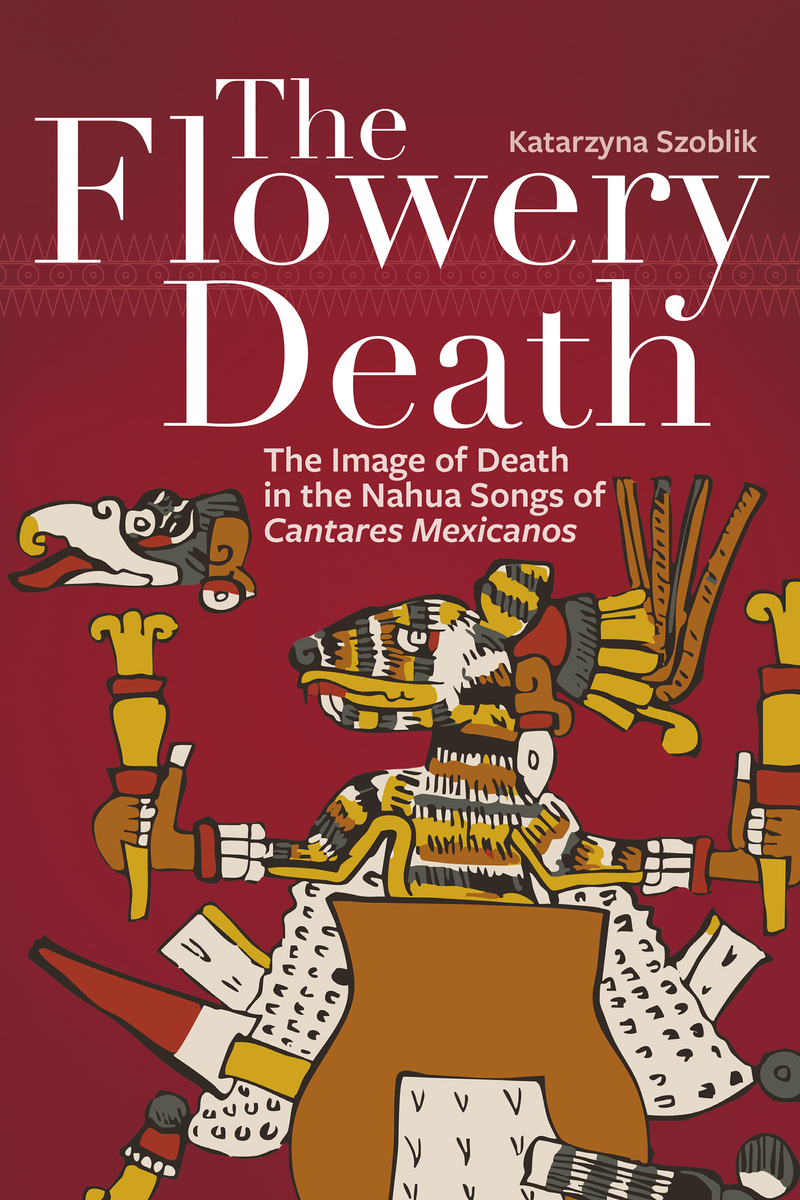
The Flowery Death is a groundbreaking exploration of xochimiquiztli, or “flowery death,” a central concept in the pre-Hispanic Nahua worldview. In the highly militarized societies of the Valley of Mexico, dying in honor of the gods—on the battlefield, in ritual sacrifice, or in childbirth—was not only a social expectation but also a path to spiritual glory. While this idea appears throughout colonial sources, previous studies have relied largely on the writings of Bernardino de Sahagún and other European chroniclers, whose perspectives often simplify or distort Indigenous understandings.
Drawing on the rich oral tradition preserved in the sixteenth-century manuscript Cantares Mexicanos, this book provides one of the first English translations of these songs since John Bierhorst’s 1985 translation. It combines paleographic fidelity, literal English translation, and detailed interpretation, revealing the metaphor- and symbol-rich meanings behind the songs. The book is divided into two interrelated parts: The first reconstructs the Nahua worldview, contextualizing war, death, and sacrifice through myths, chronicles, and visual sources; the second presents selected songs, offering readers the tools to understand their metaphors, historical references, and symbolic language, making the work both a scholarly reference and an accessible guide for students and enthusiasts.
By examining the cultural, religious, and social significance of xochimiquiztli, The Flowery Death provides fresh insights into Nahua ideology, gender roles, and collective memory. It is essential reading for anyone interested in Mesoamerican culture, early colonial history, and the power of Indigenous oral traditions.
See other books on: Aztecs | Funeral customs and rites | Image | Nahuas | Nahuatl poetry
See other titles from University Press of Colorado