
 A SCHOLARLY BOOK REPOSITORY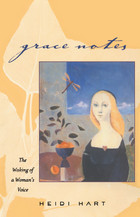
"Ever since I was 10 years old, I’d felt myself yearning to 'go astray.' For me, that didn’t mean drinking and cavorting with boys; it meant being myself without fear."—from the book
What happens when a trained singer who grew up in a "house of vowels" finds that her voice is not her own? What happens when a woman loses the Mormon faith of her childhood and abandons the rituals she’s always known? What does a woman, already married for thirteen years by her early thirties, do when she realizes she has been "lying for years?" How does one sing, with grace, from the heart?
In the spirit of Mary Catherine Bateson’s Composing a Life and Kathleen Norris’s Cloister Walk, Heidi Hart’s luminous memoir retraces her search for an opening to her heart’s path. She finds that the religious life of her Latter-day Saint family—which includes a revered General Authority—robs her of her voice and her spirit. When she discovers Catharine, a mute, Quaker ancestor, Hart begins a vital journey—a journey blessed by her devout and devoted husband; a journey that leads her as she studies Zuni mythology, Jewish tradition, Benedictine monastic ritual, Emily Dickinson, and Saint Hildegard of Bingen—a journey that leads her to a place that feels like home: the company of Friends, the Quaker community of Salt Lake City.
With grace and lyricism, Hart shares the private, personal wisdom she has earned in her community of friends, a community that embraces silences and dissonance, a place where she can't keep from singing.
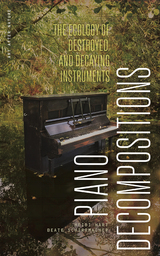
Examining musical instrument destruction through an ecological and intermedial lens
Musical instruments are typically seen as objects both used and maintained with ritualistic care. But what happens when they’re tossed from homes in mudslides, burned during ecstatic parties, or waterlogged by pop stars in viral videos—and how do these elemental interactions transform the way we see and play instruments? Piano Decompositions asks what happens when we let go of controlling musical instruments. What kind of meanings start to sound when instruments are moved out of the protected cultural space and engage with their surrounding elements?
Heidi Hart and Beate Schirrmacher trace the history of destroyed and decaying pianos, both sorting them within the realm of artistic violence against instruments and following their return journeys into water, sand, and soil. They parse the artistic vision of Annea Lockwood, whose iconic burning, drowning, and decaying Piano Transplants presented a novel means of drawing attention to the increasing threats of climate change in the 1960s and ’70s. Turning to instruments made from found materials and others played collaboratively with wind and water, they demonstrate how human sound making is entangled in the more-than-human world.
Showing how the piano can transform conversations around the Anthropocene and environmental destruction, Hart and Schirrmacher find the instrument to be a potent creative and ecological force, a medium to connect with environments in an explorative, attentive way. Piano Decompositions unearths new ways to relate our concepts of curiosity, pleasure, and music to the natural world.
Retail e-book files for this title are screen-reader friendly with images accompanied by short alt text and/or extended descriptions.
READERS
Browse our collection.
PUBLISHERS
See BiblioVault's publisher services.
STUDENT SERVICES
Files for college accessibility offices.
RECENTLY PUBLISHED



UChicago Accessibility Resources
home | accessibility | search | about | contact us
BiblioVault ® 2001 - 2026
The University of Chicago Press