
 A SCHOLARLY BOOK REPOSITORY
Here in a newly annotated edition are the two founding documents of the United States of America: the Declaration of Independence (1776), our great revolutionary manifesto, and the Constitution (1787–88), in which “We the People” forged a new nation and built the framework for our federal republic. Together with the Bill of Rights and the Civil War amendments, these documents constitute what James Madison called our “political scriptures” and have come to define us as a people. Now a Pulitzer Prize–winning historian serves as a guide to these texts, providing historical contexts and offering interpretive commentary.
In an introductory essay written for the general reader, Jack N. Rakove provides a narrative political account of how these documents came to be written. In his commentary on the Declaration of Independence, Rakove sets the historical context for a fuller appreciation of the important preamble and the list of charges leveled against the Crown. When he glosses the Constitution, the Bill of Rights, and the subsequent amendments, Rakove once again provides helpful historical background, targets language that has proven particularly difficult or controversial, and cites leading Supreme Court cases. A chronology of events provides a framework for understanding the road to Philadelphia. The general reader will not find a better, more helpful guide to our founding documents than Jack N. Rakove.
“Eminently readable, and anybody who cares about the future of American democracy in these perilous times can only hope that it will be widely read and carefully considered.”
—James Pope, Washington Post
“Fishkin and Forbath’s accessible work serves as both history lesson and political playbook, offering the Left an underutilized—and perhaps counterintuitive—tool in the present-day fight against social and economic injustice: the Constitution.”
—Benjamin Morse, Jacobin
“Aims to recover the Constitution’s pivotal role in shaping claims of justice and equality…in engaging, imaginative prose that makes even the present court’s capture by the ideological right a compelling platform for a revived social-democratic constitutional politics.”
—New Republic
Oligarchy is a threat to the American republic. When too much economic and political power is concentrated in too few hands, we risk losing the “republican form of government” the Constitution requires. Today, courts enforce the Constitution as if it had almost nothing to say about this threat. But as this revolutionary retelling of constitutional history shows, a commitment to prevent oligarchy once stood at the center of a robust tradition in American political and constitutional thought.
Joseph Fishkin and William Forbath demonstrate that reformers, legislators, and even judges working in this “democracy-of-opportunity” tradition understood that the Constitution imposes a duty on legislatures to thwart oligarchy and promote a broad distribution of wealth and political power. These ideas led Jacksonians to fight special economic privileges for the few, Populists to try to break up monopoly power, and Progressives to battle for the constitutional right to form a union.
But today, as we enter a new Gilded Age, this tradition in progressive American economic and political thought lies dormant. The Anti-Oligarchy Constitution begins the work of recovering it and exploring its profound implications for our deeply unequal society and badly damaged democracy.

The Constitution of the United States is the product of a revolution in political thought as momentous as the winning of American independence. This profusely illustrated volume is a magnificent tribute to the oldest surviving charter of a federal republic. In a felicitous blend of words and pictures, Richard B. Bernstein retells the entire story of this revolution: the problems under the Articles of Confederation; the intense, often vituperative debate between Americans and Europeans over the brave new republican experiment; the arguing, reasoning, and reconciliation of interests before, during, and after the Federal Convention in 1787; the often bitter struggle for ratification in the thirteen states and the critical importance of The Federalist in the accompanying propaganda war; the beginnings of government under the Constitution; and the states' adoption of the Bill of Rights.
The delegates to the Federal Convention were the foremost men of their states and regions—bookish but not reclusive, activist but not undisciplined, principled but not rigid. Bernstein's colorful description of the intellectual and political ferment they first created and then controlled brings to life their heroic effort. Along with these lost chapters of our history, he shows how experiments in government were a critical part of Americans' attempts to define their identity as a nation and a people.
The Constitution was the result of no miracle; the outcome was never foreordained. A blend of theory and practicality, it was to be understood by all, not just by experts, and was no talisman against evils or unyielding to new experiences. As it bound up the founding generation, it was to be a guide to their successors. Illuminating his discussion—and our understanding—of the Constitution is a huge array of rare, in some cases unique, documents assembled by The New York Public Library for its exhibition commemorating the bicentennial of the Constitution.
Armed with the Constitution stresses the courage of a black man, Rosco Jones, and a white woman, Grace Marsh, who dared to challenge the status quo in Alabama in the early 1940s. These two Jehovah’s Witnesses helped to lay a foundation for testing the constitutionality of state and local laws, establishing precedents that the Civil Rights movement, the feminist movement, and similar forces could follow. Newton has prepared a finely woven tale of oral, legal, and social history that opens a window on the world of the Jehovah’s Witnesses in Alabama.
More than a legal study, this book is also a dramatic history of two powerful personalities whose total commitment to their faith enabled them to carry the Jehovah’s Witnesses’ battle from rural Alabama to the halls of the U.S. Supreme Court.

Sunder Rajan’s ethnography informs his theoretically sophisticated inquiry into how the contemporary world is shaped by the marriage of biotechnology and market forces, by what he calls technoscientific capitalism. Bringing Marxian theories of value into conversation with Foucaultian notions of biopolitics, he traces how the life sciences came to be significant producers of both economic and epistemic value in the late twentieth century and early twenty-first.
Many of the most controversial political issues of our time focus on the actions and well-being of children such as Greta Thunberg’s climate movement; youth activists standing up for racial justice, safe schools, and an equitable economy; and the furor over separating migrant children from their families. When do we treat children as competent citizens, when do we treat them as dependents in need of protection, and why?
The Child before the Court: Judgment, Citizenship, and the Constitution provides answers to these foundational questions. It analyzes landmark US Supreme Court cases involving children’s free speech and due process rights and argues that our ideas about civic and legal judgment are deeply contested concepts instead of simple character traits. These cases serve as analytic touchstones for these problems, and the Court’s opinions seemingly articulate clear rules through a pragmatic balancing of interests.
Timothy Barouch shows how these cases continually reshape constitutional thought, breaking from a vocabulary of wardship and recasting the child as a liberal individual. He analyzes these legal opinions as judicial novelizations and focuses on their rhetorical markers: the range of tropes, idioms, figures, and arguments that emerge across nearly two centuries of jurisprudence in this important but oft-neglected area. The careful and subtle readings of these cases demonstrate how judicial representations of the child provide key resources for thinking about the child as citizen and, more broadly, citizenship itself. It serves as a bold call to think through the relationship between the liberal individual and the problem of civic judgment as it manifests in public culture in a wide array of contexts at a time when liberal democracy is under siege.
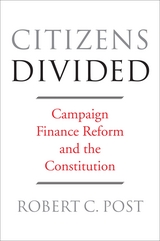
The Supreme Court’s 5–4 decision in Citizens United v. Federal Election Commission, which struck down a federal prohibition on independent corporate campaign expenditures, is one of the most controversial opinions in recent memory. Defenders of the First Amendment greeted the ruling with enthusiasm, while advocates of electoral reform recoiled in disbelief. Robert C. Post offers a new constitutional theory that seeks to reconcile these sharply divided camps.
Post interprets constitutional conflict over campaign finance reform as an argument between those who believe self-government requires democratic participation in the formation of public opinion and those who believe that self-government requires a functioning system of representation. The former emphasize the value of free speech, while the latter emphasize the integrity of the electoral process. Each position has deep roots in American constitutional history. Post argues that both positions aim to nurture self-government, which in contemporary life can flourish only if elections are structured to create public confidence that elected officials are attentive to public opinion. Post spells out the many implications of this simple but profound insight. Critiquing the First Amendment reasoning of the Court in Citizens United, he also shows that the Court did not clearly grasp the constitutional dimensions of corporate speech.
Blending history, constitutional law, and political theory, Citizens Divided explains how a Supreme Court case of far-reaching consequence might have been decided differently, in a manner that would have preserved both First Amendment rights and electoral integrity.

Ryan Hendrickson examines the behavior of the Clinton administration and Congress in dealing with the range of American military operations that occurred during the Clinton presidency. He uses a case-study approach, laying out the foreign background and domestic political controversies in separate chapters on Somalia, Haiti, Bosnia, Kosovo, and Iraq. Of special interest after the World Trade Center attacks is the chapter "Terrorism: Usama Bin Laden."
The author analyzes a number of factors that influence the domestic decision-making process. We see the president relying on congressional consultation and approval during periods of political or personal weakness, and, conversely, in better times we see a president with a freer hand. Also influential is the ability of the public to comprehend and support the reasons for a particular action, with troops in Bosnia requiring more explanation than cruise missiles over Baghdad. Consideration is given to the relevance and effectiveness of the War Powers Resolution of 1973, a Watergate-era attempt by Congress to restore what it perceived to be its legitimate constitutional role in the decision to use force abroad.
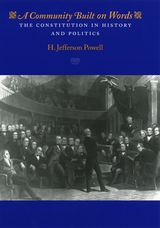
Combining history and theory, Powell analyzes a series of constitutional controversies from 1790 to 1944 to demonstrate that constitutional law from its very beginning has involved politically charged and ideologically divisive arguments. Nowhere in our past can one find the golden age of apolitical constitutional thinking that a great deal of contemporary scholarship seeks or presupposes. Viewed over time, American constitutional law is a history of political dispute couched in constitutional terms.
Powell then takes his conclusions one step further, claiming that it is precisely this historical tradition of argument that has given American constitutional law a remarkable coherence and integrity over time. No matter what the particular political disputes of the day might be, constitutional argument has provided a shared language through which our political community has been able to fight out its battles without ultimately fracturing.
A Community Built on Words will be must reading for any student of constitutional history, theory, or law.
"Cavell's 'readings' of Wittgenstein and Heidegger and Emerson and other thinkers surely deepen our understanding of them, but they do much more: they offer a vision of what life can be and what culture can mean. . . . These profound lectures are a wonderful place to make [Cavell's] acquaintance."—Hilary Putnam
Several contributors offer wide-ranging accounts of the workings of Congress. They look at lawmakers’ attitudes toward Congress’s role as a constitutional interpreter, the offices within Congress that help lawmakers learn about constitutional issues, Congress’s willingness to use its confirmation power to shape constitutional decisions by both the executive and the courts, and the frequency with which congressional committees take constitutional questions into account. Other contributors address congressional deliberation, paying particular attention to whether Congress’s constitutional interpretations are sound. Still others examine how Congress and the courts should respond to one another’s decisions, suggesting how the courts should evaluate Congress’s work and considering how lawmakers respond to Court decisions that strike down federal legislation. While some essayists are inclined to evaluate Congress’s constitutional interpretation positively, others argue that it could be improved and suggest institutional and procedural reforms toward that end. Whatever their conclusions, all of the essays underscore the pervasive and crucial role that Congress plays in shaping the meaning of the Constitution.
Contributors. David P. Currie, Neal Devins, William N. Eskridge Jr.. John Ferejohn, Louis Fisher, Elizabeth Garrett, Michael J. Gerhardt, Michael J. Klarman, Bruce G. Peabody, J. Mitchell Pickerill, Barbara Sinclair, Mark Tushnet, Adrian Vermeule, Keith E. Whittington, John C. Yoo
In a powerful new narrative, G. Edward White challenges the reigning understanding of twentieth-century Supreme Court decisions, particularly in the New Deal period. He does this by rejecting such misleading characterizations as "liberal," "conservative," and "reactionary," and by reexamining several key topics in constitutional law.
Through a close reading of sources and analysis of the minds and sensibilities of a wide array of justices, including Holmes, Brandeis, Sutherland, Butler, Van Devanter, and McReynolds, White rediscovers the world of early-twentieth-century constitutional law and jurisprudence. He provides a counter-story to that of the triumphalist New Dealers. The deep conflicts over constitutional ideas that took place in the first half of the twentieth century are sensitively recovered, and the morality play of good liberals vs. mossbacks is replaced. This is the only thoroughly researched and fully realized history of the constitutional thought and practice of all the Supreme Court justices during the turbulent period that made America modern.
Like its predecessors, The Constitution in Congress: Democrats and Whigs will be an invaluable reference for legal scholars and constitutional historians alike.
This acclaimed series serves as a biography of the U.S. Constitution, offering an indispensable survey of the congressional history behind its development. In a rare examination of the role that both the legislative and executive branches have played in the development of constitutional interpretation, The Constitution in Congress shows how the actions and proceedings of these branches reveal perhaps even more about constitutional disputes than Supreme Court decisions of the time.
The centerpiece for the fourth volume in this series is the great debate over slavery and how this divisive issue led the country into the maelstrom of the Civil War. From the Jacksonian revolution of 1829 to the secession of Southern states from the Union, legal scholar David P. Currie provides an unrivaled analysis of the significant constitutional events—the Wilmot Proviso, the Compromise of 1850, the Kansas-Nebraska Act, the Lincoln-Douglas Debates, and "Bleeding Kansas"—that led up to the war. Exploring how slavery was addressed in presidential speeches and debated in Congress, Currie shows how the Southern Democrats dangerously diminished federal authority and expanded states' rights, threatening the nation's very survival.
Like its predecessors, this fourth volume of The Constitution in Congress will be an invaluable reference for legal scholars and constitutional historians alike.
"A joy to read."—Appellate Practive Journal and Update
"[A] patient and exemplary analysis of the work of the first six Congresses."—Geoffrey Marshall, Times Literary Supplement
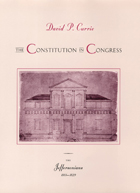
legislative and executive action in the United States, legal scholars
have traditionally looked only to the courts for guidance in
interpreting the Constitution. This, the second book in David P.
Currie's multivolume series, looks to the legislative and executive
branches for insights into the development of constitutional
interpretation.
Currie examines the period of Republican hegemony from the
inauguration of Thomas Jefferson in 1801 to the election of Andrew
Jackson in 1829. During this time of great leadership and
controversy, many benchmark issues—the abolition of the new Circuit
Courts, the Louisiana Purchase, the Burr conspiracy, the War of 1812,
the Monroe Doctrine, and the Missouri Compromise, among others—were
debated and decided almost exclusively in the legislative and
executive arenas. With its uniquely legal perspective and
comprehensive coverage, The Constitution in Congress
illustrates how the executive and legislative branches matched the
Supreme Court in putting flesh and blood onto the skeleton of the
Constitution.
"A thorough, systematic, and careful assessment. . . . As a reference work for constitutional teachers, it is a gold mine."—Charles A. Lofgren, Constitutional Commentary
"Elegant and readable. Whether you are in favor of judicial restraint or judicial activism, whatever your feelings about the Warren Court, or the Renquist Court, this is a book that justifies serious study."—Robert Stevens, New York Times Book Review
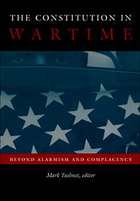
Some of the essays are broad in scope, reflecting on national character, patriotism, and political theory; exploring whether war and republican government are compatible; and considering in what sense we can be said to be in wartime circumstances today. Others are more specific, examining the roles of Congress, the presidency, the courts, and the international legal community. Throughout the collection, balanced, unbiased analysis leads to some surprising conclusions, one of which is that wartime conditions have sometimes increased, rather than curtailed, civil rights and civil liberties. For instance, during the cold war, government officials regarded measures aimed at expanding African Americans’ freedom at home as crucial to improving America’s image abroad.
Contributors. Sotirios Barber, Mark Brandon, James E. Fleming, Mark Graber, Samuel Issacharoff, David Luban, Richard H. Pildes, Eric Posner, Peter Spiro, William Michael Treanor, Mark Tushnet, Adrian Vermeule
"A reflective, often biting, commentary on the nature of our society and its dominant thought by one who is passionately opposed to the coercion of human beings by the arbitrary will of others, who puts liberty above welfare and is sanguine that greater welfare will thereby ensue."—Sidney Hook, New York Times Book Review
In this classic work Hayek restates the ideals of freedom that he believes have guided, and must continue to guide, the growth of Western civilization. Hayek's book, first published in 1960, urges us to clarify our beliefs in today's struggle of political ideologies.
From the $700 billion bailout of the banking industry to president Barack Obama’s $787 billion stimulus package to the highly controversial passage of federal health-care reform, conservatives and concerned citizens alike have grown increasingly fearful of big government. Enter Nobel Prize–winning economist and political theorist F. A. Hayek, whose passionate warning against empowering states with greater economic control, The Road to Serfdom, became an overnight sensation last summer when it was endorsed by Glenn Beck. The book has since sold over 150,000 copies.
The latest entry in the University of Chicago Press’s series of newly edited editions of Hayek’s works, The Constitution of Liberty is, like Serfdom, just as relevant to our present moment. The book is considered Hayek’s classic statement on the ideals of freedom and liberty, ideals that he believes have guided—and must continue to guide—the growth of Western civilization. Here Hayek defends the principles of a free society, casting a skeptical eye on the growth of the welfare state and examining the challenges to freedom posed by an ever expanding government—as well as its corrosive effect on the creation, preservation, and utilization of knowledge. In opposition to those who call for the state to play a greater role in society, Hayek puts forward a nuanced argument for prudence. Guided by this quality, he elegantly demonstrates that a free market system in a democratic polity—under the rule of law and with strong constitutional protections of individual rights—represents the best chance for the continuing existence of liberty.
Striking a balance between skepticism and hope, Hayek’s profound insights are timelier and more welcome than ever before. This definitive edition of The Constitution of Liberty will give a new generation the opportunity to learn from his enduring wisdom.
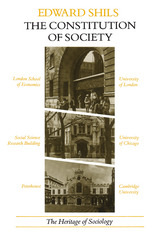
Professor Shils has attempted to develop a theory that has a place for more than those parts of society that are generated from the biological nature of human beings and those parts that are engendered by the desires of individuals, acting for themselves or for groups and categories of individuals, to maintain and increase their power over other human beings and to secure material goods and services for themselves. He has argued that there are constituents of society in which human beings seek and cultivate connections with objects that transcend those needed to satisfy biological necessity and the desire for material objects and power over others. This third stratum of social existence, he concludes, cannot be reduced to the other two and cannot be disregarded in any serious attempt to understand the function of any society. Thus Edward Shils, without disregarding its many valuable achievements, has nevertheless parted ways with much of modern sociology.
For this collection of papers the author has written an introductory intellectual autobiography that places each essay in the setting of the development of his thought and that connects it with his other writings.

Beginning with an overview of the essential features of the Basic Law of Germany, Currie then elucidates those features by analyzing a number of decisions of the German Constitutional Court. Contrasting German constitutional law with the American model, Currie further illuminates the German system and provides an invaluable comparative perspective on American institutions, judicial methods, and constitutional principles.
The German constitutional court recently has become the object of international attention as it has grappled with controversies involving abortion, ratification of the Maastricht Treaty, and the reunification of East and West. Currie examines these issues and their impact on the German constitution.
An appendix includes (in English translation) the complete Basic Law for the Federal Republic of Germany of May 23, 1949 as amended to December 1, 1993.
A sympathetic yet critical guide, Currie's book enables students and laypersons to understand one of the cornerstones of the Western political tradition. The second edition, along with an updated chronology and bibliography, incorporates the Supreme Court decisions over the past decade that have affected constitutional interpretation.
"Superb . . . highly recommended for those seeking a reliable, understandable, and useful introduction to our constitution."—Appellate Practice Journal and Update

A masterly introduction to the United States Constitution, this slim book leads the reader through a concise overview of the document's individual articles and amendments. With clear and accessible language, Currie then examines each of the three branches of the federal government and explains the relation between the federal and state governments. He analyzes those constitutional provisions that are designed to protect citizens from governmental interference, such as the due process and equal protection clauses and the confusing first amendment provisions respecting the separation of church and state, and includes discussions of judicial review and freedom of speech and of the press.
A sympathetic yet critical guide, Currie's book enables students and laypersons to understand one of the cornerstones of the Western political tradition. The second edition, along with an updated chronology and bibliography, incorporates the Supreme Court decisions over the past decade that have affected constitutional interpretation.
"Superb . . . highly recommended for those seeking a reliable, understandable, and useful introduction to our constitution."—Appellate Practice Journal and Update

In recognition of the bicentennial of the Constitution of the United States, former chief justice Warren E. Burger, Justice Antonin Scalia, ACLU president Norman Dorsen, and others delivered papers at the first annual DeWitt Wallace Conference on the Liberal Arts, held at Macalester College, St. Paul.
Joining some of the best legal minds in America were novelist John Edgar Wideman, chemist Harry B. Gray, historian Mary Beth Norton, and psychiatrist and social psychologist Robert Jay Lifton.
Opening the conference and this book, former chief Justice Burger emphasizes the daring of those who drafted the Constitution. Justice Scalia, noting the great reduction in curbs to freedom of expression since World War I, points out that the proliferation of freedom has forced courts to distinguish between types of expression.
Although the views expressed in these essays differ widely, opinion concerning the major issue falls into two definite camps: Burger, Scalia, and Dorsen contend that freedom of expression depends on the legal structure for survival; Wideman, Gray, Lifton, and Norton maintain that social forces determine freedom of expression.
Krieger's lucid discussions will help readers to appreciate the larger physical issues behind the mathematical detail of modern physics and gain deeper insights into how theoretical physicists work. Constitutions of Matter is a rare, behind-the-scenes glimpse into the world of modern physics.
"[Krieger] provides students of physics and applied mathematics with a view of the physical forest behind the mathematical trees, historians and philosophers of science with insights into how theoretical physicists go about their work, and technically advanced general readers with a glimpse into the discipline."—Scitech Book News
The larger question with which the legislators grappled were the limits of the Constitution’s provisions granting Congress the authority to affect the institution of slavery—both where it already existed and where it could expand. The issue—what would come to be known as the Missouri Crisis—severely tested the still young republic and, some four decades later, would all but rend it asunder. This timely collection of original essays thoughtfully engages the intersections of history and constitutional law, and is certain to find eager readers among historians, legal scholars, political scientists, as well as many who call Missouri home.
Contributing Authors:
William S. Belko
Christopher Childers
John Eastman
Brook Poston
John R. Van Atta

We are connected to distant space and time not only by our imaginations but also through a common cosmic heritage. Emerging now from modern science is a unified scenario of the cosmos, including ourselves as sentient beings, based on the time-honored concept of change. From galaxies to snowflakes, from stars and planets to life itself, we are beginning to identify an underlying ubiquitous pattern penetrating the fabric of all the natural sciences--a sweepingly encompassing view of the order and structure of every known class of object in our richly endowed universe.
This is the subject of Eric Chaisson's new book. In Cosmic Evolution Chaisson addresses some of the most basic issues we can contemplate: the origin of matter and the origin of life, and the ways matter, life, and radiation interact and change with time. Guided by notions of beauty and symmetry, by the search for simplicity and elegance, by the ambition to explain the widest range of phenomena with the fewest possible principles, Chaisson designs for us an expansive yet intricate model depicting the origin and evolution of all material structures. He shows us that neither new science nor appeals to nonscience are needed to understand the impressive hierarchy of the cosmic evolutionary story, from quark to quasar, from microbe to mind.
In 2005 hopes for closer European integration were dealt a potentially fatal blow when French and Dutch voters rejected the proposed new European Union constitution. Going beyond the instant analysis of journalists, which placed blame for the failed vote on the two nations’ internal politics, Democracy Needs Dispute examines a collection of media accounts of European policy debates to argue that the problem with the EU is its relative lack of vibrant political conflict. Democracy Needs Dispute offers both up-to-date analysis and a rich theoretical understanding of the problems facing further efforts at European integration.
The project of E Pluribus Unum is twofold. Its first and underlying concern is the general philosophic problem of the one and the many as it came to be understood at the time. W. C. Harris supplies a detailed account of the genealogy of the concept, exploring both its applications and its paradoxes as a basis for state and identity formation.
Harris then considers the perilous integration of the one and the many as a motive in the major literary accomplishments of 19th-century U.S. writers. Drawing upon critical as well as historical resources and upon contexts as diverse as cosmology, epistemology, poetics, politics, and Bible translation, he discusses attempts by Poe, Whitman, Melville, and William James to resolve the problems of social construction caused by the paradox of e pluribus unum by writing literary and philosophical texts that supplement the nation’s political founding documents.
Poe (Eureka), Whitman (Leaves of Grass), Melville (Billy Budd), and William James (The Varieties of Religious Experience) provide their own distinct, sometimes contradictory resolutions to the conflicting demands of diversity and unity, equality and hierarchy. Each of these texts understands literary and philosophical writing as having the potential to transform-conceptually or actually-the construction of social order.
This work will be of great interest to literary and constitutional scholars.
Although Hamilton exterted an extraordinary influence on American institutions, his contribution and the thinking behind it often have been obscured and misconstrued by piecemeal approaches to his voluminous writings. Here, Flaumenhaft draws upon more than two dozen volumes of Hamilton’s papers to produce a comprehensive account of his thought on the principles of politics—the account which Hamilton himself hoped to give in a multivolume treatise, but died before producing.
Beginning with a discussion of the place of general principles in Hamilton’s thought, The Effective Republic proceeds to his views on popular representation as a safeguard of individual liberty. Flaumenhaft then elaborates on Hamilton’s thinking about efficacious administration, especially how the President and Senate meet the requirements of unity and duration in a republic, and on the importance of an independent judiciary for constitutional integrity. What emerges clearly as Hamilton’s chief concern is the need to make government not only safe but effective—hindered from doing harm by its popular base, but also, through the differentiation of administrative powers and tasks, capable of doing good.
Interpreting, linking, and, and arranging Hamilton’s words, Flaumenhaft allows Hamilton to speak for himself, to explain his benificiaries his vision of what the republican experiment needed in order to succeed.
Winner, Crader Family Book Prize in American Values, Department of History and Crader Family Endowment for American Values, Southeast Missouri State University
In this volume, Gary McDowell considers the equity power created by Article III of the Constitution, on which the most controversial decisions of the Supreme Court have rested. He points out the equity was originally understood as an extraordinary means of offering relief to individuals in cases of fraud, accident, mistake, or trust and as a means of "confining the operation of unjust and partial laws." It has now been stretched to offer relief to broadly defined social classes. This "sociological" understanding, in McDowell's view, has undermined equity as a substantive body of law. He urges a return to the former definition as a means of restraining the reach of federal jurisdiction.
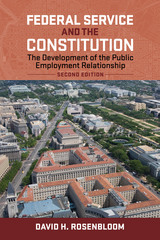
Conceived during the turbulent period of the late 1960s when ‘rights talk’ was ubiquitous, Federal Service and the Constitution, a landmark study first published in 1971, strove to understand how the rights of federal civil servants had become so differentiated from those of ordinary citizens. Now in a new, second edition, this legal–historical analysis reviews and enlarges its look at the constitutional rights of federal employees from the nation's founding to the present.
Thoroughly revised and updated, this highly readable history of the constitutional relationship between federal employees and the government describes how the changing political, administrative, and institutional concepts of what the federal service is or should be are related to the development of constitutional doctrines defining federal employees’ constitutional rights. Developments in society since 1971 have dramatically changed the federal bureaucracy, protecting and expanding employment rights, while at the same time Supreme Court decisions are eroding the special legal status of federal employees. Looking at the current status of these constitutional rights, Rosenbloom concludes by suggesting that recent Supreme Court decisions may reflect a shift to a model based on private sector practices.

More than four million U.S. citizens currently live in five “unincorporated” U.S. territories. The inhabitants of these vestiges of an American empire are denied full representation in Congress and cannot vote in presidential elections. Focusing on Puerto Rico, the largest and most populous of the territories, Foreign in a Domestic Sense sheds much-needed light on the United States’ unfinished colonial experiment and its legacy of racially rooted imperialism, while insisting on the centrality of these “marginal” regions in any serious treatment of American constitutional history. For one hundred years, Puerto Ricans have struggled to define their place in a nation that neither wants them nor wants to let them go. They are caught in a debate too politicized to yield meaningful answers. Meanwhile, doubts concerning the constitutionality of keeping colonies have languished on the margins of mainstream scholarship, overlooked by scholars outside the island and ignored by the nation at large.
This book does more than simply fill a glaring omission in the study of race, cultural identity, and the Constitution; it also makes a crucial contribution to the study of American federalism, serves as a foundation for substantive debate on Puerto Rico’s status, and meets an urgent need for dialogue on territorial status between the mainlandd and the territories.
Contributors. José Julián Álvarez González, Roberto Aponte Toro, Christina Duffy Burnett, José A. Cabranes, Sanford Levinson, Burke Marshall, Gerald L. Neuman, Angel R. Oquendo, Juan Perea, Efrén Rivera Ramos, Rogers M. Smith, E. Robert Statham Jr., Brook Thomas, Richard Thornburgh, Juan R. Torruella, José Trías Monge, Mark Tushnet, Mark Weiner

Viewed alternately as an obstacle to justice, an impediment to efficient government, and a tool by which some groups gain benefits and privileges at the expense of others, public administration threatens to become the whipping boy of American government. In this innovative look at the nation's bureaucracy, Michael W. Spicer revisits the values of the Constitution in order to reconcile the administrative state to its many critics.
Drawing on political and social philosophy, Spicer argues that there is a fundamental philosophical conflict over the role of reason in society between writers in public administration and the designers of the American Constitution. This examination of worldviews illuminates the problem that American government faces in trying to ground a legitimate public administration in the Constitution. Defending and developing the Founders' idea that political power, whatever its source, must be checked, he critically examines existing ideas about the role of public administration in American governance and offers an alternative vision of public administration more in line with the Founders' constitutional design. This book will provide fresh insights for anyone interested in the role of public administration in the United States today.
This book argues that the Supreme Court performs two functions. The first is to identify the Constitution's idealized "meaning." The second is to develop tests and doctrines to realize that meaning in practice. Bridging the gap between the two--implementing the Constitution--requires moral vision, but also practical wisdom and common sense, ingenuity, and occasionally a willingness to make compromises.
In emphasizing the Court's responsibility to make practical judgments, Implementing the Constitution takes issue with the two positions that have dominated recent debates about the Court's proper role. Constitutional "originalists" maintain that the Court's essential function is to identify the "original understanding" of constitutional language and then apply it deductively to current problems. This position is both unwise and unworkable, the book argues. It also critiques well-known accounts according to which the Court is concerned almost exclusively with matters of moral and constitutional principle.
Implementing the Constitution bridges the worlds of constitutional theory, political theory, and constitutional practice. It illuminates the Supreme Court's decision of actual cases and its development of well-known doctrines. It is a doctrinal study that yields jurisprudential insights and a contribution to constitutional theory that is closely tied to actual judicial practice.
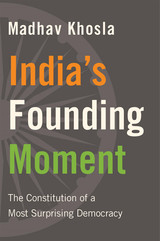
An Economist Best Book of the Year
How India’s Constitution came into being and instituted democracy after independence from British rule.
Britain’s justification for colonial rule in India stressed the impossibility of Indian self-government. And the empire did its best to ensure this was the case, impoverishing Indian subjects and doing little to improve their socioeconomic reality. So when independence came, the cultivation of democratic citizenship was a foremost challenge.
Madhav Khosla explores the means India’s founders used to foster a democratic ethos. They knew the people would need to learn ways of citizenship, but the path to education did not lie in rule by a superior class of men, as the British insisted. Rather, it rested on the creation of a self-sustaining politics. The makers of the Indian Constitution instituted universal suffrage amid poverty, illiteracy, social heterogeneity, and centuries of tradition. They crafted a constitutional system that could respond to the problem of democratization under the most inhospitable conditions. On January 26, 1950, the Indian Constitution—the longest in the world—came into effect.
More than half of the world’s constitutions have been written in the past three decades. Unlike the constitutional revolutions of the late eighteenth century, these contemporary revolutions have occurred in countries characterized by low levels of economic growth and education, where voting populations are deeply divided by race, religion, and ethnicity. And these countries have democratized at once, not gradually. The events and ideas of India’s Founding Moment offer a natural reference point for these nations where democracy and constitutionalism have arrived simultaneously, and they remind us of the promise and challenge of self-rule today.
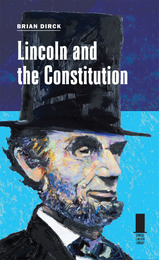
In this highly readable study of Abraham Lincoln’s thoughts and actions concerning the U.S. Constitution, Brian R. Dirck combines extensive primary research and thoughtful, accessible consideration of Lincoln’s views to reveal new insights into Lincoln’s impact on the U.S. Constitution. In the statesman’s roles as a leading antebellum politician, an ardent critic of slavery, and the president of the United States during the Civil War, Lincoln fashioned a strong antislavery constitutional ideology and articulated a constitutional vision of the Civil War that reinforced his determination to restore the Union.
Grounding Lincoln’s constitutionalism in his reading habits and early legal career, Dirck masterfully balances biographical details, Lincoln’s value system, the opinions of his supporters and critics, and key events and ideas to show how his thinking about the U.S. Constitution changed over time. From Lincoln’s deep reverence for the work of the Founding Fathers to his innovative interpretation of presidential war powers, Dirck reveals Lincoln’s understanding of the Constitution to be progressive, emphasizing federal power as a tool to develop the economy, and pragmatic, in that he was often forced to make decisions on the fly during a remarkably volatile period in American history. Lincoln used his conception of presidential war powers to advance the twin causes of Union and emancipation, and Dirck explores the constitutional problems stirred by curbs Lincoln placed on civil liberties, internal security, and freedom of expression during wartime.
More than a straightforward overview of Lincoln’s constitutional views, Lincoln and the Constitution provides a starting point for further inquiry into interpretations and defenses as well as the political, intellectual, and cultural traditions of the founding document of the United States. In the end, Dirck shows, Lincoln viewed the political and legal traditions of the Constitution with optimism, emphasizing
throughout his life the possibilities he believed the document held—always keeping faith in it and swearing to protect it, even as he was awash in a sea of blood and controversy.
Univeristy Press Books for Public and Secondary Schools 2013 edition
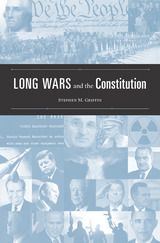
In a wide-ranging constitutional history of presidential war decisions from 1945 to the present, Stephen M. Griffin rethinks the long-running debate over the “imperial presidency” and concludes that the eighteenth-century Constitution is inadequate to the challenges of a post-9/11 world.
The Constitution requires the consent of Congress before the United States can go to war. Truman’s decision to fight in Korea without gaining that consent was unconstitutional, says Griffin, but the acquiescence of Congress and the American people created a precedent for presidents to claim autonomy in this arena ever since. The unthinking extension of presidential leadership in foreign affairs to a point where presidents unilaterally decide when to go to war, Griffin argues, has destabilized our constitutional order and deranged our foreign policy. Long Wars and the Constitution demonstrates the unexpected connections between presidential war power and the constitutional crises that have plagued American politics.
Contemporary presidents are caught in a dilemma. On the one hand are the responsibilities handed over to them by a dangerous world, and on the other is an incapacity for sound decisionmaking in the absence of interbranch deliberation. President Obama’s continuation of many Bush administration policies in the long war against terrorism is only the latest in a chain of difficulties resulting from the imbalances introduced by the post-1945 constitutional order. Griffin argues for beginning a cycle of accountability in which Congress would play a meaningful role in decisions for war, while recognizing the realities of twenty-first century diplomacy.
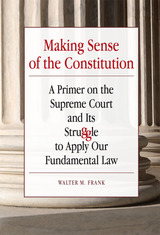
In Making Sense of the Constitution: A Primer on the Supreme Court and Its Struggle to Apply Our Fundamental Law, Walter Frank tackles in a comprehensive but lively manner subjects rarely treated in one volume.
Aiming at both the general reader and students of political science, law, or history, Frank begins with a brief discussion of the nature of constitutional law and why the Court divides so closely on many issues. He then proceeds to an analysis of the Constitution and subsequent amendments, placing them in their historical context. Next, Frank shifts to the Supreme Court and its decisions, examining, among other things, doctrinal developments, the Court’s decision making processes, how justices interact with each other, and the debate over how the Constitution should be interpreted.
The work concludes with a close analysis of Court decisions in six major areas of continuing controversy, including abortion, affirmative action, and campaign finance.
Outstanding by the University Press Books for Public and Secondary Schools
—Amendment II, United States Constitution
The Second Amendment is regularly invoked by opponents of gun control, but H. Richard Uviller and William G. Merkel argue the amendment has nothing to contribute to debates over private access to firearms. In The Militia and the Right to Arms, or, How the Second Amendment Fell Silent, Uviller and Merkel show how postratification history has sapped the Second Amendment of its meaning. Starting with a detailed examination of the political principles of the founders, the authors build the case that the amendment's second clause (declaring the right to bear arms) depends entirely on the premise set out in the amendment's first clause (stating that a well-regulated militia is necessary to the security of a free state). The authors demonstrate that the militia envisioned by the framers of the Bill of Rights in 1789 has long since disappeared from the American scene, leaving no lineal descendants. The constitutional right to bear arms, Uviller and Merkel conclude, has evaporated along with the universal militia of the eighteenth century.
Using records from the founding era, Uviller and Merkel explain that the Second Amendment was motivated by a deep fear of standing armies. To guard against the debilitating effects of militarism, and against the ultimate danger of a would-be Caesar at the head of a great professional army, the founders sought to guarantee the existence of well-trained, self-armed, locally commanded citizen militia, in which service was compulsory. By its very existence, this militia would obviate the need for a large and dangerous regular army. But as Uviller and Merkel describe the gradual rise of the United States Army and the National Guard over the last two hundred years, they highlight the nation's abandonment of the militia ideal so dear to the framers. The authors discuss issues of constitutional interpretation in light of radically changed social circumstances and contrast their position with the arguments of a diverse group of constitutional scholars including Sanford Levinson, Carl Bogus, William Van Alstyne, and Akhil Reed Amar.
Espousing a centrist position in the polarized arena of Second Amendment interpretation, this book will appeal to those wanting to know more about the amendment's relevance to the issue of gun control, as well as to those interested in the constitutional and political context of America's military history.
Examining a wide array of cultures, Paul reveals how the inherent tensions between these two modes of transmission generate many of the features of human society, such as marriage rules, initiation rituals, gender asymmetry, and sexual symbolism. Exploring differences in the requirements, range, and agendas of genetic and symbolic reproduction, he shows that a properly conceived dual inheritance model does a better job of accounting for the distinctive character of actual human societies than either evolutionary or socio-cultural construction theories can do alone. Ultimately this book offers a powerful call for a synthesis of the traditions inspired by Darwin, Durkheim, and Freud—one that is critically necessary if we are to advance our understanding of human social life.
Expertly translated by Jeffrey Kosky, this work will appeal to historians of philosophy, students of religion, and anyone interested in the genealogy of contemporary thought and its contradictions.
Antiquity’s most prolific and influential medical writer and practitioner.
Galen of Pergamum (129–?199/216), physician to the court of the emperor Marcus Aurelius, was a philosopher, scientist, and medical historian, a theoretician and practitioner, who wrote forcefully and prolifically on an astonishing range of subjects and whose impact on later eras rivaled that of Aristotle. Galen synthesized the entirety of Greek medicine as a basis for his own doctrines and practice, which comprehensively embraced theory, practical knowledge, experiment, logic, and a deep understanding of human life and society.
In the three classic works in this volume, On the Constitution of the Art of Medicine, The Art of Medicine, and A Method of Medicine to Glaucon, Galen covers fundamental aspects of his practice in a lucid and engaging style designed to appeal to a broad audience.
The Constitution is not so simple that it explains itself—nor so complex that only experts can understand it.
In this accessible, nonpartisan quick reference, historian Andrew Arnold provides concise explanations of the Constitution's meaning and history, offering little-known facts and anecdotes about every article and all twenty-seven amendments. This handy guide won’t tell you what the Constitution ought to say, nor what it ought to mean. It will tell you what the Constitution says and what it has meant.
A Pocket Guide to the US Constitution presents a straightforward way to understand the American Constitutional system. Without wading through lengthy legal prose, heavy historical analysis, or polemical diatribes, you can easily find out what the emoluments clause means, learn about gerrymandering and separation of powers, or read a brief background on why slaves in colonial America were considered 3/5 of a person.
Small enough to put in your pocket, backpack, or briefcase, A Pocket Guide to the US Constitution can be used to comprehend current events, dig deeper into court cases, or sort out your own opinions on constitutional issues.
This third volume of Politics and the Constitution, which Crosskey began and William Jeffrey has finished, treats political activity in the period 1776-87, and is in many ways the heart of the work as Crosskey conceived it. In support of the lexicographic analysis of volumes 1 and 2, volume 3 shows that nationalist ideas and sentiments were a powerful force in American public opinion from the Revolution to the eve of the Constitutional Convention. The creation of a generally empowered national government in Philadelphia, it is argued, was the fruition of a long-active political movement, not the unintended or accidental result of a temporary conservative coalition.
This view of the political background of the Constitutional Convention directly challenges the Madisonian-Jeffersonian orthodoxy on the subject. In support of his interpretation, Crosskey amassed a wealth of primary source materials, including heretofore unexplored pamphlets and newspapers. This exhaustive research makes this unique work invaluable for scholars of the period, both for the primary sources collected as well as for the provocative interpretation offered.
From the Constitution’s adoption, presidents, Congress, judges, scholars, the press, and the public have debated the appropriate scope of presidential power during a crisis, especially when presidents see bending or breaking the rules as necessary to protect the country from serious, even irreparable, harm.
Presidential Constitutionalism in Perilous Times examines this quandary, from Abraham Lincoln’s suspension of the writ of habeas corpus during the Civil War, Woodrow Wilson’s enforcement of the Espionage Act of 1917 during World War I, Franklin D. Roosevelt’s evacuation and internment of West Coast Japanese during World War II, Harry S. Truman’s seizure of the steel mills during the Korean War to George W. Bush’s torture, surveillance, and detention programs following the September 11, 2001, terrorist attacks.
Presidents have exercised extraordinary power to protect the nation in ways that raised serious constitutional concerns about individual liberties and separation of powers. By looking at these examples through different constitutional perspectives, Scott Matheson achieves a deeper understanding of wartime presidential power in general and of President Bush’s assertions of executive power in particular. America can function more effectively as a constitutional democracy in an unsafe world, he argues, if our leaders embrace an approach to presidential power that he calls executive constitutionalism.

The Press and the Constitution, 1931–1947 was first published in 1948. Minnesota Archive Editions uses digital technology to make long-unavailable books once again accessible, and are published unaltered from the original University of Minnesota Press editions.
Sixteen dramatic years—from the Minnesota gag law case in 1931 to the Taft-Hartley Act in 1947. Sixteen years in which the American system of freedom developed new strength and conferred new benefits on the common man. In The Press and the Constitution J. Edward Gerald has told the story of these years as they have influenced the development of freedom of the press.
During this turbulent time American newspapers, in spite of their claims to protection under the First and Fourteenth amendments, have found themselves subjected to increasing legal restraints. The guarantee of freedom of the press affects the lives of a wide range of individuals—from publishers to pickets, from Big Business leaders to itinerant evangelists. To show this, Mr. Gerald includes in his discussion the anti-trust laws, newspaper taxes, wage and hour legislation, censorship, picketing, licensing, and the contempt power.
The book analyzes a series of cases decided by the United States Supreme Court from 1931 to 1947. Among the more celebrated are the Chicago Sun-Chicago Tribune antitrust case, the Esquire case, in which the powers of the Postmaster General were limited, and the Jehovah's Witnesses cases, in which the line between religion and commerce was defined.
The author concludes that American law definitely establishes—and carries out—the concept of the common welfare, even to the point of government intervention to increase freedom of the press for some while restricting it for others.

Applying the Fourth Amendment’s prohibition on unreasonable searches and seizures, Slobogin argues that courts should prod legislatures into enacting more meaningful protection against government overreaching. In setting forth a comprehensive framework meant to preserve rights guaranteed by the Constitution without compromising the government’s ability to investigate criminal acts, Slobogin offers a balanced regulatory regime that should intrigue everyone concerned about privacy rights in the digital age.
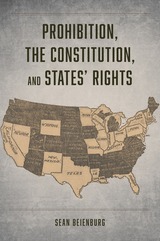
Sean Beienburg recovers a largely forgotten constitutional debate, revealing how Prohibition became a battlefield on which skirmishes of American political development, including the debate over federalism and states’ rights, were fought. Beienburg focuses on the massive extension of federal authority involved in Prohibition and the passage of the Eighteenth Amendment, describing the roles and reactions of not just Congress, the presidents, and the Supreme Court but political actors throughout the states, who jockeyed with one another to claim fidelity to the Tenth Amendment while reviling nationalism and nullification alike. The most comprehensive treatment of the constitutional debate over Prohibition to date, the book concludes with a discussion of the parallels and differences between Prohibition in the 1920s and debates about the legalization of marijuana today.
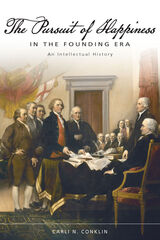
Scholars have long debated the meaning of the pursuit of happiness, yet have tended to define it narrowly, focusing on a single intellectual tradition, and on the use of the term within a single text, the Declaration of Independence. In this insightful volume, Carli Conklin considers the pursuit of happiness across a variety of intellectual traditions, and explores its usage in two key legal texts of the Founding Era, the Declaration and William Blackstone’s Commentaries on the Laws of England.
For Blackstone, the pursuit of happiness was a science of jurisprudence, by which his students could know, and then rightly apply, the first principles of the Common Law. For the founders, the pursuit of happiness was the individual right to pursue a life lived in harmony with the law of nature and a public duty to govern in accordance with that law. Both applications suggest we consider anew how the phrase, and its underlying legal philosophies, were understood in the founding era. With this work, Conklin makes important contributions to the fields of early American intellectual and legal history.
In this groundbreaking analysis of Supreme Court decision-making, Andrew Coan explains how judicial caseload shapes the course of American constitutional law and the role of the Court in American society.
Compared with the vast machinery surrounding Congress and the president, the Supreme Court is a tiny institution that can resolve only a small fraction of the constitutional issues that arise in any given year. Rationing the Constitution shows that this simple yet frequently ignored fact is essential to understanding how the Supreme Court makes constitutional law.
Due to the structural organization of the judiciary and certain widely shared professional norms, the capacity of the Supreme Court to review lower-court decisions is severely limited. From this fact, Andrew Coan develops a novel and arresting theory of Supreme Court decision-making. In deciding cases, the Court must not invite more litigation than it can handle. On many of the most important constitutional questions—touching on federalism, the separation of powers, and individual rights—this constraint creates a strong pressure to adopt hard-edged categorical rules, or defer to the political process, or both.
The implications for U.S. constitutional law are profound. Lawyers, academics, and social activists pursuing social reform through the courts must consider whether their goals can be accomplished within the constraints of judicial capacity. Often the answer will be no. The limits of judicial capacity also substantially constrain the Court’s much touted—and frequently lamented—power to overrule democratic majorities. As Rationing the Constitution demonstrates, the Supreme Court is David, not Goliath.
Religion has become a charged token in a politics of division. In disputes about faith-based social services, public money for religious schools, the Pledge of Allegiance, Ten Commandments monuments, the theory of evolution, and many other topics, angry contestation threatens to displace America's historic commitment to religious freedom. Part of the problem, the authors argue, is that constitutional analysis of religious freedom has been hobbled by the idea of "a wall of separation" between church and state. That metaphor has been understood to demand that religion be treated far better than other concerns in some contexts, and far worse in others. Sometimes it seems to insist on both contrary forms of treatment simultaneously. Missing has been concern for the fair and equal treatment of religion. In response, the authors offer an understanding of religious freedom called Equal Liberty.
Equal Liberty is guided by two principles. First, no one within the reach of the Constitution ought to be devalued on account of the spiritual foundation of their commitments. Second, all persons should enjoy broad rights of free speech, personal autonomy, associative freedom, and private property. Together, these principles are generous and fair to a wide range of religious beliefs and practices.
With Equal Liberty as their guide, the authors offer practical, moderate, and appealing terms for the settlement of many hot-button issues that have plunged religious freedom into controversy. Their book calls Americans back to the project of finding fair terms of cooperation for a religiously diverse people, and it offers a valuable set of tools for working toward that end.
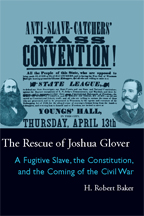
On March 11, 1854, the people of Wisconsin prevented agents of the federal government from carrying away the fugitive slave, Joshua Glover. Assembling in mass outside the Milwaukee courthouse, they demanded that the federal officers respect his civil liberties as they would those of any other citizen of the state. When the officers refused, the crowd took matters into its own hands and rescued Joshua Glover. The federal government brought his rescuers to trial, but the Wisconsin Supreme Court intervened and took the bold step of ruling the Fugitive Slave Act unconstitutional.
The Rescue of Joshua Glover delves into the courtroom trials, political battles, and cultural equivocation precipitated by Joshua Glover’s brief, but enormously important, appearance in Wisconsin on the eve of the Civil War.
H. Robert Baker articulates the many ways in which this case evoked powerful emotions in antebellum America, just as the stage adaptation of Uncle Tom’s Cabin was touring the country and stirring antislavery sentiments. Terribly conflicted about race, Americans struggled mightily with a revolutionary heritage that sanctified liberty but also brooked compromise with slavery. Nevertheless, as The Rescue of Joshua Glover demonstrates, they maintained the principle that the people themselves were the last defenders of constitutional liberty, even as Glover’s rescue raised troubling questions about citizenship and the place of free blacks in America.
Where did the right to privacy come from and what does it mean? Grappling with the critical issues involving women and gays that relate to the recent Supreme Court appointment, Vincent J. Samar develops a definition of legal privacy, discusses the reasons why and the degree to which privacy should be protected, and shows the relationship between privacy and personal autonomy. He answers former Supreme Court nominee Robert Bork’s questions about scope, content, and legal justification for a general right to privacy and emphasizes issues involving gays and lesbians, Samar maintains that these privacy issues share a common constitutional-ethical underpinning with issues such as abortion, surrogate motherhood, drug testing, and the right to die.

In a few thousand words the Constitution sets up the government of the United States and proclaims the basic human and political rights of its people. From the interpretation and elaboration of those words in over 500 volumes of Supreme Court cases comes the constitutional law that structures our government and defines our individual relationship to that government. This book fills the need for an account of that law free from legal jargon and clear enough to inform the educated layperson, yet which does not condescend or slight critical nuance, so that its judgments and analyses will engage students, practitioners, judges, and scholars.
Taking the reader up to and through such controversial recent Supreme Court decisions as the Texas sodomy case and the University of Michigan affirmative action case, Charles Fried sets out to make sense of the main topics of constitutional law: the nature of doctrine, federalism, separation of powers, freedom of expression, religion, liberty, and equality.
Fried draws on his knowledge as a teacher and scholar, and on his unique experience as a practitioner before the Supreme Court, a former Associate Justice of the Supreme Judicial Court of Massachusetts, and Solicitor General of the United States to offer an evenhanded account not only of the substance of constitutional law, but of its texture and underlying themes. His book firmly draws the reader into the heart of today's constitutional battles. He understands what moves today's Court and that understanding illuminates his analyses.
A stunning revision of our founding document’s evolving history that forces us to confront anew the question that animated the founders so long ago: What is our Constitution?
Americans widely believe that the United States Constitution was created when it was drafted in 1787 and ratified in 1788. But in a shrewd rereading of the Founding era, Jonathan Gienapp upends this long-held assumption, recovering the unknown story of American constitutional creation in the decade after its adoption—a story with explosive implications for current debates over constitutional originalism and interpretation.
When the Constitution first appeared, it was shrouded in uncertainty. Not only was its meaning unclear, but so too was its essential nature. Was the American Constitution a written text, or something else? Was it a legal text? Was it finished or unfinished? What rules would guide its interpretation? Who would adjudicate competing readings? As political leaders put the Constitution to work, none of these questions had answers. Through vigorous debates they confronted the document’s uncertainty, and—over time—how these leaders imagined the Constitution radically changed. They had begun trying to fix, or resolve, an imperfect document, but they ended up fixing, or cementing, a very particular notion of the Constitution as a distinctively textual and historical artifact circumscribed in space and time. This means that some of the Constitution’s most definitive characteristics, ones which are often treated as innate, were only added later and were thus contingent and optional.
The United States Constitution, battleground of a politically bifurcated nation, and sponsor of that nation's now threatened cultural unity, is a quintessentially political document. Americans' representatives swear loyalty to it, and her soldiers die for it. Yet no one has ever seriously considered the formative influence this document, so central a force for all Americans, has had on American cultural life. Now, in this ambitious book, Mitchell Meltzer has for the first time demonstrated the extent to which the Constitution is both source and inspiration for America's greatest literary masterworks.
Retelling the history of the Constitution's formation, Meltzer explains how the peculiarly paradoxical form of the Constitution, its "secular revelation," underwent a literary rebirth after the passing of the Founders' generation, and issued in what is strangest and most characteristic in America's classic literature. By combining the secular with the revealed, a Constitutional poetics results that gives rise, in both politics and literature, to the formation of more perfect unions.
Offering powerful new perspectives on Lincoln, Emerson, Whitman, and Melville, Meltzer reveals how the Constitution counterintuitively generated such oft-noted tendencies as these writers' penchant for self-contradiction, their willingness to court radical discontinuity, and their intensely conflicted, romance-directed fictions.
Secular Revelations presents the Constitution in a new role, the inspiration of a great national literature.
In a set of cases decided at the end of the nineteenth century, the Supreme Court declared that Congress had "plenary power" to regulate immigration, Indian tribes, and newly acquired territories. Not coincidentally, the groups subject to Congress' plenary power were primarily nonwhite and generally perceived as "uncivilized." The Court left Congress free to craft policies of assimilation, exclusion, paternalism, and domination.
Despite dramatic shifts in constitutional law in the twentieth century, the plenary power case decisions remain largely the controlling law. The Warren Court, widely recognized for its dedication to individual rights, focused on ensuring "full and equal citizenship"--an agenda that utterly neglected immigrants, tribes, and residents of the territories. The Rehnquist Court has appropriated the Warren Court's rhetoric of citizenship, but has used it to strike down policies that support diversity and the sovereignty of Indian tribes.
Attuned to the demands of a new century, the author argues for abandonment of the plenary power cases, and for more flexible conceptions of sovereignty and citizenship. The federal government ought to negotiate compacts with Indian tribes and the territories that affirm more durable forms of self-government. Citizenship should be "decentered," understood as a commitment to an intergenerational national project, not a basis for denying rights to immigrants.
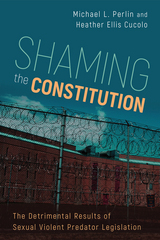
Convicted sexually violent predators are more vilified, more subject to media misrepresentation, and more likely to be denied basic human rights than any other population. Shaming the Constitution authors Michael Perlin and Heather Cucolo question the intentions of sex offender laws, offering new approaches to this most complex (and controversial) area of law and social policy.
The authors assert that sex offender laws and policies are unconstitutional and counter-productive. The legislation largely fails to add to public safety—even ruining lives for what are, in some cases, trivial infractions. Shaming the Constitution draws on law, behavioral sciences, and other disciplines to show that many of the “solutions” to penalizing sexually violent predators are “wrong,” as they create the most repressive and useless laws.
In addition to tracing the history of sex offender laws, the authors address the case of Jesse Timmendequas, whose crime begat “Megan’s Law;” the media’s role in creating a “moral panic;” recidivism statistics and treatments, as well as international human rights laws. Ultimately, they call attention to the flaws in the system so we can find solutions that contribute to public safety in ways that do not mock Constitutional principles.
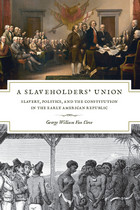
After its early introduction into the English colonies in North America, slavery in the United States lasted as a legal institution until the passage of the Thirteenth Amendment to the Constitution in 1865. But increasingly during the contested politics of the early republic, abolitionists cried out that the Constitution itself was a slaveowners’ document, produced to protect and further their rights. A Slaveholders’ Union furthers this unsettling claim by demonstrating once and for all that slavery was indeed an essential part of the foundation of the nascent republic.
In this powerful book, George William Van Cleve demonstrates that the Constitution was pro-slavery in its politics, its economics, and its law. He convincingly shows that the Constitutional provisions protecting slavery were much more than mere “political” compromises—they were integral to the principles of the new nation. By the late 1780s, a majority of Americans wanted to create a strong federal republic that would be capable of expanding into a continental empire. In order for America to become an empire on such a scale, Van Cleve argues, the Southern states had to be willing partners in the endeavor, and the cost of their allegiance was the deliberate long-term protection of slavery by America’s leaders through the nation’s early expansion. Reconsidering the role played by the gradual abolition of slavery in the North, Van Cleve also shows that abolition there was much less progressive in its origins—and had much less influence on slavery’s expansion—than previously thought.
Deftly interweaving historical and political analyses, A Slaveholders’ Union will likely become the definitive explanation of slavery’s persistence and growth—and of its influence on American constitutional development—from the Revolutionary War through the Missouri Compromise of 1821.
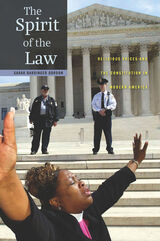
A new constitutional world burst into American life in the mid-twentieth century. For the first time, the national constitution's religion clauses were extended by the United States Supreme Court to all state and local governments. As energized religious individuals and groups probed the new boundaries between religion and government and claimed their sacred rights in court, a complex and evolving landscape of religion and law emerged.
Sarah Gordon tells the stories of passionate believers who turned to the law and the courts to facilitate a dazzling diversity of spiritual practice. Legal decisions revealed the exquisite difficulty of gauging where religion ends and government begins. Controversies over school prayer, public funding, religion in prison, same-sex marriage, and secular rituals roiled long-standing assumptions about religion in public life. The range and depth of such conflicts were remarkable—and ubiquitous.
Telling the story from the ground up, Gordon recovers religious practices and traditions that have generated compelling claims while transforming the law of religion. From isolated schoolchildren to outraged housewives and defiant prisoners, believers invoked legal protection while courts struggled to produce stable constitutional standards. In a field dominated by controversy, the vital connection between popular and legal constitutional understandings has sometimes been obscured. The Spirit of the Law explores this tumultuous constitutional world, demonstrating how religion and law have often seemed irreconcilable, even as they became deeply entwined in modern America.
The founding of the United States after the American Revolution was so deliberate, so inspired, and so monumental in scope that the key actors considered this new government to be a work of art framed from natural rights. Recognizing the artificial nature of the state, these early politicians believed the culture of a people should inform the development of their governing rules and bodies. Eric Slauter explores these central ideas in this extensive and novel account of the origins and meanings of the Constitution of the United States. Slauter uncovers the hidden cultural histories upon which the document rests, highlights the voices of ordinary people, and considers how the artifice of the state was challenged in its effort to sustain inalienable natural rights alongside slavery and to achieve political secularization at a moment of growing religious expression.
A complement to classic studies of the Constitution’s economic, ideological, and political origins, The State as a Work of Art sheds new light on the origins of the Constitution and on ongoing debates over its interpretation.

Joyce Malcolm illuminates the historical facts underlying the current passionate debate about gun-related violence, the Brady Bill, and the NRA, revealing the original meaning and intentions behind the individual right to “bear arms.” Few on either side of the Atlantic realize that this extraordinary, controversial, and least understood liberty was a direct legacy of English law. This book explains how the Englishmen’s hazardous duty evolved into a right, and how it was transferred to America and transformed into the Second Amendment.
Malcolm’s story begins in turbulent seventeenth-century England. She shows why English subjects, led by the governing classes, decided that such a dangerous public freedom as bearing arms was necessary. Entangled in the narrative are shifting notions of the connections between individual ownership of weapons and limited government, private weapons and social status, the citizen army and the professional army, and obedience and resistance, as well as ideas about civilian control of the sword and self-defense. The results add to our knowledge of English life, politics, and constitutional development, and present a historical analysis of a controversial Anglo-American legacy, a legacy that resonates loudly in America today.
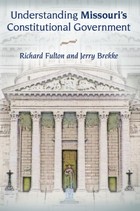
Understanding Missouri’s Constitutional Government presents a case study in the foundations of state governments. The book provides a sweeping look at the constitutional foundations of the processes of Missouri government. Authors Richard Fulton and Jerry Brekke place Missouri within the context of our larger federal system while using the state’s constitution as a touchstone for the discussion of each element of state government.
Understanding Missouri’s Constitutional Government has a dual framework specifically designed to enhance the reader’s learning experience. First, the essential elements of government outlined in the constitution are introduced, and then analysis and interpretation of each of the document’s articles is covered. This organization permits readers to build an understanding of a particular element—for example, the legislature—by learning its fundamental organization, processes, and purposes in a straightforward manner. After gaining that primary perspective, the reader can use the formal analysis in the second section to explore interpretations of each article. Not only helpful to the general reader, this two-part structure makes the text especially useful in courses on American government, state and local governments, and particularly Missouri government and constitution.
In short, Understanding Missouri’s Constitutional Government is an approachable, valuable exposition on Missouri government as reflected in the day-to-day operations outlined in the Missouri constitution. It fills a significant gap in the literature on the interpretation, use, and operation of state constitutions. Since Missouri law dictates that all levels of education should teach government and constitution at the national and state levels, this book will be an indispensable resource for educators while serving as a valuable reference for journalists and public officials in the state.
Reviewing the processes taken by all forty-four presidents to form new legal precedents and the constitutional conventions that have developed as a result, Harold H. Bruff shows that the president is both more and less powerful than many suppose. He explores how presidents have been guided by both their predecessors’ and their own interpretations of constitutional text, as well as how they implement policies in ways that statutes do not clearly authorize or forbid. But while executive power has expanded far beyond its original conception, Bruff argues that the modern presidency is appropriately limited by the national political process—their actions are legitimized by the assent of Congress and the American people or rejected through debilitating public outcry, judicial invalidation, reactive legislation, or impeachment. Synthesizing over two hundred years of presidential activity and conflict, this timely book casts new light on executive behavior and the American constitutional system.
In George William Van Cleve’s book, we encounter a sharply divided America. The Confederation faced massive war debts with virtually no authority to compel its members to pay them. It experienced punishing trade restrictions and strong resistance to American territorial expansion from powerful European governments. Bitter sectional divisions that deadlocked the Continental Congress arose from exploding western settlement. And a deep, long-lasting recession led to sharp controversies and social unrest across the country amid roiling debates over greatly increased taxes, debt relief, and paper money. Van Cleve shows how these remarkable stresses transformed the Confederation into a stalemate government and eventually led previously conflicting states, sections, and interest groups to advocate for a union powerful enough to govern a continental empire.
Touching on the stories of a wide-ranging cast of characters—including John Adams, Patrick Henry, Daniel Shays, George Washington, and Thayendanegea—Van Cleve makes clear that it was the Confederation’s failures that created a political crisis and led to the 1787 Constitution. Clearly argued and superbly written, We Have Not a Government is a must-read history of this crucial period in our nation’s early life.
Richards argues that both movements are extensions of rights-based dissent, rooted in antebellum abolitionist feminism that condemned both American racism and sexism. He sees the progressive role of such radical dissent as an emancipated moral voice in the American constitutional tradition. He examines the role of dissident African Americans, Jews, women, and homosexuals in forging alternative visions of rights-based democracy. He also draws special attention to Walt Whitman's visionary poetry, showing how it made space for the silenced and subjugated voices of homosexuals in public and private culture.
According to Richards, contemporary feminism rediscovers and elaborates this earlier tradition. And, similarly, the movement for gay rights builds upon an interpretation of abolitionist feminism developed by Whitman in his defense, both in poetry and prose, of love between men. Richards explores Whitman's impact on pro-gay advocates, including John Addington Symonds, Havelock Ellis, Edward Carpenter, Oscar Wilde, and André Gide. He also discusses other diverse writers and reformers such as Margaret Sanger, Franz Boas, Elizabeth Stanton, W. E. B. DuBois, and Adrienne Rich.
Richards addresses current controversies such as the exclusion of homosexuals from the military and from the right to marriage and concludes with a powerful defense of the struggle for such constitutional rights in terms of the principles of rights-based feminism.
READERS
Browse our collection.
PUBLISHERS
See BiblioVault's publisher services.
STUDENT SERVICES
Files for college accessibility offices.
RECENTLY PUBLISHED




UChicago Accessibility Resources
home | accessibility | search | about | contact us
BiblioVault ® 2001 - 2025
The University of Chicago Press