
 A SCHOLARLY BOOK REPOSITORY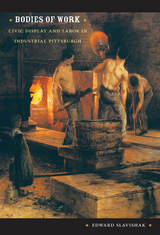
Slavishak focuses on the workers whose bodies came to epitomize Pittsburgh, the men engaged in the arduous physical labor demanded by the city’s metals, glass, and coal industries. At the same time, he emphasizes how conceptions of Pittsburgh as quintessentially male limited representations of women in the industrial workplace. The threat of injury or violence loomed large for industrial workers at the turn of the twentieth century, and it recurs throughout Bodies of Work: in the marketing of artificial limbs, statistical assessments of the physical toll of industrial capitalism, clashes between labor and management, the introduction of workplace safety procedures, and the development of a statewide workmen’s compensation system.

Building for Oil is a historical account of the development of the oil town of Daqing in northeastern China during the formative years of the People’s Republic, describing Daqing’s rise and fall as a national model city. Daqing oil field was the most profitable state-owned enterprise and the single largest source of state revenue for almost three decades, from the 1950s through the early 1980s. The book traces the roots and maturation of the Chinese socialist state and its early industrialization and modernization policies during a time of unprecedented economic growth.
The metamorphosis of Daqing’s physical landscape in many ways exemplified the major challenges and changes taking place in Chinese state and society. Through detailed, often personal descriptions of the process of planning and building Daqing, the book illuminates the politics between party leaders and elite ministerial cadres and examines the diverse interests, conflicts, tensions, functions, and dysfunctions of state institutions and individuals. Building for Oil records the rise of the “Petroleum Group” in the central government while simultaneously revealing the everyday stories and struggles of the working men and women who inhabited China’s industrializing landscape—their beliefs, frustrations, and pursuit of a decent life.
capitalist transformation, Anne Kelly Knowles traces a community of
Welsh immigrants to Jackson and Gallia counties in southern Ohio. After
reconstructing the gradual process of community-building, Knowles
focuses on the pivotal moment when the immigrants became involved with
the industrialization of their new region as workers and investors in
Welsh-owned charcoal iron companies. Setting the southern Ohio Welsh in
the context of Welsh immigration as a whole from 1795 to 1850, Knowles
explores how these strict Calvinists responded to the moral dilemmas
posed by leaving their native land and experiencing economic success in
the United States.
Knowles draws on a wide variety of sources, including obituaries and
community histories, to reconstruct the personal histories of over 1,700
immigrants. The resulting account will find appreciative readers not
only among historical geographers, but also among American economic
historians and historians of religion.
Robert Lewis documents how manufacturers, attracted to greenfield sites on the city’s outskirts, began to build factory districts there with the help of an intricate network of railroad owners, real estate developers, financiers, and wholesalers. These immense networks of social ties, organizational memberships, and financial relationships were ultimately more consequential, Lewis demonstrates, than any individual achievement. Beyond simply giving Chicago businesses competitive advantages, they transformed the economic geography of the region. Tracing these transformations across seventy-five years, Chicago Made establishes a broad new foundation for our understanding of urban industrial America.
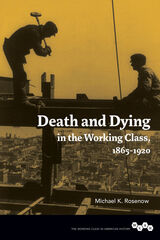
Drawing from an eclectic array of sources ranging from Andrew Carnegie to grave markers in Chicago's potter's field, Rosenow portrays the complex political, social, and cultural relationships that fueled the United States' industrial ascent. The result is an undertaking that adds emotional depth to existing history while challenging our understanding of modes of cultural transmission.

The 1990s witnessed significant changes in the Cuban economy. The first half of the decade focused on obtaining the adjustments necessary to enable the country to overcome the profound economic crisis that had befallen it. The second half was characterized by the reality and possibilities of economic recovery. This volume may be the first academic text specifically written to assess the development perspectives of Cuba in the new conditions that prevail. The overarching question is "What comes after recovery?" The authors deal with questions of immediate relevance to the Cuban economy and its recent past, with emphasis placed on the implications for long-term prospects for development. This reflects the conviction that solutions to the challenge of development will require longer periods of analysis and different areas of focus than those which have served as the temporal and conceptual references for recent studies of the island's economy. Contributors include Julio Carranza, Anicia Garci;a, Hiram Marquetti, Lázaro Peña, Omar Everleny Perez, and Julio Di;az Vázquez (University of Havana), Claes Brundenius (Centre for Development Research, Copenhagen), David Dapice (Tufts University and Harvard University), Francisco León (United Nations Economic Commission for Latin America and the Caribbean), and Mauricio de Miranda (Pontificia Universidad Javeriana, Colombia).
In this magisterial study, Michael Smith explains how France left behind small-scale merchant capitalism for the large corporate enterprises that would eventually dominate its domestic economy and project French influence throughout the world.
Arguing against the long-standing view that French economic and business development was crippled by missed opportunities and entrepreneurial failures, Smith presents a story of considerable achievement. French companies made major contributions to the Second Industrial Revolution of 1880-1930, especially in ferrous and non-ferrous metallurgy, electrochemicals, industrial gases, and motor vehicles. Rejecting the notion that France took a separate route to economic modernity, Smith argues that it tracked other industrial nations along a path dominated by large-scale production and corporate enterprise. Technological and organizational capabilities acquired by French companies prior to 1930 played a key role in the country's rapid economic recovery after World War II and its broader economic success in the second half of the twentieth century. Smith also addresses the distinctive characteristics of French economic and business development, including the pivotal role of the French state, the pervasive influence of French financiers, and the significance of labor conflict.
This superb account is an invaluable contribution to business history and the history of modern France.

Combining theoretical rigor with extensive archival research, Bruegel’s account diverges from other historiographies of nineteenth-century economic development. It challenges the assumption that the coexistence of long-distance trade, private property, and entrepreneurial activity lead to one inescapable outcome: a market economy either wholeheartedly embraced or entirely rejected by its members. When Bruegel tells the story of farmer William Coventry struggling in the face of bad harvests, widow Mary Livingston battling her tenants, blacksmith Samuel Fowks perfecting the cast-iron plough, and Hannah Bushnell sending her butter to market, Bruegel shows that the social conventions of a particular community, and the real struggles and hopes of individuals, actively mold the evolving economic order. Ultimately, then, Farm, Shop, Landing suggests that the process of modernization must be understood as the result of the simultaneous and often contentious interplay of social and economic spheres.
Japan and the four little dragons—Taiwan, South Korea, Hong Kong, and Singapore—constitute less than 1 percent of the world’s land mass and less than 4 percent of the world’s population. Yet in the last four decades they have become, with Europe and North America, one of the three great pillars of the modern industrial world order. How did they achieve such a rapid industrial transformation? Why did the four little dragons, dots on the East Asian periphery, gain such Promethean energy at this particular time in history?
Ezra F. Vogel, one of the most widely read scholars on Asian affairs, provides a comprehensive explanation of East Asia’s industrial breakthrough. While others have attributed this success to tradition or to national economic policy, Vogel’s penetrating analysis illuminates how cultural background interacted with politics, strategy, and situational factors to ignite the greatest burst of sustained economic growth the world has yet seen.
Vogel describes how each of the four little dragons acquired the political stability needed to take advantage of the special opportunities available to would-be industrializers after World War II. He traces how each little dragon devised a structure and a strategy to hasten industrialization and how firms acquired the entrepreneurial skill, capital, and technology to produce internationally competitive goods. Vogel brings masterly insight to the underlying question of why Japan and the little dragons have been so extraordinarily successful in industrializing while other developing countries have not. No other work has pinpointed with such clarity how institutions and cultural practices rooted in the Confucian tradition were adapted to the needs of an industrial society, enabling East Asia to use its special situational advantages to respond to global opportunities.
This is a book that all scholars and lay readers with an interest in Asia will want to read and ponder.

This book shows that the South was not slower to develop with respect to industrialization than either the majority of the northern states, especially in the West, or the countries of Western Europe. In fact, the apparently disappointing performance of the New South’s economy appears to be the result of more pervasive and largely uncontrollable trends that affected the national as well as the international economy. Global Perspectives on Industrial Transformation in the American South makes an important contribution to the economic history of the South and to recent efforts to place American history in a more international context.
The essays incorporate several indicators of quality of life, especially real per capita income and health, but also real wages, education, and inequality. And while the authors use traditional measures of health such as life expectancy and mortality rates, this volume stands alone in its extensive use of new "anthropometric" data—information about height, weight and body mass index that indicates changes in nations' well-being. Consequently, Health and Welfare during Industrialization signals a new direction in economic history, a broader and more thorough understanding of what constitutes standard of living.
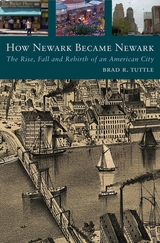
How Newark Became Newark is a fresh, unflinching popular history that spans the city's epic transformation from a tiny Puritan village into a manufacturing powerhouse, on to its desperate struggles in the twentieth century and beyond. After World War II, unrest mounted as the minority community was increasingly marginalized, leading to the wrenching civic disturbances of the 1960s. Though much of the city was crippled for years, How Newark Became Newark is also a story of survival and hope. Today, a real estate revival and growing population are signs that Newark is once again in ascendance.
Sara A. Whaley Book Prize, National Women's Studies Association, 2017
AMEWS Book Award, Journal of Middle Eastern Studies, 2017
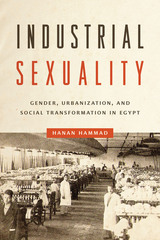
Millions of Egyptian men, women, and children first experienced industrial work, urban life, and the transition from peasant-based and handcraft cultures to factory organization and hierarchy in the years between the two world wars. Their struggles to live in new places, inhabit new customs, and establish and abide by new urban norms and moral and gender orders underlie the story of the making of modern urban life—a story that has not been previously told from the perspective of Egypt’s working class.
Reconstructing the ordinary urban experiences of workers in al-Mahalla al-Kubra, home of the largest and most successful Egyptian textile factory, Industrial Sexuality investigates how the industrial urbanization of Egypt transformed masculine and feminine identities, sexualities, and public morality. Basing her account on archival sources that no researcher has previously used, Hanan Hammad describes how coercive industrial organization and hierarchy concentrated thousands of men, women, and children at work and at home under the authority of unfamiliar men, thus intensifying sexual harassment, child molestation, prostitution, and public exposure of private heterosexual and homosexual relationships. By juxtaposing these social experiences of daily life with national modernist discourses, Hammad demonstrates that ordinary industrial workers, handloom weavers, street vendors, lower-class landladies, and prostitutes—no less than the middle and upper classes—played a key role in shaping the Egyptian experience of modernity.
Taiwan's export-led industrial development is often presented as a model of how state intervention promotes growth. Others see the same experience as a model of a private enterprise market at work. This study demonstrates that Taiwan policymakers varied their approach to development as circumstances changed. Export promotion of labor-intensive industries, which predominated in the 1960s, was supplemented by efforts to promote import-substituting heavy industries in the 1970s.
In the early 1980s there was a fundamental change in the economic environment as Taiwan's government reduced its active intervention in the economy and created a foundation for development based on information and other high-technology products. Taiwan's economy continued to prosper in the 1990s because policies and systems changed along with conditions.
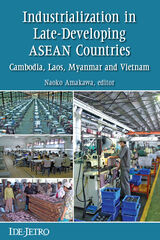
The outcomes differed significantly owing to geographical location, government policies, and internal economic conditions. Industrialization in Late-Developing ASEAN Countries explores these differences through case studies based on an extended research program conducted by the Institute of Developing Economies in Tokyo, which offered insights into models of economic growth, and into the trajectories followed by the four countries examined.

São Paulo is one of the few places in the underdeveloped world where an advanced industrial system has grown out of a tropical raw-material-exporting economy. By 1960 there were 830,000 industrial workers in the state, producing $3.3 billion worth of goods. It had become Latin America’s largest industrial center.
This is a study of the early years of manufacturing in São Paulo: how it was influenced by the growth and decline of the coffee trade; where it found its markets, its credit, and its labor force; and how it confronted the competition of imports. The principal focus, however, is on the manufacturers themselves, whose perceptions of their opportunities determined how industrialization was brought about. Warren Dean discusses their social origins, their connections with other sectors of the elite, their attitudes toward workers and consumers, and their view of the potentialities of economic development. He analyzes the political activities of the manufacturers, to discover both how they promoted their interests and how they confronted the larger challenge of social and political transformation.
Paradoxically, the industrialization of São Paulo is not a “success story” of private entrepreneurship. Until after World War II manufacturing grew quite slowly, and its hallmarks were always low productivity, technical backwardness, and consumer hostility. More than half of the state’s present large-scale factory production and nearly all of its heavy industry was built by foreign capital or state enterprise, not by privately owned firms. Dean shows that this outcome is partly a consequence of the historical experience of domestic manufacture.
Throughout the book the author points out the “peculiar articulations” of the industrial system of São Paulo—the significant social and political interests that determined what kinds of development were possible. The result is an exposition of an unusual case study in twentieth-century economic development.
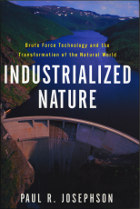
The construction of the Three Gorges Dam on China's Yangtze River. The transformation of the Amazon into a site for huge cattle ranches and aluminum smelters. The development of Nevada's Yucca Mountain into a repository for nuclear waste. The extensive irrigation networks of the Grand Coulee and Kuibyshev Dams. On the face of it, these massive projects are wonders of engineering, financial prowess, and our seldom-questioned ability to modify nature to suit our immediate needs. For nearly a century we have relied increasingly on science and technology to harness natural forces, but at what environmental and social cost?
In Industrialized Nature, historian Paul R. Josephson provides an original examination of the ways in which science, engineering, policy, finance, and hubris have come together, often with unforeseen consequences, to perpetuate what he calls "brute-force technologies"—the large-scale systems created to manage water, forest, and fish resources. Throughout the twentieth century, nations with quite different political systems and economic orientations all pursued this same technological subjugation of nature. Josephson compares the Soviet Union's heavy-handed efforts at resource management to similar projects undertaken in the United States, Norway, Brazil, and China. He argues that brute-force technologies require brute-force politics to operate. He shows how irresponsible—or well-intentioned but misguided—large-scale manipulation of nature has resulted in resource loss and severe environmental degradation.
Josephson explores the ongoing industrialization of nature that is happening in our own backyards and around the world. Both a cautionary tale and a call to action, Industrialized Nature urges us to consider how to develop a future for succeeding generations that avoids the pitfalls of brute-force technologies.
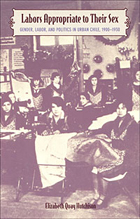
In addition to population and industrial censuses, Hutchison culls published and archival sources to illuminate such misconceptions and to reveal how women’s paid labor became a locus of anxiety for a society confronting social problems—both real and imagined—that were linked to industrialization and modernization. The limited options of working women were viewed by politicians, elite women, industrialists, and labor organizers as indicative of a society in crisis, she claims, yet their struggles were also viewed as the potential springboard for reform. Labors Appropriate to Their Sex thus demonstrates how changing norms concerning gender and work were central factors in conditioning the behavior of both male and female workers, relations between capital and labor, and political change and reform in Chile.
This study will be rewarding for those whose interests lie in labor, gender, or Latin American studies; as well as for those concerned with the histories of early feminism, working-class women, and sexual discrimination in Latin America.
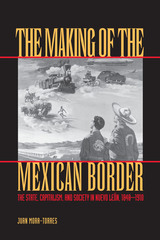
The issues that dominate U.S.-Mexico border relations today—integration of economies, policing of boundaries, and the flow of workers from south to north and of capital from north to south—are not recent developments. In this insightful history of the state of Nuevo León, Juan Mora-Torres explores how these processes transformed northern Mexico into a region with distinct economic, political, social, and cultural features that set it apart from the interior of Mexico.
Mora-Torres argues that the years between the establishment of the U.S.-Mexico boundary in 1848 and the outbreak of the Mexican Revolution in 1910 constitute a critical period in Mexican history. The processes of state-building, emergent capitalism, and growing linkages to the United States transformed localities and identities and shaped class formations and struggles in Nuevo León. Monterrey emerged as the leading industrial center and home of the most powerful business elite, while the countryside deteriorated economically, politically, and demographically. By 1910, Mora-Torres concludes, the border states had already assumed much of their modern character: an advanced capitalist economy, some of Mexico's most powerful business groups, and a labor market dependent on massive migrations from central Mexico.
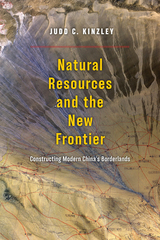
China’s westernmost province of Xinjiang has experienced escalating cycles of violence, interethnic strife, and state repression since the 1990s. In their search for the roots of these growing tensions, scholars have tended to focus on ethnic clashes and political disputes. In Natural Resources and the New Frontier, historian Judd C. Kinzley takes a different approach—one that works from the ground up to explore the infrastructural and material foundation of state power in the region.
As Kinzley argues, Xinjiang’s role in producing various natural resources for regional powers has been an important but largely overlooked factor in fueling unrest. He carefully traces the buildup to this unstable situation over the course of the twentieth century by focusing on the shifting priorities of Chinese, Soviet, and provincial officials regarding the production of various resources, including gold, furs, and oil among others. Through his archival work, Kinzley offers a new way of viewing Xinjiang that will shape the conversation about this important region and offer a model for understanding the development of other frontier zones in China as well as across the global south.
Contributors. Alfredo Ávila, Roberto Breña, Sarah C. Chambers, Jordana Dym, Carolyn Fick, Erick Langer, Adam Rothman, David Sartorius, Kirsten Schultz, John Tutino
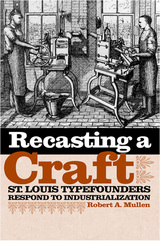
In the nineteenth and early twentieth centuries, type for newspapers and books was set one letter at a time, and the manufacturers of the metal type used in the printing trade were called typefounders. This prominent yet rarely documented industry was essential to the development of modern American publishing and was particularly prevalent in St. Louis. In Recasting a Craft: St. Louis Typefounders Respond to Industrialization, Robert A. Mullen recognizes the city’s significant contributions to typefounding and details how the craft fundamentally changed through mechanization, growth, and the creation of a large conglomerate.
Like many trades of the nineteenth and early twentieth centuries that were eventually lost to industrialization, the typefoundries of St. Louis grew from small shops to factories with organized labor. Mullen describes three distinct periods of the industry that emerged in St. Louis’s typefounding trade: the early struggles in establishing the industry there, the period of intense competition and creative enterprise, and the proliferation of new companies that appealed to those customers who felt alienated by the monopolizing older companies.
Mullen discusses at length the technological, social, and demographic foundations of the immense growth of the trade in the nineteenth century, identifying the changes in typographical design and the demand for it in the new era of advertising. He also profiles the workers, working conditions, and labor issues—such as the failed industry-wide strike of 1903—that emerged as the craft of typefounding entered the industrial age. More than two hundred type designs that originated with the St. Louis firms are listed in an appendix with examples of each face. The volume also contains a list of the catalogs of the St. Louis typefoundries known to exist in the public and academic libraries of the United States.

Russia's Factory Children presents the first English-language account of the changing role of children in the Russian workforce, from the onset of industrialization until the Communist Revolution of 1917, and profiles the laws that would establish children's labor rights.
In this compelling study, Boris B. Gorshkov examines the daily lives, working conditions, hours, wages, physical risks, and health dangers to children who labored in Russian factories. He also chronicles the evolving cultural mores that initially welcomed child labor practices but later shunned them.
Through extensive archival research, Gorshkov views the evolution of Russian child labor law as a reaction to the rise of industrialism and the increasing dangers of the workplace. Perhaps most remarkable is his revelation that activism, from the bourgeoisie, intellectuals, and children themselves, led to the conciliation of legislators and marked a progressive shift that would impact Russian society in the early twentieth century and beyond.

Neoliberals often point to improvements in public health and nutrition as examples of globalisation's success, but this book argues that the corporate food and medicine industries are destroying environments and ruining living conditions across the world.
Scientist Stan Cox expertly draws out the strong link between Western big business and environmental destruction. This is a shocking account of the huge damage that drug manufacturers and large food corporations are inflicting on the health of people and crops worldwide. Companies discussed include Wal-Mart, GlaxoSmithKline, Tyson Foods and Monsanto. On issues ranging from the poisoning of water supplies in South Asia to natural gas depletion and how it threatens global food supplies, Cox shows how the demand for profits is always put above the public interest.
While individual efforts to "shop for a better world" and conserve energy are laudable, Cox explains that they need to be accompanied by an economic system that is grounded in ecological sustainability if we are to find a cure for our Sick Planet.

As Martin shows, access to land in and around steel and pottery towns allowed residents to preserve rural habits and culture. Workers in these places valued place and local community. Because of their belief in localism, an individualistic ethic of "making do," and company loyalty, they often worked to place limits on union influence. At the same time, this localism allowed workers to adapt to the dictates of industrial capitalism and a continually changing world on their own terms--and retain rural ways to a degree unknown among their urbanized peers. Throughout, Martin ties these themes to illuminating discussions of capital mobility, the ways in which changing work experiences defined gender roles, and the persistent myth that modernizing forces bulldozed docile local cultures.
Revealing and incisive, Smokestacks in the Hills reappraises an overlooked stratum of American labor history and contributes to the ongoing dialogue on shifts in national politics in the postwar era.
One linchpin of China’s expansion has been township and village enterprises (TVEs), a vast group of firms with diverse modes of ownership and structure. Based on the author’s fieldwork in Zhejiang, this book explores the emergence and success of rural enterprises.
This study also examines how ordinary rural residents have made sense of and participated in the industrialization engulfing them in recent decades. How much does TVE success depend on the ruthless exploitation of workers? How did peasants-turned-workers develop such impressive skills so quickly? To what extent do employees’ values affect the cohesion and operations of companies? And how long can peasant workers sustain these efforts in the face of increasing market competition?
The author argues that the resilience of these factories has as much to do with how authority is defined and how people interact as it does with the ability to generate profits. How social capital was deployed and replenished at critical moments was central to the eventual rise and consolidation of these enterprises as effective, robust institutions. Without mutual respect, company leaders would have found it impossible to improve their firms’ productivity, workplace stability, and long-term viability.

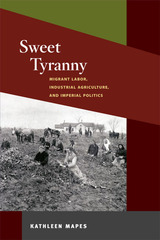
Engagingly written, this book demonstrates that capitalism was not solely a force from above but was influenced by the people below who defended their interests in an ever-expanding market of imperialist capitalism. The fact that the United States acquired its own sugar producing empire at the very moment that its domestic sugar beet industry was coming into its own, as well as the fact that the domestic sugar beet industry came to depend on immigrant workers as the basis of its field labor force, magnified the local and global ties as well as the political battles that ensued. As such, the issue of how Americans would satiate their growing demand for sweetness--whether with beet sugar grown at home or with cane sugar raised in colonies abroad--became part of a much larger debate about the path of industrial agriculture, the shape of American imperialism, and the future of immigration.
Because of its strong agrarian roots, the South has typically been viewed as a region not favorably disposed to innovation and technology. Yet innovation was never absent from industrialization in this part of the United States. From the early nineteenth century onward, southerners were as eager as other Americans to embrace technology as a path to modernity.
This volume features seven essays that range widely across the region and its history, from the antebellum era to the present, to assess the role of innovations presumed lacking by most historians. Offering a challenging interpretation of industrialization in the South, these writings show that the benefits of innovations had to be carefully weighed against the costs to both industry and society.
The essays consider a wide range of innovative technologies. Some examine specific industries in subregions: steamboats in the lower Mississippi valley, textile manufacturing in Georgia and Arkansas, coal mining in Virginia, and sugar planting and processing in Louisiana. Others consider the role of technology in South Carolina textile mills around the turn of the twentieth century, the electrification of the Tennessee valley, and telemedicine in contemporary Arizona—marking the expansion of the region into the southwestern Sunbelt.
Together, these articles show that southerners set significant limitations on what technological innovations they were willing to adopt, particularly in a milieu where slaveholding agriculture had shaped the allocation of resources. They also reveal how scarcity of capital and continued reliance on agriculture influenced that allocation into the twentieth century, relieved eventually by federal spending during the Depression and its aftermath that sparked the Sunbelt South’s economic boom.
Technology, Innovation, and Southern Industrialization clearly demonstrates that the South’s embrace of technological innovation in the modern era doesn’t mark a radical change from the past but rather signals that such pursuits were always part of the region’s economy. It deflates the myth of southern agrarianism while expanding the scope of antebellum American industrialization beyond the Northeast and offers new insights into the relationship of southern economic history to the region’s society and politics.
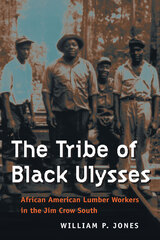
The lumber industry employed more African American men than any southern economic sector outside agriculture. Yet little scholarship exists on these workers and their times.
William P. Jones merges interviews with archival sources to explore black men and women's changing relationship to industrial work in the southern sawmill communities of Elizabethtown, North Carolina; Chapman, Alabama; and Bogalusa, Louisiana. By placing black lumber workers within the history of southern industrialization, Jones reveals that industrial employment was another facet of the racial segregation and political disfranchisement that defined black life in the Jim Crow South. He also examines an older tradition of southern sociology that viewed industrialization as socially disruptive and morally corrupting to African American social and cultural traditions rooted in agriculture.

Fernando Fajnzylber argues that technological and industrial progress is the driving force of a positive relationship among dynamism, competitiveness, austerity, and equity. Latin America’s failure to master this technological progress underlies its economic difficulties. To overcome the inheritance of past mistakes, the author maintains, Latin America must undergo not only macroeconomic stabilization and a reduction of the debt burden, but also a complete transformation of the production structure. The role of the state and the institutional setup need to be modified and new social and sectoral policies devised. Fajnzylber sees this radical restructuring as an unavoidable step if Latin America is ever to achieve a workable balance between growth and equity.

Unknown Tongues examines the social and economic factors of northern industrialization, social reform, and black nationalism, all of which undergirded black women’s political consciousness during the decades before the American Civil War. The linkages between black women’s roles in the “culture of resistance” in slave communities and their transformations in the urban market economy fueled the development of black women’s political consciousness. As community activists and then as abolitionists, black urban women organized and protested against slavery, racism, sexism, and its attendant ills. Driven by market forces of nascent capitalism, black women created broad- based protest responses to the white power structure. Unknown Tongues explores the material realities that underpinned black women’s political development as well as the transformative stages of their political consciousness and activity.
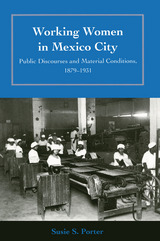
READERS
Browse our collection.
PUBLISHERS
See BiblioVault's publisher services.
STUDENT SERVICES
Files for college accessibility offices.
RECENTLY PUBLISHED







UChicago Accessibility Resources
home | accessibility | search | about | contact us
BiblioVault ® 2001 - 2024
The University of Chicago Press