
 A SCHOLARLY BOOK REPOSITORY
Banking on Stability looks at Japan's willingness to cooperate financially with the United States--its most important trade partner--in cases where such compliance yields an improvement in relations. Katada argues that the Japanese government carefully weighs the benefits arising in international and domestic realms when taking on the role of collective crisis manager and concludes that Japan is no exception in having private gain as a central motivation during international financial crises.
Saori Katada is Assistant Professor, School of International Relations, University of Southern California.
These banks enhance credibility by promoting financial transparency in the local system, improving the quality of banking regulation and supervision, and by serving as private lenders of last resort. Reputable multinational banks provide an enforcement mechanism for publicized economic policies, signaling to international financial markets that the host government is committed to low inflation and stable currency.
Grittersová examines actual changes in government behavior of nations trying to gain legitimacy in international financial markets, and the ways in which perceptions of these nations change in relation to multinational banks. In addition to quantitative analysis of over 80 emerging-market countries, she offers extensive case studies of credibility building in the transition countries of Eastern Europe, Argentina in 2001, and the global financial crisis of 2008. Grittersová illuminates the complex interactions between multinational banks and national policymaking that characterize the process of financial globalization to reveal the importance of market confidence in a world of mobile capital.
Listen to a short interview with Rawi AbdelalHost: Chris Gondek | Producer: Heron & Crane
The rise of global financial markets in the last decades of the twentieth century was premised on one fundamental idea: that capital ought to flow across country borders with minimal restriction and regulation. Freedom for capital movements became the new orthodoxy.
In an intellectual, legal, and political history of financial globalization, Rawi Abdelal shows that this was not always the case. Transactions routinely executed by bankers, managers, and investors during the 1990s--trading foreign stocks and bonds, borrowing in foreign currencies--had been illegal in many countries only decades, and sometimes just a year or two, earlier.
How and why did the world shift from an orthodoxy of free capital movements in 1914 to an orthodoxy of capital controls in 1944 and then back again by 1994? How have such standards of appropriate behavior been codified and transmitted internationally? Contrary to conventional accounts, Abdelal argues that neither the U.S. Treasury nor Wall Street bankers have preferred or promoted multilateral, liberal rules for global finance. Instead, European policy makers conceived and promoted the liberal rules that compose the international financial architecture. Whereas U.S. policy makers have tended to embrace unilateral, ad hoc globalization, French and European policy makers have promoted a rule-based, "managed" globalization. This contest over the character of globalization continues today.
“A timely account of how the 1% holds on to their wealth…Ought to keep wealth managers awake at night.”
—Wall Street Journal
“Harrington advises governments seeking to address inequality to focus not only on the rich but also on the professionals who help them game the system.”
—Richard Cooper, Foreign Affairs
“An insight unlike any other into how wealth management works.”
—Felix Martin, New Statesman
“One of those rare books where you just have to stand back in awe and wonder at the author’s achievement…Harrington offers profound insights into the world of the professional people who dedicate their lives to meeting the perceived needs of the world’s ultra-wealthy.”
—Times Higher Education
How do the ultra-rich keep getting richer, despite taxes on income, capital gains, property, and inheritance? Capital without Borders tackles this tantalizing question through a groundbreaking multi-year investigation of the men and women who specialize in protecting the fortunes of the world’s richest people. Brooke Harrington followed the money to the eighteen most popular tax havens in the world, interviewing wealth managers to understand how they help their high-net-worth clients dodge taxes, creditors, and disgruntled heirs—all while staying just within the letter of the law. She even trained to become a wealth manager herself in her quest to penetrate the fascinating, shadowy world of the guardians of the one percent.
Li roots his argument in an analysis of the political and economic imbalances in China that would exacerbate a crisis, and possibly even precipitate a full collapse—and he shows in detail the reasons why that collapse could happen much more quickly than anyone imagines. Writing from a Marxist and ecologically oriented perspective, Li shows unequivocally that the limits to capitalism are fast approaching, and that events in China—essentially the last great frontier for capitalist expansion—are likely to be pivotal.
In a comprehensive review that ranges from World War II to the present, Cohen convincingly argues that one goal stands out as the primary motivation for currency statecraft: the extent of a country’s geopolitical ambition, or how driven it is to build or sustain a prominent place in the international community. When a currency becomes internationalized, it generally increases the power of the nation that produces it. In the persistent contestation that characterizes global politics, that extra edge can matter greatly, making monetary rivalry an integral component of geopolitics. Today, the major example of monetary rivalry is the emerging confrontation between the US dollar and the Chinese renminbi. Cohen describes how China has vigorously promoted the international standing of its currency in recent years, even at the risk of exacerbating relations with the United States, and explains how the outcome could play a major role in shaping the broader geopolitical engagement between the two superpowers.
This project on developing country debt, undertaken by the National Bureau of Economic Research, provides a detailed analysis of the ongoing developing country debt crisis. The project focuses on the middle-income developing countries, particularly those in Latin America and East Asia, although many lessons of the study should apply as well to other, poorer debtor countries. The project analyzes the crisis from two perspectives, that of the international financial system as a whole (volume 1) and that of individual debtor countries (volumes 2 and 3).
This project on developing country debt, undertaken by the National Bureau of Economic Research, provides a detailed analysis of the ongoing developing country debt crisis. The project focuses on the middle-income developing countries, particularly those in Latin America and East Asia, although many lessons of the study should apply as well to other, poorer debtor countries. The project analyzes the crisis from two perspectives, that of the international financial system as a whole (volume 1) and that of individual debtor countries (volumes 2 and 3).
This second volume contains lengthy and detailed case studies of four Latin American nations—Argentina, Bolivia, Brazil, and Mexico—providing a wealth of comparative data and new statistics on the general economic development of each nation. The authors explore the various factors that contributed to the debt crisis in each country and analyze how the crisis was managed once it had taken hold. Trenchant economic analyses are enchanced by assessments of the stark political realities behind the policy choices facing each nation.
This project on developing country debt, undertaken by the National Bureau of Economic Research, provides a detailed analysis of the ongoing developing country debt crisis. The project focuses on the middle-income developing countries, particularly those in Latin America and East Asia, although many lessons of the study should apply as well to other, poorer debtor countries. The project analyzes the crisis from two perspectives, that of the international financial system as a whole (volume 1) and that of individual debtor countries (volumes 2 and 3).
This third volume contains lengthy and detailed case studies of four very different Asian countries—Turkey, Indonesia, Korea, and the Philippines.
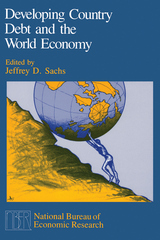
Developing Country Debt and the World Economy contains nontechnical versions of papers prepared under the auspices of the project on developing country debt, sponsored by the National Bureau of Economic Research. The project focuses on the middle-income developing countries, particularly those in Latin America and East Asia, although many lessons of the study should apply as well to other, poorer debtor countries. The contributors analyze the crisis from two perspectives, that of the international financial system as a whole and that of individual debtor countries.
Studies of eight countries—Argentina, Bolivia, Brazil, Indonesia, Mexico, the Philippines, South Korea, and Turkey—explore the question of why some countries succumbed to serious financial crises while other did not. Each study was prepared by a team of two authors—a U.S.-based research and an economist from the country under study. An additional eight papers approach the problem of developing country debt from a global or "systemic" perspective. The topics they cover include the history of international sovereign lending and previous debt crises, the political factors that contribute to poor economic policies in many debtor nations, the role of commercial banks and the International Monetary Fund during the current crisis, the links between debt in developing countries and economic policies in the industrialized nations, and possible new approaches to the global management of the crisis.
Exchange Rates, and the World Economy, this book addresses topics in
international macroeconomics that have come to the forefront of economic
policy debates in recent years. Covering exchange rate policy, the
European Monetary System, protection and competition, and the
international "non-system" since the collapse of Bretton Woods, Corden
provides a probing analysis of significant economic trends associated
with the increasing integration of the world capital market.
Beginning with essays on exchange rate policy, the current account, and
external effects of fiscal policy, Corden lays out the foundations of
balance-of-payments theory in relation to wage rates, income
distribution, and inflation. Chapters on the European Monetary System
focus on monetary integration and look skeptically at European proposals
to move toward monetary union. Other topical essays discuss the
"competitiveness" problem and the relation between protection and
macroeconomic policy.
Corden summarizes and clarifies a vast range of work on the coordination
of macroeconomic policies and critically reviews various proposals for
reforming the international monetary system.

"Globalization" is here. Signified by an increasingly close economic interconnection that has led to profound political and social change around the world, the process seems irreversible. In this book, however, Harold James provides a sobering historical perspective, exploring the circumstances in which the globally integrated world of an earlier era broke down under the pressure of unexpected events.
James examines one of the great historical nightmares of the twentieth century: the collapse of globalism in the Great Depression. Analyzing this collapse in terms of three main components of global economics--capital flows, trade, and international migration--James argues that it was not simply a consequence of the strains of World War I but resulted from the interplay of resentments against all these elements of mobility, as well as from the policies and institutions designed to assuage the threats of globalism. Could it happen again? There are significant parallels today: highly integrated systems are inherently vulnerable to collapse, and world financial markets are vulnerable and unstable. While James does not foresee another Great Depression, his book provides a cautionary tale in which institutions meant to save the world from the consequences of globalization--think WTO and IMF, in our own time--ended by destroying both prosperity and peace.

Both empirical and theoretical research are represented, and the contributors analyze such issues as the performance of various models of exchange rate determination, the role of risk and speculation in the forward market for foreign exchange, the rational expectations hypothesis in such markets, the performance of monetary policy in ten industrial countries, the role that labor market contracts play in exchange rate policies, the effect of he oil shocks on the evolution of exchange rates, and the output cost of bringing down inflation in the open economy.

Financial Missionaries to the World establishes the broad scope and significance of "dollar diplomacy"—the use of international lending and advising—to early-twentieth-century U.S. foreign policy. Combining diplomatic, economic, and cultural history, the distinguished historian Emily S. Rosenberg shows how private bank loans were extended to leverage the acceptance of American financial advisers by foreign governments. In an analysis striking in its relevance to contemporary debates over international loans, she reveals how a practice initially justified as a progressive means to extend “civilization” by promoting economic stability and progress became embroiled in controversy. Vocal critics at home and abroad charged that American loans and financial oversight constituted a new imperialism that fostered exploitation of less powerful nations. By the mid-1920s, Rosenberg explains, even early supporters of dollar diplomacy worried that by facilitating excessive borrowing, the practice might induce the very instability and default that it supposedly worked against.
"[A] major and superb contribution to the history of U.S. foreign relations. . . . [Emily S. Rosenberg] has opened up a whole new research field in international history."—Anders Stephanson, Journal of American History
"[A] landmark in the historiography of American foreign relations."—Melvyn P. Leffler, author of A Preponderence of Power: National Security, the Truman Administration, and the Cold War
"Fascinating."—Christopher Clark, Times Literary Supplement
Recently, a volatile global economy has challenged the United States to rethink its financial policies toward economically troubled countries. Emily Rosenberg suggests that perplexing questions about how to standardize practices within the global financial system, and thereby strengthen market economies in unstable areas of the world, go back to the early decades of this century. Then, dollar diplomacy--the practice of extending private U.S. bank loans in exchange for financial supervision over other nations--provided America's major approach to stabilizing economies overseas and expanding its influence.
Policymakers, private bankers, and the members of the emerging profession of international economic advising cooperated in devising arrangements by which U.S. banks would extend foreign loans on the condition that the countries hire U.S. experts to revamp financial systems and exercise some supervision. Rosenberg demonstrates that these arrangements were not simply technical and shows how they became central to foreign policy debates during the 1920s, when increasingly vocal critics at home and abroad assailed dollar diplomacy as a new imperialism. She explores how loan-for-supervision arrangements interrelated with broad cultural notions of racial destiny, professional expertise, and the virtues of manliness. An innovative, interdisciplinary study, Financial Missionaries to the World illuminates the dilemmas of public/private cooperation in foreign economic policy and the incalculable consequences of exercising financial power in the global marketplace.
An Economist Best Book of the Year
A Financial Times Best Book of the Year
A Foreign Affairs Best Book of the Year
A ProMarket Best Political Economy Book of the Year
One of The Week’s Ten Best Business Books of the Year
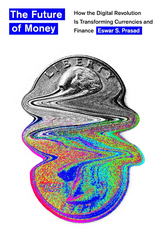
A cutting-edge look at how accelerating financial change, from the end of cash to the rise of cryptocurrencies, will transform economies for better and worse.
We think we’ve seen financial innovation. We bank from laptops and buy coffee with the wave of a phone. But these are minor miracles compared with the dizzying experiments now underway around the globe, as businesses and governments alike embrace the possibilities of new financial technologies. As Eswar Prasad explains, the world of finance is at the threshold of major disruption that will affect corporations, bankers, states, and indeed all of us. The transformation of money will fundamentally rewrite how ordinary people live.
Above all, Prasad foresees the end of physical cash. The driving force won’t be phones or credit cards but rather central banks, spurred by the emergence of cryptocurrencies to develop their own, more stable digital currencies. Meanwhile, cryptocurrencies themselves will evolve unpredictably as global corporations like Meta and Amazon join the game. The changes will be accompanied by snowballing innovations that are reshaping finance and have already begun to revolutionize how we invest, trade, insure, and manage risk.
Prasad shows how these and other changes will redefine the very concept of money, unbundling its traditional functions as a unit of account, medium of exchange, and store of value. The promise lies in greater efficiency and flexibility, increased sensitivity to the needs of diverse consumers, and improved market access for the unbanked. The risk is instability, lack of accountability, and erosion of privacy. A lucid, visionary work, The Future of Money shows how to maximize the best and guard against the worst of what is to come.
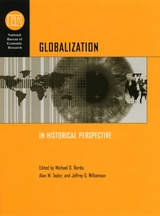
This volume collects eleven papers doing exactly that and more. The first group of essays explores how the process of globalization can be measured in terms of the long-term integration of different markets-from the markets for goods and commodities to those for labor and capital, and from the sixteenth century to the present. The second set of contributions places this knowledge in a wider context, examining some of the trends and questions that have emerged as markets converge and diverge: the roles of technology and geography are both considered, along with the controversial issues of globalization's effects on inequality and social justice and the roles of political institutions in responding to them. The final group of essays addresses the international financial systems that play such a large part in guiding the process of globalization, considering the influence of exchange rate regimes, financial development, financial crises, and the architecture of the international financial system itself.
This volume reveals a much larger picture of the process of globalization, one that stretches from the establishment of a global economic system during the nineteenth century through the disruptions of two world wars and the Great Depression into the present day. The keen analysis, insight, and wisdom in this volume will have something to offer a wide range of readers interested in this important issue.
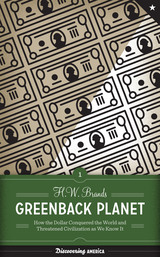
The world runs on the U.S. dollar. From Washington to Beijing, governments, businesses, and individuals rely on the dollar to conduct commerce and invest profitably and safely—even after the global financial meltdown in 2008 revealed the potentially catastrophic cost of the dollar's hegemony. But how did the greenback achieve this planetary dominance a mere century and a half after President Lincoln issued the first currency backed only by the credit—and credibility—of the federal government?
In Greenback Planet, acclaimed historian H. W. Brands charts the dollar's astonishing rise to become the world's principal currency. Telling the story with the verve of a novelist, he recounts key episodes in U.S. monetary history, from the Civil War debate over fiat money (greenbacks) to the recent worldwide financial crisis. Brands explores the dollar's changing relations to gold and silver and to other currencies and cogently explains how America's economic might made the dollar the fundamental standard of value in world finance. He vividly describes the 1869 Black Friday attempt to corner the gold market, banker J. P. Morgan's bailout of the U.S. treasury, the creation of the Federal Reserve, and President Franklin Roosevelt's handling of the bank panic of 1933. Brands shows how lessons learned (and not learned) in the Great Depression have influenced subsequent U.S. monetary policy, and how the dollar's dominance helped transform economies in countries ranging from Germany and Japan after World War II to Russia and China today. He concludes with a sobering dissection of the 2008 world financial debacle, which exposed the power—and the enormous risks—of the dollar's worldwide reign.

Popular anger against the financial system has never been higher, yet the practical workings of the system remain opaque to many people. The Heretic's Guide to Global Finance aims to bridge the gap between protest slogans and practical proposals for reform.
Brett Scott is a campaigner and former derivatives broker who has a unique understanding of life inside and outside the financial sector. He builds up a framework for approaching it based on the three principles of 'Exploring', 'Jamming' and 'Building', offering a practical guide for those who wish to deepen their understanding of, and access to, the inner workings of financial institutions.
Scott covers aspects frequently overlooked, such as the cultural dimensions of the financial system, and considers major issues such as agricultural speculation, carbon markets and tar-sands financing. Crucially, it also showcases the growing alternative finance movement, showing how everyday people can get involved in building a new, democratic, financial system.
The book is unique in its scrutiny of the type of lenders and investors that triggered and deepened the crises, focusing particularly on institutional investors and banks; allocation of their assets; the criteria used in this process; and the impact of the nature of the investor on the volatility of different types of capital flow. It addresses such questions as: What determines or triggers massive changes in perceptions and sentiment by different investors and leaders? To what extent does contagion spread not just among countries but between actors? What are the policy implications of this analysis? The book concludes by examining the asymmetries in the financial architecture discussions and implementation and by offering policy proposals.
United States monetary policy has traditionally been modeled under the assumption that the domestic economy is immune to international factors and exogenous shocks. Such an assumption is increasingly unrealistic in the age of integrated capital markets, tightened links between national economies, and reduced trading costs. International Dimensions of Monetary Policy brings together fresh research to address the repercussions of the continuing evolution toward globalization for the conduct of monetary policy.
In this comprehensive book, the authors examine the real and potential effects of increased openness and exposure to international economic dynamics from a variety of perspectives. Their findings reveal that central banks continue to influence decisively domestic economic outcomes—even inflation—suggesting that international factors may have a limited role in national performance. International Dimensions of Monetary Policy will lead the way in analyzing monetary policy measures in complex economies.
After a guided tour by the editor and a historical exploration, some of the world's leading theorists and policy analysts examine the benefits and pitfalls of capital movements and controls. In the second portion, papers examine the recent experiences of Argentina and Mexico, with Charles Calomiris—whose proposals for a new world financial architecture have elicited wide attention—contributing a response. The volume concludes with a roundtable discussion of the report of the International Financial Institutions Advisory Commission, in which the chair of the commission, Allan H. Meltzer, both comments on the report and responds to questions about it.
The material presented here will become a standard reference for analysts, policymakers, and the interested general public.
Contributors:
Leonardo Auernheimer, Matthew Bishop, Michael D. Bordo, Charles Calomiris, Guillermo A. Calvo, Augustin Carstens, Michael P. Dooley, Pablo E. Guidotti, T. Britton Harris, John P. Lipsky, Guillermo Ortiz Martinez, Allan H. Meltzer, Andrew Powell, Rene Stulz, Carl E. Walsh
The authors construct a consistent data base of information for eight countries and design a theoretically sound model to test and evaluate competing hypotheses incorporating the most recent theoretical developments. Additional chapters address an impressive variety of issues that complement and corroborate the core of the study. They answer such questions as these: Can countries conduct an independent monetary policy under fixed exchange rates? How closely tied are product prices across countries? How are disturbances transmitted across countries?
The International Transmission of Inflation is an important contribution to international monetary economics in furnishing an invaluable empirical foundation for future investigation and discussion.
Eight essays examine such issues as the current extent of international market integration, gains to U.S. investors through international diversification, home-country bias in investing, the role of time and location around the world in stock trading, and the behavior of country funds. Other, long-standing questions about equity markets are also addressed, including market efficiency and the accuracy of models of expected returns, with a particular focus on variances, covariances, and the price of risk according to the Capital Asset Pricing Model.
This account of the financial crisis of 2008–2009 compares banking systems in the United States and the United Kingdom to those of Canada and Australia and explains why the system imploded in the former but not the latter. Central to this analysis are differences in bankers’ beliefs and incentives in different banking markets.
A boom mentality and fear of being left behind by competitors drove many U.S. and British bank executives to take extraordinary risks in creating new financial products. Intense market competition, poorly understood trading instruments, and escalating system complexity both drove and misled bankers. Formerly illiquid assets such as mortgages and other forms of debt were repackaged into complex securities, including collateralized debt obligations (CDOs). These were then traded on an industrial scale, and in 2007 and 2008, when their value collapsed, economic activity fell into a deep freeze. The financial crisis threatened not just investment banks and their insurers but also individual homeowners and workers at every level. In contrast, because banks in Canada and Australia could make good profits through traditional lending practices, they did not confront the same pressures to reinvent themselves as did banks in the United States and the United Kingdom, thus allowing them to avoid the fate of their overseas counterparts.
Stephen Bell and Andrew Hindmoor argue that trading and systemic risk in the banking system need to be reined in. However, prospects for this are not promising given the commitment of governments in the crisis-hit economies to protect the “international competitiveness” of the London and New York financial markets.
“The Meddlers is an eye-opening, essential new history that places our international financial institutions in the transition from a world defined by empire to one of nation states enmeshed in the world economy.”
—Adam Tooze, Columbia University
An award-winning history traces the origins of global economic governance—and the political conflicts it generates—to the aftermath of World War I.
International economic institutions like the International Monetary Fund and World Bank exert incredible influence over the domestic policies of many states. These institutions date from the end of World War II and amassed power during the neoliberal era of the late twentieth century. But as Jamie Martin shows, if we want to understand their deeper origins and the ideas and dynamics that shaped their controversial powers, we must turn back to the explosive political struggles that attended the birth of global economic governance in the early twentieth century.
The Meddlers tells the story of the first international institutions to govern the world economy, including the League of Nations and Bank for International Settlements, created after World War I. These institutions endowed civil servants, bankers, and colonial authorities from Europe and the United States with extraordinary powers: to enforce austerity, coordinate the policies of independent central banks, oversee development programs, and regulate commodity prices. In a highly unequal world, they faced a new political challenge: was it possible to reach into sovereign states and empires to intervene in domestic economic policies without generating a backlash?
Martin follows the intense political conflicts provoked by the earliest international efforts to govern capitalism—from Weimar Germany to the Balkans, Nationalist China to colonial Malaya, and the Chilean desert to Wall Street. The Meddlers shows how the fraught problems of sovereignty and democracy posed by institutions like the IMF are not unique to late twentieth-century globalization, but instead first emerged during an earlier period of imperial competition, world war, and economic crisis.
"In a meticulously researched study, David Bearce demonstrates that, contrary to predictions, financial globalization has not resulted in a systematic convergence of national monetary policies. The book is a must-read for students of the political economy of international finance. Highlighting the critical role of partisan politics in determining policy outcomes, Bearce adds a new and important dimension to our understanding of the impacts of international capital mobility in the contemporary era."
—Benjamin Jerry Cohen, University of California, Santa Barbara
"Bearce offers a compelling analysis of partisan economic policy in an open economy. By analyzing both fiscal and monetary policies, Bearce extends our understanding of how the electoral imperative conditions policy behavior. His conclusions will have to be addressed in any
future debate about the topic."
—William Bernhard, University of Illinois at Urbana-Champaign
"Interest group divisions over exchange rates and macroeconomic policy have been at the center of international political economy research for about 20 years. Political scientists have studied these cleavages, focusing on the policy interests of various industry groups. On a separate but parallel track, another group of researchers explored the relationship between partisan politics and macroeconomic policy choices. In this exceptionally well researched book, Bearce integrates these two analytical traditions. Noting that industry groups are typically important organized constituents in left-wing and right-wing political parties, Bearce demonstrates how macroeconomic policy outcomes in advanced countries vary systematically with the alternation of political parties in government."
—J. Lawrence Broz, University of California, San Diego
David H. Bearce is Assistant Professor of Political Science at the University of Pittsburgh.
With expert knowledge and a wry sense of humor, Aliber demystifies international finance by breaking through the jargon barrier and presenting technical issues in a clear and concise manner. Aliber takes the reader on a tour of a multiplicity of international finance issues, included fixed and floating exchange rates, devaluations, money markets, monetary policy, and the concepts that lie behind the esoteric language of financial economists.
This sixth edition tracks the changes that have taken place in the world economy since the previous editions by exploring financial globalization, postcommunist transition, European integration, and the Asian economic crisis. It is an indispensable and highly readable guide to the complex and increasingly fragile system through which the world's business is financed.
Since the late 1950s the world's banks have expanded their global operations, with US institutions leading the way. As the recent global economic crisis shows, actions of private bankers can threaten capital markets, weaken national regulatory systems, and strain international cooperation-seriously endangering the world economy and the interests of nation states.
This is the story of how the economists, bankers, and politicians of Britain, France, and the United States approached the financial crisis of 1918–1923 after the most devastating of wars. It captures the emotional demands for rapid recovery and reconstruction of Europe as well as the machinations of countries already jousting for economic advantage in peace. It’s also a timely book because the West today faces similar problems with little more in the way of theory or tools for repair than after World War I, and with an evident loss of historical memory.
Dan Silverman places the reparations issue in proper perspective as only one of many complex problems. He demonstrates that the war produced a crisis in financial and monetary theory as well as in fact. Theory proved inadequate to the requirements of balancing budgets, liquidating massive debts, halting inflation, and stabilizing foreign exchange. In fact, the English and Americans imposed their economic orthodoxy on their less fortunate French ally and their former German adversary.
One of the more remarkable results of Silverman’s research is the reversal of the old view that France responded to its allies’ economic demands with intransigence, ignorance, and incompetence. Instead, Silverman depicts France as legitimately pursuing its own national self-interest, fighting Anglo-American hegemony, and defending itself as a debtor nation against the creditors who were its “allies.”
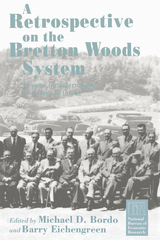
The contributors explore adjustment, liquidity, and transmission under the System; the way it affected developing countries; and the role of the International Monetary Fund in maintaining a stable rate. The authors examine the reasons for the System's success and eventual collapse, compare it to subsequent monetary regimes, such as the European Monetary System, and address the possibility of a new fixed exchange rate for today's world.
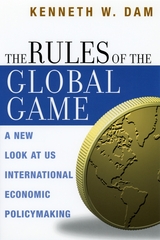
In The Rules of the Global Game, Dam first lays out what US international economic policies are and compares them to what they should be based on how they affect US per capita income. With this foundation in place, Dam then develops and applies principles for elucidating the major components of economic policy, such as foreign trade and investment, international monetary and financial systems, and current controversial issues, including intellectual property and immigration. Underlying his explanations is a belief in the importance of worldwide free trade and open markets as well as a crucial understanding of the political forces that shape decision making. Because economic policy is not created in a political vacuum, Dam argues, sound policymaking requires an understanding of "statecraft"-the creation and use of institutions that channel the efforts of interest groups and political forces in directions that encourage good economic outcomes.
Dam's vast experience with the politics and practicalities of economic policy translates into a view of policy that is neither academic nor abstract. Rather, Dam shows us how policy is actually made, who makes it, and why, using examples such as GATT, NAFTA, the US-Japan semiconductor agreement, and the Asian financial crisis. A rare book that can be read with pleasure and profit by layperson and economist alike, The Rules of the Global Game allows readers to understand the policies that shape our economy and our lives.
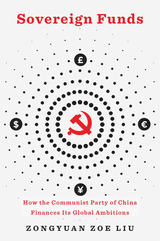
The first in-depth account of the sudden growth of China’s sovereign wealth funds and their transformative impact on global markets, domestic and multinational businesses, and international politics.
One of the keys to China’s global rise has been its strategy of deploying sovereign wealth on behalf of state power. Since President Xi Jinping took office in 2013, China has doubled down on financial statecraft, making shrewd investments with the sovereign funds it has built up by leveraging its foreign exchange reserves. Sovereign Funds tells the story of how the Communist Party of China (CPC) became a global financier of surpassing ambition.
Zongyuan Zoe Liu offers a comprehensive and up-to-date analysis of the evolution of China’s sovereign funds, including the China Investment Corporation, the State Administration of Foreign Exchange, and Central Huijin Investment. Liu shows how these institutions have become mechanisms not only for transforming low-reward foreign exchange reserves into investment capital but also for power projection. Sovereign funds are essential drivers of the national interest, shaping global markets, advancing the historic Belt and Road Initiative, and funneling state assets into strategic industries such as semiconductors, fintech, and artificial intelligence. In the era of President Xi, state-owned financial institutions have become gatekeepers of the Chinese economy. Political and personal relationships with prestigious sovereign funds have enabled Blackstone to flourish in China and have fueled the ascendance of private tech giants such as Alibaba, Ant Finance, and Didi.
As Liu makes clear, sovereign funds are not just for oil exporters. The CPC is a leader in both foreign exchange reserves investment and economic statecraft, using state capital to encourage domestic economic activity and create spheres of influence worldwide.
With the growing debate about the effect of financial interdependence on the ability of states to conduct economic policy and indeed to preserve their independence in the face of unprecedented economic linkages, this book will be of interest to political scientists and economists as well as policy makers concerned with the impact of financial globalization and the causes of differentials in access to capital.
Andrew C. Sobel is Assistant Professor of Political Science and Resident Fellow, Center in Political Economy, Washington University, St. Louis. He is the author of Domestic Choices, International Markets: Dismantling National Barriers and Liberalizing Securities Markets.
READERS
Browse our collection.
PUBLISHERS
See BiblioVault's publisher services.
STUDENT SERVICES
Files for college accessibility offices.
RECENTLY PUBLISHED





UChicago Accessibility Resources
home | accessibility | search | about | contact us
BiblioVault ® 2001 - 2024
The University of Chicago Press