
 A SCHOLARLY BOOK REPOSITORY
121 books about Israel & Palestine and 4
start with U
121 books about Israel & Palestine and 4
121 books about Israel & Palestine
4 start with U start with U
4 start with U start with U
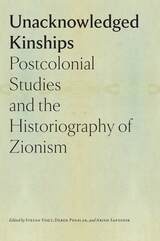
Unacknowledged Kinships
Postcolonial Studies and the Historiography of Zionism
Edited by Stefan Vogt, Derek Penslar, and Arieh Saposnik
Brandeis University Press, 2023
The first work to systematically investigate the potential for a dialogue between postcolonial studies and the history of Zionism.
There is an “unacknowledged kinship” between studies of Zionism and post-colonial studies, a kinship that deserves to be both discovered and acknowledged. Unacknowledged Kinships strives to facilitate a conversation between the historiography of Zionism and postcolonial studies by identifying and exploring possible linkages and affiliations between their subjects as well as the limits of such connections. The contributors to this volume discuss central theoretical concepts developed within the field of postcolonial studies, and they use these concepts to analyze crucial aspects of the history of Zionism while contextualizing Zionist thought, politics, and culture within colonial and postcolonial histories. This book also argues that postcolonial studies could gain from looking at the history of Zionism as an example of not only colonial domination but also the seemingly contradictory processes of national liberation and self-empowerment.
Unacknowledged Kinships is the first work to systematically investigate the potential for a dialogue between postcolonial studies and Zionist historiography. It is also unique in suggesting that postcolonial concepts can be applied to the history of European Zionism just as comprehensively as to the history of Zionism in Palestine and Israel or Arab countries. Most importantly, the book is an overture for a dialogue between postcolonial studies and the historiography of Zionism.
There is an “unacknowledged kinship” between studies of Zionism and post-colonial studies, a kinship that deserves to be both discovered and acknowledged. Unacknowledged Kinships strives to facilitate a conversation between the historiography of Zionism and postcolonial studies by identifying and exploring possible linkages and affiliations between their subjects as well as the limits of such connections. The contributors to this volume discuss central theoretical concepts developed within the field of postcolonial studies, and they use these concepts to analyze crucial aspects of the history of Zionism while contextualizing Zionist thought, politics, and culture within colonial and postcolonial histories. This book also argues that postcolonial studies could gain from looking at the history of Zionism as an example of not only colonial domination but also the seemingly contradictory processes of national liberation and self-empowerment.
Unacknowledged Kinships is the first work to systematically investigate the potential for a dialogue between postcolonial studies and Zionist historiography. It is also unique in suggesting that postcolonial concepts can be applied to the history of European Zionism just as comprehensively as to the history of Zionism in Palestine and Israel or Arab countries. Most importantly, the book is an overture for a dialogue between postcolonial studies and the historiography of Zionism.
[more]
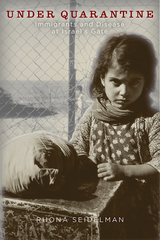
Under Quarantine
Immigrants and Disease at Israel’s Gate
Rhona Seidelman
Rutgers University Press, 2020
Under Quarantine is the riveting story of Shaar Ha’aliya, a central immigrant processing camp opened shortly after Israel became an independent state. This historic gateway for Jewish migration was surrounded by a controversial barbed wire fence. The camp administrators defended this imposing barrier as a necessary quarantine measure - even as detained immigrants regularly defied it by crawling out of the camp and returning at will. Focusing on the conflicts and complications surrounding the medical quarantine, this book brings the history of this place and the remarkable experiences of the immigrants who went through it to life. Evocative and bold, Under Quarantine shows that we cannot fully understand Israel until we understand Shaar Ha’aliya. The gate of arrival for nearly half a million immigrants - a space of homecoming, conflict, exclusion and welcoming - here was the country’s crucible.
[more]
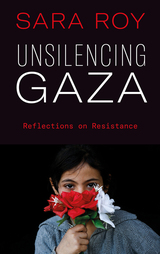
Unsilencing Gaza
Reflections on Resistance
Sara Roy
Pluto Press, 2021
'Roy is humanely and professionally committed in ways that are unmatched by any other non-Palestinian scholar' - Edward W. Said
Gaza, the centre of Palestinian nationalism and resistance to the occupation, is the linchpin of the Israeli-Palestinian conflict and the key to its resolution. Since 2005, Israel has deepened the isolation of the territory, severing it almost completely from its most vital connections to the West Bank, Israel and beyond, and has deliberately shattered its economy, transforming Palestinians from a people with political rights into a humanitarian problem.
Sara Roy unpacks this process, looking at US foreign policy towards the Palestinians, as well as analysing the trajectory of Israeli policy toward Gaza, which became a series of punitive approaches meant not only to contain the Hamas regime but weaken Gazan society.
Roy also reflects on Gaza's ruination from a Jewish perspective and discusses the connections between Gaza's history and her own as a child of Holocaust survivors. This book, a follow up from the renowned Failing Peace, comes from one of the world's most acclaimed writers on the region.
Gaza, the centre of Palestinian nationalism and resistance to the occupation, is the linchpin of the Israeli-Palestinian conflict and the key to its resolution. Since 2005, Israel has deepened the isolation of the territory, severing it almost completely from its most vital connections to the West Bank, Israel and beyond, and has deliberately shattered its economy, transforming Palestinians from a people with political rights into a humanitarian problem.
Sara Roy unpacks this process, looking at US foreign policy towards the Palestinians, as well as analysing the trajectory of Israeli policy toward Gaza, which became a series of punitive approaches meant not only to contain the Hamas regime but weaken Gazan society.
Roy also reflects on Gaza's ruination from a Jewish perspective and discusses the connections between Gaza's history and her own as a child of Holocaust survivors. This book, a follow up from the renowned Failing Peace, comes from one of the world's most acclaimed writers on the region.
[more]

Unsilencing Gaza
Reflections on Resistance
Sara Roy
Pluto Press, 2021
'Roy is humanely and professionally committed in ways that are unmatched by any other non-Palestinian scholar' - Edward W. Said
Gaza, the centre of Palestinian nationalism and resistance to the occupation, is the linchpin of the Israeli-Palestinian conflict and the key to its resolution. Since 2005, Israel has deepened the isolation of the territory, severing it almost completely from its most vital connections to the West Bank, Israel and beyond, and has deliberately shattered its economy, transforming Palestinians from a people with political rights into a humanitarian problem.
Sara Roy unpacks this process, looking at US foreign policy towards the Palestinians, as well as analysing the trajectory of Israeli policy toward Gaza, which became a series of punitive approaches meant not only to contain the Hamas regime but weaken Gazan society.
Roy also reflects on Gaza's ruination from a Jewish perspective and discusses the connections between Gaza's history and her own as a child of Holocaust survivors. This book, a follow up from the renowned Failing Peace, comes from one of the world's most acclaimed writers on the region.
Gaza, the centre of Palestinian nationalism and resistance to the occupation, is the linchpin of the Israeli-Palestinian conflict and the key to its resolution. Since 2005, Israel has deepened the isolation of the territory, severing it almost completely from its most vital connections to the West Bank, Israel and beyond, and has deliberately shattered its economy, transforming Palestinians from a people with political rights into a humanitarian problem.
Sara Roy unpacks this process, looking at US foreign policy towards the Palestinians, as well as analysing the trajectory of Israeli policy toward Gaza, which became a series of punitive approaches meant not only to contain the Hamas regime but weaken Gazan society.
Roy also reflects on Gaza's ruination from a Jewish perspective and discusses the connections between Gaza's history and her own as a child of Holocaust survivors. This book, a follow up from the renowned Failing Peace, comes from one of the world's most acclaimed writers on the region.
[more]
READERS
Browse our collection.
PUBLISHERS
See BiblioVault's publisher services.
STUDENT SERVICES
Files for college accessibility offices.
RECENTLY PUBLISHED





UChicago Accessibility Resources
home | accessibility | search | about | contact us
BiblioVault ® 2001 - 2024
The University of Chicago Press