
 A SCHOLARLY BOOK REPOSITORY
The surprising claim of this book is that dwelling on loss is not necessarily depressing. Instead, Jonathan Flatley argues, embracing melancholy can be a road back to contact with others and can lead people to productively remap their relationship to the world around them. Flatley demonstrates that a seemingly disparate set of modernist writers and thinkers showed how aesthetic activity can give us the means to comprehend and change our relation to loss.
The texts at the center of Flatley’s analysis—Henry James’s Turn of the Screw, W. E. B. Du Bois’s The Souls of Black Folk, and Andrei Platonov’s Chevengur—share with Freud an interest in understanding the depressing effects of difficult losses and with Walter Benjamin the hope that loss itself could become a means of connection and the basis for social transformation. For Du Bois, Platonov, and James, the focus on melancholy illuminates both the historical origins of subjective emotional life and a heretofore unarticulated community of melancholics. The affective maps they produce make possible the conversion of a depressive melancholia into a way to be interested in the world.
The editors have provided what James himself emphasized in his literary criticism—the text's context. Each selection is framed by an editorial commentary and notes which give its biographical, bibliographical, and critical background and cite other references in James' work to the topic discussed. This framework, along with the editors' introduction, gives the reader a sense of the place of these pieces in the history of criticism.
This collection of prefaces, originally written for the 1909 multi-volume New York Edition of Henry James’s fiction, first appeared in book form in 1934 with an introduction by poet and critic R. P. Blackmur. In his prefaces, James tackles the great problems of fiction writing—character, plot, point of view, inspiration—and explains how he came to write novels such as The Portrait of a Lady and The American. As Blackmur puts it, “criticism has never been more ambitious, nor more useful.”
The latest edition of this influential work includes a foreword by bestselling author Colm Tóibín, whose critically acclaimed novel The Master is told from the point of view of Henry James. As a guide not only to James’s inspiration and execution, but also to his frustrations and triumphs, this volume will be valuable both to students of James’s fiction and to aspiring writers.
In Ashes of the Mind, Martin Griffin examines the work of five Northerners—three poets and two fiction writers—who over a period of four decades tried to understand and articulate the landscape of memory in postwar America, and in particular in that part of the nation that could, with most justification, claim the victory of its beliefs and values. The book begins with an examination of the rhetorical grandeur of James Russell Lowell's Harvard Commemoration Ode, ranges across Herman Melville's ironic war poetry, Henry James's novel of North-South reconciliation, The Bostonians, and Ambrose Bierce's short stories, and ends with the bitter meditation on race and nation presented by Paul Laurence Dunbar's elegy "Robert Gould Shaw." Together these texts reveal how a group of representative Northern writers were haunted in different ways by the memory of the
conflict and its fraught legacy.
Griffin traces a concern with individual and community loss, ambivalence toward victory, and a changing politics of commemoration in the writings of Lowell, Melville, James, Bierce, and Dunbar. What links these very different authors is a Northern memory of the war that became more complex and more compromised as the century went on, often replacing a sense of justification and achievement with a perception of irony and failed promise.


Here is a study of the essential Henry James, a study that delineates the development of his imagination, not in a strictly chronological way but by isolating patterns that can be applied to his work as a whole. Manfred Mackenzie analyzes James's social imagination, examining the kind of society and social structure he tended to portray and the motivations of his characters.
The experience of exposure, the author argues, is met with everywhere in James: identity and honor sought, won, or lost. Secrecy, or the use of secrecy in conspiracy, is a reaction to exposure, and cabal and conspiracy are consistently an element in the protagonists' quests. As James matured, however, he seemed to realize that identity and honor are ambiguous, and ultimately dehumanizing; a different set of values was needed. Mackenzie argues that a final plane of experience steadily emerges in James's work, that of love as manifested in the capacity to sacrifice identity and honor.
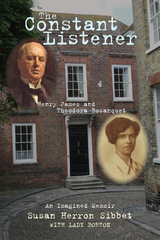
In 1907, in a quiet English village, Theodora Bosanquet answered Henry James’s call for someone to transcribe his edits and additions to his formidable body of work. The aging James had agreed to revise his novels and tales into the twenty-four-volume New York Edition. Enter Bosanquet, a budding writer who would record the dictated revisions and the prefaces that would become a lynchpin of his legacy.
Embracing the role of amanuensis and creative counterpoint cautiously at first, Bosanquet kept a daily diary over the nine years that she worked with James, as their extraordinary partnership evolved. Bosanquet became the first audience for James’s compositions and his closest literary associate—and their relationship ultimately resulted in James’s famed “deathbed dictations.” At the same time, the homosexuality of each was an unspoken but important influence on their mutual support and companionship.
Susan Herron Sibbet’s posthumous novel gifts us with the voice of a young woman writer drawn into the intimate circle of an aging master, and is a moving addition to previous literary treatments of James and Bosanquet, even as it hews closer to fact than other works do. The Constant Listener is itself the work of an accomplished poet, and will speak to fans of James, historical fiction, and themes of art, love, sexuality, and identity.
From the deepest longings of Isabel Archer to James’s insights in The Art of Fiction, longer seasonal quotes introduce each month, while concise bits of wisdom and whimsy mark each day. To take but one example: Isabel, in a quote from The Portrait of a Lady for September 30, muses, “She gave an envious thought to the happier lot of men, who are always free to plunge into the healing waters of action.” Featuring a new foreword by James biographer Michael Gorra as well as the original introductions by James and his good friend William Dean Howells, this long-forgotten perennial calendar will be an essential bibelot for James’s most ardent devotees and newest converts alike, a treasure to be cherished daily, across all seasons, for years, for ages to come.
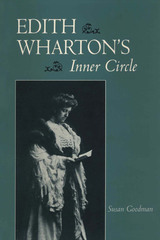
When Edith Wharton became friends with Henry James, she joined a group of men who became her "inner circle." This group included both well-known figures, such as James, Percy Lubbock, and Bernard Berenson, and several now forgotten, including John Hugh Smith, Walter Berry, Gaillard Lapsley, Robert Norton, and Howard Sturgis.
Drawing on unpublished archival material by and about members of the circle, Susan Goodman here presents an intimate view of this American expatriate community, as well as the larger transatlantic culture it mirrored. She explores how the group, which began forming around 1904 and lasted until Wharton's death in 1937, defined itself against the society its founders had left in the United States, while simultaneously criticizing and accommodating the one it found in Europe. Tracing Wharton's individual relationships with these men and their relationships with one another, she examines literary kinships and movements in the biographical and feminist context of gender, exile, and aesthetics. She also relates the group to other literary circles, such as the Bloomsbury group and Gertrude Stein's salon.
The first book devoted to the literary relationship between Henry James and his American predecessor, Nathaniel Hwthorne. Robert Emmet Long demonstrates James’ transformation of Hawthorne’s romantic forms into realism, as one of the significant features of James’ early career. Long shows that Hawthorne provided James ith a native tradition having its own conceptions of American psychological experience.
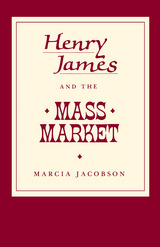
The author considers James’s work from The Bostonians to The Awkward Age – from 1883 to 1889 – a period in which James was resident in London and searching for material to replace the “international theme.” Jacobson considers this context in relation to the emergence of a mass market and sees James’s major fiction of this period as an attempt to exploit the conventions of popular fiction in an analysis of his society’s assumptions. James’s work at this time must also be viewed as an artist’s effort to secure popular attention and acceptance.
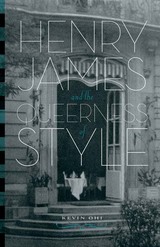
For Ohi, there are many elements in the style that make James’s writing queer. But if there is a thematic marker, Ohi shows through his careful engagements with these texts, it is belatedness. The recurrent concern with belatedness, Ohi explains, should be understood not psychologically but stylistically, not as confessing the sad predicament of being out of sync with one’s life but as revealing the consequences of style’s refashioning of experience. Belatedness marks life’s encounter with style, and it describes an experience not of deprivation but of the rich potentiality of the literary work that James calls “freedom.” In Ohi’s reading, belatedness is the indicator not of sublimation or repression, nor of authorial self-sacrifice, but of the potentiality of the literary—and hence of the queerness of style.
Presenting original readings of a series of late Jamesian texts, the book also represents an exciting possibility for queer theory and literary studies in the future: a renewed attention to literary form and a new sounding—energized by literary questions of style and form—of the theoretical implications of queerness.
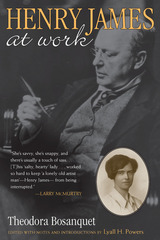
Theodora Bosanquet was Henry James's secretary from 1907 until his death in 1916, one of the most significant periods of his long writing career. Her memoir Henry James at Work, originally published by Leonard and Virginia Woolf's Hogarth Press in 1924, recounts Bosanquet's association with James and provides a lively and engaging commentary on James's milieu, preferences, and attitudes, as well as on his process of writing and revision. Bosanquet is an intelligent and observant witness and reporter, and her objective and comparatively unbiased point of view makes the memoir especially valuable.
This enlarged and annotated edition rescues Bosanquet from the shadows of literary history and shows her to be a fascinating figure in her own right, a skilled writer and editor, an early feminist, and a contemporary of the Bloomsbury literary community. The book is enhanced by an essay about Bosanquet and her circle, and fascinating snippets from her diaries and letters, now in the Harvard University archives.
Soon after Henry James hired Theodora Bosanquet in 1907, the well-educated and dedicated Bosanquet became indispensable to James. In addition to the memoir Henry James at Work she published two other books, critical studies on Harriet Martineau and Paul Valéry. Following James’s death she became Executive Secretary of the International Federation of University Women and traveled extensively in support of the women’s suffrage movement. From 1935 to 1958 she was literary editor, then director, of the publication Time and Tide.
Lyall H. Powers is Professor of English Emeritus at the University of Michigan and author of numerous books, including Alien Heart: The Life and Work of Margaret Laurence.
Praise for Henry James at Work:
—Larry McMurtry
“I’m sure [your book] ought to have a success with anyone who cared for Henry James and his work, and I think we are very lucky to get it.”
—Letter from Virginia Woolf to Theodora Bosanquet, 1924
“It's fascinating to encounter, in the era just before high modernism, a female intellectual like Bosanquet—one as fully engaged in the life of ideas and cultural production as her male counterparts—making as much of her putatively secondary status as she possibly could. The book is important as a primary document in its own right as well as a gloss on the methods and material of the magisterial James.”
—Jonathan Freedman, University of Michigan
"He was a supreme artist in the intimacies and connections that bind people together or tear them apart," says Leon Edel in his introduction to this collection of Henry James's best letters. Edel has chosen, from the four-volume epistolarium already published, those letters which especially illuminate James's writing, his life, his thoughts and fancies, his literary theories, and his most meaningful friendships. In addition, there are two dozen letters that have never before been printed.
In its unity, its elegance, and its reflection of almost a century of Anglo-American life and letters, this correspondence can well be said to belong to literature as well as to biography. Besides epistles to James's friends and family--including his celebrated brother, William--there are letters to notables such as Flaubert and Daudet in France; Stevenson, Gosse, Wells, and Conrad in England; and Americans from William Dean Howells to Edith Wharton. The latter correspondence, in particular, enlarges our understanding of James's complex involvements with Wharton and her circle; among the previously unpublished letters are several to Wharton's rakish lover, Morton Fullerton.
This masterly selection allows us to observe the precocious adolescent, the twenty-six-year-old setting out for Europe, the perceptive traveler in Switzerland and Italy, and the man-about-London consorting with Leslie Stephen and William Morris, meeting Darwin and Rossetti, hearing Ruskin lecture, visiting George Eliot. The letters describe periods of stress as well as happiness, failure as well as success, loneliness as well as sociability. They portray in considerable psychological depth James's handling of his problems (particularly with his family), and they allow us to see him adjust his mask for each correspondent.
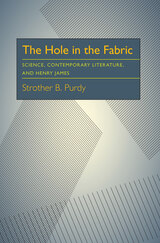
In this imaginative and provocative book, Purdy draws upon the work of a such writers as Kurt Vonnegut, Vladimir Nabokov, Alain Robbe-Grillet, Günter Grass, Samuel Becket, and Eugene Ionesco to suggest ways in which novelists explore the unknown. His ingenious consideration of Henry James in conjunction with these novelists, as well as with science fiction and detective fiction writers and with mid-century scientific discoveries and advances—black holes, hydrogen bombs, space travel—offers rich, new insights into James’s work and into the twentieth-century view of humanity’s place in the world.
Here at last is the first volume of the long-awaited edition of Henry James letters by the world’s foremost Jamesian scholar, Leon Edel.
James was a superlative letter-writer; his correspondence constitutes one of the greatest self-portraits in all literature. In this edition Edel, respecting James’s view that only the best of a writer’s letters deserve publication, skims the cream of the fifteen thousand letters collected or discovered, many by the biographer himself, since the novelist’s death in 1916. In Volume I, the first of four, he provides a General Introduction and a necessary minimum of annotation, and prefaces each section—Boyhood and Youth; Beginnings; The Grand Tour; A Season in Cambridge; Travel and Opportunity; and The Choice—with an informative account of James’s attitudes and activities during the period in question. The volume closes, appropriately, with James’s decision in 1875, at age thirty-two, to move permanently to Europe.
The third volume of Leon Edel’s superb edition of Henry James’s letters finds the novelist settled in Europe and his expatriation complete. The letters of this time reflect the growth of James’s literary and personal friendships and introduce the reader to the frescoed palazzos, Palladian villas, and great estates of the Roseberys, the Rothschilds, the Bostonian-Venetian Curtises, and the Florentine-American Boott circle. In all his travels, James closely observes the social scene and the dilemmas of the human beings within it. During this fruitful period he writes The Bostonians, The Princess Casamassima, The Tragic Muse, and some thirty-five of his finest international tales.
Undermining his success, however, are a devastating series of disappointments. Financial insecurity, an almost paraniod defensiveness following the utter failure of his dramatic efforts, and the deaths of his sister, his friend Robert Louis Stevenson, and his ardent admirer Constance Fenimore Woolson all combine to take him to what he recognizes is the edge of an abyss of personal tragedy.
And yet James endures, and throughtout these trials his letters reveal the flourish, the tongue-in-cheek humor, and the social insight that marked his genius. As Edel writes in his Introduction: “The grand style is there, the amusement at the vanities of this world, the insistence that the great ones of the earth lack the imagination he is called upon to supply, and then his boundless affection and empathy for those who have shown him warmth and feeling.”
In an appendix Mr. Edel presents four remarkable unpublished letters from Miss Woolson to James. These throw light on their ambiguous relationship and on James’s feelings of guilt and shock after her suicide in Venice.
In this, the second volume of Leon Edel's superb edition of the letters, we see Henry James in his thirties, pursuing his writing in Paris and London and finding his first literary successes in Daisy Miller and The Portrait of a Lady. The letters of these years, describing for family and friends in Boston the expatriate's days, reveal the usual wit and sophistication, but there is a new tone: James is relentlessly building a personal career and begins to see himself as a professional writer. Few other letters so fully document the process of an artist in the making.
James was a social success in London: in Mr. Edel's words, "England speedily opened its arms to him, as it does to anyone who is at ease with the world." The letters of this period pull us into the atmosphere of Victorian England, its drawing rooms, manors, and clubs, and James's keen American eyes give us views of this world probably unique in our literary annals. He used these observations to forge his great international theme, the confrontation of the Old and New Worlds.

Reising suggests that these "non-endings" entirely refocus the narrative structures they appear to conclude, accentuate the narrative stresses and ideological fissures that the texts seem to suppress, and reveal "shadow narratives" that trail alongside the dominant story line. He argues that unless the reader notices the ruptures in the closing moments of these works, the social and historical moments in which the narrative and the reader are embedded will be missed. This reading not only offers new interpretive possibilities, but also uncovers startling affinities between the poetry of Phillis Wheatley and the fiction of Henry James, between Charles Brockden Brown’s Wieland and Melville’s least-studied novel, and between Emily Dickinson’s poem "I Started Early—Took My Dog" and Disney’s animated classic.
Pursuing the implications of these failed moments of closure, Reising elaborates on topics ranging from the roots of domestic violence and mass murder in early American religious texts to the pornographic imperative of mid-century nature writing, and from James’s "descent" into naturalist and feminist fiction to Dumbo’s explosive projection of commercial, racial, and political agendas for postwar U. S. culture.
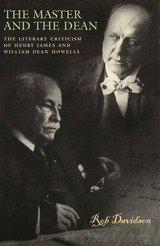
Henry James rebelled intuitively against the tyranny and banality of plots. Believing a life to have many potential paths and a self to hold many destinies, he hung the evocative shadow of "what might have been" over much of what he wrote. Yet James also realized that no life can be lived--and no story written--except by submission to some outcome. The limiting conventions of society and literature are, he found, almost inescapable. In a major, comprehensive new study of James's work, Millicent Bell explores this oscillation between hope and fatalism, indeterminacy and form, and uncertainty and meaning. In the process Bell provides fresh insight into how we read and interpret fiction.
Bell demonstrates how James's texts steadfastly, almost perversely at times, preserve a sense of alternative possibilities. James involves his characters in overlapping scenarios drawn from folklore, drama, literature, or naturalist formula. The reader engages, with the hero or heroine, in imagining many plots other than the one that finally--and often ambiguously--emerges. The story arouses expectations, proposes courses, then cancels them successively. In complicity with author and character, the reader crafts the story in an adventure of constant revision and anticipation. Literary meaning becomes an experience as well as a goal. In the end, revelations and resolutions, even if unclear or partial, assume an altered significance in light of the earlier imaginings.
Not surprisingly, James's deepest sympathies lay with those characters who resisted entrapment by cultural expectations--his idealistic free spirits like Isabel, his marriage renouncers like Fleda Vetch, his largely silent and detached witnesses to life like Strether and the generous Maisie. They are frequently the victims of callous manipulators who box them into oppressive roles or who literally "plot against" them. By looking closely at James's critiques of the "clever" categorical mind and at his loving and complex portraits of characters of unfulfilled potentiality, Bell celebrates the paradoxes of James's story-denying fiction.
In extended analyses of "Daisy Miller," Washington Square, The Portrait of a Lady; The Bostonians, The Princess Casamassima, "The Aspern Papers," The Spoils of Poynton, "The Turn of the Screw," What Maisie Knew, "The Beast in the Jungle," "The Jolly Corner," The Wings of the Dove, and The Ambassadors, Bell relates James's work to influential movements of the day, notably impressionism and naturalism. She examines the influence of Hawthorne, Emerson, Flaubert, Balzac, and Zola on James at various periods throughout his career. Drawing on rich traditions of criticism and on stimulating recent theories, Bell forges a critical approach both accessible and profound for this elegant reading of one of the greatest writers of this or any time.
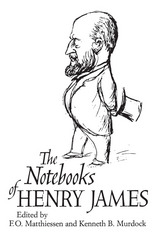
"The Notebooks take us into his study, and here we can observe him, at last, in the very act of creation at his writing table."—Leon Edel, Atlantic Monthly
"A document of prime importance."—Edmund Wilson, New Yorker
Presented in order of their first appearance, the articles in each volume constitute a revealing record of developing insights and important shifts of critical emphasis. Each article has opened a fresh line of inquiry, established a fresh perspective on a familiar topic, or settled a question that engaged the interest of experts.
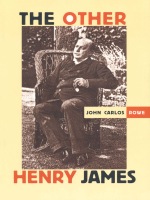
Rowe traces a particular development in James’s work, showing how in his early writings James criticized women’s rights, same-sex relations, and other social and political trends now identified with modern culture; how he ambivalently explored these aspects of modernity in his writings of the 1880s; and, later, how he increasingly identified with such modernity in his heretofore largely ignored or marginally treated fiction of the 1890s. Building on recent scholarship that has shown James to be more anxious about gender roles, more conflicted, and more marginal a figure than previously thought, Rowe argues that James—through his treatment of women, children, and gays—indicts the values and conventions of the bourgeoisie. He shows how James confronts social changes in gender roles, sexual preferences, national affiliations, and racial and ethnic identifications in such important novels as The American, The Tragic Muse, What Maisie Knew, and In the Cage, and in such neglected short fiction as “The Last of the Valerii,” “The Death of the Lion,” and “The Middle Years.”
Positioning James’s work within an interpretive context that pits the social and political anxieties of his day against the imperatives of an aesthetic ideology, The Other Henry James will engage scholars, students, and teachers of American literature and culture, gay literature, and queer theory.

Whereas previous critics have explored the relationship between liberalism and the novel by studying the novel's liberal characters, Tucker argues that the liberal subject is represented not merely within the novel, but in the experience of the novel's form as well. With special attention to George Eliot, Henry James, Oliver Wendell Holmes, and S. Y. Abramovitch, Tucker shows how we can understand liberalism and the novel as modes of recognizing and negotiating with history.
McKee provides close readings of six novels—James’s The Wings of the Dove and The Golden Bowl, Faulkner’s The Sound and the Fury and Light in August, and Morrison’s Sula and Jazz—interspersed with excursions into Lacanian and Freudian theory, critical race theory, epistemology, and theories of visuality. In James and Faulkner, she finds, race is represented visually through media that highlight ways of seeing and being seen. Written in the early twentieth century, the novels of James and Faulkner reveal how whiteness depended on visual culture even before film and television became its predominant media. In Morrison, the culture is aural and oral—and often about the absence of the visual. Because Morrison’s African American communities produce identity in nonvisual, even anti-visual terms, McKee argues, they refute not just white representations of black persons as objects but also visual orders of representation that have constructed whites as subjects and blacks as objects.
With a theoretical approach that both complements and transcends current scholarship about race—and especially whiteness—Producing American Races will engage scholars in American literature, critical race theory, African American studies, and cultural studies. It will also be of value to those interested in the novel as a political and aesthetic form.
Description is the novelistic technique charged with establishing a common world, but in the early twentieth century, there was little agreement about how a common world could be known and represented. Zhang argues that the protagonists in her study responded by shifting description away from visualizing objects to revealing relations—social, formal, and experiential—between disparate phenomena. In addition to shedding new light on some of the best-known works of modernism, Zhang opens up new ways of thinking about description more broadly. She moves us beyond the classic binary of narrate-or-describe and reinvigorates our thinking about the novel. Strange Likeness will enliven conversations around narrative theory, affect theory, philosophy and literature, and reading practices in the academy.

Rowe examines James from the perspectives of the psychology of literary influence, feminism, Marxism, psychoanalysis, literary phenomenology and impressionism, and reader-response criticism, transforming a literary monument into the telling point of intersection for modern critical theories.
Applying current theoretical work on globalization to the writing of authors as diverse as Edward Bellamy, Charlotte Perkins Gilman, William Dean Howells, and Henry James, Peyser reveals the ways in which turn-of-the-century American writers struggled to understand the future in a newly emerging global community. Because the pressures of globalization at once fostered the formation of an American national culture and made national culture less viable as a source of identity, authors grappled to find a form of fiction that could accommodate the contradictions of their condition. Utopia and Cosmopolis unites utopian and realist narratives in subtle, startling ways through an examination of these writers’ aspirations and anxieties. Whether exploring the first vision of a world brought together by the power of consumer culture, or showing how different cultures could be managed when reconceived as specimens in a museum, this book steadily extends the horizons within which late nineteenth- and early twentieth-century American literature and culture can be understood.
Ranging widely over history, politics, philosophy, and literature, Utopia and Cosmopolis is an important contribution to debates about utopian thought, globalization, and American literature.
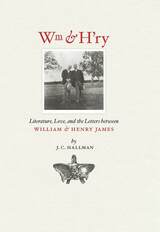
William and Henry James served as each other’s muse and critic. For instance, the event of the death of Mrs. Sands illustrates what H’ry never stated: even if the “matter” of his fiction was light, the minds behind it lived and died as though it was very heavy indeed. He seemed to best understand this himself only after Wm fully fleshed out his system. “I can’t now explain save by the very fact of the spell itself . . . that [Pragmatism] cast upon me,” H’ry wrote in 1907. “All my life I have . . . unconsciously pragmatised.”
Wm was never able to be quite so gracious in return. In 1868, he lashed out at the “every day” elements of two of H’ry’s early stories, and then explained: “I have uttered this long rigmarole in a dogmatic manner, as one speaks, to himself, but of course you will use it merely as a mass to react against in your own way, so that it may serve you some good purpose.” He believed he was doing H’ry a service as he criticized a growing tendency toward “over-refinement” or “curliness” of style. “I think it ought to be of use to you,” he wrote in 1872, “to have any detailed criticism fm even a wrong judge, and you don’t get much fm. any one else.” For the most part, H’ry agreed. “I hope you will continue to give me, when you can, your free impression of my performance. It is a great thing to have some one write to one of one’s things as if one were a 3d person & you are the only individual who will do this.”
READERS
Browse our collection.
PUBLISHERS
See BiblioVault's publisher services.
STUDENT SERVICES
Files for college accessibility offices.
RECENTLY PUBLISHED






UChicago Accessibility Resources
home | accessibility | search | about | contact us
BiblioVault ® 2001 - 2024
The University of Chicago Press