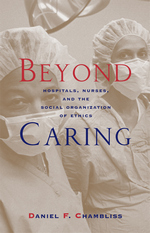
front cover of Beyond Caring
Beyond Caring
Hospitals, Nurses, and the Social Organization of Ethics
Daniel F. Chambliss
University of Chicago Press, 1996
A powerful account of the everyday experiences and challenges of nursing in American hospitals

Vividly documenting the real world of the contemporary hospital, its nurses, and their moral and ethical crises, Dan Chambliss offers a sobering revelation of the forces shaping moral decisions in our hospitals.

Based on more than ten years' field research, Beyond Caring is filled with eyewitness accounts and personal stories demonstrating how nurses turn the awesome into the routine. It shows how patients, many weak and helpless, too often become objects of the bureaucratic machinery of the health care system and how ethics decisions, once the dilemmas of troubled individuals, become the setting for political turf battles between occupational interest groups. The result is a compelling combination of realism and a powerful theoretical argument about moral life in large organizations.

[more]

front cover of Called to Care?
Called to Care?
Health Care, Burnout, and the Search for Meaningful Work
Cindy L. Cain
Rutgers University Press, 2026

Health care workers are burned out. Health care leaders know that workers are burned out but do not yet have the right tools to fix the problem. Called to Care? argues that we can mitigate burnout by examining what is most meaningful about health care work. Using interviews and observation of a wide range of health care workers, Cain shows that workers who care for our most vulnerable adults find their work to be meaningful when they are able to connect to the work and make progress on something that matters. In most cases, these meaningful experiences are also consistent with better care for patients. And yet organizational practices, policy environments, and cultural meanings get in the way of meaningful work, creating burnout. But it doesn’t have to be this way. Called to Care? illustrates that workplaces can and should align meaningful work experiences with quality care for patients.
[more]

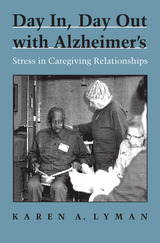
front cover of Day In Day Out Alzheimers
Day In Day Out Alzheimers
Karen Lyman
Temple University Press, 1993
"...an insightful and constructive view of persons with dementia and their caregivers." --Carroll L. Estes, Institute for Health & Aging, University of California, San Francisco Stress for care providers and distress for clients with varying degrees of dementia--these are the dynamics Karen A. Lyman discovered in her study of eight Alzheimer's day care centers in California. Speaking as an advocate for both day care providers and people with Alzheimer's disease, the author presents a model of "what works" in Alzheimer's care. Many strategies developed by caregivers are self-defeating, Lyman found. Drawing on personal reflections, interviews, and anecdotes, she demonstrates how caregivers' struggle to maintain order through often unnecessary control contributed to patients' increased sense of self-doubt, anxiety, and incompetence. Negative expectations by caregivers brought on depression and rapid intellectual decline in patients, a "sense of hopelessness" that has been called "therapeutic nihilism." Lyman identifies unsupportive institutional policies, restrictive environments, and poorly organized programs as chronic sources of stress. The alternatives she offers meet caregivers' needs and permit clients a degree of self-determination and identity. Her model for care will be of great interest to gerontological professionals, policy makers, and family members dealing with victims of Alzheimer's disease. "[A]n insightful, comprehensive analysis of the unique reciprocal relationship between people with Alzheimer's disease and people who care for them. The author's compassionate concern emphasizes the need for innovative methods of care which alleviate stress for the care-giver and distress for the patients...an important book for policy makers, health care administrators, medical and nursing students, and all others who care." --Maggie Kuhn, Founder and National Convener of the Gray Panthers
[more]

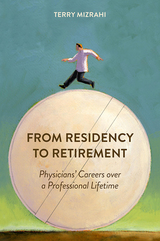
front cover of From Residency to Retirement
From Residency to Retirement
Physicians' Careers over a Professional Lifetime
Terry Mizrahi
Rutgers University Press, 2021
From Residency to Retirement tells the stories of twenty American doctors over the last half century, which saw a period of continuous, turbulent, and transformative changes to the U.S. health care system. The cohort’s experiences are reflective of the generation of physicians who came of age as presidents Carter and Reagan began to focus on costs and benefits of health services.
 
Mizrahi observed and interviewed these physicians in six timeframes ending in 2016. Beginning with medical school in the mid-1970s, these physicians reveal the myriad fluctuations and uncertainties in their professional practice, working conditions, collegial relationships, and patient interactions. In their own words, they provide a “view from the front lines” both in academic and community settings. They disclose the satisfactions and strains in coping with macro policies enacted by government and insurance companies over their career trajectory.
 
They describe their residency in internal medicine in a large southern urban medical center as a “siege mentality” which lessened as they began their careers, in Getting Rid of Patients, the title of Mizrahi’s first book (1986). As these doctors moved on in their professional lives more of their experiences were discussed in terms of dissatisfaction with financial remuneration, emotional gratification, and intellectual fulfillment. Such moments of career frustration, however, were also interspersed with moments of satisfaction at different stages of their medical careers. Particularly revealing was whether they were optimistic about the future at each stage of their career and whether they would recommend a medical career to their children. Mizrahi's subjects also divulge their private feelings of disillusionment and fear of failure given the malpractice epidemic and lawsuits threatened or actually brought against so many doctors. Mizrahi’s work, covering almost fifty years, provides rarely viewed insights into the lives of physicians over a professional life span.
[more]

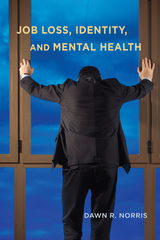
front cover of Job Loss, Identity, and Mental Health
Job Loss, Identity, and Mental Health
Norris, Dawn R
Rutgers University Press, 2016
Our jobs are often a big part of our identities, and when we are fired, we can feel confused, hurt, and powerless—at sea in terms of who we are. Drawing on extensive, real-life interviews, Job Loss, Identity, and Mental Health shines a light on the experiences of unemployed, middle-class professional men and women, showing how job loss can affect both identity and mental health.
 
Sociologist Dawn R. Norris uses in-depth interviews to offer insight into the experience of losing a job—what it means for daily life, how the unemployed feel about it, and the process they go through as they try to deal with job loss and their new identities as unemployed people. Norris highlights several specific challenges to identity that can occur. For instance, the way other people interact with the unemployed either helps them feel sure about who they are, or leads them to question their identities. Another identity threat happens when the unemployed no longer feel they are the same person they used to be. Norris also examines the importance of the subjective meaning people give to statuses, along with the strong influence of society’s expectations. For example, men in Norris’s study often used the stereotype of the “male breadwinner” to define who they were. Job Loss, Identity, and Mental Health describes various strategies to cope with identity loss, including “shifting” away from a work-related identity and instead emphasizing a nonwork identity (such as “a parent”), or conversely “sustaining” a work-related identity even though he or she is actually unemployed. Finally, Norris explores the social factors—often out of the control of unemployed people—that make these strategies possible or impossible.
 
A compelling portrait of a little-studied aspect of the Great Recession, Job Loss, Identity, and Mental Health is filled with insight into the identity crises that unemployment can trigger, as well as strategies to help the unemployed maintain their mental strength.
 
[more]


Send via email Share on Facebook Share on Twitter