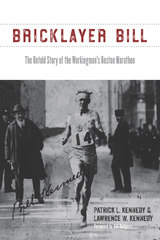
front cover of Bricklayer Bill
Bricklayer Bill
The Untold Story of the Workingman's Boston Marathon
Patrick L. Kennedy and Lawrence W. Kennedy
University of Massachusetts Press, 2017

Two weeks after the United States officially entered World War I, Irish American “Bricklayer Bill” Kennedy won the Boston Marathon wearing his stars-and-stripes bandana, rallying the crowd of patriotic spectators. Kennedy became an American hero and, with outrageous stories of his riding the rails and sleeping on pool tables, a racing legend whose name has since appeared in almost every book written on the Boston Marathon.

When journalist Patrick Kennedy and historian Lawrence Kennedy unearthed their uncle's unpublished memoir, they discovered a colorful character who lived a tumultuous life, beyond his multiple marathons. The bricklayer survived typhoid fever, a five-story fall, auto and train accidents, World War action, Depression-era bankruptcy, decades of back-breaking work, and his own tendency to tipple. In many ways, Bill typified the colorful, newly emerging culture and working-class ethic of competitive long-distance running before it became a professionalized sport. Bricklayer Bill takes us back to another time, when bricklayers, plumbers, and printers could take the stage as star athletes.


[more]

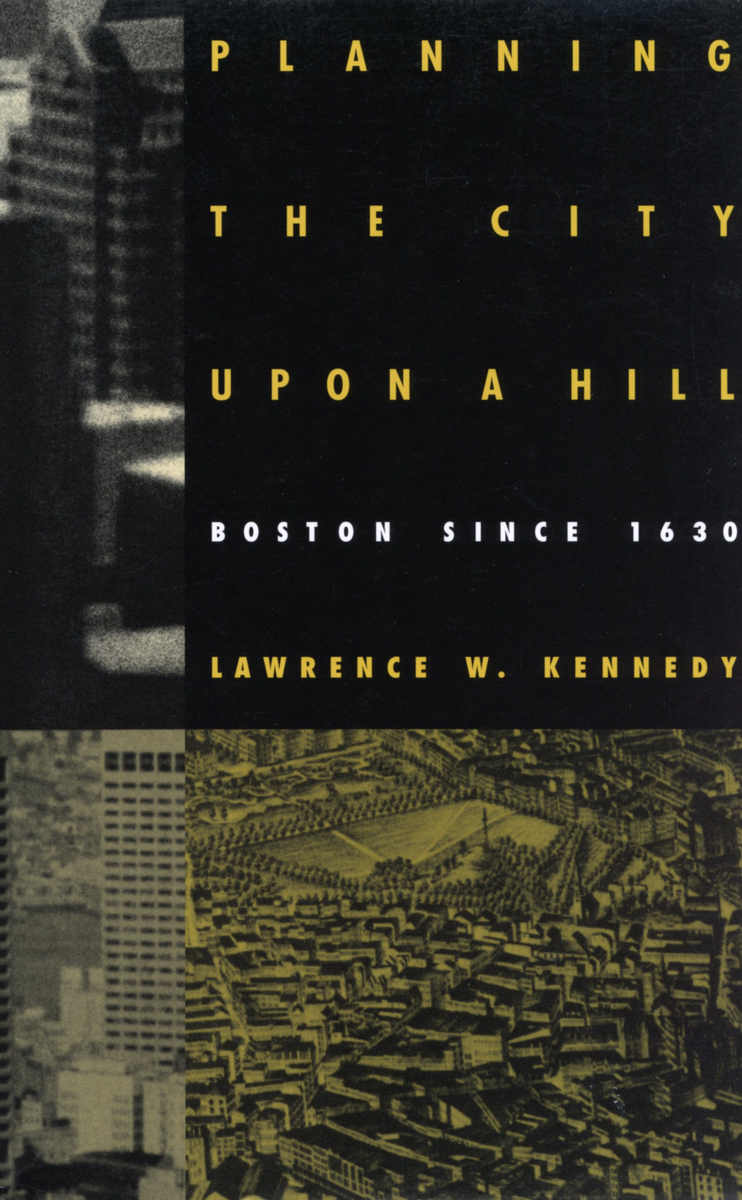
front cover of Planning the City upon a Hill
Planning the City upon a Hill
Boston since 1630
Lawrence W. Kennedy
University of Massachusetts Press, 1992
The focus of this study is on the changing role of local government in city planning. Boston's municipal government holds the primary responsibility for guiding the growth of the city. The city's political leaders have always needed to work with partners in the private sector, and in the twentieth century have found it increasingly necessary to cooperate with federal and state agencies as well. Although the roles played by the federal and state governments--like that played by the private sector--are crucial to the story of Boston, the author considers them in relation to city government. Planning the City upon a Hill is not, then, a comprehensive account of all planning done by government agencies, but an attempt to examine the process of planning and uncover some of the patterns at work. Planning Boston has been a sustained activity for nearly four centuries: this study is the story of the continuous evolution of both an idea and a city.
[more]


Send via email Share on Facebook Share on Twitter