
 A SCHOLARLY BOOK REPOSITORY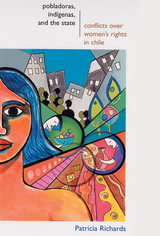
Chile has made a public commitment to equality between women and men through the creation of a National Women’s Service, SERNAM. Yet, indigenous Mapuche women and working-class pobladora activists assert that they have been excluded from programs implemented by SERNAM. Decisions about what constitutes "women’s interests" are usually made by middle class, educated, lighter-skinned women, and the priorities and concerns of poor, working-class, and indigenous women have not come to the fore.
Through critical analysis of the role of the state, the diversity of women’s movements, and the social and political position of indigenous peoples in Latin America, Richards provides an illuminating discussion of the ways in which the state defines women’s interests and constructs women’s citizenship. This book makes important contributions to feminist studies, theories of citizenship, and studies of the intersections of class, gender, and race.
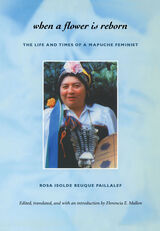
A leading activist during the Pinochet dictatorship, Reuque—a woman, a Catholic, and a Christian Democrat—often felt like an outsider within the male-dominated, leftist Mapuche movement. This sense of herself as both participant and observer allows for Reuque’s trenchant, yet empathetic, critique of the Mapuche ethnic movement and of the policies regarding indigenous people implemented by Chile’s post-authoritarian government. After the 1990 transition to democratic rule, Reuque collaborated with the government in the creation of the Indigenous Development Corporation (CONADI) and the passage of the Indigenous Law of 1993. At the same time, her deepening critiques of sexism in Chilean society in general, and the Mapuche movement in particular, inspired her to found the first Mapuche feminist organization and participate in the 1996 International Women’s Conference in Beijing. Critical of the democratic government’s inability to effectively address indigenous demands, Reuque reflects on the history of Mapuche activism, including its disarray in the early 1990s and resurgence toward the end of the decade, and relates her hopes for the future.
An important reinvention of the testimonial genre for Latin America’s post-authoritarian, post-revolutionary era, When a Flower Is Reborn will appeal to those interested in Latin America, race and ethnicity, indigenous people’s movements, women and gender, and oral history and ethnography.
READERS
Browse our collection.
PUBLISHERS
See BiblioVault's publisher services.
STUDENT SERVICES
Files for college accessibility offices.
RECENTLY PUBLISHED






UChicago Accessibility Resources
home | accessibility | search | about | contact us
BiblioVault ® 2001 - 2026
The University of Chicago Press