
 A SCHOLARLY BOOK REPOSITORY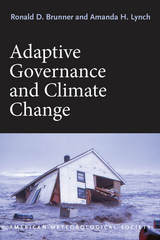
While recent years have seen undeniable progress in international acknowledgement both of the dangers of climate change and the importance of working to mitigate it, little has actually been done. Emissions continue to rise, and even the ambitious targets set by international accords would fall far short of the drastic cuts that are needed to prevent catastrophe.
With Adaptive Governance and Climate Change, Ronald D. Brunner and Amanda H. Lynch argue that we need to take a new tack, moving away from reliance on centralized, top-down approaches—the treaties and accords that have proved disappointingly ineffective thus far—and towards a more flexible, multi-level approach. Based in the principles of adaptive governance—which are designed to produce programs that adapt quickly and easily to new information and experimental results—such an approach would encourage diversity and innovation in the search for solutions, while at the same time pointedly recasting the problem as one in which every culture and community around the world has an inherent interest.
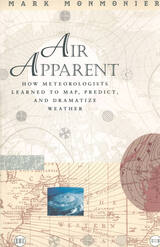
"Clever title, rewarding book. Monmonier . . . offers here a basic course in meteorology, which he presents gracefully by means of a history of weather maps." —Scientific American
"Mark Monmonier is onto a winner with Air Apparent. . . . It is good, accessible science and excellent history. . . . Read it." —Fred Pearce, New Scientist
"[Air Apparent] is a superb first reading for any backyard novice of weather . . . but even the veteran forecaster or researcher will find it engaging and, in some cases, enlightening." —Joe Venuti, Bulletin of the American Meteorological Society
"Monmonier is solid enough in his discussion of geographic and meteorological information to satisfy the experienced weather watcher. But even if this information were not presented in such a lively and engaging manner, it would still hook most any reader who checks the weather map every morning or who sits happily entranced through a full cycle of forecasts on the Weather Channel."—Michael Kennedy, Boston Globe
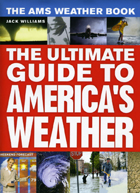
America has some of the most varied and dynamic weather in the world. Every year, the Gulf Coast is battered by hurricanes, the Great Plains are ravaged by tornados, the Midwest is pummeled by blizzards, and the temperature in the Southwest reaches a sweltering 120 degrees. Extreme weather can be a matter of life and death, but even when it is pleasant—72 degrees and sunny—weather is still central to the lives of all Americans. Indeed, it’s hard to imagine a topic of greater collective interest. Whether we want to know if we should close the storm shutters or just carry an umbrella to work, we turn to forecasts. But few of us really understand the science behind them.
All that changes with The AMS Weather Book. The most comprehensive and up-to-date guide to our weather and our atmosphere, it is the ultimate resource for anyone who wants to understand how hurricanes form, why tornados twirl, or even why the sky is cerulean blue. Written by esteemed science journalist and former USA Today weather editor Jack Williams, The AMS Weather Book, copublished with the American Meteorological Society, covers everything from daily weather patterns, air pollution, and global warming to the stories of people coping with severe weather and those who devote their lives to understanding the atmosphere, oceans, and climate. Words alone, of course, are not adequate to explain many meteorological concepts, so The AMS Weather Book is filled with engaging full-color graphics that explain such concepts as why winds blow in a particular direction, how Doppler weather radar works, what happens inside hurricanes, how clouds create wind and snow, and what’s really affecting the earth’s climate.
For Weather Channel junkies, amateur meteorologists, and storm chasers alike, The AMS Weather Book is an invaluable tool for anyone who wants to better understand how weather works and how it affects our lives.
In Atlas of a Threatened Planet, award-winning book and graphic designer Esther Gonstalla digs into these questions and many more through her attractive and easy-to-understand infographics. Gonstalla is known for breaking complex topics into digestible and memorable pieces in her popular “Our World in 50 Graphics” book series. In this book, she turns her designer’s eye to the most critical threats to our environment, from shrinking glaciers and declining biodiversity to shifting ocean currents. These accessible and fun illustrations will show readers that, although the threats are grave, not all is lost. Changes in technology, infrastructure, and our outlook can still help us protect the places we love.
Atlas of a Threatened Planet will spark your curiosity and invite you to see the Earth in a new way. It is written for all who want to understand the interlocking pieces of our home—and fight for the best ideas and strategies to save it.
Whether it is used as an icebreaker in conversation or as the subject of serious inquiry, “the weather” is one of the few subjects that everyone talks about. And though we recognize the faces that bring us the weather on television, how government meteorologists and forecasters go about their jobs is rarely scrutinized. Given recent weather-related disasters, it’s time we find out more. In Authors of the Storm, Gary Alan Fine offers an inside look at how meteorologists and forecasters predict the weather.
Based on field observation and interviews at the Storm Prediction Center in Oklahoma, the National Weather Service in Washington, D.C., and a handful of midwestern outlets, Fine finds a supremely hard-working, insular clique of professionals who often refer to themselves as a “band of brothers.” In Fine’s skilled hands, we learn their lingo, how they “read” weather conditions, how forecasts are written, and, of course, how those messages are conveyed to the public. Weather forecasts, he shows, are often shaped as much by social and cultural factors inside local offices as they are by approaching cumulus clouds. By opening up this unique world to us, Authors of the Storm offers a valuable and fascinating glimpse of a crucial profession.
Our ancestors lived through hundreds of such abrupt episodes since the more gradual Ice Ages began two and a half million years ago—but abrupt cooling produced a population bottleneck each time, one that eliminated most of their relatives. We are the improbable descendants of those who survived—and later thrived.
William H. Calvin's marvelous A Brain for All Seasons argues that such cycles of cool, crash, and burn powered the pump for the enormous increase in brain size and complexity in human beings. Driven by the imperative to adapt within a generation to "whiplash" climate changes where only grass did well for a while, our ancestors learned to cooperate and innovate in hunting large grazing animals.
Calvin's book is structured as a travelogue that takes us around the globe and back in time. Beginning at Darwin's home in England, Calvin sits under an oak tree and muses on what controls the speed of evolutionary "progress." The Kalahari desert and the Sterkfontein caves in South Africa serve as the backdrop for a discussion of our ancestors' changing diets. A drought-shrunken lake in Kenya shows how grassy mudflats become great magnets for grazing animals. And in Copenhagen, we learn what ice cores have told us about abrupt jumps in past climates.
Perhaps the most dramatic discovery of all, though, awaits us as we fly with Calvin over the Gulf Stream and Greenland: global warming caused by human-made pollution could paradoxically trigger another sudden episode of global cooling. Because of the accumulation of greenhouse gases in the atmosphere, the oceanic "conveyor belt" that sends warmer waters into the North Atlantic could abruptly shut down. If that happens again, much of the Earth could be plunged into a deep chill within a few years. Europe would become as cold and dry as Siberia. Agriculture could not adapt quickly enough to avoid worldwide famines and wars over the dwindling food supplies—a crash from which it would take us many centuries to recover.
With this warning, Calvin connects us directly to evolution and the surprises it holds. Highly illustrated, conversational, and learned, A Brain for All Seasons is a fascinating view of where we came from, and where we're going.
"This highly readable account aimed at a general audience excels at telling the plight of the victims and how local political authorities reacted. The saddest lesson is how little the public and the government learned from Camille. Highly recommended for all public libraries, especially those on the Gulf and East coasts."
—Library Journal online
As the unsettled social and political weather of summer 1969 played itself out amid the heat of antiwar marches and the battle for civil rights, three regions of the rural South were devastated by the horrifying force of Category 5 Hurricane Camille.
Camille's nearly 200 mile per hour winds and 28-foot storm surge swept away thousands of homes and businesses along the Gulf Coast of Louisiana and Mississippi. Twenty-four oceangoing ships sank or were beached; six offshore drilling platforms collapsed; 198 people drowned. Two days later, Camille dropped 108 billion tons of moisture drawn from the Gulf onto the rural communities of Nelson County, Virginia-nearly three feet of rain in 24 hours. Mountainsides were washed away; quiet brooks became raging torrents; homes and whole communities were simply washed off the face of the earth.
In this gripping account, Ernest Zebrowski and Judith Howard tell the heroic story of America's forgotten rural underclass coping with immense adversity and inconceivable tragedy.
Category 5 shows, through the riveting stories of Camille's victims and survivors, the disproportionate impact of natural disasters on the nation's poorest communities. It is, ultimately, a story of the lessons learned-and, in some cases, tragically unlearned-from that storm: hard lessons that were driven home once again in the awful wake of Hurricane Katrina.
"Emergency responses to Katrina were uncoordinated, slow, and--at least in the early days--woefully inadequate. Politicians argued about whether there had been one disaster or two, as if that mattered. And before the last survivors were even evacuated, a flurry of finger-pointing had begun. The question most neglected was: What is the shelf life of a historical lesson?"
Ernest Zebrowski is founder of the doctoral program in science and math education at Southern University, a historically black university in Baton Rouge, Louisiana, and Professor of Physics at Pennsylvania State University's Pennsylvania College of Technology. His previous books include Perils of a Restless Planet: Scientific Perspectives on Natural Disasters. Judith Howard earned her Ph.D. in clinical social work from UCLA, and writes a regular political column for the Ruston, Louisiana, Morning Paper.
"Category 5 examines with sensitivity the overwhelming challenges presented by the human and physical impacts from a catastrophic disaster and the value of emergency management to sound decisions and sustainability."
--John C. Pine, Chair, Department of Geography & Anthropology and Director of Disaster Science & Management, Louisiana State University
Challenge of Global Warming examines the causes and effects of global climate change.
Climate Affairs sets forth in a concise primer the base of knowledge needed to begin to address questions surrounding the unknown impacts of climate change. In so doing, it outlines a new approach to understanding the interactions among climate, society, and the environment. Chapters consider:
• the effects of climate around the world
• important but overlooked aspects of climate-society-environment interactions
• examples of societal uses, misuses, and potential uses of climate-related information such as forecasts
• a research agenda, challenges, and methodologies for future climate research.
Climate change is today’s news, but it isn’t a new phenomenon. Centuries-long cycles of heating and cooling are well documented for Europe and the North Atlantic. These variations in climate, including the Medieval Warm Period (MWP), AD 900 to 1300, and the early centuries of the Little Ice Age (LIA), AD 1300 to 1600, had a substantial impact on the cultural history of Europe. In this pathfinding volume, William C. Foster marshals extensive evidence that the heating and cooling of the MWP and LIA also occurred in North America and significantly affected the cultural history of Native peoples of the American Southwest, Southern Plains, and Southeast.
Correlating climate change data with studies of archaeological sites across the Southwest, Southern Plains, and Southeast, Foster presents the first comprehensive overview of how Native American societies responded to climate variations over seven centuries. He describes how, as in Europe, the MWP ushered in a cultural renaissance, during which population levels surged and Native peoples substantially intensified agriculture, constructed monumental architecture, and produced sophisticated works of art. Foster follows the rise of three dominant cultural centers—Chaco Canyon in New Mexico, Cahokia on the middle Mississippi River, and Casas Grandes in northwestern Chihuahua, Mexico—that reached population levels comparable to those of London and Paris. Then he shows how the LIA reversed the gains of the MWP as population levels and agricultural production sharply declined; Chaco Canyon, Cahokia, and Casas Grandes collapsed; and dozens of smaller villages also collapsed or became fortresses.
Knowledge of today’s available energy forms is constantly surfacing and changing in the face of climate change, making it increasingly important to enhance communication about various energy supplies. This report on energy supply and use summarizes current knowledge, especially emerging findings, about implications of climate change for energy production and supply (oil and gas, thermal electricity, renewable energy, integrated perspectives, and indirect impacts on energy systems). A comprehensive resource for community planners and researchers, it discusses future risk-management strategies surrounding water treatment, heating or cooling, and mitigation that the country can utilize in its energy consumption. The authors analyze findings from their own research and practice to arrive at conclusions about vulnerabilities, risks, and impact concerns for different aspects of U.S. energy supply and use. Global and national policy contexts are informed by these efforts to create energy options and choices.
Rich in science and case studies, Climate Change and Energy Supply and Use offers decision makers and stakeholders a substantial basis from which to make informed choices that will affect energy risk-management in the decades to come.
Developed to inform the 3rd National Climate Assessment, and a landmark study in terms of its breadth and depth of coverage and conducted under the auspices of the U.S. Department of Energy, Climate Change and Infrastructure, Urban Systems, and Vulnerabilities examines the known effects and relationships of climate change variables on American infrastructure and risk-management policies. Its rich science and case studies will enable policymakers, urban planners, and stakeholders to develop a long-term, self-sustained assessment capacity and more effective risk-management strategies.
The book provides the basis for understanding the key observations and impacts from climate change in the region, including the rise in surface air and sea-surface temperatures, along with sea levels, and the changes in ocean chemistry, rainfall amount and distribution, weather extremes, and widespread ecosystem changes.
Rich in science and case studies, it examines the latest climate change impacts, scenarios, vulnerabilities, and adaptive capacity and offers decision makers and stakeholders a substantial basis from which to make informed choices that will affect the well-being of the region’s inhabitants in the decades to come.
People living in the Great Lakes region are already feeling the effects of a changing climate. Shifts in seasonal temperatures and precipitation patterns could have dramatic impacts on the economy, ecology, and quality of life. In this illuminating and thorough volume, leading scholars address the challenge of preparing for climate change in the region, where decision makers from various sectors—government, agriculture, recreation, and tourism—must increasingly be aware of the need to incorporate climate change into their short- and long-term planning. The chapters in this revealing book, written by some of the foremost climate change scholars in North America, outline the major trends in the climate of the Great Lakes region, how humans might cope with the uncertainty of climate change impacts, and examples of on-the-ground projects that have addressed these issues.
This state of the art assessment comes from a broad range of experts in academia, private industry, state and local governments, NGOs, professional societies, and impacted communities. It highlights past climate trends, projected climate change and vulnerabilities, and impacts to specific sectors.
Rich in science and case studies, it examines the latest climate change impacts, scenarios, vulnerabilities, and adaptive capacity and offers decision makers and stakeholders a substantial basis from which to make informed choices that will affect the well-being of the region’s inhabitants in the decades to come.

Developed to inform the 2013 National Climate Assessment, and a landmark study in terms of its breadth and depth of coverage and conducted under the auspices of the U.S. Global Change Research Program, Climate Change in the Northeast examines the known effects and relationships of climate change variables on the Northeast region, encompassing New England, the Mid-Atlantic, Chesapeake Bay Area and Appalachia.
Prepared by a broad range of experts in academia, private industry, state and local governments, NGOs, professional societies, and impacted communities, it highlights past climate trends, projected climate change and vulnerabilities, and impacts to specific sectors and includes case studies on topics such as adaptive capacity and climate change effects.
Rich in science and case studies, it examines the latest climate change impacts, scenarios, vulnerabilities, and adaptive capacity and offers decision makers and stakeholders a substantial basis from which to make informed choices that will affect the well-being of the region’s inhabitants in the decades to come.
This report will serve as an updated resource for scientists, stakeholders, decision makers, students, and community members interested in understanding and preparing for climate change impacts on Oregon, Washington, and Idaho. This more detailed, foundational report is intended to support the key findings presented in the Northwest chapter of the Third National Climate Assessment.
Questions surrounding the issue of climate change are evolving from "Is it happening?" to "What can be done about it?" The primary obstacles to addressing it at this point are not scientific but political and economic; nonetheless a quick resolution is unlikely.
Ignorance and confusion surrounding the issue -- including a lack of understanding of climate science, its implications for the environment and society, and the range of policy options available -- contributes to the political morass over dealing with climate change in which we find ourselves. Climate Change Policy addresses that situation by bringing together a wide range of new writings from leading experts that examine the many dimensions of the topics most important in understanding climate change and policies to combat it. Chapters consider:
- climate science in historical perspective
- analysis of uncertainties in climate science and policy
- the economics of climate policy
- North-South and intergenerational equity issues
- the role of business and industry in climate solutions
- policy mechanisms including joint implementation, emissions trading, and the so-called clean development mechanism
Climate Change is the report of Working Group III of the Intergovernmental Panel on Climate Change (IPCC), established in 1988 by the World Meteorological Organization and UNEP to address the threat of global warming on an international scale.
Chakrabarty argues that we must see ourselves from two perspectives at once: the planetary and the global. This distinction is central to Chakrabarty’s work—the globe is a human-centric construction, while a planetary perspective intentionally decenters the human. Featuring wide-ranging excursions into historical and philosophical literatures, The Climate of History in a Planetary Age boldly considers how to frame the human condition in troubled times. As we open ourselves to the implications of the Anthropocene, few writers are as likely as Chakrabarty to shape our understanding of the best way forward.
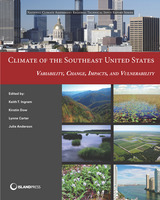
The book summarizes the scientific literature with respect to climate impacts on the Southeast United States, including 11 southern states to the east of the Mississippi River, Puerto Rico, and the US Virgin Islands; reviews the historic climate, current climate, and the projected future climate of the region; and describes interactions with important sectors of the Southeast and cross-sectoral issues, namely climate change mitigation, adaptation, and education and outreach.
Rich in science and case studies, it examines the latest climate change impacts, scenarios, vulnerabilities, and adaptive capacity and offers decision makers and stakeholders a substantial basis from which to make informed choices that will affect the well-being of the region’s inhabitants in the decades to come.
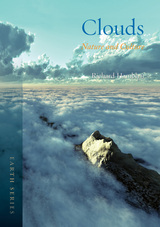
As Hamblyn shows, clouds function not only as a crucial means of circulating water around the globe but also as a finely tuned thermostat regulating the planet’s temperature. He discusses the many different kinds of clouds, from high, scattered cirrus clouds to the plump thought-bubbles of cumulus clouds, even exploring man-made clouds and clouds on other planets. He also shows how clouds have featured as meaningful symbols in human culture, whether as ominous portents of coming calamities or as ethereal figures giving shape to the heavens, whether in Wordsworth’s poetry or today’s tech speak. Comprehensive yet compact, cogent and beautifully illustrated, this is the ultimate guidebook to those shapeshifters of the sky.
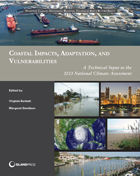
Cundill History Prize Finalist
Longman–History Today Prize Finalist
Winner of the Roland H. Bainton Book Prize
“Meticulous environmental-historical detective work.”
—Times Literary Supplement
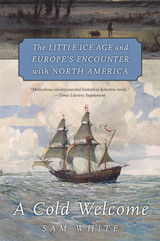
When Europeans first arrived in North America, they faced a cold new world. The average global temperature had dropped to lows unseen in millennia. The effects of this climactic upheaval were stark and unpredictable: blizzards and deep freezes, droughts and famines, winters in which everything froze, even the Rio Grande. A Cold Welcome tells the story of this crucial period, taking us from Europe’s earliest expeditions in unfamiliar landscapes to the perilous first winters in Quebec and Jamestown. As we confront our own uncertain future, it offers a powerful reminder of the unexpected risks of an unpredictable climate.
“A remarkable journey through the complex impacts of the Little Ice Age on Colonial North America…This beautifully written, important book leaves us in no doubt that we ignore the chronicle of past climate change at our peril. I found it hard to put down.”
—Brian Fagan, author of The Little Ice Age
“Deeply researched and exciting…His fresh account of the climatic forces shaping the colonization of North America differs significantly from long-standing interpretations of those early calamities.”
—New York Review of Books
Deducing the initial conditions for these diverse worlds and unraveling how and why they diverged to their current climates is a challenge at the forefront of planetary science. Through the contributions of more than sixty leading experts in the field, Comparative Climatology of Terrestrial Planets sets forth the foundations for this emerging new science and brings the reader to the forefront of our current understanding of atmospheric formation and climate evolution. Particular emphasis is given to surface-atmosphere interactions, evolving stellar flux, mantle processes, photochemistry, and interactions with the interplanetary environment, all of which influence the climatology of terrestrial planets. From this cornerstone, both current professionals and most especially new students are brought to the threshold, enabling the next generation of new advances in our own solar system and beyond.
Contents
Jim Hansen
Mark Bullock
Scot Rafkin
Caitlin Griffith
Shawn Domagal-Goldman and Antigona Segura
Kevin Zahnle
Part II: The Greenhouse Effect and Atmospheric Dynamics
Curt Covey
G. Schubert and J. Mitchell
Tim Dowling
Francois Forget and Sebastien Lebonnois
Vladimir Krasnopolsky
Adam Showman
Part III: Clouds, Hazes, and Precipitation
Larry Esposito
A. Määttänen, K. Pérot, F. Montmessin, and A. Hauchecorne
Nilton Renno
Zibi Turtle
Mark Marley
Part IV: Surface-Atmosphere Interactions
Colin Goldblatt
Teresa Segura et al.
John Grotzinger
Adrian Lenardic
D. A. Brain, F. Leblanc, J. G. Luhmann, T. E. Moore, and F. Tian
Part V: Solar Influences on Planetary Climate
Aaron Zent
Jerry Harder
F. Tian, E. Chassefiere, F. Leblanc, and D. Brain
David Des Marais
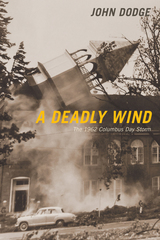
The Columbus Day Storm of 1962 was a freak of nature, a weather outlier with deadly winds topping one hundred miles per hour. The storm killed dozens, injured hundreds, damaged more than fifty thousand homes, and leveled enough timber to build one million homes. To find an equally ferocious storm of its kind, fast-forward fifty years and cross the continent to Superstorm Sandy’s 2012 attack on the East Coast. While Superstorm Sandy was predicted days in advance, the Columbus Day Storm caught ill-equipped weather forecasters by surprise.
This unrivalled West Coast windstorm fueled the Asian log export market, helped give birth to the Oregon wine industry, and influenced the 1962 World Series. It remains a cautionary tale and the Pacific Northwest benchmark for severe windstorms in this era of climate change and weather uncertainty. From its genesis in the Marshall Islands to its final hours on Vancouver Island, British Columbia, the storm plowed an unparalleled path of destruction.
In A Deadly Wind, veteran journalist John Dodge tells a compelling story spiced with human drama, Cold War tension, and Pacific Northwest history. This is a must-read for the tens of thousands of storm survivors, for history buffs, and for anyone interested in the intersection of severe weather events and climate change.
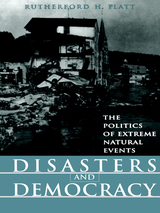
In recent years, the number of presidential declarations of “major disasters” has skyrocketed. Such declarations make stricken areas eligible for federal emergency relief funds that greatly reduce their costs. But is federalizing the costs of disasters helping to lighten the overall burden of disasters or is it making matters worse? Does it remove incentives for individuals and local communities to take measures to protect themselves? Are people more likely to invest in property in hazardous locations in the belief that, if worse comes to worst, the federal government will bail them out?
Disasters and Democracy addresses the political response to natural disasters, focusing specifically on the changing role of the federal government from distant observer to immediate responder and principal financier of disaster costs.
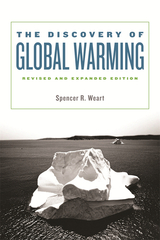
The award-winning book is now revised and expanded.
In 2001 an international panel of distinguished climate scientists announced that the world was warming at a rate without precedent during at least the last ten millennia, and that warming was caused by the buildup of greenhouse gases from human activity. The story of how scientists reached that conclusion—by way of unexpected twists and turns—was the story Spencer Weart told in The Discovery of Global Warming. Now he brings his award-winning account up to date, revised throughout to reflect the latest science and with a new conclusion that shows how the scientific consensus caught fire among the general world public, and how a new understanding of the human meaning of climate change spurred individuals and governments to action.
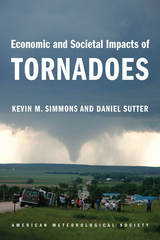
For almost a decade, economists Kevin M. Simmons and Daniel Sutter have been studying the economic impacts and social consequences of the approximately 1,200 tornadoes that touch down across the United States annually. During this time, Simmons and Sutter have been compiling information from sources such as the National Oceanic and Atmospheric Administration and the U.S. Census in order to examine the casualties caused by tornadoes and to evaluate the National Weather Service’s efforts to reduce these casualties. In Economic and Societal Impacts of Tornadoes, Simmons and Sutter present their findings. This analysis will be extremely useful to anyone studying meteorology and imperative for anyone working in emergency disaster management.

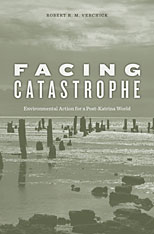
As Hurricane Katrina vividly revealed, disaster policy in the United States is broken and needs reform. What can we learn from past disasters—storms, floods, earthquakes, tsunamis, landslides, and wildfires—about preparing for and responding to future catastrophes? How can these lessons be applied in a future threatened by climate change?
In this bold contribution to environmental law, Robert Verchick argues for a new perspective on disaster law that is based on the principles of environmental protection. His prescription boils down to three simple commands: Go Green, Be Fair, and Keep Safe. “Going green” means minimizing exposure to hazards by preserving natural buffers and integrating those buffers into artificial systems like levees or seawalls. “Being fair” means looking after public health, safety, and the environment without increasing personal and social vulnerabilities. “Keeping safe” means a more cautionary approach when confronting disaster risks.
Verchick argues that government must assume a stronger regulatory role in managing natural infrastructure, distributional fairness, and public risk. He proposes changes to the federal statutes governing environmental impact assessments, wetlands development, air emissions, and flood control, among others. Making a strong case for more transparent governmental decision-making, Verchick offers a new vision of disaster law for the next generation.
Fatal Isolation tells the stories of these victims and the catastrophe that took their lives. It explores the multiple narratives of disaster--the official story of the crisis and its aftermath, as presented by the media and the state; the life stories of the individual victims, which both illuminate and challenge the ways we typically perceive natural disasters; and the scientific understandings of disaster and its management. Fatal Isolation is both a social history of risk and vulnerability in the urban landscape and a story of how a city copes with emerging threats and sudden, dramatic change.
Father Benito Viñes is a fascinating look at the life of a man who worked on the cutting edge of weather science while still remaining devoted to his religious life. It explores Viñes as both pioneer in the study of tropical meteorology and a colonial Jesuit priest. With notes that put his life into modern context, this book puts a much deserved spotlight on a figure who played a crucial role in making our lives safer.
In A Field Guide to Snow, veteran snow scientist Matthew Sturm answers those questions and more. Drawing on decades of study, he explains in clear and simple ways how and why snow works the way it does. The perfect companion a ski trip or a hike in the snowy woods, A Field Guide to Snow will give you a new appreciation for the science behind snow’s beauty.
This book shows that floods and droughts don't happen by accident but are the products of patterns of wind, temperature, and precipitation that produce meteorologic extremes. It introduces the mechanics of global weather, puts these processes into the longer-term framework of climate, and then explores the evolution of climatic patterns through time to show that floods and droughts, once considered isolated "acts of God," are often related events driven by the same forces that shape the entire atmosphere.
Michael Collier and Robert Webb offer a fresh, insightful look at what we know about floods, droughts, and climate variability—and their impact on people—in an easy-to-read text, with dramatic photos, that assumes no previous understanding of climate processes. They emphasize natural, long-term mechanisms of climate change, explaining how floods and droughts relate to climate variability over years and decades. They also show the human side of some of the most destructive weather disasters in history.
As Collier and Webb ably demonstrate, "climate" may not be the smooth continuum of meteorologic possibilities we supposed but rather the sum of multiple processes operating both regionally and globally on different time scales. Amid the highly politicized discussion of our changing environment, Floods, Droughts, and Climate Change offers a straightforward scientific account of weather crises that can help students and general readers better understand the causes of climate variability and the consequences for their lives.
With Global Fever, William H. Calvin delivers both a clear-eyed diagnosis and a strongly worded prescription. In striking, straightforward language, he first clearly sets out the current state of the Earth’s warming climate and the disastrous possibilities ahead should we continue on our current path. Increasing temperatures will kill off vegetation and dry up water resources, and their loss will lead, in an increasingly destructive feedback loop, to even more warming. Resource depletion, drought, and disease will follow, leading to socioeconomic upheaval—and accompanying violence—on a scale barely conceivable.
It is still possible, Calvin argues, to avoid such a dire fate. But we must act now, aggressively funneling resources into jump-starting what would amount to a third industrial revolution, this one of clean technologies—while simultaneously expanding our use of existing low-emission technologies, from nuclear power to plug-in hybrid vehicles, until we achieve the necessary scientific breakthroughs.
Passionately written, yet thoroughly grounded in the latest climate science, Global Fever delivers both a stark warning and an ambitious blueprint for saving the future of our planet.
The Great Plains states are already experiencing the impacts of a changing climate, and will likely continue to experience warming temperatures, more extreme precipitation events, reduced snow and ice cover, and rising relative sea levels. The book presents a review of the historic, current, and projected future climate of the region; describes interactions with important sectors of the Northeast and examines cross-sectoral issues, namely climate change mitigation, adaptation, and education and outreach.
Rich in science and case studies, it examines the latest climate change impacts, scenarios, vulnerabilities, and adaptive capacity and offers decision makers and stakeholders a substantial basis from which to make informed choices that will affect the well-being of the region's inhabitants in the decades to come.
We know that the Earth’s climate is changing, and that the magnitude of this change is colossal. At the same time, the world outside is still a natural world, and one we can experience on a granular level every day. Ground Truth is a guide to living in this condition of changing nature, to paying attention instead of turning away, and to gathering facts from which a fuller understanding of the natural world can emerge over time.
Featuring detailed guidance for keeping records of the plants, invertebrates, amphibians, birds, and mammals in your neighborhood, this book also ponders the value of everyday observations, probes the connections between seasons and climate change, and traces the history of phenology—the study and timing of natural events—and the uses to which it can be put. An expansive yet accessible book, Ground Truth invites readers to help lay the groundwork for a better understanding of the nature of change itself.
In Humanity’s Moment, Joëlle takes us through the science in the IPCC report with unflinching honesty, explaining what it means for our future, while sharing her personal reflections on bearing witness to the heartbreak of the climate emergency unfolding in real time. But this is not a lament for a lost world. It is an inspiring reminder that human history is an endless tug-of-war for social justice. We are each a part of an eternal evolutionary force that can transform our world.
Joëlle shows us that the solutions we need to live sustainably already exist—we just need the social movement and political will to create a better world. Humanity’s Moment is a climate scientist’s guide to rekindling hope, and a call to action to restore our relationship with ourselves, each other, and our planet.
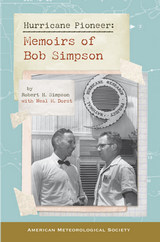
For Simpson this was just one of his many pioneering explorations of hurricanes and extreme storms. Over his decades-long career his research led to great leaps in our understanding of tropical meteorology and our approach to hurricane safety. He was the first director of the National Hurricane Research Project and the second director of the National Hurricane Center, though he may be best known as co-creator of the widely used Saffir-Simpson Hurricane Scale, familiar to anyone who has heard a reporter use the words “category five.”
Simpson’s memoirs take readers from his experience with the Corpus Christi hurricane of 1919 to his travels to study weather across the globe. Along the way he crosses paths with other weather greats, including his trailblazing wife, meteorologist Joanne Simpson. Hurricane Pioneer is a riveting first-hand account at a revolutionary time in meteorology.
This book tells the exciting story of the ice ages—what they were like, why they occurred, and when the next one is due. The solution to the ice age mystery originated when the National Science Foundation organized the CLIMAP project to study changes in the earth’s climate over the past 700,000 years. One of the goals was to produce a map of the earth during the last ice age. Scientists examined cores of sediment from the Indian Ocean bed and deciphered a continuous history for the past 500,000 years. Their work ultimately confirmed the theory that the earth’s irregular orbital motions account for the bizarre climatic changes which bring on ice ages.
This is a tale of scientific discovery and the colorful people who participated: Louis Agassiz, the young Swiss naturalist whose geological studies first convinced scientists that the earth has recently passed through an ice age; the Reverend William Buckland, an eccentric but respected Oxford professor who fought so hard against the ice-age theory before accepting it; James Croll, a Scots mechanic who educated himself as a scientist and first formulated the astronomic theory of ice ages; Milutin Milankovitch, the Serbian mathematician who gave the astronomic theory its firm quantitative foundation; and the many other astronomers, geochemists, geologists, paleontologists, and geophysicists who have been engaged for nearly a century and a half in the pressing search for a solution to the ice-age mystery.
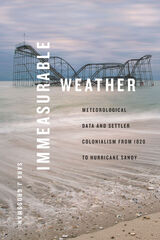
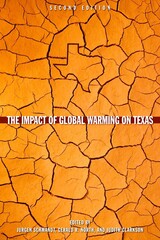
When The Impact of Global Warming on Texas was first published in 1995, it discussed climate change as a likely future phenomenon, predicted by scientific studies. This entirely rewritten second edition presents evidence that early climate change impacts can now be observed and identifies the threats climate change will pose to Texas through the year 2050. It also offers the hopeful message that corrective action, if taken now, can avert unmanageable consequences.
The book begins with a discussion of climate science and modeling and the information that can be derived from these sources for Texas. The authors follow this with an analysis of actual climate trends in the various Texas climate regions, including a predicted rise in temperatures of 5.4 degrees F (plus or minus 1.8 F) by the end of the century. This could lead to less rainfall and higher evaporation, especially in regions that are already dry. Other important effects include possible changes in El Niño (climate variability) patterns and hurricane behaviors. Taking into account projected population growth, subsequent chapters explore likely trends with respect to water availability, coastal impacts, and biodiversity.
The authors then look at the issues from a policy perspective, focusing on Texas's importance to the national economy as an energy producer, particularly of oil and gas. They recommend that Texas develop its own climate change policy to serve the goals of reducing greenhouse gas emissions, increasing energy independence, ensuring regional security, and improving management of water, air, land, and wildlife.

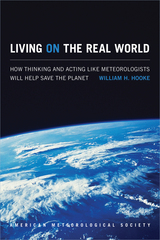
Living on the Real World explains why we should be approaching environmental issues collaboratively, each taking on a challenging aspect and finding solutions to small parts of the larger problem. It outlines current crises brought about by climate change and extreme weather, including effects on food, water, and energy, and then explores the ways we can tackle these problems together. Blending science with a philosophical approach, Hooke offers a clear-eyed analysis as well as an inspiring call to action. Everyone from scientists to politicians, educators to journalists, and businesses large and small, can—and must—participate in order to save the planet for generations to come.
Long before GPS, Google Earth, and global transit, humans traveled vast distances using only environmental clues and simple instruments. John Huth asks what is lost when modern technology substitutes for our innate capacity to find our way. Encyclopedic in breadth, weaving together astronomy, meteorology, oceanography, and ethnography, The Lost Art of Finding Our Way puts us in the shoes, ships, and sleds of early navigators for whom paying close attention to the environment around them was, quite literally, a matter of life and death.
Haunted by the fate of two young kayakers lost in a fog bank off Nantucket, Huth shows us how to navigate using natural phenomena—the way the Vikings used the sunstone to detect polarization of sunlight, and Arab traders learned to sail into the wind, and Pacific Islanders used underwater lightning and “read” waves to guide their explorations. Huth reminds us that we are all navigators capable of learning techniques ranging from the simplest to the most sophisticated skills of direction-finding. Even today, careful observation of the sun and moon, tides and ocean currents, weather and atmospheric effects can be all we need to find our way.
Lavishly illustrated with nearly 200 specially prepared drawings, Huth’s compelling account of the cultures of navigation will engross readers in a narrative that is part scientific treatise, part personal travelogue, and part vivid re-creation of navigational history. Seeing through the eyes of past voyagers, we bring our own world into sharper view.
In Make It Rain, Kristine C. Harper tells the long and somewhat ludicrous history of state-funded attempts to manage, manipulate, and deploy the weather in America. Harper shows that governments from the federal to the local became helplessly captivated by the idea that weather control could promote agriculture, health, industrial output, and economic growth at home, or even be used as a military weapon and diplomatic tool abroad. Clear fog for landing aircraft? There’s a project for that. Gentle rain for strawberries? Let’s do it! Enhanced snowpacks for hydroelectric utilities? Check. The heyday of these weather control programs came during the Cold War, as the atmosphere came to be seen as something to be defended, weaponized, and manipulated. Yet Harper demonstrates that today there are clear implications for our attempts to solve the problems of climate change.
In Masters of Uncertainty, Phaedra Daipha develops a new conceptual framework for the process of decision making, after spending years immersed in the life of a northeastern office of the National Weather Service. Arguing that predicting the weather will always be more craft than science, Daipha shows how forecasters have made a virtue of the unpredictability of the weather. Impressive data infrastructures and powerful computer models are still only a substitute for the real thing outside, and so forecasters also enlist improvisational collage techniques and an omnivorous appetite for information to create a locally meaningful forecast on their computer screens. Intent on capturing decision making in action, Daipha takes the reader through engrossing firsthand accounts of several forecasting episodes (hits and misses) and offers a rare fly-on-the-wall insight into the process and challenges of producing meteorological predictions come rain or come shine. Combining rich detail with lucid argument, Masters of Uncertainty advances a theory of decision making that foregrounds the pragmatic and situated nature of expert cognition and casts into new light how we make decisions in the digital age.

The past decade has been characterized by remarkable advances in meteorological observation, computing techniques, and data-visualization technology. However, the benefit of these advances can only be fully realized with the introduction of a systematic, applied approach to meteorological education that allows well-established theoretical concepts to be applied to modernized observational and numerical datasets.
This informative and accessible guide walks readers through the basics of making weather predictions through understanding cloud types and sky formations. It explains, in nontechnical terms, the science behind the weather, connecting fundamental meteorological concepts with the processes that shape weather patterns. Readers will learn how to develop their powers of observation and hone their ability to make quick forecasts without complicated tools. Whether you're an amateur weather enthusiast or a beginning meteorology student, An Observer’s Guide to Clouds and Weather will help anyone who prefers looking up to looking it up.
Prepared for the 2013 National Climate Assessment and a landmark study in terms of its breadth and depth of coverage, Oceans and Marine Resources in a Changing Climate is the result of a collaboration among numerous local, state, federal, and nongovernmental agencies to develop a comprehensive, state of the art look at the effects of climate change on the oceans and marine ecosystems under U.S. jurisdiction.
This book provides an assessment of scientific knowledge of the current and projected impacts of climate change and ocean acidification on the physical, chemical, and biological components and human uses of marine ecosystems under U.S. jurisdiction. It also provides assessment of the international implications for the U.S. due to climate impacts on ocean ecosystems and of efforts to prepare for and adapt to climate and acidification impacts on ocean ecosystem, including
· Climate-Driven Physical and Chemical Changes in Marine Ecosystems
· Impacts of Climate Change on Marine Organisms
· Impacts of Climate Change on Human Uses of the Ocean
· International Implications of Climate Change
· Ocean Management Challenges, Adaptation Approaches, and Opportunities in a Changing Climate
· Sustaining the Assessment of Climate Impacts on Oceans and Marine Resources
Rich in science and case studies, it examines the latest climate change impacts, scenarios, vulnerabilities, and adaptive capacity and offers decision makers and stakeholders a substantial basis from which to make informed choices that will affect the well-being of the region’s inhabitants in the decades to come.
Leona Marshall Libby was a pioneer in modern climatic research, a field that gained great impetus in the late twentieth century because of the promise it holds for predicting future climatic trends. Libby’s work led to remarkable new procedures for investigating long-term changes in precipitation and temperature and thereby greatly expanding our knowledge of past climates.
As Professor Rainer Berger writes in his foreword:
“In recent years, tree ring–based temperature data have been collected which go far beyond the records available to historians. These data can be analyzed by Fourier transforms which identify certain periodicities. . . . Climatic changes detected by tree rings have been checked against historic records. . . . The correspondence is astonishing. . . .
“At present weather forecasting is becoming more accurate for periods on the order of days, weeks, and months. Climatic prognoses have also been attempted for very long times of tens of thousands of years. But the intermediate range in the decades and centuries has so far been an enigma. It is here where tree ring thermometry plays its trump cards.
“. . . Its potential is enormous in assessing worldwide crop yields, water inventory, heating requirements, stockpiling policies, and construction planning as well as political and military prospects.”

Jankovic interweaves classical traditions, folk/popular beliefs and practices, and the increasingly quantitative approaches of urban university men to understanding the wonders of the skies. He places special emphasis on the role that detailed meteorological observations played in natural history and chorography, or local geography; in religious and political debates; and in agriculture. Drawing on a number of archival sources, including correspondence and weather diaries, as well as contemporary pamphlets, tracts, and other printed sources reporting prodigious phenomena in the skies, this book will interest historians of science, Britain, and the environment.
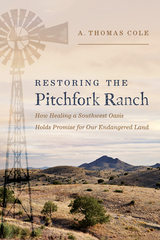
Restoring the Pitchfork Ranch tells the story of a decades-long habitat restoration project in southwestern New Mexico. A. Thomas Cole explains what inspired him and his wife, Lucinda, to turn their retirement into years dedicated to hard work and renewal. The book shares the past and present history of a very special ranch south of Silver City, which is home to a rare type of regional wetland, a fragile desert grassland ecosystem, archaeological sites, and a critical wildlife corridor in a drought-stricken landscape.
Today the 11,300 acres that make up the Pitchfork Ranch provide an important setting for carbon sequestration, wildlife habitats, and space for the reintroduction of endangered or threatened species. Restoring the Pitchfork Ranch weaves together stories of mine strikers, cattle ranching, and the climate crisis into an important and inspiring call to action. For anyone who has wondered how they can help, the Pitchfork Ranch provides an inspiring way forward.
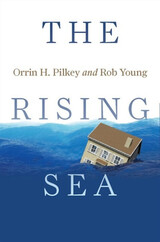
In The Rising Sea, Orrin H. Pilkey and Rob Young warn that many other coastal areas may be close behind. Prominent scientists predict that the oceans may rise by as much as seven feet in the next hundred years. That means coastal cities will be forced to construct dikes and seawalls or to move buildings, roads, pipelines, and railroads to avert inundation and destruction.
The question is no longer whether climate change is causing the oceans to swell, but by how much and how quickly. Pilkey and Young deftly guide readers through the science, explaining the facts and debunking the claims of industry-sponsored “skeptics.” They also explore the consequences for fish, wildlife—and people.
While rising seas are now inevitable, we are far from helpless. By making hard choices—including uprooting citizens, changing where and how we build, and developing a coordinated national response—we can save property, and ultimately lives. With unassailable research and practical insights, The Rising Sea is a critical first step in understanding the threat and keeping our heads above water.
The Rising Tide is the first analysis of global warming and world sea level rise. It outlines state, national, and international actions to respond to the effects of global warming on coastal communities and ecosystems.
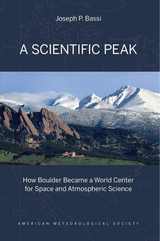
A Scientific Peak chronicles Boulder’s meteoric rise to eventually become “America’s Smartest City” and a leader in space and atmospheric sciences. In just two decades following World War II, a tenacious group of researchers, supported by groups from local citizenry to the State of Colorado, managed to convince the US government and some of the world’s scientific pioneers to make Boulder a center of the new space age. Joseph P. Bassi introduces us to the characters, from citizens to scientists, and the mix of politics, passion, and sheer luck at the start of Boulder’s transformation from “Scientific Siberia” to the research mecca it is today.
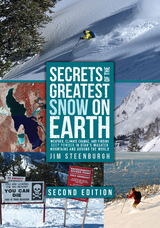
Utah has long claimed to have the greatest snow on Earth—the state itself has even trademarked the phrase. In Secrets of the Greatest Snow on Earth, Jim Steenburgh investigates Wasatch weather, exposing the myths, explaining the reality, and revealing how and why Utah’s powder lives up to its reputation. Steenburgh also examines ski and snowboard regions beyond Utah, providing a meteorological guide to mountain weather and snow climates around the world.
Chapters explore mountain weather, avalanches and snow safety, historical accounts of weather events and snow conditions, and the basics of climate and weather forecasting. In this second edition, Steenburgh explains what creates the best snow for skiing and snowboarding using accurate and accessible language and 150 color photographs and illustrations, making Secrets of the Greatest Snow on Earth a helpful tool for planning vacations and staying safe during mountain adventures.
This edition is updated with two new chapters covering microclimates and climate change in greater depth. Steenburgh addresses the declining snowpack and the future of snow across the western United States, as well as the declining snow and ice in several regions of the world—the European Alps in particular. Snowriders, weather enthusiasts, meteorologists, students of snow science, and anyone who dreams of deep powder and bluebird skies will want to get their gloves on this new edition of Secrets of the Greatest Snow on Earth.
Praise for the first edition:
“Everything you always wanted to know about how snow forms and how to follow forecasts so you see
how much an”d where is in the book. It’s a must-have for any fan of snow, sure to get you excited about
winter, and give you a bevy of conversation topics for the chairlift ride.”
—Utah Adventure Journal
“For backcountry enthusiasts that find themselves infatuated with weather patterns, snow-water
equivalents, microclimates, and Utah, this book is a dream come true.”
—The Backcountry Skiing Blog
“Steenburgh shares a career’s worth of knowledge in this book. His love of both snow science and skiing
is obvious, and he adds humor and personality to the scientific discussion.”
—First Tracks!! Online Skiing Magazine
“When it comes to snow, the details—both small- and large-scale—do matter. If we all observed our
surroundings with as much curiosity and enthusiasm as Steenburgh, the world could be a much better-
tended place.”
—American Scientist
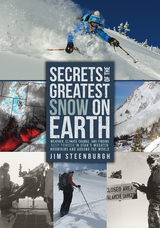
Chapters explore mountain weather, avalanches and snow safety, historical accounts of weather events and snow conditions, and the basics of climate and weather forecasting. Steenburgh explains what creates the best snow for skiing and snowboarding in accurate and accessible language and illustrates his points with 150 color photographs, making Secrets of the Greatest Snow on Earth a helpful tool for planning vacations and staying safe during mountain adventures. Snowriders, weather enthusiasts, meteorologists, students of snow science, and anyone who dreams of deep powder and bluebird skies will want to get their gloves on Secrets of the Greatest Snow on Earth.
Watch Book Trailer!(Special thanks to Ski Utah)
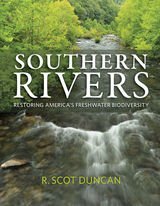
Southern Rivers, by award-winning nature writer and biologist R. Scot Duncan, is a thoroughly crafted exploration of the perilous state of the Southeast’s rivers and the urgent need to safeguard their vitality. The region’s rivers are the epicenter of North American freshwater biodiversity and are the top global hotspot for important aquatic animals including mussels, turtles, snails, crayfish, and fish, many of which have made important contributions to southern life and culture.
Centuries of commercial development have impaired the region’s river systems, sacrificing biodiversity and compromising the rivers’ ability to provide resources essential to human life: drinking water, waste disposal, irrigation, navigation, recreation, power production, and more. Now, increased heat and drought caused by climate change are lowering water levels. As such threats increase, it may seem necessary to choose between nature conservation and human needs, but Duncan persuasively demonstrates that this is a false choice. Conservation enhances human life.
In the same engaging voice of an expert friend that won over thousands of readers of his earlier book, Southern Wonder: Alabama’s Surprising Biodiversity, Duncan explains the task of managing southeastern rivers and how river water quality affects the daily lives of the millions who hold these historic waterways dear. He shows how managing rivers wisely can meet the needs of biodiversity and humanity both. With Americans increasingly anxious about the onset of climate change and the accelerating extinction crisis, Southern Rivers illuminates actionable solutions.
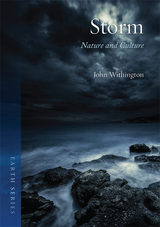
Withington shows how storms have changed the course of human history. From Roman times to the modern day, he shows how their devastating effects have wiped out entire communities, changed the fates of battle, and even reset the entire planet. He also shows how beneficial they have been to us: as an important feature of our atmosphere and climate, but also as a source of inspiration for nearly every artist who has ever lived, from Homer to Rembrandt, in works from the Old Testament to Robinson Crusoe. Beautifully illustrated, this book offers a fascinating look at Earth’s most fearsome events.

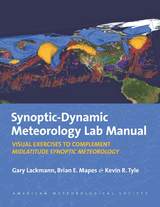
One of the greatest challenges facing atmospheric science instructors is helping students link theoretical and mathematical concepts to the real atmosphere. The past decade has been characterized by remarkable advances in meteorological observation, computing techniques, and data-visualization technology. However, the benefit of these advances can only be fully realized with the introduction of a systematic, applied approach to meteorological education that allows well-established theoretical concepts to be used with modernized observational and numerical datasets.
This lab manual is a tool designed just for this purpose; it links theoretical concepts with groundbreaking visualization to elucidate concepts taught in the companion textbook by Gary Lackmann, Midlatitude Synoptic Meteorology, the most current text available on modern weather forecasting techniques. When used in concert with Lackmann’s book and its companion CD of lecture slides, this lab manual will guide students in using contemporary observational and visualization techniques to provide in-depth understanding of fundamental concepts and serve as a catalyst for student-led innovation and application. With topics considered in an order that reinforces and builds upon new knowledge in meteorological observation and analysis, these materials will help students to deepen their understanding of synoptic-dynamic meteorology, synoptically-driven mesoscale phenomena, numerical weather prediction, ensemble prediction, and more, and put this understanding into practice.
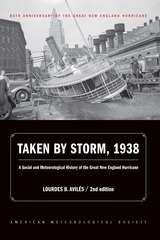
The storm formed near the Cape Verde Islands on September 10, but was not spotted until several days later, and was predicted by the understaffed Weather Bureau to head toward Florida. Junior forecaster Charlie Pierce correctly projected the northerly storm track, but senior meteorologists ignored his forecast, a mistake that cost many lives—including those of immigrants who had arrived to the Northeast in waves in the preceding decades. Updated for the 80th anniversary of the hurricane, this compelling history successfully weaves science, historical accounts, and social analyses to create a comprehensive picture of the most powerful and devastating hurricane to hit New England to date.
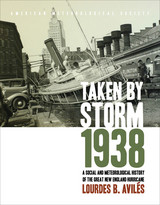
On September 21, 1938 one of the most powerful storms of the twentieth century came unannounced into the lives of New Yorkers and New Englanders, leaving utter devastation in its wake. The Great Hurricane, as it came to be known, changed everything, from the landscape and its inhabitants’ lives, to Weather Bureau practices, to the measure and kind of relief New Englanders would receive during the Great Depression and the resulting pace of regional economic recovery.
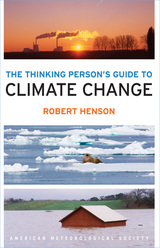
Using global research and written with nonscientists in mind, the Guide breaks down the issues into straightforward categories: “Symptoms” covers signs such as melting ice and extreme weather, while “Science” lays out what we know and how we figured it out. “Debates” tackles the controversy and politics, while “Solutions” and “Actions” discuss what we can do as individuals and communities to create the best possible future. Full-color illustrations offer explanations of everything from how the greenhouse effect traps heat to which activities in everyday life emit the most carbon. Special-feature boxes zoom in on locations across the globe already experiencing the effects of a shifting climate.
The Thinking Person's Guide to Climate Change combines years of data with recent research, including conclusions from the Fifth Assessment Report of the Intergovernmental Panel on Climate Change. This reference provides the most comprehensive, yet accessible, overview of where climate science stands today, acknowledging controversies but standing strong in its stance that the climate is changing— and something needs to be done.
The Thinking Person's Guide to Climate Change is a full update and revision of Robert Henson’s The Rough Guide to Climate Change and is now published through the American Meteorological Society, with distribution through University of Chicago Press.
Using global research and written with nonscientists in mind, the Guide breaks down the issues into straightforward categories: “Symptoms” covers signs such as melting ice and extreme weather, while “Science” lays out what we know and how we figured it out. “Debates” tackles the controversy and politics, while “Solutions” and “Actions” discuss what we can do as individuals and communities to create the best possible future. Full-color illustrations offer explanations of everything from how the greenhouse effect traps heat to which activities in everyday life emit the most carbon. Special-feature boxes zoom in on locations across the globe already experiencing the effects of a shifting climate.
The new edition of The Thinking Person's Guide to Climate Change has been thoroughly updated, including content on new global record highs, new research across the spectrum, and the Paris Agreement to cut greenhouse gases. This reference provides the most comprehensive, yet accessible, overview of where climate science stands today, acknowledging controversies but standing strong in its stance that the climate is changing—and something needs to be done.
From the glaciers of the Alps to the towering cumulonimbus clouds of the Caribbean and the unexpectedly chaotic flows of the North Atlantic, Waters of the World is a tour through 150 years of the history of a significant but underappreciated idea: that the Earth has a global climate system made up of interconnected parts, constantly changing on all scales of both time and space. A prerequisite for the discovery of global warming and climate change, this idea was forged by scientists studying water in its myriad forms. This is their story.
Linking the history of the planet with the lives of those who studied it, Sarah Dry follows the remarkable scientists who summited volcanic peaks to peer through an atmosphere’s worth of water vapor, cored mile-thick ice sheets to uncover the Earth’s ancient climate history, and flew inside storm clouds to understand how small changes in energy can produce both massive storms and the general circulation of the Earth’s atmosphere. Each toiled on his or her own corner of the planetary puzzle. Gradually, their cumulative discoveries coalesced into a unified working theory of our planet’s climate.
We now call this field climate science, and in recent years it has provoked great passions, anxieties, and warnings. But no less than the object of its study, the science of water and climate is—and always has been—evolving. By revealing the complexity of this history, Waters of the World delivers a better understanding of our planet’s climate at a time when we need it the most.
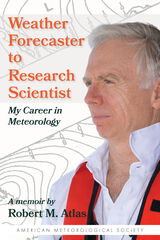
As a young child, Robert M. Atlas would often look up at the sky, observe the clouds, and ask his parents questions about the weather. That early interest sparked a career in meteorology that took place during a period of rapid development in the field. Weather Forecaster to Research Scientist follows his decades-long career and his innovative research, which led to improvements in the understanding and prediction of extreme weather.
Atlas’s journey begins with his start as an apprentice forecaster for the US Weather Bureau during a time when satellite meteorology and operational numerical weather prediction were just in their infancy. Weather Forecaster to Research Scientist also traces his experiences as an operational forecaster in the US Air Force, discusses his pioneering work on ocean surface winds using satellites, and describes his leadership of scientific organizations within NASA and NOAA as well as his experiences teaching at several universities. An engaging account of a distinguished career, this book will appeal to students, educators, weather forecasters, scientists, and weather enthusiasts alike.
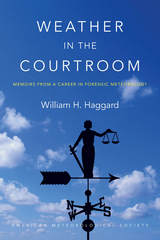
For a society enthralled by courtroom drama, forensics, and natural disasters, Weather in the Courtroom is a perfect storm: an exciting inside scoop on legendary court cases where the weather may—or may not—have played a crucial role. Haggard explores both the meteorological facts and human stories of a variety of high-profile cases among the hundreds in which, after retiring from the government, he served as an expert witness. Were the disappearance of Alaskan Congressman Nick Begich’s plane on October 16, 1972; the collapse of Tampa Bay’s Skyway Bridge on May 9, 1980; and the crash of Delta Flight 191 in Dallas/Fort Worth on August 2, 1985, natural or human-caused disasters? Haggard’s recounting of these and other litigations reveals just how critical the interpretation of weather and climate data in the courtroom is to our understanding of what happened—and who, if anyone, is at fault.
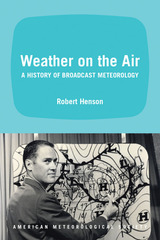
From low humor to high drama, TV weather reporting has encompassed an enormous range of styles and approaches, triggering chuckles, infuriating the masses, and at times even saving lives. In Weather on the Air,meteorologist and science journalist Robert Henson covers it all—the people, technology, science, and show business that combine to deliver the weather to the public each day.
The first comprehensive history of its kind, Weather on the Air explores the many forces that have shaped weather broadcasts over the years, including the long-term drive to professionalize weathercasting, the complex relations between government and private forecasters, and the effects of climate-change science and the Internet on today’s broadcasts. Dozens of photos and anecdotes accompany Henson’s more than two decades of research to document the evolution of weathercasts, from their primitive beginnings on the radio to the high-gloss, graphics-laden segments we watch on television every morning.
This engaging study will be an invaluable tool for students of broadcast meteorology and mass communication and an entertaining read for anyone fascinated by the public face of weather.

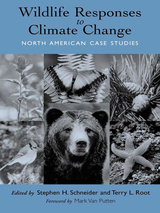
Wildlife Responses to Climate Change is the culmination of a three-year project to research and study the impacts of global climate change on ecosystems and individual wildlife species in North America. In 1997, the National Wildlife Federation provided fellowships to eight outstanding graduate students to conduct research on global climate change, and engaged leading climate change experts Stephen H. Schneider and Terry L. Root to advise and guide the project. This book presents the results, with chapters describing groundbreaking original research by some of the brightest young scientists in America. The book presents case studies that examine:
- ways in which local and regional climate variables affect butterfly populations and habitat ranges
- how variations in ocean temperatures have affected intertidal marine species
- the potential effect of reduced snow cover on plants in the Rocky Mountains
- the potential effects of climate change on the distribution of vegetation in the United States
- how climate change may increase the susceptibility of ecosystems to invasions of non-native species
- the potential for environmental change to alter interactions between a variety of organisms in whitebark pine communities of the Greater Yellowstone Ecosystem
Each of the eight case studies provides important information about how biotic systems respond to climatic variables, and how a changing climate may affect biotic systems in the future. They also acknowledge the inherent complexities of problems likely to arise from changes in climate, and demonstrate the types of scientific questions that need to be explored in order to improve our understanding of how climate change and other human disturbances affect wildlife and ecosystems.
Wildlife Responses to Climate Change is an important addition to the body of knowledge critical to scientists, resource managers, and policymakers in understanding and shaping solutions to problems caused by climate change. It provides a useful resource for students and scientists studying the effects of climate change on wildlife and will assist resource managers and other wildlife professionals to better understand factors affecting the species they are striving to conserve.
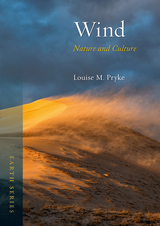
By turns creative and destructive, wind spreads seeds, fills sails, and disperses the energy of the sun. Worshipped since antiquity, wind has molded planets, determined battles, and shaped the evolution of life on earth—yet this invisible element remains intangible and unpredictable. In this book, Louise M. Pryke explores wind’s natural history as well as its cultural life in myth, religion, art, and literature. Beyond these ancient imaginings, Pryke also traces how wind inspired modern scientific innovations and appeared in artistic works as diverse as the art of Van Gogh, the poetry of Keats, and the blockbuster film.
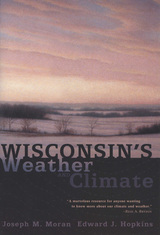
Wisconsin's Weather and Climate is written for weather buffs, teachers, students, outdoor enthusiasts, and those working in fields, lakes, and forests for whom the weather is a daily force to be reckoned with. It examines the physical features of Wisconsin that shape the state’s climate—topography, mid-latitude location, and proximity to Lakes Superior and Michigan—and meteorological phenomena that affect climate, such as atmospheric circulation and air mass frequency. Authors Joseph M. Moran and Edward J. Hopkins trace the evolution of methods of weather observation and forecasting that are so important for agriculture and Great Lakes commerce, and they explain how Wisconsin scientists use weather balloons, radar, and satellites to improve forecasting and track climate changes. They take readers through the seasonal changes in weather in Wisconsin and give an overview of what past climate changes might tell us about the future.
Appendices provide climatic data for Wisconsin, including extremes of temperature, snowfall, and precipitation at selected stations in the state. The authors also list sources for further information.
Vignettes throughout the book provide fascinating weather lore:
o Why there are cacti in Wisconsin
o The famous Green Bay Packers–Dallas Cowboys "Ice Bowl" game of 1967
o The Army Signal Corps’ ban on the word tornado
o Advances in snow-making technology
o The decline of the Great Lakes ice industry
READERS
Browse our collection.
PUBLISHERS
See BiblioVault's publisher services.
STUDENT SERVICES
Files for college accessibility offices.
RECENTLY PUBLISHED




UChicago Accessibility Resources
home | accessibility | search | about | contact us
BiblioVault ® 2001 - 2024
The University of Chicago Press