
 A SCHOLARLY BOOK REPOSITORY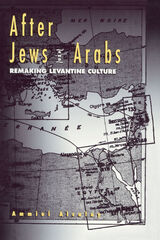
By exposing the rich and diverse textual and cultural legacy of this time and space, Alcalay reassesses the exclusion of Semitic culture in Europe from the perspective of contemporary Arabic culture and opposing images of the Israeli-Palestinian conflict. This book will compel a revision of Jewish studies by placing contemporary Israeli culture within its Middle Eastern context and the terms of colonial, postcolonial, and multicultural discourse.

Spanning several decades, Ella Shohat's work has introduced conceptual frameworks that fundamentally challenged conventional understandings of Palestine, Zionism and the Middle East, focusing on the pivotal figure of the Arab-Jew. This book gathers together her most influential political essays, interviews, speeches, testimonies and memoirs, as well as previously unpublished material.
Defying the binarist and Eurocentric Arab-versus-Jew rendering of the Israeli/Palestinian conflict, Shohat's work has dared to engage with the deeper historical and cultural questions swirling around colonialism, Orientalism and nationalism. Shohat's paradigm-shifting work unpacks such fraught issues as the anomalies of the national/colonial in Zionist discourse; the narrating of Jewish pasts in Muslim spaces; the links and distinctions between the dispossession of the Nakba and the dislocation of Arab-Jews; the traumatic memories triggered by partition and border-crossing; the echoes within Islamophobia of the anti-Semitic figure of 'the Jew'; and the efforts to imagine a possible future inter-communal 'convivencia'.
Shohat's transdisciplinary perspective illuminates the cultural politics in and around the Middle East. Juxtaposing texts of various genres written in divergent contexts, the book offers a vivid sense of the author's intellectual journey.

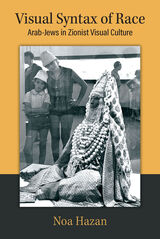
Analyzing the visual syntax and display rhetoric applied in newspaper photos, national historical albums, and museum exhibitions, Noa Hazan shows that although racial thought was and still is verbally suppressed in Israel, it is vividly present in its nonverbal official and public visual sphere. The racist perspective of newspaper editors, book publishers, photographers, and museum curators were morally justified in its time by such patronizing ideals as realistic news coverage or the salvation of Jewish heritage assets. Although their perspectives played a dominant role in establishing a visual syntax of race in Israel, they were not seen as racially discriminating at the time. The racist motifs and actions are revealed here by colligating multiple cases into a coherent narrative in retrospect.
This book points to a direct influence of the anti-Semitic discourse in Europe toward Mizrahim in Israel, highlighting the shared visual stereotypes used in both Europe and the fledgling state of Israel. Engraved in their body, these cultural traits were depicted and understood as racial-biological qualities and were visually manipulated to silo Ashkenazim and Mizrahim in Israel as distinct racial types.
READERS
Browse our collection.
PUBLISHERS
See BiblioVault's publisher services.
STUDENT SERVICES
Files for college accessibility offices.
RECENTLY PUBLISHED



UChicago Accessibility Resources
home | accessibility | search | about | contact us
BiblioVault ® 2001 - 2026
The University of Chicago Press