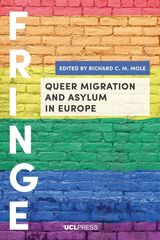
Queer Migration and Asylum in Europe
Edited by Richard C. M. Mole
University College London, 2021
A wide-ranging study on the reasons why queer individuals migrate to Europe and the sociopolitical frameworks they navigate.
Europe is a popular destination for LGBTQ people seeking to escape discrimination and persecution. Yet, while European institutions have done much to promote the legal equality of sexual minorities and a number of states pride themselves on their acceptance of sexual diversity, the image of European tolerance is often quite different from the reality faced by LGBTQ migrants and asylum seekers. Queer Migration and Asylum in Europe brings together scholars from politics, sociology, urban studies, anthropology, and law to analyze how and why queer individuals migrate to Europe, as well as the legal, social, and political frameworks they are forced to navigate in the destination societies. The subjects covered include LGBTQ Latino migrants in queer and diasporic spaces in London; the diasporic consciousness of queer Polish, Russian, and Brazilian migrants in Berlin; the role of the Council of Europe in shaping legal and policy frameworks relating to queer migration and asylum; the challenges facing bisexual asylum seekers; queer asylum and homonationalism in the Netherlands; and the role of space, faith, and LGBTQ organizations in Germany, Italy, the UK, and France in supporting queer asylum seekers.
[more]