
 A SCHOLARLY BOOK REPOSITORY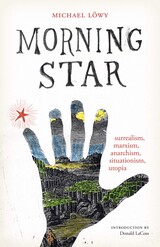
An expanded edition of revered theorist Michael Löwy's Morning Star: Marxism and Surrealism (previously published in French, Portuguese, Spanish, Italian, and Greek), this masterwork collects the author's essays on the ways in which surrealism intersected with a variety of revolutionary political approaches, ranging from utopian ideals to Marxism and situationism. Taking its title from André Breton's essay "Arcane 17," which casts the star as the searing firebrand of rebellion, Löwy's provocative work spans many perspectives. These include surrealist artists who were deeply interested in Marxism and anarchism (Breton among them), as well as Marxists who were deeply interested in surrealism (Walter Benjamin in particular).
Probing the dialectics of innovation, diversity, continuity, and unity throughout surrealism's international presence, Morning Star also incorporates analyses of Claude Cahun, Guy Debord, Pierre Naville, José Carlos Mariátegui and others, accompanied by numerous reproductions of surrealist art. An extraordinarily rich collection, Morning Star promises to ignite new dialogues regarding the very nature of dissent.
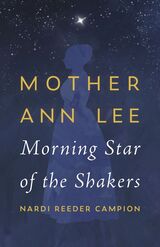
The definitive biography of the founder of the Shaker movement, whose remarkable life is the subject of a new film, The Testament of Ann Lee.
This acclaimed, accessible, and thoroughly researched biography documents the life of Ann Lee, a controversial, religious leader and early feminist figure. Lee established the Shaker movement in 1770 in Manchester, England. The core principles of the Shakers were radical: in an era when wives were the possession of their husband, Lee proclaimed the equality of men and women. The Shakers were dedicated to beliefs in absolute pacifism, equality of the sexes, absolute celibacy, and the cleansing of sin through dancing and chanting to shake away the past.
The Shakers sought inner peace and harmony, but their unusual beliefs, including total abstinence from sex and their exhibitions of mystical ecstasy were considered suspect and led to the imprisonment of Lee and her followers. While jailed, Lee experienced a blinding, soul-splitting vision which reaffirmed her belief in celibacy and named her the second coming of Christ. Seeking religious freedom, she led her followers, known as the United Society of Believers in Christ’s Second Appearing, from England to settle in upstate New York, near Albany.
Mother Ann Lee died in 1784, but her movement continued to grow into the nineteenth century with at least eighteen utopian Shaker communities in Kentucky, Maine, Massachusetts, New Hampshire, New York, and Ohio. Today many of those Shaker settlements are museums. The last remaining Shaker community is at Sabbathday Lake Shaker Village near Poland, Maine. The Testament of Ann Lee, starring Amanda Seyfried, drew on this book among other sources to tell Lee’s story.
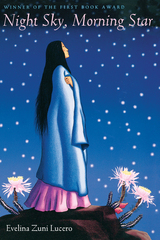
At the Indian artisans show in Santa Clara Pueblo, Cecelia Bluespruce sits with her wares in the middle of a row of booths—a good place to catch buyers. She is a successful Native American artist, a sculptor and potter of renown. But Cecelia is in the middle of something deeper than an art show, for she has become trapped by dreams and shadows of her past.
Night Sky, Morning Star is a story of remembrance and reconciliation in one Native American family separated by time and chance. Cecelia’s grown son, Jude, now wants to learn about the father he has never known. Political activist Julian Morning Star, imprisoned twenty years for a crime he did not commit, is unaware that his son even exists. Troubled by dreams, lies, and denial of the past, Cecelia is guided toward wholeness by family and friends who have their own pasts to confront.
This compelling novel plunges readers into the hubbub of the Indian arts market and into the grim reality of prison life. Evelina Zuni Lucero introduces us to experiences we may find unfamiliar: diverse Native American traditions, life on a BIA Indian agency compound, the making of an Indian activist. But she also reintroduces us to two things we all live for: the power of story and the power of love.
Night Sky, Morning Star is the fiction winner of the 1999 First Book Awards competition of the Native Writers’ Circle of the Americas.
READERS
Browse our collection.
PUBLISHERS
See BiblioVault's publisher services.
STUDENT SERVICES
Files for college accessibility offices.
RECENTLY PUBLISHED




UChicago Accessibility Resources
home | accessibility | search | about | contact us
BiblioVault ® 2001 - 2025
The University of Chicago Press