
 A SCHOLARLY BOOK REPOSITORY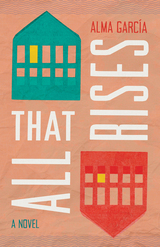
What follows is a story in which mysteries are unraveled, odd alliances are forged, and the boundaries between lives blur in destiny-changing ways—all in a place where the physical border between two countries is as palpable as it is porous, and the legacies of history are never far away. There are no easy solutions to the issues the characters face in this story, and their various realities—as undocumented workers, Border Patrol agents, the American supervisor of a Mexican factory employing an impoverished workforce—never play out against a black-and-white moral canvas. Instead, they are complex human beings with sometimes messy lives who struggle to create a place for themselves in a part of the world like no other, even as they are forced to confront the lives they have made.
All That Rises is about secrets, lies, border politics, and discovering where you belong—within a family, as well as in the world beyond. It is a novel for the times we live in, set in a place many people know only from the news.
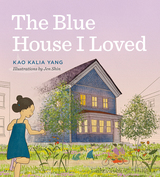
A Hmong girl tells the story of her beloved aunt and uncle’s first home in America—long gone, but still alive in the family’s memories
The Blue House I Loved centers on a family of newly arrived Hmong refugees who move into the lower level of a duplex in St. Paul, Minnesota. The narrator loves her aunt and uncle’s home with its mismatched furniture, but it is too small for the large family. The boy cousins sleep in the three-season porch, where their wet hair freezes in wintertime, and the rest of the family crowds into two bedrooms. Yet this is the cherished home where they live and love, their own small corner of a very large and unfamiliar place, and in this blue house a young girl learns about her new country. Eventually, the family moves in search of more space, and years later the house is torn down. Where it was, green grass now grows. But for this girl and her family, the ghost of the house remains, its memories a strong thread that holds time at bay and hearts close together.
Combining Kao Kalia Yang’s lyrical prose with ethereal illustrations by artist and architect Jen Shin, The Blue House I Loved speaks to the multitude of refugee experiences around the world, honoring the challenges they face and the homes they create together.

In the late 1970s, Ziad Idilbi, a Palestinian refugee from Lebanon, marries Salma, a Lebanese refugee escaping the war in Beirut. Resolving to start over for the very last time, the couple opens a corner store in Toledo, Ohio, across from the General Motors factory, where Toledo’s Arab community intermingles with the working class. Over the decades, whether it’s bigotry (pre- and post-9/11), financial ruin, or terminal illness, the Idilbis find themselves on life’s outskirts, attempting to build something new.
Achingly poignant and slyly funny, the linked stories in Carryout follow the Idilbis and their children as they teeter on the brink of catastrophe. Walid, the youngest child of Ziad and Salma, navigates the heartbreaks of youth as well as the colorful characters who haunt his parents’ corner store. As he grows up into a writer, Walid’s gaze fixes on his father and the long shadow of displacement and occupation. Mustafa, the eldest son, is forever trying to outrun the disasters that seem to seek him out, while Nawal, the only daughter, is dumped by a friend and hatches a scheme to win her back. Unsure whether to run toward each other or away from each other, the characters in Dudar’s exquisite debut suffer the absurdities and indignities of life in America with wry obstinance and striking wisdom.

Matt’s journey to manhood takes place in a vividly depicted landscape populated by lively, memorable characters. This is the powerful story of a young man’s search for an identity that encompasses two cultures and one complex, scattered family.
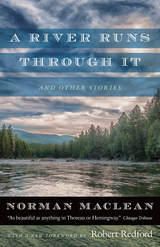
Elegantly redesigned, A River Runs through It includes a new foreword by Robert Redford, director of the Academy Award-winning 1992 film adaptation of River. Based on Maclean’s own experiences as a young man, the book’s two novellas and short story are set in the small towns and mountains of western Montana. It is a world populated with drunks, loggers, card sharks, and whores, but also one rich in the pleasures of fly-fishing, logging, cribbage, and family. By turns raunchy and elegiac, these superb tales express, in Maclean’s own words, “a little of the love I have for the earth as it goes by.”
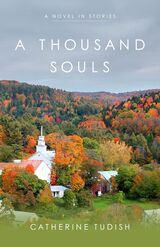
Catching sight of the village of Neptune nestled in a remote Vermont valley, a traveler likens it to “a lost kingdom.” The fourteen stories in Catherine Tudish’s gorgeously crafted volume interweave the lives of three generations in this “embarrassingly pretty town” of “upward of a thousand souls” as they inevitably touch the outside world. A boy born of a secret affair travels by train to South Carolina for a first-time meeting with his respected father. A recent widow and Boston transplant solves the mystery of a teen girl gone missing. A beloved sheriff breaks up a drug operation, only to get busted himself for helping undocumented workers evade ICE. The disappointed wife of a rural mail driver presents him with a nude portrait—of herself. A shy girl with a speech impediment loses her stutter when she befriends and speaks to a black bear. Another boy has nightmares that seem to be the memories of a distant stranger’s tragedy.
Even as their loyalties and traditions are tested through loss, betrayal, and startling discovery, the characters in A Thousand Souls embody the belonging that comes from a close-knit community. Sharply observed, wry, and deeply tender, these stories resonate with both the intricacy and cost of interconnection as the years pass, and ordinary lives take unexpected turns.
READERS
Browse our collection.
PUBLISHERS
See BiblioVault's publisher services.
STUDENT SERVICES
Files for college accessibility offices.
RECENTLY PUBLISHED






UChicago Accessibility Resources
home | accessibility | search | about | contact us
BiblioVault ® 2001 - 2026
The University of Chicago Press