front cover of Leon Bibel
Leon Bibel
Forgotten Artist of the New Deal
Richard Haw
Rutgers University Press, 2025

Honorable Mention for the 2025 New Deal Book Award 

Leon Bibel (1913–1995) was a prolific modern American artist who painted, printed, stamped, etched, sketched, and carved. He produced pieces that ranged from social realism to dreamy expressionism and was an aesthetic experimentalist, never working for too long in any medium or style. And despite Bibel's obvious talent, his work would have languished in obscurity were it not for the New Deal programs like the Federal Art Project and Public Works of Art Project.
 
Leon Bibel, the first biography of this eclectic artist, recounts his life from his birth in Szczebrzeszyn, Poland, in 1913, to his death in New Jersey in 1995. After immigrating to the United States in the 1920s, Bibel came of age during the Great Depression, when New Deal agencies recognized his abilities and supported his artistic endeavors. Working-class artists faced challenges after these programs folded, and Bibel would later spend twenty years as a New Jersey chicken farmer before resurrecting his art career in the 1960s.
 
Historian Richard Haw shows how Bibel's life was defined by the New Deal, his visionary artwork shaped by the era's commitment to social and economic justice. With reproductions of more than 240 of Bibel's works, most in vivid color, this book reveals how he depicted everything from the trauma of unemployment to the dignity of work, from the horrors of lynching to the pleasures of everyday life.


[more]

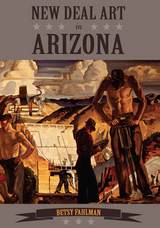
front cover of New Deal Art in Arizona
New Deal Art in Arizona
Betsy Fahlman
University of Arizona Press, 2009
Arizona’s art history is emblematic of the story of the modern West, and few periods in that history were more significant than the era of the New Deal. From Dorothea Lange and Ansel Adams to painters and muralists including Native American Gerald Nailor, the artists working in Arizona under New Deal programs were a notable group whose art served a distinctly public purpose. Their photography, paintings, and sculptures remain significant exemplars of federal art patronage and offer telling lessons positioned at the intersection of community history and culture.

Art is a powerful instrument of historical record and cultural construction, and many of the issues captured by the Farm Security Administration photographers remain significant issues today: migratory labor, the economic volatility of the mining industry, tourism, and water usage. Art tells important stories, too, including the work of Japanese American photographer Toyo Miyatake in Arizona’s internment camps, murals by Native American artist Gerald Nailor for the Navajo Nation Council Chamber in Window Rock, and African American themes at Fort Huachuca. Illustrated with 100 black-andwhite photographs and covering a wide range of both media and themes, this fascinating and accessible volume reclaims a richly textured story of Arizona history with potent lessons for today.
[more]


Send via email Share on Facebook Share on Twitter