
 A SCHOLARLY BOOK REPOSITORY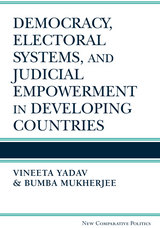
Moving next to de facto independence, Yadav and Mukherjee bring together data from 103 democracies in the developing world, complemented by case studies of Brazil, India, and Indonesia. Honing in on the effects of electoral institutions, the authors find that, when faced with short time horizons, governments that operate in personal vote electoral systems are likely to increase de facto judicial independence whereas governments in party-centered systems are likely to reduce it.

Despite dramatic increases in poverty, unemployment, and social inequalities, the Central and Eastern European transitions from communism to market democracy in the 1990s have been remarkably peaceful. This book proposes a new explanation for this unexpected political quiescence. It shows how reforming governments in Poland, Hungary and the Czech Republic have been able to prevent massive waves of strikes and protests by the strategic use of welfare state programs such as pensions and unemployment benefits.
Divide and Pacify explains how social policies were used to prevent massive job losses with softening labor market policies, or to split up highly aggrieved groups of workers in precarious jobs by sending some of them onto unemployment benefits and many others onto early retirement and disability pensions. From a narrow economic viewpoint, these policies often appeared to be immensely costly or irresponsibly populist. Yet a more inclusive social-scientific perspective can shed new light on these seemingly irrational policies by pointing to deeper political motives and wider sociological consequences.
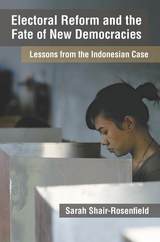
When and why do democratic political actors change the electoral rules, particularly regarding who is included in a country’s political representation? The incidences of these major electoral reforms have been on the rise since 1980.
Electoral Reform and the Fate of New Democracies argues that elite inexperience may constrain self-interest and lead elites to undertake incremental approaches to reform, aiding the process of democratic consolidation. Using a multimethods approach, the book examines three consecutive periods of reform in Indonesia, the world’s largest Muslim majority country and third largest democracy, between 1999 and 2014. Each case study provides an in-depth process tracing of the negotiations leading to new reforms, including key actors in the legislature, domestic civil society, international experts, and government bureaucrats. A series of counterfactual analyses assess the impact the reforms had on actual election outcomes, versus the possible alternative outcomes of different reform options discussed during negotiations. With a comparative analysis of nine cases of iterated reform processes in other new democracies, the book confirms the lessons from the Indonesian case and highlights key lessons for scholars and electoral engineers.
READERS
Browse our collection.
PUBLISHERS
See BiblioVault's publisher services.
STUDENT SERVICES
Files for college accessibility offices.
RECENTLY PUBLISHED






UChicago Accessibility Resources
home | accessibility | search | about | contact us
BiblioVault ® 2001 - 2026
The University of Chicago Press