
 A SCHOLARLY BOOK REPOSITORY
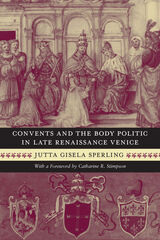
Sperling explains how women were not allowed to marry beneath their social status while men could, especially if their brides were wealthy. Faced with a shortage of suitable partners, patrician women were forced to offer themselves as "a gift not only to God, but to their fatherland," as Patriarch Giovanni Tiepolo told the Senate of Venice in 1619. Noting the declining birth rate among patrician women, Sperling explores the paradox of a marriage system that preserved the nobility at the price of its physical extinction. And on a more individual level, she tells the fascinating stories of these women. Some became scholars or advocates of women's rights, some took lovers, and others escaped only to survive as servants, prostitutes, or thieves.
Jay M. Smith argues that the early modern nobility instinctively drew a correlation between the meaning of merit and an image of the "sovereign's gaze." In the early seventeenth century, merit meant the qualities traditionally associated with aristocratic values: generosity, fidelity, and honor. Nobles sought to display those qualities before the appreciative gaze of the king himself. But the expansion of the monarchy forced the routinization of the sovereign's gaze, and Louis XIV began to affirm and reward new qualities--talent and application--besides those thought innately noble.
The contradictions implicit within the absolute monarchy's culture of merit are demonstrated by the eighteenth-century French army, which was dominated by the nobility, but also committed to efficiency and expertise. Smith shows that the army's continuous efforts to encourage and reward "merit" led to a clash of principles. The ever-growing emphasis on talent and discipline led reformers--the great majority of them noble--to attack the most egregious examples of privilege and favoritism in the army. Smith's analysis of the long-term evolution in conceptions of royal service suggests a new explanation for the shift in values signified by the French Revolution. The transition away from the "personal" gaze of the king toward the "public" gaze of the monarchy and nation foretold the triumph of a new culture of merit in which noble birth would have no meaning.
The Culture of Merit will interest historians and other social scientists concerned with issues of aristocratic identity, state formation, professionalization, and the changing political culture of pre-Revolutionary France.
Jay M. Smith is Assistant Professor of History, University of North Carolina, Chapel Hill.
This child, scion of a family of power and privilege at Venice's time of greatness, left his father in a state of despair so profound and so public that it occasioned an outpouring of consoling letters, orations, treatises, and poems. In these documents, we find a firsthand account, richly colored by humanist conventions and expectations, of the life of the fifteenth-century boy, the passionate devotion of his father, the feelings of his brothers and sisters, the striking absence of his mother. The father's story is here as well: the career of a Venetian nobleman and scholar, patron and soldier, a participant in Venice's struggle for dominion in the north of Italy.
Through these sources also King traces the cultural trends that made Marcello's century famous. Her work enlarges our view of the literature of consolation, which had a distinctive tradition in Venice, and shifting attitudes toward death from the late Middle Ages onward.
For the depth and acuity of its insights into political, cultural, and private life in fifteenth-century Venice, this book will be essential reading for students of the Renaissance. For the grace and drama of its storytelling, it will be savored by anyone who wishes to look into life and death in a palace, and a city, long ago.
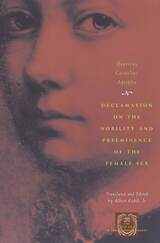
Rather than directly refuting prevailing wisdom, Agrippa uses women's superiority as a rhetorical device and overturns the misogynistic interpretations of the female body in Greek medicine, in the Bible, in Roman and canon law, in theology and moral philosophy, and in politics. He raised the question of why women were excluded and provided answers based not on sex but on social conditioning, education, and the prejudices of their more powerful oppressors. His declamation, disseminated through the printing press, illustrated the power of that new medium, soon to be used to generate a larger reformation of religion.
The Diehards is a study of the 112 peers who voted against the Parliament Bill of 1911. In voting against this bill, which abolished the veto power of the House of Lords, the diehards defied the leadership of their own party. Other Unionists were willing to capitulate in response to the Liberal government's threat to create enough new peers to swamp the upper chamber, but the diehards were ready to “die in the last ditch.”
There has never been a satisfactory explanation of diehard intransigence. A mistake of contemporaries and of later historians has been to characterize the diehards as “backwoodsmen” who cared little about national politics and barely knew their way to the House of Lords. But in fact, as Gregory Phillips shows, they were among the most politically active members of the peerage. They can be seen as radical conservatives, willing to countenance drastic changes in certain aspects of politics and society in order to preserve as much as possible of their traditional position and way of life.
Utilizing a wide range of public and private papers, Phillips has given us an economic, social, and political study of Edwardian England that substantially alters our understanding of this crisis in British constitutional history.
By shedding light on a long-forgotten epigraphic genre that flourished in North China during the Mongol Empire, or Yuan Dynasty (1271–1368), Genealogy and Status explores the ways the conquered Chinese people understood and represented the alien Mongol ruling principles through their own cultural tradition. This epigraphic genre, which this book collectively calls “genealogical steles,” was quite unique in the history of Chinese epigraphy.
Northern Chinese officials commissioned these steles exclusively to record a family’s extensive genealogy, rather than the biography or achievements of an individual. Tomoyasu Iiyama shows how the rise of these steles demonstrates that Mongol rule fundamentally affected how northern Chinese families defined, organized, and commemorated their kinship. Because most of these inscriptions are in Classical Chinese, they appear to be part of Chinese tradition. In fact, they reflect a massive social change in Chinese society that occurred because of Mongol rule in China.
The evolution of genealogical steles delineates how local elites, while thinking of themselves as the heirs of traditional Chinese culture, fully accommodated to Mongol imperial rule and became instead one of its cornerstones in eastern Eurasia.
Irina Reyfman illuminates the surprisingly diverse effects of the Table of Ranks on writers, their work, and literary culture in Russia. From Sumarokov and Derzhavin in the eighteenth century through Pushkin, Gogol, Dostoevsky, and poets serving in the military in the nineteenth, state service affected the self-images of writers and the themes of their creative output. Reyfman also notes its effects on Russia’s atypical course in the professionalization and social status of literary work.
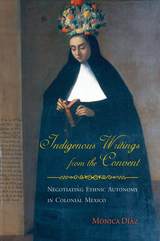
While colonial sources that refer to indigenous women are not scant, documents in which women emerge as agents who actively participate in shaping their own identity are rare. Looking at this minority agency—or subaltern voice—in various religious discourses exposes some central themes. It shows that an indigenous identity recast in Catholic terms was able to be effectively recorded and that the religious participation of these women at a time when indigenous parishes were increasingly secularized lent cohesion to that identity.
Indigenous Writings from the Convent examines ways in which indigenous women participated in one of the most prominent institutions in colonial times—the Catholic Church—and what they made of their experience with convent life. This book will appeal to scholars of literary criticism, women’s studies, and colonial history, and to anyone interested in the ways that class, race, and gender intersected in the colonial world.
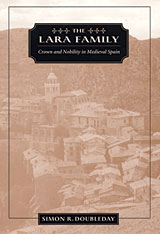
For much of the Middle Ages, the Lara family was among the most powerful aristocratic lineages in Spain. Protégés of the monarchy at the time of El Cid, their influence reached extraordinary heights during the struggle against the Moors. Hand-in-glove with successive kings, they gathered an impressive array of military and political positions across the Iberian Peninsula. But cooperation gave way to confrontation, as the family was pitted against the crown in a series of civil wars.
This book, the first modern study of the Laras, explores the causes of change in the dynamics of power, and narrates the dramatic story of the events that overtook the family. The Laras' militant quest for territorial strength and the conflict with the monarchy led toward a fatal end, but anticipated a form of aristocratic power that long outlived the family. The noble elite would come to dominate Spanish society in the coming centuries, and the Lara family provides important lessons for students of the history of nobility, monarchy, and power in the medieval and early modern world.
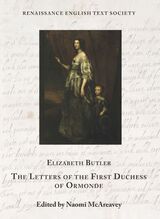
The volume comprises more than three hundred letters written by Ormonde to her husband and family, agents and servants, and friends and clients. Spanning six decades, these letters are meticulously transcribed, edited, and annotated, and the volume includes a substantial scholarly introduction, family trees, a glossary, and other resources.
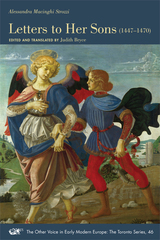
The seventy-three surviving letters written by Florentine widow, Alessandra Macinghi Strozzi (c.1406–1471), to her distant sons first appeared in print well over a century ago, but are here translated into English in their entirety for the first time. Whether for the professional historian or for the general reader interested in Renaissance Florence, they constitute a most precious testimony regarding both private and public life in the mid-fifteenth century, with themes ranging from familial relations, motherhood, marriage, and aspects of material culture to the harsh realities of political exile meted out by the Medici to their perceived opponents, these latter including her husband and, subsequently, her sons.
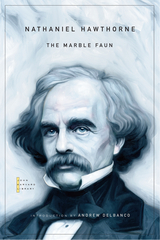
Nathaniel Hawthorne’s The Marble Faun mingles fable with fact in a mysterious tale of American artists liberated from New England mores in Rome. In his introduction, Andrew Delbanco remarks that Hawthorne’s novel is ultimately less about freedom than its costs. It is a book “that invites us to observe people in the grip of guilt, passion, or a naïve faith in God or art, and to watch them seek escape from their fears and doubts as their creed—whatever it is—fails them.” The John Harvard Library edition reproduces the authoritative text of The Marble Faun in The Centenary Edition of the Works of Nathaniel Hawthorne.
Since 1959 The John Harvard Library has been instrumental in publishing essential American writings in authoritative editions.
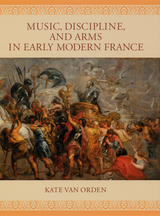
The great pressure on French noblemen to take up the life of the warrior gave rise to bellicose art forms such as sword dances and equestrian ballets. Far from being construed as effeminizing, such combinations of music and the martial arts were at once refined and masculine-a perfect way to display military prowess. The incursion of music into riding schools and infantry drills contributed materially to disciplinary order, enabling the larger and more effective armies of the seventeenth century. This book is a history of the development of these musical spheres and how they brought forth new cultural priorities of civility, military discipline, and political harmony. Music, Discipline, and Arms in Early Modern France effectively illustrates the seminal role music played in mediating between the cultural spheres of letters and arms.
Globalization has become an inescapable fact of contemporary life. Some leaders, in both the East and the West, believe that human rights are culture-bound and that liberal democracy is essentially Western, inapplicable to the non-Western world. How can civilized life be preserved and issues of human rights and civil society be addressed if the material forces dominating world affairs are allowed to run blindly, uncontrolled by any cross-cultural consensus on how human values can be given effective expression and direction?
In a thoughtful meditation ranging widely over several civilizations and historical eras, Wm. Theodore de Bary argues that the concepts of leadership and public morality in the major Asian traditions offer a valuable perspective on humanizing the globalization process. Turning to the classic ideals of the Buddhist, Hindu, Confucian, and Japanese traditions, he investigates the nature of true leadership and its relation to learning, virtue, and education in human governance; the role in society of the public intellectual; and the responsibilities of those in power in creating and maintaining civil society.
De Bary recognizes that throughout history ideals have always come up against messy human complications. Still, he finds in the exploration and affirmation of common values a worthy attempt to grapple with persistent human dilemmas across the globe.
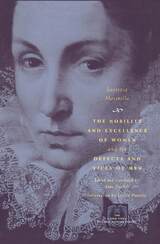
Marinella's masterpiece, The Nobility and Excellence of Women, and the Defects and Vices of Men was first published in 1600, composed at a furious pace in answer to Giusepe Passi's diatribe about women's alleged defects. This polemic displays Marinella's vast knowledge of the Italian poetic tradition and demonstrates her ability to argue against authors of the misogynist tradition from Boccaccio to Torquato Tasso. Trying to effect real social change, Marinella argued that morally, intellectually, and in many other ways, women are superior to men.
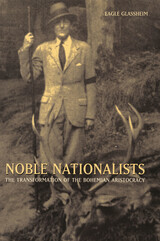
This illuminating study examines the dramatic transformation of Bohemian noble identity from the rise of mass politics in the late nineteenth century to the descent of the Iron Curtain after World War II.
At the turn of the twentieth century, some 300 noble families owned over a third of the Habsburg Bohemian Crownlands. With the Empire's demise in 1918, the once powerful Bohemian nobility quickly became a target of the nationalist revolution sweeping the new Czechoslovak state. Eagle Glassheim traces the evolving efforts of the nobles to define their place in this revolutionary new order.
Nobles saw little choice but to ally with Czech and German national parties, initially in the hopes of assuaging radical land reform. Yet they retained aristocratic political and social traditions that continued to shape their national identities after 1918. Some moved toward a hybrid national identification, embracing a form of German internationalism and a vision of pan-European unity that led many to support Hitler's expansionist efforts in the late 1930s. Others trumpeted their new-found Czech nationalism in resisting the Nazi occupation.
Noble Nationalists offers valuable insights on the nationalization of a conservative political elite, as well as on the national and social revolutions that recast Central Europe in the first half of the twentieth century.
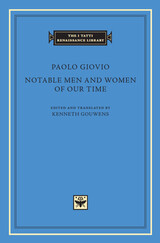
The most complete translation available of these brief biographies of great European figures, written by one of the leading historians of the sixteenth century.
Portraits of Learned Men provides a fascinating synopsis of the contours, mentality, and trajectory of humanistic culture in Italy and Europe by one of the leading historians of the sixteenth century, Paolo Giovio (1483–1552). These brief biographies of 146 men of learning—from Dante, Petrarch, and Boccaccio in the fourteenth century to Erasmus, Thomas More, and Juan Luis Vives in the sixteenth—were meant to accompany accurate portrait paintings commemorating great figures in modern history. Presented together with the literary portraits in this volume, these paintings would be located in a purpose-built villa on Lake Como that would be open to the public. Giovio called this his musaeum, or home of the Muses, one of the first such institutions in European history. His museum would not only serve the traditional function of inspiring virtuous emulation but also provide a comprehensive, candid, and personal overview of the Republic of Letters as it had taken shape and flourished in Italy and Europe during the Renaissance.
This volume contains a fresh edition of the Latin text and a new, more complete translation than any now available in English.
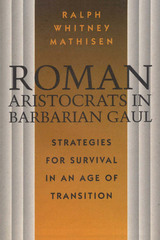
Skin-clad barbarians ransacking Rome remains a popular image of the "decline and fall" of the Roman Empire, but why, when, and how the Empire actually fell are still matters of debate among students of classical history. In this pioneering study, Ralph W. Mathisen examines the "fall" in one part of the western Empire, Gaul, to better understand the shift from Roman to Germanic power that occurred in the region during the fifth century AD.
Mathisen uncovers two apparently contradictory trends. First, he finds that barbarian settlement did provoke significant changes in Gaul, including the disappearance of most secular offices under the Roman imperial administration, the appropriation of land and social influence by the barbarians, and a rise in the overall level of violence. Yet he also shows that the Roman aristocrats proved remarkably adept at retaining their rank and status. How did the aristocracy hold on?
Mathisen rejects traditional explanations and demonstrates that rather than simply opposing the barbarians, or passively accepting them, the Roman aristocrats directly responded to them in various ways. Some left Gaul. Others tried to ignore the changes wrought by the newcomers. Still others directly collaborated with the barbarians, looking to them as patrons and holding office in barbarian governments. Most significantly, however, many were willing to change the criteria that determined membership in the aristocracy. Two new characteristics of the Roman aristocracy in fifth-century Gaul were careers in the church and greater emphasis on classical literary culture.
These findings shed new light on an age in transition. Mathisen's theory that barbarian integration into Roman society was a collaborative process rather than a conquest is sure to provoke much thought and debate. All historians who study the process of power transfer from native to alien elites will want to consult this work.
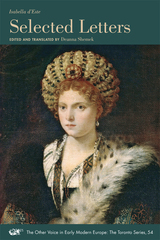
Isabella d’Este (1474–1539), daughter of the Este dukes of Ferrara and wife of Marchese Francesco II Gonzaga of Mantua, co-regent of the Gonzaga state, art collector, musician, diplomat, dynastic mother, traveler, reader, gardener, fashion innovator, and consummate politician, was also, as this volume attests, a prolific letter writer with a highly developed epistolary network. Presented here for the first time in any language is a representative selection from over 16,000 letters sent by Isabella to addressees across a wide social spectrum. Together, they paint a nuanced and colorful portrait of a brilliant and influential female protagonist of early modern European society.
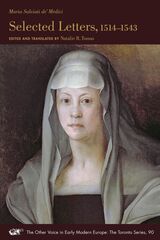
In recent years, there has been an upsurge of interest in Maria Salviati de’ Medici, specifically, in her role in Medici governance and her relationships with other members of the Medici court. Maria Salviati’s surviving correspondence documents a life spent close to the centers of Medici power in Florence and Rome, giving witness to its failures, resurrection, and eventual triumph. Presented here for the first time in English, this book is a representative sample of Maria’s surviving letters that document her remarkable life through a tumultuous period of Italian Renaissance history. While she earned the exasperation of some, she gained the respect of many more. Maria ended her life as an influential dowager, powerful intercessor for local Tuscans of all strata, and wise elder in Duke Cosimo I’s court. The first critical, analytical, biographical work on Maria Salviati de’ Medici’s life and letter-writing in English.
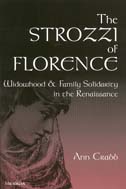
The Strozzi correspondence tells the story of the decline and recovery of one Florentine patrician family. Eventually, the Strozzi brothers earned the greatest fortune of their era, and, after the repeal of their exile, Filippo, the eldest, most successful, and longest lived, spent the last years of his life in Florence as one of its foremost citizens. Set in the context of other documentary evidence and of modern historical and anthropological studies, Crabb's study illuminates the role of women, kinship, solidarity, honor, and profit. These letters provide nuanced insights into values and practices that more impersonal sources cannot rival.
As well as appealing to those interested in the Renaissance, Florence, and Italy, this book will attract those wanting to read about topics in social history that cross time periods: women, family and kinship, business, and honor. It confronts issues of Renaissance Florentine historiography by presenting a more positive view of the role of women than does current orthodoxy, by providing evidence of the impact of extended kinship ties, a controversial issue, and by illuminating further the value placed on honor and profit.
Ann Crabb teaches medieval history at James Madison University.
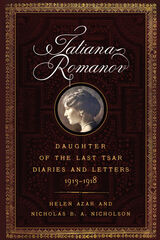
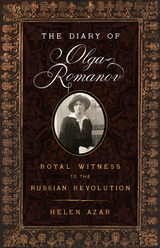
Grand Duchess Tatiana Nikolaevna of Russia was the second of the four daughters of Tsar Nicholas II and his wife, the Empress Alexandra Feodorovna. Long recognized by historians as the undisputed “beauty” of the family, Tatiana was acknowledged for her poise, her elegance, and her innate dignity within her own family. Helen Azar, translator of the diaries of Olga Romanov, and Nicholas B. A. Nicholson, Russian Imperial historian, have joined together to present a truly comprehensive picture of this extraordinarily gifted, complex, and intelligent woman in her own words. Tatiana Romanov, Daughter of the Last Tsar: Diaries and Letters, 1913–1918, presents translations of material never before published in Russian or in English, as well as materials never published in their entirety in the West.
The brisk, modern prose of Tatiana’s diary entries reveals the character of a young woman who was far more than the sheltered imperial beauty as she previously has been portrayed. While many historians and writers describe her as a cold, haughty, and distant aristocrat, this book shows instead a remarkably down-to-earth and humorous young woman, full of life and compassion. A detail-oriented and observant participant in some of the most important historical events of the early twentieth century, she left firsthand descriptions of the tercentenary celebrations of the House of Romanov, the early years of Russia’s involvement in World War I, and the road to her family’s final days in Siberian exile. Her writings reveal extraordinary details previously unknown or unacknowledged. Lavishly annotated for the benefit of the nonspecialist reader, this book is not only a reevaluation of Tatiana’s role as more than just one of four sisters, but also a valuable reference on Russia, the First World War, the Russian Revolution, and the people closest to the Grand Duchess and her family.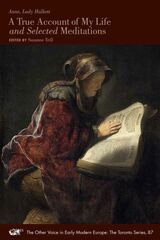
Born in the early 1620s, Anne, Lady Halkett (née Murray) grew up on the fringes of the English court during a period of increasing political tension. From 1644 to 1699, Halkett recorded her personal and political experiences in both England and Scotland in a series of manuscript meditations and an autobiographical narrative called A True Account of My Life. Royalism, romance, and contemporary religious debates are central to Halkett’s vivid portrayal of her life as a single woman, wife, mother, and widow. Collectively, the materials edited here offer the opportunity to explore how Halkett’s meditational practice informed her life writing in the only version of her writings to date available in a fully modernized edition. The forty-four meditations in this volume redefine the importance of Halkett’s contribution to seventeenth-century life writing.
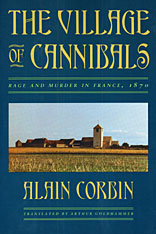
In August 1870, during a fair in the isolated French village of Hautefaye, a gruesome murder was committed in broad daylight that aroused the indignation of the entire country. A young nobleman, falsely accused of shouting republican slogans, was savagely tortured for hours by a mob of peasants who later burned him alive. Rumors of cannibalism stirred public fascination, and the details of the case were dramatically recounted in the popular press. While the crime was rife with political significance, the official inquiry focused on its brutality. Justice was swift: the mob’s alleged ringleaders were guillotined at the scene of the crime the following winter.
The Village of Cannibals is a fascinating inquiry by historian Alain Corbin into the social and political ingredients of an alchemy that transformed ordinary people into executioners in nineteenth-century France. Corbin’s chronicle of the killing is significant for the new light it sheds on the final eruption of peasant rage in France to end in murder. No other author has investigated this harrowing event in such depth or brought to its study such a wealth of perspectives.
Corbin explores incidents of public violence during and after the French Revolution and illustrates how earlier episodes in France’s history provide insight into the mob’s methods and choice of victim. He describes in detail the peasants’ perception of the political landscape and the climate of fear that fueled their anxiety and ignited long-smoldering hatreds. Drawing on the minutes of court proceedings, accounts of contemporary journalists, and testimony of eyewitnesses, the author offers a precise chronology of the chain of events that unfolded on the fairground that summer afternoon. His detailed investigation into the murder at Hautefaye reveals the political motivations of the murderers and the gulf between their actions and the sensibilities of the majority of French citizens, who no longer tolerated violence as a viable form of political expression. The book will be welcomed by scholars, students, and general readers for its compelling insights into the nature of collective violence.
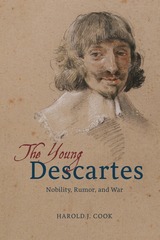
In The Young Descartes, Harold J. Cook tells the story of a man who did not set out to become an author or philosopher—Descartes began publishing only after the age of forty. Rather, for years he traveled throughout Europe in diplomacy and at war. He was present at the opening events of the Thirty Years' War in Central Europe and Northern Italy, and was also later involved in struggles within France. Enduring exile, scandals, and courtly intrigue, on his journeys Descartes associated with many of the most innovative free thinkers and poets of his day, as well as great noblemen, noblewomen, and charismatic religious reformers. In his personal life, he expressed love for men as well as women and was accused of libertinism by his adversaries.
These early years on the move, in touch with powerful people and great events, and his experiences with military engineering and philosophical materialism all shaped the thinker and philosopher Descartes became in exile, where he would begin to write and publish, with purpose. But though it is these writings that made ultimately made him famous, The Young Descartes shows that this story of his early life and the tumultuous times that molded him is sure to spark a reappraisal of his philosophy and legacy.
READERS
Browse our collection.
PUBLISHERS
See BiblioVault's publisher services.
STUDENT SERVICES
Files for college accessibility offices.
RECENTLY PUBLISHED





UChicago Accessibility Resources
home | accessibility | search | about | contact us
BiblioVault ® 2001 - 2024
The University of Chicago Press