
 A SCHOLARLY BOOK REPOSITORY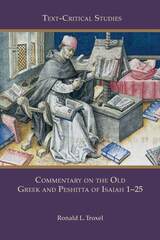
The first thorough commentary on the Old Greek and Peshitta of Isaiah
Ronald L. Troxel’s new textual commentary on Isaiah focuses on the book’s Greek and Syriac translations and seeks to recover, as much as possible, the Hebrew texts on which these early translations relied. Troxel treats the Greek and Syriac together in order to present a detailed analysis of their relationship, devoting particular attention to whether the Syriac was directly or indirectly influenced by the Greek. This comparison sheds light on both the shared and distinct approaches that the translators took in rendering lexemes, phrases, verses, and even passages. In addition Troxel presents observations about the literary structures the translators created that differ from those implicit in their source texts (as we understand them), to produce coherent discourse in the target language.
Features:
- Textual commentary on the life of the text of Isaiah 1–25
- Use of the Dead Sea Scrolls to shed light on particular issues
- Detailed comparison of the Masoretic Text, the Old Greek, and the Peshitta
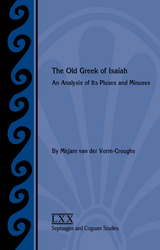
A concise study of a large number of examples of pluses and minus providing insight into translation from Hebrew to Greek
Van der Vorm-Croughs focuses this translation study on the processes leading to pluses and minuses including linguistic and stylistic aspects (i.e., cases in which elements have been added or omitted for the sake of a proper use of the Greek language), literary aspects (additions and omissions meant to embellish the Greek text), translation technical aspects (e.g., the avoidance of redundancy), and contextual and intertextual exegesis and harmonization. This work also covers the relation between the Greek Isaiah and its possible Hebrew Vorlage to try to determine which pluses and minuses may have been the result of the translator’s use of a different Hebrew text.
Features:
- Eleven categories for the pluses and minuses of the Greek Isaiah
- Examination of translation techniques and translator errors
- Use of Joseph Ziegler’s critical edition
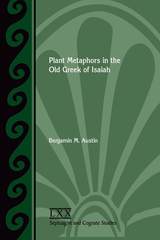
A thorough analysis of metaphor translation techniques used in Isaiah
In this study Benjamin M. Austin analyzes all the plant metaphors in Isaiah and classifies them according to the metaphor translation techniques used by the Septuagint translator. Austin illustrates how the translator took the context of each metaphor into account and demonstrates how the natural features of the plants under discussion at times influenced their translation. He argues that the translator tried to render metaphors vividly and with clarity, sometimes adjusting them to match the experience of his audience living in Egypt. Austin also examines metaphors in terms of their vehicles (the objects of comparison), so that the translation of similar metaphors can be compared.
Features
- A comparison of the Masoretic Text to the Septuagint and Targum
- A classification of metaphor translation strategies
- An introduction to the Hellenistic and the Jewish conception of metaphors
READERS
Browse our collection.
PUBLISHERS
See BiblioVault's publisher services.
STUDENT SERVICES
Files for college accessibility offices.
RECENTLY PUBLISHED




UChicago Accessibility Resources
home | accessibility | search | about | contact us
BiblioVault ® 2001 - 2026
The University of Chicago Press