
 A SCHOLARLY BOOK REPOSITORY
Results by Title
5 books about Paint materials
5 books about Paint materials

Analysis of Modern Paints
Thomas Learner
J. Paul Getty Trust, The, 2005
This volume outlines the techniques currently employed to analyze the synthetic resins in paints.
Although oil remains an important binding medium in artists' paints, today's synthetic resins are being used with increasing frequency. This was true during much of the twentieth century, when artists such as David Alfaro Siqueiros, Jackson Pollock, and Pablo Picasso used commercial or industrial paints based on synthetic resins. The growing popularity of synthetic resin materials carries important implications for the conservation, preservation, and treatment of modern art.
This volume outlines the techniques that are currently employed to analyze the synthetic resins used in modern painting materials, such as pyrolysis-gas chromatography-mass spectrometry, Fourier Transform infrared spectroscopy, and direct temperature-resolved mass spectrometry. For each technique, results are given for standard samples of the principal classes of synthetic binding media, various pigments and extenders, tube paint formulations, and microscopic paint fragments taken from actual works of art.
Primarily intended for conservation scientists, conservators, researchers, and students of conservation, this book will also be of interest to other museum professionals.
Although oil remains an important binding medium in artists' paints, today's synthetic resins are being used with increasing frequency. This was true during much of the twentieth century, when artists such as David Alfaro Siqueiros, Jackson Pollock, and Pablo Picasso used commercial or industrial paints based on synthetic resins. The growing popularity of synthetic resin materials carries important implications for the conservation, preservation, and treatment of modern art.
This volume outlines the techniques that are currently employed to analyze the synthetic resins used in modern painting materials, such as pyrolysis-gas chromatography-mass spectrometry, Fourier Transform infrared spectroscopy, and direct temperature-resolved mass spectrometry. For each technique, results are given for standard samples of the principal classes of synthetic binding media, various pigments and extenders, tube paint formulations, and microscopic paint fragments taken from actual works of art.
Primarily intended for conservation scientists, conservators, researchers, and students of conservation, this book will also be of interest to other museum professionals.
[more]
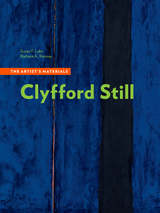
Clyfford Still
The Artist’s Materials
Susan F. Lake
J. Paul Getty Trust, The, 2022
This groundbreaking book provides the first detailed account of the materials and techniques of perhaps the most radical—and until now, least studied—major American Abstract Expressionist.
Among the most radical of the great American Abstract Expressionist painters, Clyfford Still has also long been among the least studied. Still severed ties with the commercial art world in the early 1950s, and his estate at the time of his death in 1980 comprised some 3,125 artworks—including more than 800 paintings—that were all but unknown to the art world. Susan F. Lake and Barbara A. Ramsay were granted access to this collection by the estate and by the Clyfford Still Museum in Denver, which houses this immense corpus today.
This volume, based on the authors’ materials research and enriched by their unprecedented access to Still’s artworks, paints, correspondence, studio records, and personal library, provides the first detailed account of his materials, working methods, and techniques. Initial chapters provide an engaging and erudite overview of the artist's life. Subsequent chapters trace the development of his visionary style, offer in-depth materials analysis of selected works from each decade of his career, and suggest new approaches to the care and conservation of his paintings. There is also a series of technical appendices as well as a full bibliography.
Among the most radical of the great American Abstract Expressionist painters, Clyfford Still has also long been among the least studied. Still severed ties with the commercial art world in the early 1950s, and his estate at the time of his death in 1980 comprised some 3,125 artworks—including more than 800 paintings—that were all but unknown to the art world. Susan F. Lake and Barbara A. Ramsay were granted access to this collection by the estate and by the Clyfford Still Museum in Denver, which houses this immense corpus today.
This volume, based on the authors’ materials research and enriched by their unprecedented access to Still’s artworks, paints, correspondence, studio records, and personal library, provides the first detailed account of his materials, working methods, and techniques. Initial chapters provide an engaging and erudite overview of the artist's life. Subsequent chapters trace the development of his visionary style, offer in-depth materials analysis of selected works from each decade of his career, and suggest new approaches to the care and conservation of his paintings. There is also a series of technical appendices as well as a full bibliography.
[more]
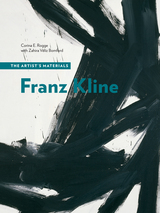
Franz Kline
The Artist's Materials
Corina E. Rogge
J. Paul Getty Trust, The, 2022
This book offers the most detailed investigation thus far of the materials and methods of this key American Abstract Expressionist artist.
Although Franz Kline was one of the seminal figures of the American Abstract Expressionist movement, he is less well known than contemporaries such as Jackson Pollock and Willem de Kooning. This is partly because Kline, unlike most artists in his circle, did not like to write or talk about his own art. In fact, when asked in a panel to discuss abstract art, Kline said, “I thought that was the reason for trying to do it, because you couldn’t [talk about it].” Still, his impact was such that the critic and art historian April Kingsley wrote, “Abstract Expressionism as a movement died with him.”
This volume, the newest addition to the Artist’s Materials series from the Getty Conservation Institute, looks closely at both Kline's life and work, from his early years in Pennsylvania to his later success in New York City. Kline's iconic paintings are poised on a critical cusp: some have already undergone conservation, but others remain unaltered and retain the artist’s color, gloss, and texture, and they are surprisingly vulnerable. The authors’ presentation of rigorous examination and scientific analysis of more than thirty of Kline’s paintings from the 1930s through the 1960s provides invaluable insight into his life, materials, and techniques. This study provides conservators with essential information that will shape future strategies for the care of Kline’s paintings, and offers readers a more thorough comprehension of this underappreciated artist who is so central to American Abstract Expressionism.
Although Franz Kline was one of the seminal figures of the American Abstract Expressionist movement, he is less well known than contemporaries such as Jackson Pollock and Willem de Kooning. This is partly because Kline, unlike most artists in his circle, did not like to write or talk about his own art. In fact, when asked in a panel to discuss abstract art, Kline said, “I thought that was the reason for trying to do it, because you couldn’t [talk about it].” Still, his impact was such that the critic and art historian April Kingsley wrote, “Abstract Expressionism as a movement died with him.”
This volume, the newest addition to the Artist’s Materials series from the Getty Conservation Institute, looks closely at both Kline's life and work, from his early years in Pennsylvania to his later success in New York City. Kline's iconic paintings are poised on a critical cusp: some have already undergone conservation, but others remain unaltered and retain the artist’s color, gloss, and texture, and they are surprisingly vulnerable. The authors’ presentation of rigorous examination and scientific analysis of more than thirty of Kline’s paintings from the 1930s through the 1960s provides invaluable insight into his life, materials, and techniques. This study provides conservators with essential information that will shape future strategies for the care of Kline’s paintings, and offers readers a more thorough comprehension of this underappreciated artist who is so central to American Abstract Expressionism.
[more]
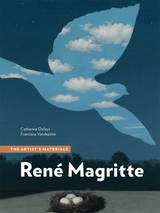
René Magritte
The Artist’s Materials
Catherine Defeyt
J. Paul Getty Trust, The
The first book-length material study of the works of Belgian Surrealist René Magritte.
René Magritte (1898–1967) is the most famous Belgian artist of the twentieth century and a celebrated representative of the Surrealist movement. Much has been written about his practices, artistic community, and significance within the history of modernism, but little has been documented regarding his process.
This volume examines fifty oil paintings made by Magritte between 1921 and 1967, now held at the Royal Museums of Fine Arts of Belgium. This technical study of his works using noninvasive scientific imaging and chemical analysis reveals the artist’s painting materials, his habit of overpainting previous compositions, and the origins and mechanisms of surface and pigment degradation. Of interest to conservators, scientists, curators, and enthusiasts of twentieth-century art, this book expands our understanding of Magritte the artist and provides new and useful findings that will inform strategies for the future care of his works.
René Magritte (1898–1967) is the most famous Belgian artist of the twentieth century and a celebrated representative of the Surrealist movement. Much has been written about his practices, artistic community, and significance within the history of modernism, but little has been documented regarding his process.
This volume examines fifty oil paintings made by Magritte between 1921 and 1967, now held at the Royal Museums of Fine Arts of Belgium. This technical study of his works using noninvasive scientific imaging and chemical analysis reveals the artist’s painting materials, his habit of overpainting previous compositions, and the origins and mechanisms of surface and pigment degradation. Of interest to conservators, scientists, curators, and enthusiasts of twentieth-century art, this book expands our understanding of Magritte the artist and provides new and useful findings that will inform strategies for the future care of his works.
[more]
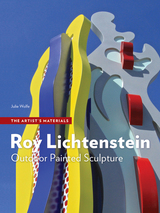
Roy Lichtenstein
Outdoor Painted Sculpture
Julie Wolfe
J. Paul Getty Trust, The
The first book-length study to examine the materials and techniques used in the fabrication and painting of the American pop artist Roy Lichtenstein’s outdoor sculpture.
Vibrant color was essential to the paintings of the American pop artist Roy Lichtenstein (1923–1997), and when he began exploring the creation of outdoor sculpture in the late 1970s, vivid hues remained an important part of his artistic vocabulary. Today, preserving these remarkable works after they have endured decades in outdoor environments around the world is an issue of pressing concern.
This abundantly illustrated volume is based on extensive archival research of Lichtenstein’s studio materials, interviews with his assistants, and a thorough technical analysis of the sculpture Three Brushstrokes. The book concludes with a chapter showing various options for the care, conservation, and restoration of his sculptural works, making this an essential resource for conservators, curators, and others interested both in the iconic artist and modern sculpture in general.
Vibrant color was essential to the paintings of the American pop artist Roy Lichtenstein (1923–1997), and when he began exploring the creation of outdoor sculpture in the late 1970s, vivid hues remained an important part of his artistic vocabulary. Today, preserving these remarkable works after they have endured decades in outdoor environments around the world is an issue of pressing concern.
This abundantly illustrated volume is based on extensive archival research of Lichtenstein’s studio materials, interviews with his assistants, and a thorough technical analysis of the sculpture Three Brushstrokes. The book concludes with a chapter showing various options for the care, conservation, and restoration of his sculptural works, making this an essential resource for conservators, curators, and others interested both in the iconic artist and modern sculpture in general.
[more]
READERS
Browse our collection.
PUBLISHERS
See BiblioVault's publisher services.
STUDENT SERVICES
Files for college accessibility offices.
RECENTLY PUBLISHED


UChicago Accessibility Resources
home | accessibility | search | about | contact us
BiblioVault ® 2001 - 2026
The University of Chicago Press