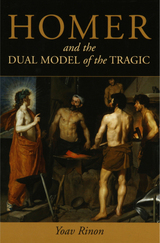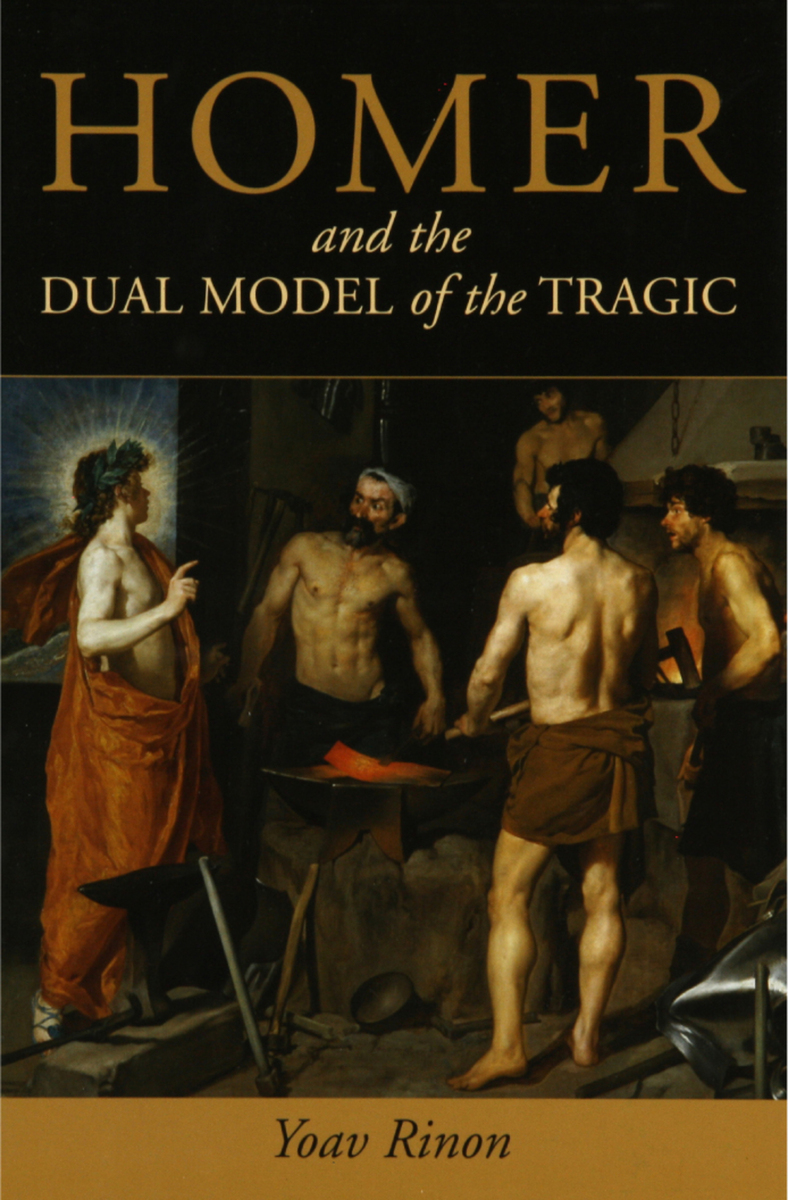
Homer and the Dual Model of the Tragic
University of Michigan Press, 2008
Cloth: 978-0-472-11663-8 | eISBN: 978-0-472-22541-5 (standard)
Library of Congress Classification PA4037.R56 2008
Dewey Decimal Classification 883.01
Cloth: 978-0-472-11663-8 | eISBN: 978-0-472-22541-5 (standard)
Library of Congress Classification PA4037.R56 2008
Dewey Decimal Classification 883.01
ABOUT THIS BOOK | AUTHOR BIOGRAPHY | REVIEWS | REQUEST ACCESSIBLE FILE
ABOUT THIS BOOK
Homer and the Dual Model of the Tragic interprets both of Homer's epics as demonstrating a sense of "the Tragic." While this view of human experience and society is customarily linked with Greek tragedy rather than epic, Rinon uses close readings of the texts to argue persuasively that both The Iliad and The Odyssey present a view of pathos interwoven with the knowledge that it is unavoidable and inexplicable. Using Aristotle's Poetics as a guide toward defining eutuchia and dystuchia, Rinon analyzes specific sections of the epics. He touches on the Cyclops episode and its use of Bakhtinian "heteroglossia," on the use of Hephaestus' creativity in both epics in the emergence of tragic signification, and on Demodocus' songs in book 8 of The Odyssey as seen through André Gide's mise en abîme. Other detailed readings look at individual themes and characters in the poems, including the image of the dog, the speeches in the ninth book of The Iliad, and numerous minor characters. Yoav Rinon's integration of classical philology, narratology, and post-colonial studies makes Homer and the Dual Model of the Tragic a widely interdisciplinary book, one that will appeal to both specialists and undergraduates in comparative literature, philosophy, and classical studies.
See other books on: Ancient & Classical | Homer | Rinon, Yoav | Tragic | Tragic, The, in literature
See other titles from University of Michigan Press