
 A SCHOLARLY BOOK REPOSITORY
Laura Helen Marks investigates the contradictions and seesawing gender dynamics in Victorian-inspired adult films and looks at why pornographers persist in drawing substance and meaning from the era's Gothic tales. She focuses on the particular Victorianness that pornography prefers, and the mythologies of the Victorian era that fuel today's pornographic fantasies. In turn, she exposes what porning the Victorians shows us about pornography as a genre.
A bold foray into theory and other forbidden places, Alice in Pornoland reveals how modern-day Victorian Gothic pornography constantly emphasizes, navigates, transgresses, and renegotiates issues of gender, sexuality, and race.

Published by University of Delaware Press. Distributed worldwide by Rutgers University Press.

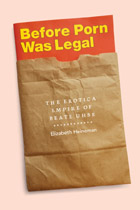
Struggling to survive in post–World War II Germany, Beate Uhse (1919–2001)—a former Luftwaffe pilot, war widow, and young mother—turned to selling goods on the black market. A self-penned guide to the rhythm method found eager buyers and started Uhse on her path to becoming the world’s largest erotica entrepreneur. Battling restrictive legislation, powerful churches, and conservative social mores, she built a mail-order business in the 1950s that sold condoms, sex aids, self-help books, and more. The following decades brought the world’s first erotica shop, the legalization of pornography, the expansion of her business into eastern Germany, and web-based commerce.
Uhse was only one of many erotica entrepreneurs who played a role in the social and sexual revolution accompanying Germany’s transition from Nazism to liberal democracy. Tracing the activities of entrepreneurs, customers, government officials, and citizen-activists, Before Porn Was Legal brings to light the profound social, legal, and cultural changes that attended the growth of the erotica sector. Heineman’s innovative readings of governmental and industry records, oral histories, and the erotica industry’s products uncover the roots of today’s sexual marketplace and reveal the indelible ways in which sexual expression and consumption have become intertwined.
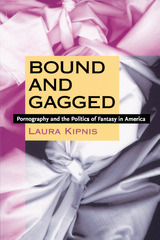
Using this textbook example of social hysteria as a springboard, Kipnis argues that criminalizing fantasy—even perverse and unacceptable fantasy—has dire social consequences. Exploring the entire spectrum of pornography, she declares that porn isn’t just about gender and that fantasy doesn’t necessarily constitute intent. She reveals Larry Flynt’s Hustler to be one of the most politically outspoken and class-antagonistic magazine in the country and shows how fetishes such as fat admiration challenge our aesthetic prejudices and socially sanctioned disgust. Kipnis demonstrates that the porn industry—whose multibillion-dollar annual revenues rival those of the three major television networks combined—know precisely how to tap into our culture’s deepest anxieties and desires, and that this knowledge, more than all the naked bodies, is what guarantees its vast popularity.
Bound and Gagged challenges our most basic assumptions about America’s relationship with pornography and questions what the calls to eliminate it are really attempting to protect.
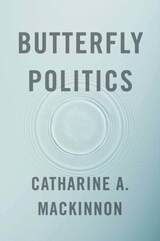
The minuscule motion of a butterfly’s wings can trigger a tornado half a world away, according to chaos theory. Under the right conditions, small simple actions can produce large complex effects. In this timely and provocative book, Catharine A. MacKinnon argues that the right seemingly minor interventions in the legal realm can have a butterfly effect that generates major social and cultural transformations.
Butterfly Politics brings this incisive understanding of social causality to a wide-ranging exploration of gender relations. The pieces collected here—many published for the first time—provide a new perspective on MacKinnon’s career as a pioneer of legal theory and practice and an activist for women’s rights. Its central concerns of gender inequality, sexual harassment, rape, pornography, and prostitution have defined MacKinnon’s intellectual, legal, and political pursuits for over forty years. Though differing in style and approach, the selections all share the same motivation: to end inequality, including abuse, in women’s lives. Several mark the first time ideas that are now staples of legal and political discourse appeared in public—for example, the analysis of substantive equality. Others urge changes that have yet to be realized.
The butterfly effect can animate political activism and advance equality socially and legally. Seemingly insignificant actions, through collective recursion, can intervene in unstable systems to produce systemic change. A powerful critique of the legal and institutional denial of reality that perpetuates practices of gender inequality, Butterfly Politics provides a model of what principled, effective, socially conscious engagement with law looks like.
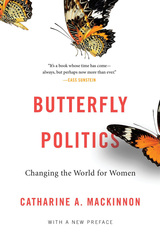
“Sometimes ideas change the world. This astonishing, miraculous, shattering, inspiring book captures the origins and the arc of the movement for sex equality. It’s a book whose time has come—always, but perhaps now more than ever.”
—Cass Sunstein, coauthor of Nudge
Under certain conditions, small simple actions can produce large and complex “butterfly effects.” Butterfly Politics shows how Catharine A. MacKinnon turned discrimination law into an effective tool against sexual abuse—grounding and predicting the worldwide #MeToo movement—and proposes concrete steps that could have further butterfly effects on women’s rights. Thirty years after she won the U.S. Supreme Court case establishing sexual harassment as illegal, this timely collection of her previously unpublished interventions on consent, rape, and the politics of gender equality captures in action the creative and transformative activism of an icon.
“MacKinnon adapts a concept from chaos theory in which the tiny motion of a butterfly’s wings can trigger a tornado half a world away. Under the right conditions, she posits, small actions can produce major social transformations.”
—New York Times
“MacKinnon [is] radical, passionate, incorruptible and a beautiful literary stylist… Butterfly Politics is a devastating salvo fired in the gender wars… This book has a single overriding aim: to effect global change in the pursuit of equality.”
—The Australian
“Sexual Harassment of Working Women was a revelation. It showed how this anti-discrimination law—Title VII—could be used as a tool… It was the beginning of a field that didn’t exist until then.”
—U.S. Supreme Court Justice Ruth Bader Ginsburg
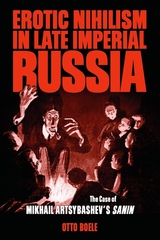
Who were the Saninists, and what was their “teaching” all about? Delving into police reports, newspaper clippings, and amateur plays, Otto Boele finds that Russian youth were not at all swept away by the self-indulgent lifestyle of the novel’s hero. In fact, Saninism was more smoke than fire—a figment of the public imagination triggered by anxieties about the revolution of 1905 and the twilight of the Russian empire. The reception of the novel, Boele shows, reflected much deeper worries caused by economic reforms, an increase in social mobility, and changing attitudes toward sexuality.
Showing how literary criticism interacts with the age-old medium of rumor, Erotic Nihilism in Late Imperial Russia offers a meticulous analysis of the scandal’s coverage in the provincial press and the reactions of young people who appealed to their peers to resist the novel’s nihilistic message. By examining the complex dialogue between readers and writers, children and parents, this study provides fascinating insights into Russian culture on the eve of World War I.
Feminist philosophers have made important strides in altering the overwhelmingly male-centric discipline of philosophy. Yet, in Nancy Bauer’s view, most are still content to work within theoretical frameworks that are fundamentally false to human beings’ everyday experiences. This is particularly intolerable for a species of philosophy whose central aspiration is to make the world a less sexist place. How to Do Things with Pornography models a new way to write philosophically about pornography, women’s self-objectification, hook-up culture, and other contemporary phenomena. Unafraid to ask what philosophy contributes to our lives, Bauer argues that the profession’s lack of interest in this question threatens to make its enterprise irrelevant.
Bauer criticizes two paradigmatic models of Western philosophizing: the Great Man model, according to which philosophy is the product of rare genius; and the scientistic model, according to which a community of researchers works together to discover once-and-for-all truths. The philosopher’s job is neither to perpetuate the inevitably sexist trope of the philosopher-genius nor to “get things right.” Rather, it is to compete with the Zeitgeist and attract people to the endeavor of reflecting on their settled ways of perceiving and understanding the world.
How to Do Things with Pornography boldly enlists J. L. Austin’s How to Do Things with Words, showing that it should be read not as a theory of speech acts but as a revolutionary conception of what philosophers can do in the world with their words.

This book contains the oral testimony of victims of pornography, spoken on the record for the first time in history.
Speaking at hearings on a groundbreaking antipornography civil rights law, women offer eloquent witness to the devastation pornography has caused in their lives. Supported by social science experts and authorities on rape, battery, and prostitution, discounted and opposed by free speech advocates and absolutists, their riveting testimony articulates the centrality of pornography to sexual abuse and inequity today.
At issue in these hearings is a law conceived and drafted by Andrea Dworkin and Catharine A. MacKinnon that defines harm done through pornography as a legal injury of sex discrimination warranting civil redress. From the first set of hearings in Minneapolis in 1983 through those before the Massachusetts state legislature in 1992, the witnesses heard here expose the commonplace reality of denigration and sexual subordination due to pornography and refute the widespread notion that pornography is harmless expression that must be protected by the state.
Introduced with powerful essays by MacKinnon and Dworkin, these hearings--unabridged and with each word scrupulously verified--constitute a unique record of a conflict over the meaning of democracy itself--a major civil rights struggle for our time and a fundamental crisis in United States constitutional law: Can we sacrifice the lives of women and children to a pornographer's right to free "speech"? Can we allow the First Amendment to shield sexual exploitation and predatory sexual violence? These pages contain all the arguments for protecting pornography--and dramatically document its human cost.

International Exposure demonstrates the wealth of desires woven into the fabric of European history: desires about empire and nation, about self and other, about plenty and dearth. By documenting the diverse meanings of pornography, senior scholars from across disciplines show the ways that sexuality became central to the individual, to the nation, and to the transnational character of modern society.
The ten essays in the volume engage a rich array of topics, including obscenity in the German states, censorship in France’s Third Republic, “she-male” internet porn, the rise of incestuous longings in England, the place of the Hungarian video revolution in the global market, and the politics of pornography in Russia. Taken together, the essays illustrate the latest approaches to content, readership, form, and delivery in modern European pornography.
A substantial discussion of the broad history and state of the field complements the ten in-depth case studies that examine a wide range of sources from literature to magazines, video to the internet. By tackling the highbrow and lowdown of the pornographic form, this volume lays the groundwork for the next surge of studies in the field.
How free is the speech of someone who can't be heard? Not very--and this, Owen Fiss suggests, is where the First Amendment comes in. In this book, a marvel of conciseness and eloquence, Fiss reframes the debate over free speech to reflect the First Amendment's role in ensuring public debate that is, in Justice William Brennan's words, truly "uninhibited, robust, and wide-open."
Hate speech, pornography, campaign spending, funding for the arts: the heated, often overheated, struggle over these issues generally pits liberty, as embodied in the First Amendment, against equality, as in the Fourteenth. Fiss presents a democratic view of the First Amendment that transcends this opposition. If equal participation is a precondition of free and open public debate, then the First Amendment encompasses the values of both equality and liberty.
By examining the silencing effects of speech--its power to overwhelm and intimidate the underfunded, underrepresented, or disadvantaged voice--Fiss shows how restrictions on political expenditures, hate speech, and pornography can be defended in terms of the First Amendment, not despite it. Similarly, when the state requires the media to air voices of opposition, or funds art that presents controversial or challenging points of view, it is doing its constitutional part to protect democratic self-rule from the aggregations of private power that threaten it.
Where most liberal accounts cast the state as the enemy of freedom and the First Amendment as a restraint, this one reminds us that the state can also be the friend of freedom, protecting and fostering speech that might otherwise die unheard, depriving our democracy of the full range and richness of its expression.
Licentious Gotham, set in the streets, news depots, publishing houses, grand jury chambers, and courtrooms of the nation’s great metropolis, delves into the stories of the enterprising men and women who created a thriving transcontinental market for sexually arousing books and pictures. The experiences of “fancy” publishers, “flash” editors, and “racy” novelists, who all managed to pursue their trade in the face of laws criminalizing obscene publications, dramatically convey nineteenth-century America’s daring notions of sex, gender, and desire, as well as the frequently counterproductive results of attempts to enforce conventional moral standards.
In nineteenth-century New York, the business of erotic publishing and legal attacks on obscenity developed in tandem, with each activity shaping and even promoting the pursuit of the other. Obscenity prohibitions, rather than curbing salacious publications, inspired innovative new styles of forbidden literature—such as works highlighting expressions of passion and pleasure by middle-class American women. Obscenity prosecutions also spurred purveyors of lewd materials to devise novel schemes to evade local censorship by advertising and distributing their products through the mail. This subterfuge in turn triggered far-reaching transformations in strategies for policing obscenity.
Donna Dennis offers a colorful, groundbreaking account of the birth of an indecent print trade and the origins of obscenity regulation in the United States. By revealing the paradoxes that characterized early efforts to suppress sexual expression in the name of morality, she suggests relevant lessons for our own day.

We usually think of women as the victims of pornography rather than its consumers. Whether appearing in films, peering provocatively from the pages of magazines, or posing on explicit Web-sites, women are considered the dehumanized objects of unseen lascivious male viewers. But in her controversial new book One for the Girls!, Clarissa Smith debunks this myth and challenges women to read, watch, and enjoy pornography on their own terms. Focusing on the British magazine For Women, Smith looks at its readers’ responses to male pinups and erotica and explores the intricacies of women’s unique reactions to pornography.

Critics tend to focus on mass-produced materials and make claims about pornography as plasticized or commodified. In contrast, eminent historian Lisa Z. Sigel looks at what people made, rather than what they bought, revealing how people thought about sexuality for themselves. She also explores periods when these sexual artifacts were pilloried, ransacked, and destroyed, providing a unique document of rare nineteenth- and twentieth-century objects. Whalers and craftsmen, prisoners and activists, African Americans and feminists—all made their own pornography. Ranging across the full sweep of this output, The People’s Porn challenges preconceptions as it tells a new and fascinating story about American sexual history.
An updated edition of this essential work.
Since its initial publication, Policing Desire has proved to be an unparalleled analysis of “the cacophony of voices which sounds through every institution of our society on the subject of AIDS.” For the third edition Simon Watney has provided a new preface, a compelling new concluding essay, and a directory for AIDS information that includes electronic resources.
“A far-reaching analysis of images of AIDS and homosexuality in the media. . . . In Policing Desire, Simon Watney called the media on its own game, and the media actually changed its coverage of AIDS and queer issues.” Voice Literary Supplement“Simon Watney’s Policing Desire is essential reading for anyone who wants to press the question of how the media represents AIDS . . . it will stand as a great work of criticism written from the trenches.” New York Native“A landmark work in AIDS analysis because of the combination of emotional urgency and analytical insight that it manifests.” American Book ReviewWinner of the Gustavus Myers Prize for the Study of Human RightsISBN 0-8166-3024-0 Cloth $39.95xx CUSAISBN 0-8166-3025-9 Paper $16.95x CUSA000 pages 0 x 0 MarchMedia Studies/Social TheoryPolicing DesirePornography, AIDS and the MediaThird EditionSimon WatneyAn updated edition of this essential work. Since its initial publication, Policing Desire has proved to be an unparalleled analysis of “the cacophony of voices which sounds through every institution of our society on the subject of AIDS.” For the third edition Simon Watney has provided a new preface, a compelling new concluding essay, and a directory for AIDS information that includes electronic resources.“A far-reaching analysis of images of AIDS and homosexuality in the media. . . . In Policing Desire, Simon Watney called the media on its own game, and the media actually changed its coverage of AIDS and queer issues.” Voice Literary Supplement“Simon Watney’s Policing Desire is essential reading for anyone who wants to press the question of how the media represents AIDS . . . it will stand as a great work of criticism written from the trenches.” New York Native“A landmark work in AIDS analysis because of the combination of emotional urgency and analytical insight that it manifests.” American Book ReviewSimon Watney is the director of the Red Hot AIDS Charitable Trust, which distributes funds internationally for HIV/AIDS prevention and education. Watney lives in London, England.
The essays in this collection address the historically and culturally varied interactions between porn and the archive. Topics range from library policies governing access to sexually explicit material to the growing digital archive of "war porn," or eroticized combat imagery; and from same-sex amputee porn to gay black comic book superhero porn. Together the pieces trace pornography as it crosses borders, transforms technologies, consolidates sexual identities, and challenges notions of what counts as legitimate forms of knowledge. The collection concludes with a valuable resource for scholars: a list of pornography archives held by institutions around the world.
Contributors. Jennifer Burns Bright, Eugenie Brinkema, Joseph Bristow, Robert Caserio, Ronan Crowley, Tim Dean, Robert Dewhurst, Lisa Downing, Frances Ferguson, Loren Glass, Harri Kahla, Marcia Klotz, Prabha Manuratne, Mireille Miller-Young, Nguyen Tan Hoang, John Paul Ricco, Steven Ruszczycky, Melissa Schindler, Darieck Scott, Caitlin Shanley, Ramon Soto-Crespo, David Squires, Linda Williams

The essays in this volume move beyond feminist debates and distinctions between a “good” erotica and a “bad” hard core. Contributors examine varieties of pornography from the tradition of the soft-core pin-up through the contemporary hard-core tradition of straight, gay, and lesbian videos and dvds to the burgeoning phenomenon of pornography on the Internet. They explore, as examples of the genre, individual works as divergent as The Starr Report, the pirated Tommy Lee/Pamela Anderson honeymoon video, and explicit Japanese “ladies’ comics” consumed by women. They also probe difficult issues such as the sexualization of race and class and the relationship of pornography to the avant-garde. To take pornography seriously as an object of analysis also means teaching it. Porn Studies thus includes a useful annotated bibliography of readings and archival sources important to the study of pornography as a cultural form.
Contributors. Heather Butler, Rich Cante, Jake Gerli, Minette Hillyer, Nguyen Tan Hoang, Despina Kakoudaki, Franklin Melendez, Ara Osterweil, Zabet Patterson, Constance Penley, Angelo Restivo, Eric Schaefer, Michael Sicinski, Deborah Shamoon, Maria St. John, Tom Waugh, Linda Williams

This volume places pornography at the heart of the 1970s American experience, exploring lesser-known forms of pornography from the decade, such as a new, vibrant gay porn genre; transsexual/female impersonator magazines; and pornography for new users, including women and conservative Christians. The collection also explores the rise of a culture of porn film auteurs and stars as well as the transition from film to video. As the corpus of adult ephemera of the 1970s disintegrates, much of it never to be professionally restored and archived, these essays seek to document what pornography meant to its producers and consumers at a pivotal moment.
In addition to the volume editors, contributors include Peter Alilunas, Gillian Frank, Elizabeth Fraterrigo, Lucas Hilderbrand, Nancy Semin Lingo, Laura Helen Marks, Nicholas Matte, Jennifer Christine Nash, Joe Rubin, Alex Warner, Leigh Ann Wheeler, and Greg Youmans.
Discussing Supreme Court decisions regarding obscenity, Richard F. Hixson highlights the views of Justices William J. Brennan and John Paul Stevens, borrows from the pioneer decisions of Judge Learned Hand, and consults the work of contemporary First Amendment scholars; finally, though, he relies not on public debate or political machinations but on the justices’ own published opinions, which are, as he says, "the most tantalizing documents of all."
Hixson proceeds chronologically through eleven chapters, with each chapter featuring a specific aspect of the constitutional problem and the approach or solution espoused by a particular justice. Through his case-by-case analysis of the many Supreme Court obscenity rulings, Hixson relates each decision to the temper of the times.
In this investigation of the Supreme Court’s dealings with obscenity, Hixson asks—and answers in detail—a series of pertinent questions. Do Congressional politics and public opinion prejudice the Court’s ability to interpret the Constitution fairly? Must adults be treated the same as children? What are the limits, if any, of "content restriction" on obscene materials? How much "expressive activity" is, or should be, protected by the First Amendment? Does pornography discriminate against women? How protective of the individual can the Supreme Court be and, at the same time, allow as many voices as possible to be heard?
Pornography and the Justices differs from other studies of pornography in its unique focus and its fresh conclusion, which is a composite of views garnered from the Supreme Court justices. As long as there is ample protection of minors and nonconsenting adults, Hixson argues, obscenity should be up to the individual. Separating himself from others who have discussed the issue, Hixson contends that the freedom to speak is as important as the freedom to be heard: it is essential to be able to speak whether or not anyone is listening.
For Hixson, the clear trajectory of Supreme Court opinions implies that the freedom to purchase obscene pornographic matter should be restricted only by time, place, and manner considerations. If a person wants pornography, he or she should be able to get it, albeit perhaps from a higher shelf, in a secluded room, or at a theater clearly marked for adults.
In this collection of path-breaking essays, thirteen respected scholars bring critical insights to the reality of porn and what it can tell us about ourselves sexually, culturally, and economically. Moving beyond simplistic feminist and religious positions that cast these films as categorical evils-a collective preserve of sexual perversion, misogyny, pedophilia, and racism-the contributors to this volume raise the bar of the debate and push porn studies into intriguing new territory.
The essays are divided into two sections. The first reprints important debates on the topic and traces the evolution of pornographic film, including comparing its development to that of Hollywood cinema. The second part presents new essays that consider current trends in the field, including pornography's expansion into new technologies.
This book separates this compelling genre from the sensation and shame that have long surrounded and obscured it. It will be of interest to general readers and film scholars alike.
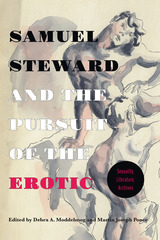
With work by prominent scholars in queer, transgender, and sexuality studies, and with topics such as the queer archive, hoarding, masochism, the queer mystery, race and desire, sexology, and gay pornography, Samuel Steward and the Pursuit of the Erotic will appeal to a wide range of readers across a variety of disciplines invested in queer experience. Closing on a personal recollection from one of Steward’s last close friends, the volume will also appeal to readers interested in the personal aspects of this fascinating, idiosyncratic figure’s multifaceted life.

Combining stories of her own coming of age as a moviegoer with film history, cultural history, and readings of significant films, Williams presents a fascinating history of the on-screen kiss, a look at the shift from adolescent kisses to more grown-up displays of sex, and a comparison of the “tasteful” Hollywood sexual interlude with sexuality as represented in sexploitation, Blaxploitation, and avant-garde films. She considers Last Tango in Paris and Deep Throat, two 1972 films unapologetically all about sex; In the Realm of the Senses, the only work of 1970s international cinema that combined hard-core sex with erotic art; and the sexual provocations of the mainstream movies Blue Velvet and Brokeback Mountain. She describes art films since the 1990s, in which the sex is aggressive, loveless, or alienated. Finally, Williams reflects on the experience of screening sex on small screens at home rather than on large screens in public. By understanding screening sex as both revelation and concealment, Williams has written the definitive study of sex at the movies.
Linda Williams is Professor of Film Studies and Rhetoric at the University of California, Berkeley. Her books include Porn Studies, also published by Duke University Press; Playing the Race Card: Melodramas of Black and White from Uncle Tom to O. J. Simpson; Viewing Positions: Ways of Seeing Film; and Hard Core: Power, Pleasure, and the “Frenzy of the Visible.”
A John Hope Franklin Center Book
November
424 pages
129 illustrations
6x9 trim size
ISBN 0-8223-0-8223-4285-5
paper, $24.95
ISBN 0-8223-0-8223-4263-4
library cloth edition, $89.95
ISBN 978-0-8223-4285-4
paper, $24.95
ISBN 978-0-8223-4263-2
library cloth edition, $89.95

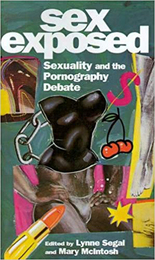
This provocative collection, by well-known feminists, surveys these arguments, and in particular asks why recent feminist debates about sexuality keep reducing to questions of pornography.
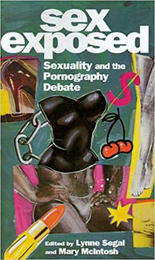
Over the past twenty years debates about pornography have raged within feminism and beyond. Throughout the 1970s feminists increasingly addressed the problem of men's sexual violence against women, and many women reduced the politics of men's power over women to questions about sexuality. By the 1980s these questions had become more and more focused on the issue of pornography––now a metaphor for the menace of male power. Collapsing feminist politics into sexuality and sexuality into pornography has not only caused some of the deepest splits between feminists, but made it harder to think clearly about either sexuality or pornography––indeed, about feminist politics more generally.
This provocative collection, by well-known feminists on both sides of the Atlantic, surveys these arguments, and in particular asks why recent feminist debates about sexuality keep reducing to questions of pornography. The authors open up the debate by looking at such topics as the improbable alliance between the right and pro-censorship feminists, the displacement of heterosexual desire and its discontents onto pornography, Andrea Dworkin's novel Mercy, psychoanalytic reflections on fantasy, censorship in relation to AIDS work, the new lesbian and bisexual pornography, the controversy over Robert Mapplethorpe's supposed racism in his photos of black nudes, Mae West as sexual icon and her brushes with the law, and the female nude in "high" art.
In addition to the editors, the contributors are Elizabeth Cowie, Harriett Gilbert, Robin Gorna, Marybeth Hamilton, Loretta Loach, Anne McClintock, Kobena Mercer, Jane Mills, Mandy Merck, Lynda Nead, Gillian Rodgerson, Carol Smart, Carole S. Vance, Linda Williams, and Elizabeth Wilson.
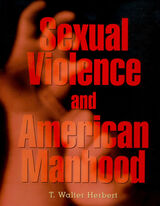
Taking up topics as diverse and timely as the work of FBI profilers, the pornography debates, feminist analyses of male supremacy as sexual abuse, the ritual meanings of fraternity gang rape, and the interplay of racial and sexual injustice, T. Walter Herbert illuminates the chronic masculine anxieties that seek compensation in fantasies of sexual coercion and in sexual offenses against women. His work offers an unusually clear view of this prevailing convention of insecure and destructive masculinity, which Herbert connects with contemporary analyses of male identity formation, sexuality, and violence and with cultural, political, and ideological developments reaching back to the nation's democratic beginnings.
Reading iconic nineteenth-century texts by Whitman, Hawthorne, and Stowe, and pursuing the articulation of their gender logic in Richard Wright's Native Son, Herbert traces a gender ideology of dominance and submission, its persistence in masculine subcultures like the military and big-time football, and its debilitating effects on imaginations and lives in our own day. In materials as diverse as Hannah Foster's post-Revolutionary War novel The Coquette and the Coen brothers' 1996 movie Fargo, this book taps into popular culture and high art alike to outline the logic of American manhood's violent streak--and its dire consequences for a culture with truly democratic and egalitarian ambitions.

Side Dishes considers feminist pornography and literary representations of masturbation, bisexuality, lesbianism, and sexual fantasies; the treatment of lust in stand-up comedy and science fiction; critical issues in leading feminist journals; and portrayals of sexuality in four contemporary Latin American films. Melissa A. Fitch concludes with a look at the rise of women's and gender studies programs in Latin America.

Side Dishes considers feminist pornography and literary representations of masturbation, bisexuality, lesbianism, and sexual fantasies; the treatment of lust in stand-up comedy and science fiction; critical issues in leading feminist journals; and portrayals of sexuality in four contemporary Latin American films. Melissa A. Fitch concludes with a look at the rise of women's and gender studies programs in Latin America.
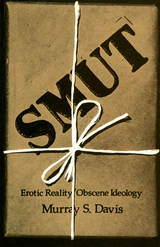
Smut investigates sex in a way that differes from nearly all previous books on the subject. Drawing on a wide variety of literary forms, including the work of novelists, poets, and even comedians–resources ranging from the most sublime theologians to the most profane pornographers–Murray S. Davis goes beyond those who regard sex merely as a biological instinct or animal behavior. He recaptures sex for the social sciences by reemphasizing the aspects of it that are unique to human beings in all their rich perplexity.
In part one, Davis employs a phenomenlogical approach to examine the differrence between sexual arousal and ordinary experience: sexual arousal, he argues, alters a person's experience of the world, resulting in an "erotic reality" that contratsts strikingly to our everyday reality; different perceptions of time, space, human bodies, and other social types occur in each realm. Davis describes in detail the movement from everyday into erotic reality from the first subtle castings-off to the shocking post-orgasmic return.
In part two the author employs a structuralist approach to determine why some people find this alternation between realities "dirty." He begins with a meditation on the similarity between sex and dirt and then asks, "How must somone view the world for him to find sex dirty?" Normal sex can be disliked, Davis concludes, only if it violates a certain conception of the individual; perverted sex can be despised only if it further violates certain conceptions of social relations and social organization. Davis ends part two with a "periodic table of perversions" that systematically summarizes the fundamental social elements out of which those who find sex dirty construct their world.
Finally, in part three Davis considers other conceptual grids affected by the alternation between everyday and erotic realities: the "pornographic," which concieves of the individual, social relations, and social organizations as deserving to disrupted by sex; and the "naturalistic," which concieves of them in a way that cannot be disrupted by sex. Throughout history these ideologies have contested for control over Western society, and, in his conlusion, Davis ofers a prognosis for the future of sex based on these historical ideological cycles.
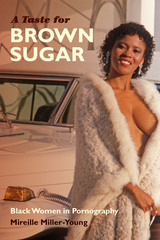


Contributors
Skylar Adams, Carolyn Bronstein, Lynn Comella, Korra Del Rio, Sly Fawkes, Aster Gilbert, RL Goldberg, Laura Horak, Valentina Mia, Geoffrey H. Nicholson, Sophie Pezzutto, Matt Richardson, Whitney Strub, Rae Threat
Prior to 2000, it was a criminal offense to sell hardcore pornography in Britain. Despite this, there was a thriving alternative economy producing and distributing such material “under the counter” of Soho’s bookshops and via mail-order. British entrepreneurs circumvented obscenity laws to satisfy the demand for uncensored adult films and profit from their enterprise, with corrupt members of the Metropolitan Police’s Obscene Publications Squad permitting them to trade.
By the late 1960s, Britain had developed an international reputation for producing “rollers,” short hardcore films distributed on 8mm, which were smuggled out of Britain for sale in Western Europe. Following an exposé by Britain’s tabloid press, a crackdown on police corruption, and several high-profile obscenity trials, the trade was all but decimated, with pornography smuggled in from Europe dominating the market.
Drawing on extensive archival research, including the use of legal records, police files, media reportage, and interviews with those who were involved in the business, Under the Counter tells the story of Britain’s trade in 8mm hardcore pornographic films and its regulation.
READERS
Browse our collection.
PUBLISHERS
See BiblioVault's publisher services.
STUDENT SERVICES
Files for college accessibility offices.
RECENTLY PUBLISHED




UChicago Accessibility Resources
home | accessibility | search | about | contact us
BiblioVault ® 2001 - 2024
The University of Chicago Press