
 A SCHOLARLY BOOK REPOSITORY
Joining together leading voices in the field of print scholarship, this collection of twenty essays affirms the catalytic properties of Eisenstein's study as a stimulus to further inquiry across geographic, temporal, and disciplinary boundaries. From early modern marginalia to the use of architectural title pages in Renaissance books, from the press in Spanish colonial America to print in the Islamic world, from the role of the printed word in nation-building to changing histories of reading in the electronic age, this book addresses the legacy of Eisenstein's work in print culture studies today as it suggests future directions for the field.
In addition to a conversation with Elizabeth L. Eisenstein, the book includes contributions by Peng Hwa Ang, Margaret Aston, Tony Ballantyne, Vivek Bhandari, Ann Blair, Barbara A. Brannon, Roger Chartier, Kai-wing Chow, James A. Dewar, Robert A. Gross, David Scott Kastan, Harold Love, Paula McDowell, Jane McRae, Jean-Dominique Mellot, Antonio Rodr'guez-Buckingham, Geoffrey Roper, William H. Sherman, Peter Stallybrass, H. Arthur Williamson, and Calhoun Winton.
As Loewenstein shows, copyright is a form of monopoly that developed alongside a range of related protections such as commercial trusts, manufacturing patents, and censorship, and cannot be understood apart from them. The regulation of the press pitted competing interests and rival monopolistic structures against one another—guildmembers and nonprofessionals, printers and booksellers, authors and publishers. These struggles, in turn, crucially shaped the literary and intellectual practices of early modern authors, as well as early capitalist economic organization.
With its probing look at the origins of modern copyright, The Author's Due will prove to be a watershed for historians, literary critics, and legal scholars alike.
For centuries across the world, books have been created as objects of beauty, with bookmakers lavishing great care on their paper, binding materials, illustrations, and lettering.
The Book by Design, featuring an array of books from the British Library's collection, focuses on the sensory experience of holding and reading these objects. Each selection represents a specific moment in the development of what we know today as the book—from scrolls and bound illuminated manuscripts to paperbacks and formatted digital information. These range from the seventh century to the present and include examples from China, Japan, Southeast Asia, the Middle East, Europe, and North America, in addition to a look at book traditions in Africa and Oceania. John James Audubon’s Birds of America, the works of Chaucer, Russian Futurist books, limited editions, historic copies of the Qur’an and the Bible, mass-market paperbacks, and more come together to tell the visual, tactile, artistic, and cultural history of books.
Expert curators and specialists explore these books from the perspective of design and manufacturing, original art photographs offer vivid representations of their textures and materials, and graphics detail the size and specifications of each book. Offering a wide-ranging look at the creation and use of books, illustrated with hundreds of color images, this volume is itself an object of beauty.
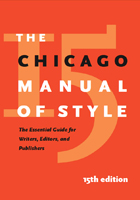
In the 1890s, a proofreader at the University of Chicago Press prepared a single sheet of typographic fundamentals intended as a guide for the University community. That sheet grew into a pamphlet, and the pamphlet grew into a book—the first edition of the Manual of Style, published in 1906. Now in its fifteenth edition, The Chicago Manual of Style—the essential reference for authors, editors, proofreaders, indexers, copywriters, designers, and publishers in any field—is more comprehensive and easier to use than ever before.
Those who work with words know how dramatically publishing has changed in the past decade, with technology now informing and influencing every stage of the writing and publishing process. In creating the fifteenth edition of the Manual, Chicago's renowned editorial staff drew on direct experience of these changes, as well as on the recommendations of the Manual's first advisory board, composed of a distinguished group of scholars, authors, and professionals from a wide range of publishing and business environments.
Every aspect of coverage has been examined and brought up to date—from publishing formats to editorial style and method, from documentation of electronic sources to book design and production, and everything in between. In addition to books, the Manual now also treats journals and electronic publications. All chapters are written for the electronic age, with advice on how to prepare and edit manuscripts online, handle copyright and permissions issues raised by technology, use new methods of preparing mathematical copy, and cite electronic and online sources.
A new chapter covers American English grammar and usage, outlining the grammatical structure of English, showing how to put words and phrases together to achieve clarity, and identifying common errors. The two chapters on documentation have been reorganized and updated: the first now describes the two main systems preferred by Chicago, and the second discusses specific elements and subject matter, with examples of both systems. Coverage of design and manufacturing has been streamlined to reflect what writers and editors need to know about current procedures. And, to make it easier to search for information, each numbered paragraph throughout the Manual is now introduced by a descriptive heading.
Clear, concise, and replete with commonsense advice, The Chicago Manual of Style, fifteenth edition, offers the wisdom of a hundred years of editorial practice while including a wealth of new topics and updated perspectives. For anyone who works with words, whether on a page or computer screen, this continues to be the one reference book you simply must have.
What's new in the Fifteenth Edition:
* Updated material throughout to reflect current style, technology, and professional practice
* Scope expanded to include journals and electronic publications
* Comprehensive new chapter on American English grammar and usage by Bryan A. Garner (author of A Dictionary of Modern American Usage)
* Updated and rewritten chapter on preparing mathematical copy
* Reorganized and updated chapters on documentation, including guidance on citing electronic sources
* Streamlined coverage of current design and production processes, with a glossary of key terms
* Descriptive headings on all numbered paragraphs for ease of reference
* New diagrams of the editing and production processes for both books and journals, keyed to chapter discussions
* New, expanded Web site with special tools and features for Manual users at www.chicagomanualofstyle.org.

**The 16th edition of The Chicago Manual of Style has been superseded by the 17th edition.**
While digital technologies have revolutionized the publishing world in the twenty-first century, one thing still remains true: The Chicago Manual of Style is the authoritative, trusted source that writers, editors, and publishers turn to for guidance on style and process. For the sixteenth edition, every aspect of coverage has been reconsidered to reflect how publishing professionals work today. Though processes may change, the Manual continues to offer the clear, well-considered style and usage advice it has for more than a century.
The sixteenth edition offers expanded information on producing electronic publications, including web-based content and e-books. An updated appendix on production and digital technology demystifies the process of electronic workflow and offers a primer on the use of XML markup, and a revised glossary includes a host of terms associated with electronic as well as print publishing. The Chicago system of documentation has been streamlined and adapted for a variety of online and digital sources. Figures and tables are updated throughout the book—including a return to the Manual’s popular hyphenation table and new, comprehensive listings of Unicode numbers for special characters.

In the seven years since the previous edition debuted, we have seen an extraordinary evolution in the way we create and share knowledge. This seventeenth edition of The Chicago Manual of Style has been prepared with an eye toward how we find, create, and cite information that readers are as likely to access from their pockets as from a bookshelf. It offers updated guidelines on electronic workflows and publication formats, tools for PDF annotation and citation management, web accessibility standards, and effective use of metadata, abstracts, and keywords. It recognizes the needs of those who are self-publishing or following open access or Creative Commons publishing models. The citation chapters reflect the ever-expanding universe of electronic sources—including social media posts and comments, private messages, and app content—and also offer updated guidelines on such issues as DOIs, time stamps, and e-book locators.
Other improvements are independent of technological change. The chapter on grammar and usage includes an expanded glossary of problematic words and phrases and a new section on syntax as well as updated guidance on gender-neutral pronouns and bias-free language. Key sections on punctuation and basic citation style have been reorganized and clarified. To facilitate navigation, headings and paragraph titles have been revised and clarified throughout. And the bibliography has been updated and expanded to include the latest and best resources available.
This edition continues to reflect expert insights gathered from Chicago’s own staff and from an advisory board of publishing experts from across the profession. It also includes suggestions inspired by emails, calls, and even tweets from readers. No matter how much the means of communication change, The Chicago Manual of Style remains the ultimate resource for those who care about getting the details right.
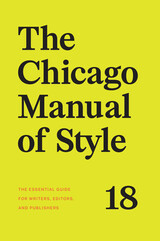
Much has happened in the years since the publication of the seventeenth edition of The Chicago Manual of Style. The world has transformed, and the Manual has risen to meet the moment. The eighteenth edition of this classic guide for writers, editors, and publishers is the most extensive revision in two decades.
Every chapter has been reexamined with diversity and accessibility in mind, and major changes include updated and expanded coverage of pronoun use and inclusive language, revised guidelines on capitalization, a broader range of examples, new coverage of Indigenous languages, and expanded advice on making publications accessible to people with disabilities. The Manual’s traditional focus on nonfiction has been expanded to include fiction and other creative genres in coverage of topics such as punctuation and dialogue, and the needs of self-published authors receive wider attention.
The citation chapters have been thoroughly reorganized for the benefit of new and experienced users alike, and the key concepts for editing mathematics have been integrated into the chapters where they will be most useful to generalists. Evolving technologies—from open-access publishing models to AI—are covered throughout. And naturally, there are some well-considered updates to familiar rules, including changes intended to align the Manual’s recommendations more closely with real-world usage.
As with every new edition, devotees of the Manual will find much to discover and ponder.
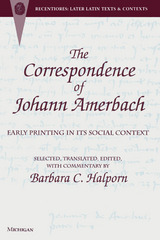
Between 1478 and 1513 Amerbach published more than a hundred substantial works. He is best known for his monumental editions of the works of early church fathers. Crucial to his success was the information network he kept through correspondence with scholars, teachers, printers, booksellers, library curators, and other members of the literate community. The letters reveal how books were made, by whom, and for whom. The Correspondence of Johann Amerbach allows us to see the tensions in the new alliance between commerce and the republic of letters. Filling out the scene more fully, letters between the Amerbach children and their parents tell of the daily life, expectations, and aspirations of an intellectual bourgeois family at the end of the fifteenth century.
Barbara C. Halporn is Head of the Collection Development Department, Widener Library, Harvard University.
Early 19th-century Alabama was a society still in the making. Now Philip Beidler tells how the first books written and published in the state influenced the formation of Alabama's literary and political culture. As Beidler shows, virtually overnight early Alabama found itself in possession of the social, political, and economic conditions required to jump start a traditional literary culture in the old Anglo-European model: property-based class relationships, large concentrations of personal wealth, and professional and merchant classes of similar social, political, educational, and literary views.
A radical and comprehensive analysis of the commodification of artistic creation and the struggle to realize its potential in the digital age.
For mainstream economics, cultural production raises no special questions: creative expression is to be harvested for wealth creation like any other form of labor. As Karl Marx saw it, however, capital is hostile to the arts because it cannot fully control the process of creativity. But while he saw the arts as marginal to capital accumulation, that was before the birth of the mass media.
Engaging with the major issues in Marxist theory around art and capitalism, From Printing to Streaming traces how the logic of cultural capitalism evolved from the print age to digital times, tracking the development of printing, photography, sound recording, newsprint, advertising, film, and broadcasting, exploring the peculiarities of each as commodities, and their recent transformation by digital technology, where everything melts into computer code. Chanan demonstrates how these developments have had profound implications for both cultural creation and consumption.
In the immediate aftermath of the Revolutionary War, only the wealthiest Americans could afford to enjoy illustrated books and prints. But, by the end of the next century, it was commonplace for publishers to load their books with reproductions of fine art and beautiful new commissions from amateur and professional artists.
Georgia Brady Barnhill, an expert on the visual culture of this period, explains the costs and risks that publishers faced as they brought about the transition from a sparse visual culture to a rich one. Establishing new practices and investing in new technologies to enhance works of fiction and poetry, bookmakers worked closely with skilled draftsmen, engravers, and printers to reach an increasingly literate and discriminating American middle class. Barnhill argues that while scholars have largely overlooked the efforts of early American illustrators, the works of art that they produced impacted readers' understandings of the texts they encountered, and greatly enriched the nation's cultural life.

A university press is a curious institution, dedicated to the dissemination of learning yet apart from the academic structure; a publishing firm that is in business, but not to make money; an arm of the university that is frequently misunderstood and occasionally attacked by faculty and administration. Max Hall here chronicles the early stages and first sixty years of Harvard University Press in a rich and entertaining book that is at once Harvard history, publishing history, printing history, business history, and intellectual history.
The tale begins in 1638 when the first printing press arrived in British North America. It became the property of Harvard College and remained so for nearly half a century. Hall sketches the various forerunners of the “real” Harvard University Press, founded in 1913, and then follows the ups and downs of its first six decades, during which the Press published steadily if not always serenely a total of 4,500 books. He describes the directors and others who left their stamp on the Press or guided its fortunes during these years. And he gives the stories behind such enduring works as Lovejoy’s Great Chain of Being, Giedion’s Space, Time and Architecture, Langer’s Philosophy in a New Key, and Kelly’s Eleanor of Aquitaine and the Four Kings.
Traversing four millennia, Martin offers a chronicle of writing as a cultural system, a means of communication, and a history of technologies. He shows how the written word originated, how it spread, and how it figured in the evolution of civilization. Using as his center the role of printing in making the written way of thinking dominant, Martin examines the interactions of individuals and cultures to produce new forms of "writing" in the many senses of authorship, language rendition, and script.
Martin looks at how much the development of writing owed to practical necessity, and how much to religious and social systems of symbols. He describes the precursors to writing and reveals their place in early civilization as mnemonic devices in service of the spoken word. The tenacity of the oral tradition plays a surprisingly important part in this story, Martin notes, and even as late as the eighteenth century educated individuals were trained in classical rhetoric and preferred to rely on the arts of memory. Finally, Martin discusses the changes to writing wrought by the electronic revolution, offering invaluable insights into the influence these new technologies have had on children born into the computer age.
The modern nation-state of Turkey was established in 1923, but when and how did its citizens begin to identify themselves as Turks? Mustafa Kemal Atatürk, Turkey's founding president, is almost universally credited with creating a Turkish national identity through his revolutionary program to "secularize" the former heartland of the Ottoman Empire. Yet, despite Turkey's status as the lone secular state in the Muslim Middle East, religion remains a powerful force in Turkish society, and the country today is governed by a democratically elected political party with a distinctly religious (Islamist) orientation.
In this history, Gavin D. Brockett takes a fresh look at the formation of Turkish national identity, focusing on the relationship between Islam and nationalism and the process through which a "religious national identity" emerged. Challenging the orthodoxy that Atatürk and the political elite imposed a sense of national identity from the top down, Brockett examines the social and political debates in provincial newspapers from around the country. He shows that the unprecedented expansion of print media in Turkey between 1945 and 1954, which followed the end of strict, single-party authoritarian government, created a forum in which ordinary people could inject popular religious identities into the new Turkish nationalism. Brockett makes a convincing case that it was this fruitful negotiation between secular nationalism and Islam—rather than the imposition of secularism alone—that created the modern Turkish national identity.
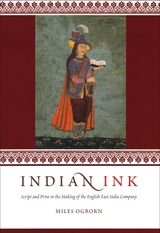
A commercial company established in 1600 to monopolize trade between England and the Far East, the East India Company grew to govern an Indian empire. Exploring the relationship between power and knowledge in European engagement with Asia, Indian Ink examines the Company at work and reveals how writing and print shaped authority on a global scale in the seventeenth and eighteenth centuries.
Tracing the history of the Company from its first tentative trading voyages in the early seventeenth century to the foundation of an empire in Bengal in the late eighteenth century, Miles Ogborn takes readers into the scriptoria, ships, offices, print shops, coffeehouses, and palaces to investigate the forms of writing needed to exert power and extract profit in the mercantile and imperial worlds. Interpreting the making and use of a variety of forms of writing in script and print, Ogborn argues that material and political circumstances always undermined attempts at domination through the power of the written word.
Navigating the juncture of imperial history and the history of the book, Indian Ink uncovers the intellectual and political legacies of early modern trade and empire and charts a new understanding of the geography of print culture.
Each entry builds on its term in order to resituate print and book history within a broader media ecology throughout the eighteenth and nineteenth centuries. The central theme is interactivity, in three senses: people interacting with print; print interacting with the non-print media that it has long been thought, erroneously, to have displaced; and people interacting with each other through print. The resulting book will introduce new energy to the field of print studies and lead to considerable new avenues of investigation.
The Intimacy of Paper in Early and Nineteenth-Century American Literature reveals that book history and literary studies are mutually constitutive and proposes a new literary periodization based on materiality and paper production. In unpacking this history and connecting it to cultural and literary representations, Senchyne also explores how the textuality of paper has been used to make social and political claims about gender, labor, and race.
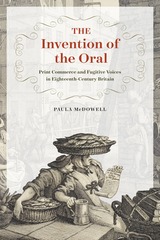
Drawing on an impressive array of sources including travel narratives, elocution manuals, theological writings, ballad collections, and legal records, McDowell re-creates a world in which everyone from fishwives to philosophers, clergymen to street hucksters, competed for space and audiences in taverns, marketplaces, and the street. She argues that the earliest positive efforts to theorize "oral tradition," and to depict popular oral culture as a culture (rather than a lack of culture), were prompted less by any protodemocratic impulse than by a profound discomfort with new cultures of reading, writing, and even speaking shaped by print.
Challenging traditional models of oral versus literate societies and key assumptions about culture’s ties to the spoken and the written word, this landmark study reorients critical conversations across eighteenth-century studies, media and communications studies, the history of the book, and beyond.
Representing three decades of research, Literacy and Historical Development: A Reader presents some of the most important historical scholarship on literacy in Europe and the United States. The approaches, research, and conclusions reflected in this collection of fifteen essays has changed how historians and many others conceptualize literacy and represents a body of scholarship that is transforming both contemporary and historical literacy theories.
In this revised and expanded edition of the groundbreaking volume Literacy and Social Development in the West, editor Harvey J. Graff provides a new introduction and nine new essays by nationally and internationally renowned contributors from a range of disciplines. Replacing an unquestioned certainty that literacy’s powers are universal, independent, and determinative, Graff brings together studies that support new concepts, contending that the importance and influences of literacy depend on specific social and historical contexts, the impacts of literacy are mediated and restricted, the effects of literacy are social and particular, and the role of literacy must be understood within the burgeoning array of communication technologies.
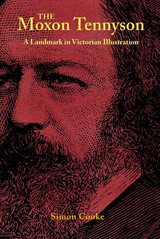
A new perspective on a book that transformed Victorian illustration into a stand-alone art.
Edward Moxon’s 1857 edition of Alfred, Lord Tennyson’s Poems dramatically redefined the relationship between images and words in print. Cooke’s study, the first book to address the subject in over 120 years, presents a sweeping analysis of the illustrators and the complex and challenging ways in which they interpreted Tennyson’s poetry. This book considers the volume’s historical context, examining in detail the roles of publisher, engravers, and binding designer, as well as the material difficulties of printing its fine illustrations, which recreate the effects of painting. Arranged thematically and reproducing all the original images, the chapters present a detailed reappraisal of the original volume and the distinctive culture that produced it.
"A compelling exposition of how authors, printers, booksellers and readers competed for power over the printed page. . . . The richness of Mr. Johns's book lies in the splendid detail he has collected to describe the world of books in the first two centuries after the printing press arrived in England."—Alberto Manguel, Washington Times
"[A] mammoth and stimulating account of the place of print in the history of knowledge. . . . Johns has written a tremendously learned primer."—D. Graham Burnett, New Republic
"A detailed, engrossing, and genuinely eye-opening account of the formative stages of the print culture. . . . This is scholarship at its best."—Merle Rubin, Christian Science Monitor
"The most lucid and persuasive account of the new kind of knowledge produced by print. . . . A work to rank alongside McLuhan."—John Sutherland, The Independent
"Entertainingly written. . . . The most comprehensive account available . . . well documented and engaging."—Ian Maclean, Times Literary Supplement
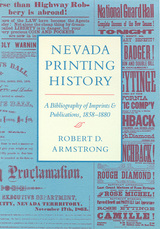
A detailed look at Nevada's printing history from 1858 through 1880. Includes proclamations, pamphlets, menus, government publications, church programs, and more. For Nevada historians, bibliographers, book collectors, and people who are interested in the printed records produced in Nevada toward the end of the nineteenth century.
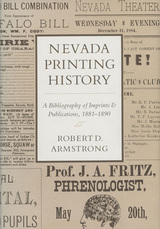
A detailed look at Nevada's printing history from 1881 through 1890. With over 1400 entries describing books, pamphlets, broadsides, state and local documents, fraternal and church publications, and a variety of other printed matter, this intriguing compilation serves as the companion volume to Armstrong's Nevada Printing History, 1858-1880. Armstrong includes annual summaries of events affecting the printing trade in Nevada as well as the locations and kinds of printing technology in use. This second volume also documents the planning and erection of a state printing office. Of particular interest are the summaries of individual publications that provide the reader with a picture of social, economic, and political viewpoints of the period. The author's research led him to more than 125 public institutions over a period of nearly twenty years. Historians, bibliographers, students of printing history and practice, collectors of Western Americana, antiquarian booksellers, and librarians will find this book to be an invaluable guide to Nevada's printing, its printers, and its history.
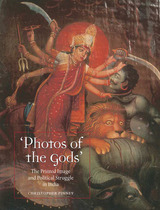
Drawing on years of archival research, interviews with artists and publishers, and the ethnographic study of their rural consumers, Christopher Pinney traces the intimate connections between the production and consumption of these images and the struggle against colonial rule. The detailed output of individual presses and artists is set against the intensification of the nationalist struggle, the constraints imposed by colonial state censorship, and fifty years of Indian independence. The reader is introduced to artists who trained within colonial art schools, others whose skills reflect their membership of traditional painting castes, and yet others who are self-taught former sign painters.
Photos of the Gods is the first comprehensive history of India’s popular visual culture. Combining anthropology, political and cultural history, and the study of aesthetic systems, and using many intriguing and unfamiliar images, the book shows that the current predicament of India cannot be understood without taking into account this complex, fascinating, and until now virtually unseen, visual history.
Since the rise of Napster and other file-sharing services in its wake, most of us have assumed that intellectual piracy is a product of the digital age and that it threatens creative expression as never before. The Motion Picture Association of America, for instance, claimed that in 2005 the film industry lost $2.3 billion in revenue to piracy online. But here Adrian Johns shows that piracy has a much longer and more vital history than we have realized—one that has been largely forgotten and is little understood.
Piracy explores the intellectual property wars from the advent of print culture in the fifteenth century to the reign of the Internet in the twenty-first. Brimming with broader implications for today’s debates over open access, fair use, free culture, and the like, Johns’s book ultimately argues that piracy has always stood at the center of our attempts to reconcile creativity and commerce—and that piracy has been an engine of social, technological, and intellectual innovations as often as it has been their adversary. From Cervantes to Sonny Bono, from Maria Callas to Microsoft, from Grub Street to Google, no chapter in the story of piracy evades Johns’s graceful analysis in what will be the definitive history of the subject for years to come.
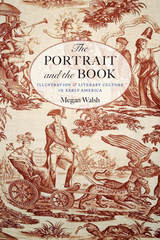
Illustrations played a key role in American literary culture despite the fact there was little demand for books by American writers. Indeed, most of the illustrated books bought, sold, and shared by Americans were either imported British works or reprinted versions of those imported editions. As a result, in addition to embellishing books, illustrations provided readers with crucial information about the country’s status as a former colony.
Through an examination of readers’ portrait-collecting habits, writers’ employment of ekphrasis, printers’ efforts to secure American-made illustrations for periodicals, and engravers’ reproductions of British book illustrations, Walsh uncovers in late eighteenth-century America a dynamic but forgotten visual culture that was inextricably tied to the printing industry and to the early US literary imagination.
Although canonical literary writers such as Shakespeare, Jonson, and Rochester are discussed, the field of writing examined is a broad one, embracing political speeches, coterie manuscript poetry, popular pamphlets, parochially targeted martyrdom accounts, and news reports. Setting writers, audiences, and texts in their specific historical context, the contributors focus on a period in early modern England, from the late sixteenth through the late seventeenth century, when the shift from orality and manuscript communication to print was part of large-scale cultural change. Arthur F. Marotti’s and Michael D. Bristol’s introduction analyzes some of the sociocultural issues implicit in the collection and relates the essays to contemporary work in textual studies, bibliography, and publication history.
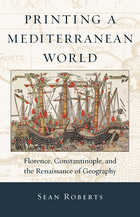
In 1482, the Florentine humanist and statesman Francesco Berlinghieri produced the Geographia, a book of over one hundred folio leaves describing the world in Italian verse, inspired by the ancient Greek geography of Ptolemy. The poem, divided into seven books (one for each day of the week the author “travels” the known world), is interleaved with lavishly engraved maps to accompany readers on this journey.
Sean Roberts demonstrates that the Geographia represents the moment of transition between printing and manuscript culture, while forming a critical base for the rise of modern cartography. Simultaneously, the use of the Geographia as a diplomatic gift from Florence to the Ottoman Empire tells another story. This exchange expands our understanding of Mediterranean politics, European perceptions of the Ottomans, and Ottoman interest in mapping and print. The envoy to the Sultan represented the aspirations of the Florentine state, which chose not to bestow some other highly valued good, such as the city’s renowned textiles, but instead the best example of what Florentine visual, material, and intellectual culture had to offer.
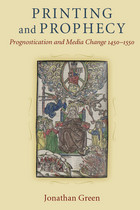
Printing and Prophecy: Prognostication and Media Change 1450-1550 examines prognostic traditions and late medieval prophetic texts in the first century of printing and their effect on the new medium of print. The many prophetic and prognostic works that followed Europe's earliest known printed book---not the Gutenberg Bible, but the Sibyl's Prophecy, printed by Gutenberg two years earlier and known today only from a single page---over the next century were perennial best sellers for many printers, and they provide the modern observer with a unique way to study the history and inner workings of the print medium. The very popularity of these works, often published as affordable booklets, raised fears of social unrest. Printers therefore had to meet customer demand while at the same time channeling readers' reactions along approved paths. Authors were packaged---and packaged themselves---in word and image to respond to the tension, while leading figures of early modern culture such as Paracelsus, Martin Luther, and Sebastian Brant used printed prophecies for their own purposes in a rapidly changing society.
Based on a wide reading of many sources, Printing and Prophecy contributes to the study of early modern literature, including how print changed the relationship among authors, readers, and texts. The prophetic and astrological texts the book examines document changes in early modern society that are particularly relevant to German studies and are key texts for understanding the development of science, religion, and popular culture in the early modern period. By combining the methods of cultural studies and book history, this volume brings a new perspective to the study of Gutenberg and later printers.
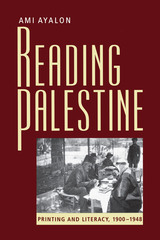
Prior to the twentieth century, Arab society in Palestine was predominantly illiterate, with most social and political activities conducted through oral communication. There were no printing presses, no book or periodical production, and no written signs in public places. But a groundswell of change rapidly raised the region's literacy rates, a fascinating transformation explored for the first time in Reading Palestine.
Addressing an exciting aspect of Middle Eastern history as well as the power of the printed word itself, Reading Palestine describes how this hurried process intensified the role of literacy in every sphere of community life. Ami Ayalon examines Palestine's development of a modern educational system in conjunction with the emergence of a print industry, libraries and reading clubs, and the impact of print media on urban and rural populations. Drawn from extensive archival sources, official reports, autobiographies, and a rich trove of early Palestinian journalism, Reading Palestine provides crucial insight into the dynamic rise of literacy that revolutionized the way Palestinians navigated turbulent political waters.

In a remarkable act of recovery, So Much to Be Angry About conjures an influential but largely obscured strand in the nation’s radical tradition—the “movement” printing presses and publishers of the late 1960s and 1970s, and specifically Appalachian Movement Press in Huntington, West Virginia, the only movement press in Appalachia. More than a history, this craft- and activist-centered book positions the frontline politics of the Appalachian Left within larger movements in the 1970s. As Appalachian Movement Press founder Tom Woodruff wrote: “Appalachians weren’t sitting in the back row during this struggle, they were driving the bus.”
Emerging from the Students for a Democratic Society chapter at Marshall University, and working closely with organizer and poet Don West, Appalachian Movement Press made available an eclectic range of printed material, from books and pamphlets to children’s literature and calendars. Many of its publications promoted the Appalachian identity movement and “internal colony” theory, both of which were cornerstones of the nascent discipline of Appalachian studies. One of its many influential publications was MAW, the first feminist magazine written by and for Appalachian women.
So Much to Be Angry About combines complete reproductions of five of Appalachian Movement Press’s most engaging publications, an essay by Shaun Slifer about his detective work resurrecting the press’s history, and a contextual introduction to New Left movement publishing by Josh MacPhee. Amply illustrated in a richly produced package, the volume pays homage to the graphic sensibility of the region’s 1970s social movements, while also celebrating the current renaissance of Appalachia’s DIY culture—in many respects a legacy, Slifer suggests, of the movement publishing documented in his book.
The Northern Song (960–1126) was one of the most transformative periods in Chinese literary history, characterized by the emergence of printing and an ensuing proliferation of books. The poet Huang Tingjian (1045–1105), writing at the height of this period, both defined and was defined by these changes. The first focused study on the cultural consequences of printing in Northern Song China, this book examines how the nascent print culture shaped the poetic theory and practice of Huang Tingjian and the Jiangxi School of Poetry he founded.
Author Yugen Wang argues that at the core of Huang and the Jiangxi School’s search for poetic methods was their desire to find a new way of reading and writing that could effectively address the changed literary landscape of the eleventh century. Wang chronicles the historical and cultural negotiation Huang and his colleagues were conducting as they responded to the new book culture, and opens new ground for investigating the literary interpretive and hermeneutical effects of printing. This book should be of interest not only to scholars and readers of classical Chinese poetry but to anyone concerned with how the material interacts with the intellectual and how technology has influenced our conception and practice of reading and writing throughout history.
In Western thought, the modern period signals a break with stagnant social formations, the advent of a new rationalism, and the emergence of a truly secular order, all in the context of an overarching globalization. In The Twilight of the Literary, Terry Cochran links these developments with the rise of the book as the dominant medium for recording, preserving, and disseminating thought. Consequently, his book explores the role that language plays in elaborating modern self-understanding. It delves into what Cochran calls the "figures of thought" that have been an essential component of modern consciousness in the age of print technology--and questions the relevance of this "print-bound" thinking in a world where print no longer dominates.
Cochran begins by examining major efforts of the eighteenth century that proved decisive for modern conceptions of history, knowledge, and print. After tracing late medieval formulations of vernacular language that proved crucial to print, he analyzes the figures of thought in print culture as they proceed from the idea of the collective spirit (the "people"), an elaboration of modern history. Cochran reconsiders basic texts that, in his analysis, reveal the underpinnings of modernity's formation--from Dante and Machiavelli to Antonio Gramsci and Walter Benjamin. Moving from premodern models for collective language to competing theories of history, his work offers unprecedented insight into the means by which modern consciousness has come to know itself.
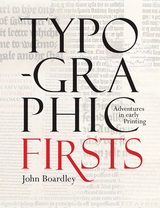
Many of the standard features of printed books were designed by pioneering typographers and printers in the latter half of the fifteenth century. Johannes Gutenberg is credited with printing the first books in Europe with moveable type in the fifteenth century, but many different European printers and publishers went on to find innovative solutions to replicate the appearance of manuscript books in print and improve on them throughout the Renaissance. The illustrated examples in Typographic Firsts originate in those early decades, bringing into focus the influences and innovations that shaped the printed book and established a Western typographic canon.
From the practical challenges of polychromatic printing and sheet music printing to the techniques for illustrating books with woodcuts and producing books for children to the design of the first fonts, these stories chart the invention of the printed book, the world’s first means of mass communication. Also covering title pages, maps, printing in gold, and printing in color, this book shows how a mixture of happenstance and brilliant technological innovation came together to form the typographic and design conventions of the book.
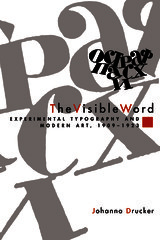
Drucker suggests a methodology closer to the actual practices of the early avant-garde artists, based on a rereading of their critical and theoretical writings. After reviewing theories of signification, the production of meaning, and materiality, she analyzes the work of four poets active in the typographic experimentation of the 1910s and 1920s: Ilia Zdanevich, Filippo Marinetti, Guillaume Apollinaire, and Tristan Tzara.
Few studies of avant-garde art and literature in the early twentieth century have acknowledged the degree to which typographic activity furthered debates about the very nature and function of the avant-garde. The Visible Word enriches our understanding of the processes of change in artistic production and reception in the twentieth century.
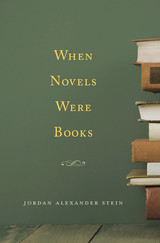
A literary scholar explains how eighteenth-century novels were manufactured, sold, bought, owned, collected, and read alongside Protestant religious texts. As the novel developed into a mature genre, it had to distinguish itself from these similar-looking books and become what we now call “literature.”
Literary scholars have explained the rise of the Anglophone novel using a range of tools, from Ian Watt’s theories to James Watt’s inventions. Contrary to established narratives, When Novels Were Books reveals that the genre beloved of so many readers today was not born secular, national, middle-class, or female.
For the first three centuries of their history, novels came into readers’ hands primarily as printed sheets ordered into a codex bound along one edge between boards or paper wrappers. Consequently, they shared some formal features of other codices, such as almanacs and Protestant religious books produced by the same printers. Novels are often mistakenly credited for developing a formal feature (“character”) that was in fact incubated in religious books.
The novel did not emerge all at once: it had to differentiate itself from the goods with which it was in competition. Though it was written for sequential reading, the early novel’s main technology for dissemination was the codex, a platform designed for random access. This peculiar circumstance led to the genre’s insistence on continuous, cover-to-cover reading even as the “media platform” it used encouraged readers to dip in and out at will and read discontinuously. Jordan Alexander Stein traces this tangled history, showing how the physical format of the book shaped the stories that were fit to print.
This book examines the widespread practice of self-publishing by writers in late imperial China, focusing on the relationships between manuscript tradition and print convention, peer patronage and popular fame, and gift exchange and commercial transactions in textual production and circulation.
Combining approaches from various disciplines, such as history of the book, literary criticism, and bibliographical and textual studies, Suyoung Son reconstructs the publishing practices of two seventeenth-century literati-cum-publishers, Zhang Chao in Yangzhou and Wang Zhuo in Hangzhou, and explores the ramifications of these practices on eighteenth-century censorship campaigns in Qing China and Chosŏn Korea. By giving due weight to the writers as active agents in increasing the influence of print, this book underscores the contingent nature of print’s effect and its role in establishing the textual authority that the literati community, commercial book market, and imperial authorities competed to claim in late imperial China.
READERS
Browse our collection.
PUBLISHERS
See BiblioVault's publisher services.
STUDENT SERVICES
Files for college accessibility offices.
RECENTLY PUBLISHED






UChicago Accessibility Resources
home | accessibility | search | about | contact us
BiblioVault ® 2001 - 2024
The University of Chicago Press