
 A SCHOLARLY BOOK REPOSITORY
What is distinctive, Derek Bok asks, about the American system of higher education, and how well does it perform? In particular, just how good is the education our universities offer? Are they doing all they can to educate their students, or do teaching and learning get lost in the pressure for ever more prestigious research and publication? Bok concludes that the competition characteristic of American higher education—competition for the best students, the most advanced scholarship, the most successful scientific research, the best facilities—has helped to produce venturesome, adaptable, and varied universities. But because the process of learning itself is imperfectly understood, it is difficult to achieve sustained progress in the quality of education or even to determine which educational innovations actually enhance learning.
Despite these problems, the last fifteen years have produced many promising developments, such as experimental curricula, computer-assisted learning, much-expanded offerings for nontraditional students, clinical legal education, schools of public policy to prepare students for public service careers, and many more. Such initiatives need a more secure and central place within the regular curriculum. In addition to the traditional focus on program and curriculum, Bok stresses the need to pay greater attention to improving the effectiveness of teaching and learning. He calls for a number of steps, including a sustained program of research directed toward evaluating educational programs and methods of teaching. Only through careful experimentation and evaluation of its own efforts, through many small improvements and occasional inspired advances, can each university move toward the goal of giving its students the best possible preparation for life in an increasingly complex world.
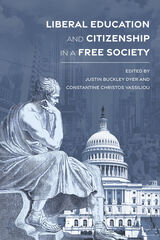
With Liberal Education and Citizenship in a Free Society, a collection of 19 original essays, editors Justin Dyer and Constantine Vassiliou present the work of a diverse group of scholars to assess the value of a liberal arts education in the face of market, technological, cultural, and political forces shaping higher learning today.
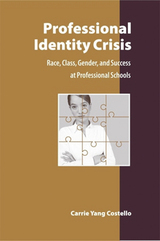
The author spent over 400 hours observing how first-year students are socialized in two very different environments, Boalt School of Law and the School of Social Welfare at UC Berkeley, watching how they adapted to different expectations of how to speak, dress, and behave in the classroom.
Costello found that students who were female, of color, disabled, or poor were not underqualified compared with their privileged peers. Nor did the research uncover intentional bigotry. Instead, the disproportionate success of white men can be explained by the fact that they are more likely to acquire appropriate professional identities swiftly, with little inner conflict. Students from less privileged backgrounds, however, suffered from "identity dissonance." For example, Jasmine, a Filipino student from Los Angeles, explained, "In the legal culture you have to adopt a different way of being, a different vocabulary and way to carry yourself . . . That's how I got this far. And when I go home, if I act the way I do here, they won't get it. My cousins and my friends say, 'You're kind of whitewashed.' And when I come back here I have to get back my law style."
READERS
Browse our collection.
PUBLISHERS
See BiblioVault's publisher services.
STUDENT SERVICES
Files for college accessibility offices.
RECENTLY PUBLISHED




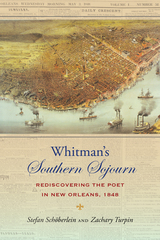


UChicago Accessibility Resources
home | accessibility | search | about | contact us
BiblioVault ® 2001 - 2026
The University of Chicago Press