
 A SCHOLARLY BOOK REPOSITORY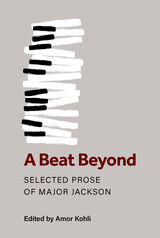
In this collection of essays, talks, and reviews, Major Jackson revels in the work of poetry not only to limn and assess the intellectual and spiritual dimensions of poets, but to amplify the controversies and inner conflicts that define our age: political unrest, climate crises, the fallout from bewildering traumas, and the social function of the art of poetry itself. Accessible and critically minded, Jackson returns to the poem as an unparalleled source of linguistic pleasure that structures a multilayered “lyric self.” In his interviews, Jackson illustrates poetry’s distinct ability to mediate the inexplicable while foregrounding the possibilities of human song.
Collected over several decades, these essays find Jackson praising mythmaking in Frank Bidart and Ai’s poetry, expressing bafflement at the silence of white-identified poets in the cause of social and racial justice, unearthing the politics behind Gwendolyn Brooks’s Pulitzer Prize, and marveling at the “hallucinatory speed of thought” in a diverse range of poets including Mei-mei Berssenbrugge, Brenda Hillman, Afaa Michael Weaver, Forrest Gander, and Terrance Hayes. This collection passionately surveys the radical shifts of the art and notes poetry as a necessity for a modern sensibility.
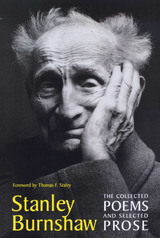
Stanley Burnshaw began to publish poems in the 1920s and founded his own verse journal in 1925. After serving as coeditor and drama critic of the New Masses weekly (1934-1936), he entered book publishing, directing the Dryden Press until 1958, when he joined Henry Holt. The first of his nineteen earlier works, André Spire and His Poetry, appeared in 1934 and the last in 1990, A Stanley Burnshaw Reader, with an introduction by Denis Donoghue.
The present volume—the definitive Burnshaw collection—offers all the poems he wishes to preserve and a full representation of his prose, including My Friend, My Father in its entirety. The Collected Poems and Selected Prose is vital reading for anyone wishing to be fully acquainted with the man whom Karl Shapiro called "one of the best-respected men of letters of our time."
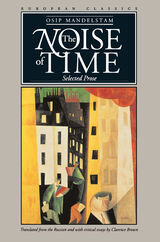
This volume includes Mandelstam's "The Noise of Time," a series of autobiographical sketches; "The Egyptian Stamp," a novella; "Fourth Prose;" and the famous travel memoirs "Theodosia" and "Journey to Armenia."

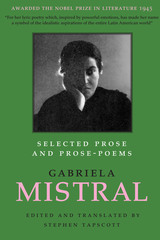
The first Latin American to receive a Nobel Prize for Literature, the Chilean writer Gabriela Mistral (1889-1957) is often characterized as a healing, maternal voice who spoke on behalf of women, indigenous peoples, the disenfranchised, children, and the rural poor. She is that political poet and more: a poet of philosophical meditation, self-consciousness, and daring. This is a book full of surprises and paradoxes. The complexity and structural boldness of these prose-poems, especially the female-erotic prose pieces of her first book, make them an important moment in the history of literary modernism in a tradition that runs from Baudelaire, the North American moderns, and the South American postmodernistas. It's a book that will be eye-opening and informative to the general reader as well as to students of gender studies, cultural studies, literary history, and poetry.
This Spanish-English bilingual volume gathers the most famous and representative prose writings of Gabriela Mistral, which have not been as readily available to English-only readers as her poetry. The pieces are grouped into four sections. "Fables, Elegies, and Things of the Earth" includes fifteen of Mistral's most accessible prose-poems. "Prose and Prose-Poems from Desolación / Desolation [1922]" presents all the prose from Mistral's first important book. "Lyrical Biographies" are Mistral's poetic meditations on Saint Francis and Sor Juana de la Cruz. "Literary Essays, Journalism, 'Messages'" collects pieces that reveal Mistral's opinions on a wide range of subjects, including the practice of teaching; the writers Alfonso Reyes, Alfonsina Storni, Rainer Maria Rilke, and Pablo Neruda; Mistral's own writing practices; and her social beliefs. Editor/translator Stephen Tapscott rounds out the volume with a chronology of Mistral's life and a brief introduction to her career and prose.
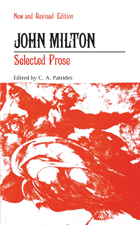
Although John Milton is best known for his poems such as Paradise Lost, his prose works, including Areopagitica, The Tenure of Kings, and The Doctrine and Discipline of Divorce, are important in their own right. In this selection of Milton’s prose, C.A. Patrides presents the best possible texts of complete works in a format designed to enable students to understand Milton the thinker as well as to judge for themselves the achievements of Milton the artist in prose.
First published in 1974, C.A. Patrides ‘s edition of Milton’s prose has proved invaluable to students and scholars of Renaissance literature because it includes mostly the complete texts of Milton’s prose works. Now, in this new and updated edition, Patrides has revised his introduction and his bibliography to reflect advances in Milton scholarship in the past ten years. In addition, the selections have been expanded to include passages from Milton’s theological treatise De doctrina Christiana.
For sale only in the USA and Philippines.
READERS
Browse our collection.
PUBLISHERS
See BiblioVault's publisher services.
STUDENT SERVICES
Files for college accessibility offices.
RECENTLY PUBLISHED


UChicago Accessibility Resources
home | accessibility | search | about | contact us
BiblioVault ® 2001 - 2025
The University of Chicago Press