
 A SCHOLARLY BOOK REPOSITORY
Hoogland documents interactions within and among families of prairie dogs to examine the advantages and disadvantages of coloniality. By addressing such topics as male and female reproductive success, inbreeding, kin recognition, and infanticide, Hoogland offers a broad view of conflict and cooperation. Among his surprising findings is that prairie dog females sometimes suckle, and at other times kill, the offspring of close kin.
Enhanced by more than 100 photographs, this book illuminates the social organization of a burrowing mammal and raises fundamental questions about current theory. As the most detailed long-term study of any social rodent, The Black-Tailed Prairie Dog will interest not only mammalogists and other vertebrate biologists, but also students of behavioral and evolutionary ecology.

Anahid Nersessian explores works by Friedrich Hölderlin, William Wordsworth, John Keats, and others to argue that as the human and ecological costs of industry became clear, Romantic poetry adopted formal strategies—among them parataxis, the setting of elements side by side in a manner suggestive of postindustrial dissonance, and apostrophe, here an address to an absent or vanishing natural environment—as it tried and failed to narrate the calamities of capitalism. These tropes reflect how Romantic authors took their bewilderment and turned it into a poetics: a theory of writing, reading, and understanding poetry as an eminently critical act. Throughout, Nersessian pushes back against recent attempts to see literature as a source of information on par with historical or scientific data, arguing instead for an irreducibility of poetic knowledge. Revealing the ways in which these Romantic works are of their time but not about it, The Calamity Form ultimately exposes the nature of poetry’s relationship to capital—and capital’s ability to hide how it works.
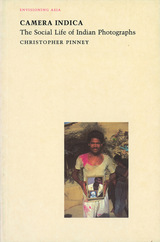
These quiet but moving images represent the changing role of photographic portraiture in India, a topic anthropologist Christopher Pinney explores in Camera Indica. Studying photographic practice in India, Pinney traces photography's various purposes and goals from colonial through postcolonial times. He identifies three key periods in Indian portraiture: the use of photography under British rule as a quantifiable instrument of measurement, the later role of portraiture in moral instruction, and the current visual popular culture and its effects on modes of picturing. Photographic culture thus becomes a mutable realm in which capturing likeness is only part of the project. Lavishly illustrated, Pinney's account of the change from depiction to invention uncovers fascinating links between these evocative images and the society and history from which they emerge.

These quiet but moving images represent the changing role of photographic portraiture in India, a topic anthropologist Christopher Pinney explores in Camera Indica. Studying photographic practice in India, Pinney traces photography's various purposes and goals from colonial through postcolonial times. He identifies three key periods in Indian portraiture: the use of photography under British rule as a quantifiable instrument of measurement, the later role of portraiture in moral instruction, and the current visual popular culture and its effects on modes of picturing. Photographic culture thus becomes a mutable realm in which capturing likeness is only part of the project. Lavishly illustrated, Pinney's account of the change from depiction to invention uncovers fascinating links between these evocative images and the society and history from which they emerge.
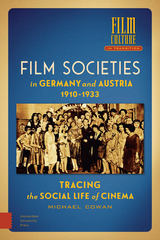
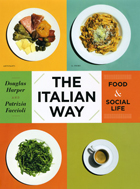
Outside of Italy, the country’s culture and its food appear to be essentially synonymous. And indeed, as The Italian Way makes clear, preparing, cooking, and eating food play a central role in the daily activities of Italians from all walks of life. In this beautifully illustrated book, Douglas Harper and Patrizia Faccioli present a fascinating and colorful look at the Italian table.
The Italian Way focuses on two dozen families in the city of Bologna, elegantly weaving together Harper’s outsider perspective with Faccioli’s intimate knowledge of the local customs. The authors interview and observe these families as they go shopping for ingredients, cook together, and argue over who has to wash the dishes. Throughout, the authors elucidate the guiding principle of the Italian table—a delicate balance between the structure of tradition and the joy of improvisation. With its bite-sized history of food in Italy, including the five-hundred-year-old story of the country’s cookbooks, and Harper’s mouth-watering photographs, The Italian Way is a rich repast—insightful, informative, and inviting.
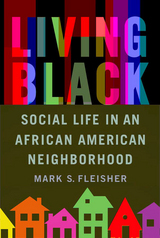
Mark S. Fleisher offers a window into daily life in this neighborhood, particularly through the stories of Mo and Memphis Washington, who fight to sustain a stable home for their children, and of Burpee, a local man who has returned to the North End to rebuild his life after years of crime and punishment in Chicago.
“Outstanding” books for public & secondary school libraries from university presses, American Library Association
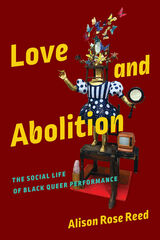
Reed identifies abolition literature as an emergent field of inquiry that emphasizes social relationships in the ongoing struggle to dismantle systems of coercion, criminalization, and control. Focusing on love as an affective modality and organizing tool rooted in the Black radical tradition’s insistence on collective sociality amidst unrelenting state violence, Reed provides fresh readings of visionaries such as James Baldwin, Ntozake Shange, Sharon Bridgforth, and vanessa german. Both abolitionist manifesto and examination of how Black queer performance offers affective modulations of tough and tender love, Love and Abolition ultimately calls for a critical reconsideration of the genre of prison literature—and the role of the humanities—during an age of mass incarceration.
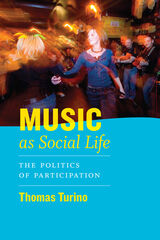
Turino begins by developing tools to think about the special properties of music and dance that make them fundamental resources for connecting with our own lives, our communities, and the environment. These concepts are then put into practice as he analyzes various musical examples among indigenous Peruvians, rural and urban Zimbabweans, and American old-time musicians and dancers. To examine the divergent ways that music can fuel social and political movements, Turino looks at its use by the Nazi Party and by the American civil rights movement. Wide-ranging, accessible to anyone with an interest in music’s role in society, and accompanied by a compact disc, Music as Social Life is an illuminating initiation into the power of music.

An analysis of the ways film and media create topographies of cities, architecture, and metropolitan experiences.
Narrating the City examines how film and related visual media offer insights and commentary on the city as both a constructed object and a lived social experience. It brings together filmmakers, architects, digital artists, designers, and media journalists who critically read, reinterpret, and create narratives of the city. Analyzing a variety of international films and placing them in dialogue with video art, photographic narratives, and emerging digital image-based technologies, the authors explore the expanding range of “mediated” narratives of contemporary architecture and urban culture from both a media and a sociological standpoint.
The authors explore how moving-image narratives can create cinematic topographies, presenting familiar cities and modes of seeing in unfamiliar ways. The authors then turn to the new age of digital image making and consumption, revealing new techniques of representation, mediation, and augmentation of sensorial reality for city dwellers. The book’s emphasis on narrative also offers insights into critical societal issues including cultural identity, diversity, memory, and spatial politics, as they are both informed by and represented in various media.
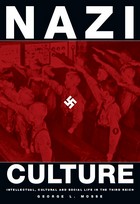
What was life like under the Third Reich? What went on between parents and children? What were the prevailing attitudes about sex, morality, religion? How did workers perceive the effects of the New Order in the workplace? What were the cultural currents—in art, music, science, education, drama, and on the radio?
Professor Mosse’s extensive analysis of Nazi culture—groundbreaking upon its original publication in 1966—is now offered to readers of a new generation. Selections from newspapers, novellas, plays, and diaries as well as the public pronouncements of Nazi leaders, churchmen, and professors describe National Socialism in practice and explore what it meant for the average German.
By recapturing the texture of culture and thought under the Third Reich, Mosse’s work still resonates today—as a document of everyday life in one of history’s darkest eras and as a living memory that reminds us never to forget.

This engaging study begins by looking at the eighteenth century, when critical writing started to assume the institutional and generic structures we associate with it today, and examines a series of case studies that illuminate how women writers engaged with the forms of intellectual sociability that defined nineteenth-century criticism—including critical dialogue, the club, the salon, and the publishing firm. In doing so, it clarifies the fascinating rhetorical and political debates surrounding the figure of the female critic and charts how women writers worked both within and against professional communities. Ultimately, Stern contends that gender was a formative influence on critical practice from the very beginning, presenting the history of criticism as a history of gender politics.
While firmly grounded in literary studies, The Social Life of Criticism combines an attention to historical context with a deep investment in feminist scholarship, social theory, and print culture. The book promises to be of interest not only to professional academics and graduate students in nineteenth-century literature but also to scholars in a wide range of disciplines, including literature, intellectual history, cultural studies, gender theory, and sociology.
TheSocial Life of Democracy is a response to the polarization of our times and the crisis in democracy being experienced across the world today. Drawing from B. R. Ambedkar’s view that democracy is not a form of government but more a form of society and mental disposition, this book argues that democracy needs to be seen as a form of social life that must be part of our everyday practice. Noting that the obstacles to realizing Ambedkar’s vision of democracy are both material and conceptual, philosopher Sundar Sarukkai critically examines the meaning of democratic action and the function of democracy in different domains ranging from homes to governments. He also examines its relation to labor, science, and religion, and analyzes the ethical processes that are central to democracy. Finally, clarifying the concepts of truth in politics and the ideas of freedom and choice, he persuasively argues in favor of bringing democracy into our everyday lives rather than leaving it exclusively in the domain of electoral politics.

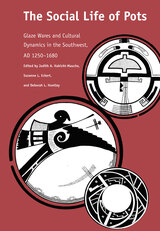
Through the study of glaze-painted pottery, archaeologists are beginning to understand that pots had “social lives” in this changing world and that careful reconstruction of the social lives of pots can help us understand the social lives of Puebloan peoples. In this book, fifteen contributors apply a wide range of technological and stylistic analysis techniques to pottery of the Rio Grande and Western Pueblo areas to show what it reveals about inter- and intra-community dynamics, work groups, migration, trade, and ideology in the precontact and early postcontact Puebloan world.
The contributors report on research conducted throughout the glaze producing areas of the Southwest and cover the full historical range of glaze ware production. Utilizing a variety of techniques—continued typological analyses, optical petrography, instrumental neutron activation analysis, X-ray microprobe analysis, and inductively coupled plasma mass spectroscopy—they develop broader frameworks for examining the changing role of these ceramics in social dynamics. By tracing the circulation and exchange of specialized knowledge, raw materials, and the pots themselves via social networks of varying size, they show how glaze ware technology, production, exchange, and reflected a variety of dynamic historical and social processes.
Through this material evidence, the contributors reveal that technological and aesthetic innovations were deliberately manipulated and disseminated to actively construct “communities of practice” that cut across language and settlement groups. The Social Life of Pots offers a wealth of new data from this crucial period of prehistory and is an important baseline for future work in this area.
Contributors
Patricia Capone
Linda S. Cordell
Suzanne L. Eckert
Thomas R. Fenn
Judith A. Habicht-Mauche
Cynthia L Herhahn
Maren Hopkins
Deborah L. Huntley
Toni S. Laumbach
Kathryn Leonard
Barbara J. Mills
Kit Nelson
Gregson Schachner
Miriam T. Stark
Scott Van Keuren
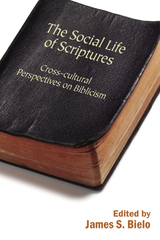
Contributors offer a collection of closely analyzed and carefully conducted ethnographic and historical case studies, covering a range of geographic, theological, and cultural territory, including: American evangelicals and charismatics; Jamaican Rastafarians; evangelical and Catholic Mayans; Northern Irish charismatics; Nigerian Anglicans; and Chinese evangelicals in the United States.
The Social Life of Scriptures is the first book to present an eclectic, cross-cultural, and comparative investigation of Bible use. Moreover, it models an important movement to outline a framework for how scriptures are implicated in organizing social structures and meanings, with specific foci on gender, ethnicity, agency, and power.
The contributors tour the spiritual globe—the globe of nonthings—in essays on topics ranging from the Holy Ghost in southern Africa to spirits of the “people of the streets” in Rio de Janeiro to dragons and magic in Britain. Avoiding a reliance on religion and belief systems to explain the significance of spirits, they reimagine spirits in a rich network of social trajectories, ultimately arguing for a new ontological ground upon which to examine the intangible world and its interactions with the tangible one.
The Strange Music of Social Life presents a dialogue on dialogic sociology, explored through the medium of music. Sociologist and composer Michael Mayerfeld Bell presents an argument that both sociology and classical music remain largely in the grip of a nineteenth-century totalizing ambition of prediction and control. He provides the refreshing approach of "strangency" to explain a sociology that tries to understand not only the regularities of social life but also the social conditions in which people do what we do not expect.
Nine important sociologists and musicians respond-often vigorously-to the conversation Bell initiates by raising pivotal questions. The Strange Music of Social Life concludes with Bell's reply to those responses and offers new insight into sociology and music sociology.
We live in a world of technical systems designed in accordance with technical disciplines and operated by personnel trained in those disciplines. This is a unique form of social organization that largely determines our way of life, but the actions of individuals and social protest still play a role in developing and purposing these rational systems. In Technosystem, Andrew Feenberg builds a theory of both the threats of technocratic modernity and the potential for democratic change.
Feenberg draws on the tradition of radical social criticism represented by Herbert Marcuse and the Frankfurt School, which recognized the social effects of instrumental rationality but did not advance a convincing alternative to the new forms of domination imposed by rational systems. That is where the fine-grained analyses of Science, Technology, and Society (STS) studies can contribute. Feenberg uses these approaches to reconcile the claims of rationality with the agency of a public increasingly mobilized to intervene in technically based decisions. The resulting social theory recognizes emerging forms of resistance, such as protests and hacking, as essential expressions of public life in the “rational society.”
Combining the most salient insights from critical theory with the empirical findings of STS, Technosystem advances the philosophical debate over the nature and practice of reason in modern society.
Narratives are fundamental to our lives: we dream, plan, complain, endorse, entertain, teach, learn, and reminisce through telling stories. They provide hopes, enhance or mitigate disappointments, challenge or support moral order and test out theories of the world at both personal and communal levels. It is because of this deep embedding of narrative in everyday life that its study has become a wide research field including disciplines as diverse as linguistics, literary theory, folklore, clinical psychology, cognitive and developmental psychology, anthropology, sociology, and history.
In Telling Stories leading scholars illustrate how narratives build bridges among language, identity, interaction, society, and culture; and they investigate various settings such as therapeutic and medical encounters, educational environments, politics, media, marketing, and public relations. They analyze a variety of topics from the narrative construction of self and identity to the telling of stories in different media and the roles that small and big life stories play in everyday social interactions and institutions. These new reflections on the theory and analysis of narrative offer the latest tools to researchers in the fields of discourse analysis and sociolinguistics.

Krause offers a revelatory look into how families involved in the fashion industry are coping with globalization based on longterm research in Prato, the historic hub of textile production in the heart of metropolitan Tuscany. She brings to the fore the tensions—over value, money, beauty, family, care, and belonging—that are reaching a boiling point as the country struggles to deal with the same migration pressures that are triggering backlash all over Europe and North America. Tight Knit tells a fascinating story about the heterogeneity of contemporary capitalism that will interest social scientists, immigration experts, and anyone curious about how globalization is changing the most basic of human conditions—making a living and making a life.
Drawing on a rich archive of Korean, Japanese, and Chinese sources, Park describes how Koreans negotiated the contradictory demands of national and colonial powers. She demonstrates that the dynamics of global capitalism led the Chinese and Japanese to pursue capitalist expansion while competing for sovereignty. Decentering the nation-state as the primary analytic rubric, her emphasis on the role of global capitalism is a major innovation for understanding nationalism, colonialism, and their immanent links in social space.
Through a regional and temporal comparison of Manchuria from the late nineteenth century until 1945, Park details how national and colonial powers enacted their claims to sovereignty through the regulation of access to land, work, and loans. She shows that among Korean migrants, the complex connections among Chinese laws, Japanese colonial policies, and Korean social practices gave rise to a form of nationalism in tension with global revolution—a nationalism that laid the foundation for what came to be regarded as North Korea’s isolationist politics.
Drawing on a broad range of sources, including building documents, correspondence, diaries, and court regulations, Klingensmith investigates the intricacies of Bavarian court practice and shows that Versailles was only one among several influences on German palace planning. Klingensmith offers a cogent, detailed understanding of the relations between architectural spaces and the ceremonial, social, and private life that both required and used them. Handsomely illustrated with photographs and plans, The Utility of Splendor will appeal to anyone interested in how life was lived among the nobility during the last centuries of the old regime.
Samuel John Klingensmith (1949-1986) was assistant professor of art history at Tulane University.
What is a person? This fundamental question is a perennial concern of philosophers and theologians. But, Christian Smith here argues, it also lies at the center of the social scientist’s quest to interpret and explain social life. In this ambitious book, Smith presents a new model for social theory that does justice to the best of our humanistic visions of people, life, and society.
Finding much current thinking on personhood to be confusing or misleading, Smith finds inspiration in critical realism and personalism. Drawing on these ideas, he constructs a theory of personhood that forges a middle path between the extremes of positivist science and relativism. Smith then builds on the work of Pierre Bourdieu, Anthony Giddens, and William Sewell to demonstrate the importance of personhood to our understanding of social structures. From there he broadens his scope to consider how we can know what is good in personal and social life and what sociology can tell us about human rights and dignity.
Innovative, critical, and constructive, What Is a Person? offers an inspiring vision of a social science committed to pursuing causal explanations, interpretive understanding, and general knowledge in the service of truth and the moral good.
READERS
Browse our collection.
PUBLISHERS
See BiblioVault's publisher services.
STUDENT SERVICES
Files for college accessibility offices.
RECENTLY PUBLISHED




UChicago Accessibility Resources
home | accessibility | search | about | contact us
BiblioVault ® 2001 - 2024
The University of Chicago Press